
Photo: Wikipedia
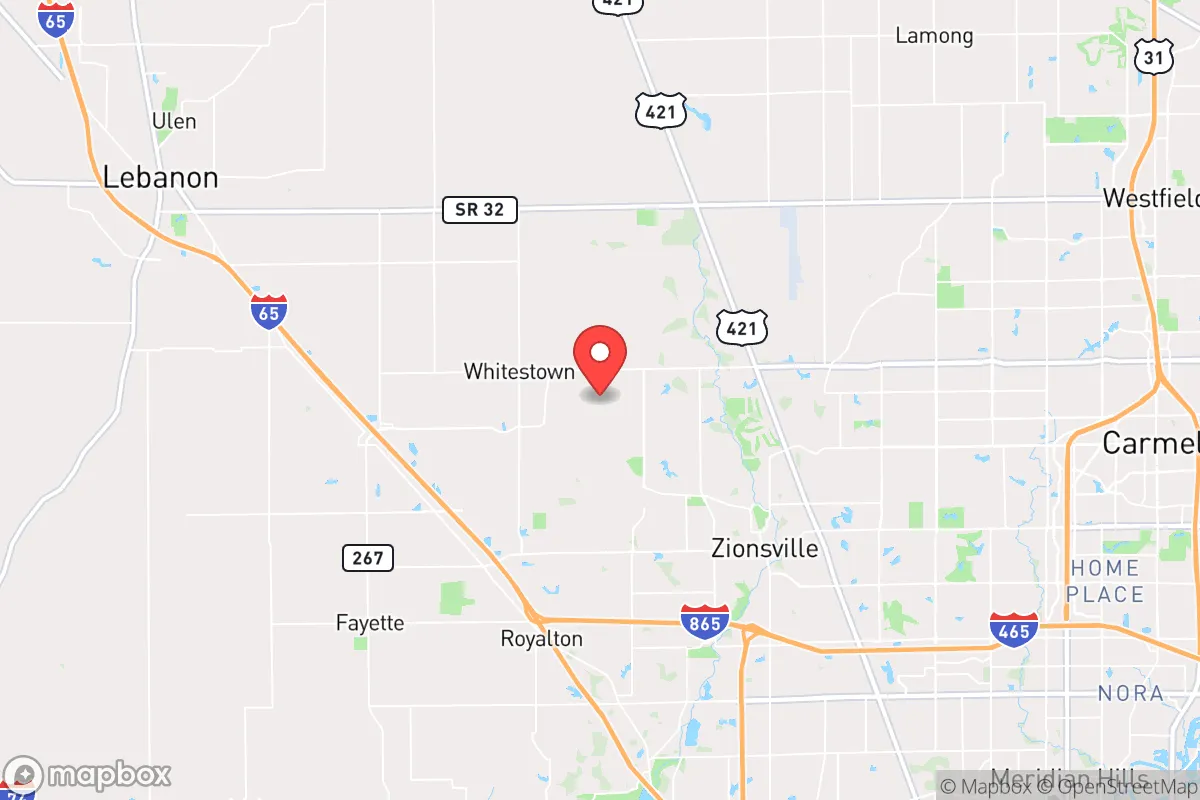
Personal Sovereignty in Zionsville, IN
Viable for self-reliance. Generally workable, though some barriers may limit total independence.
What does Personal Sovereignty tell us?
Personal Sovereignty measures your capacity for self-reliance and independence with minimal government friction. Higher scores mean fewer barriers between you and the way you want to live... but it assumes you have the space you need and good neighbors.
What does this tell us?
Personal Sovereignty measures your capacity for self-reliance and independence with minimal government friction. Higher scores mean fewer barriers between you and the way you want to live... but it assumes you have the space you need and good neighbors.
State Policy
Energy independence: Importer (35% of energy produced in-state)
Personal Liberty
Homesteading

Personal Liberty Analysis
Zionsville, Indiana, offers a notably high degree of personal sovereignty, particularly when viewed through a survivalist or prepper lens. The town’s location in Boone County places it within a state that has aggressively pushed back against federal overreach, creating an environment where individual autonomy is the default rather than the exception. For those concerned with government intrusion into daily life, Zionsville provides a rare blend of affluent, small-town stability and a legal framework that prioritizes personal liberty over collective mandates.
Tax burden and regulatory posture: How Indiana’s policies affect your autonomy
Indiana’s tax structure is a clear win for personal sovereignty. The state has a flat income tax rate of 3.05% as of 2026, with ongoing legislative efforts to reduce it further, and no inheritance or estate tax—meaning your property stays with your family, not the state. Boone County’s property tax rates are moderate, typically around 1.0% to 1.2% of assessed value, which is competitive for a high-income area. More importantly, Indiana is a “right-to-work” state, meaning you cannot be forced to join a union as a condition of employment, and it has a “right-to-farm” law that protects agricultural operations from nuisance lawsuits—a subtle but real protection for anyone wanting to raise livestock or grow food on their property. The regulatory environment is generally light: no state-level rent control, no mandatory paid leave mandates for small businesses, and a streamlined permitting process for home construction and renovations. For a prepper, this means fewer bureaucratic hurdles when building a root cellar, installing solar panels, or adding a secure room to your home. The state also preempts local governments from enacting stricter building codes than the state standard, preventing the kind of overregulation seen in blue states.
Self-defense and gun law specifics: What Zionsville residents can legally do
Indiana is a constitutional carry state, meaning no permit is required to carry a handgun openly or concealed for anyone 18 or older who can legally possess a firearm. Zionsville itself is a “Second Amendment Sanctuary” community, with local officials publicly opposing any state or federal infringements on gun rights. There are no magazine capacity limits, no “assault weapon” bans, and no waiting periods for firearm purchases. Stand-your-ground laws are in full effect: you have no duty to retreat before using deadly force if you are lawfully present and reasonably believe it is necessary to prevent death or serious injury. The state also has a strong castle doctrine, extending protection to your vehicle and workplace. For preppers, this means you can legally maintain a substantial armory—including suppressors and short-barreled rifles with proper federal paperwork—without state-level interference. The Boone County Sheriff’s Office is known for being pro-2A, and permit applications for NFA items are processed without unnecessary delays. One practical note: while Indiana does not require registration of firearms, private sales between individuals are legal without a background check, though many local gun shops and shows still use the NICS system voluntarily.
Self-reliance and homesteading viability: Lot sizes, zoning, and off-grid feasibility
Zionsville’s zoning is a mixed bag for serious homesteading. The town’s historic core and newer subdivisions typically have lot sizes of 0.25 to 0.5 acres, with strict HOA covenants that often prohibit chickens, livestock, or visible gardening structures. However, the unincorporated areas of Boone County surrounding Zionsville—especially near Whitestown and Lebanon—offer 1- to 5-acre parcels with agricultural zoning that allows for goats, chickens, bees, and even small-scale cattle operations. The county’s comprehensive plan is generally friendly to accessory dwelling units (ADUs), which can serve as a guest house, rental income, or a bug-out location on your own land. Off-grid living is legally feasible but requires attention to Indiana’s building codes: you can install solar panels with net metering through Duke Energy or Boone REMC, and rainwater collection is legal for non-potable uses like irrigation. However, composting toilets and graywater systems require a permit and inspection, and the state mandates connection to municipal sewer if available within 300 feet. For a serious prepper, the best strategy is to buy a property in unincorporated Boone County with a well and septic already in place, giving you water independence and reducing reliance on municipal infrastructure. The county also allows for the keeping of firearms for self-defense without any storage mandates, even for those with children in the home.
Personal liberties: Parental rights, medical autonomy, speech, and property
Indiana has become a national leader in protecting parental rights. The state’s “Parents’ Bill of Rights” (enacted in 2023) gives parents explicit authority over their children’s education, medical decisions, and religious upbringing, including the right to opt out of any curriculum or activity without penalty. Zionsville Community Schools, while highly rated, are required to notify parents of any changes to a student’s mental, emotional, or physical health, and cannot withhold information about gender-related issues. Medical autonomy is strong: Indiana has banned nearly all abortions (with narrow exceptions), and there are no vaccine mandates for adults or children beyond standard school requirements (which allow broad religious and medical exemptions). The state also has a robust “Right to Try” law for terminally ill patients and protects physicians who refuse to participate in procedures they find morally objectionable. Free speech is protected by both state law and the Indiana Constitution, which explicitly guarantees the right to assemble and petition the government. Property rights are reinforced by Indiana’s “Private Property Protection Act,” which requires the government to prove a taking is for a legitimate public use and to pay just compensation, including lost business value. For a prepper, this means you can fly a Gadsden flag, post “No Trespassing” signs with legal force, and defend your property without fear of prosecution for exercising your rights.
Overall, Zionsville ranks among the top small towns in the Midwest for personal sovereignty. Its combination of constitutional carry, low taxes, strong parental rights, and a county government that respects property autonomy creates a legal environment where a survivalist mindset can thrive without constant friction from the state. The main trade-off is cost: Boone County’s real estate is expensive, with median home prices around $550,000, and HOA restrictions in many subdivisions limit some prepper activities. But for those who can afford a few acres in the unincorporated areas, Zionsville offers a rare sanctuary where the law is on your side, not the government’s. Compared to neighboring states like Illinois or Michigan, Indiana’s legal framework is a fortress of individual liberty, and Zionsville sits at its center.

* Values derived from national, state, county, city and local statistics and may differ in a specific area. Last updated: 2026-04-22T10:06:46.000Z
Narrative content on this page is AI-generated and may contain mistakes. Verify any details that matter before acting on them.
ReloMaps may earn a commission from affiliate links at no extra cost to you.

