Photo: Wikipedia
Demographics of Zionsville, IN
Affluence Level in Zionsville, IN
An upper-middle-class area. Household wealth, education levels, and homeownership run ahead of national benchmarks.
People of Zionsville, IN
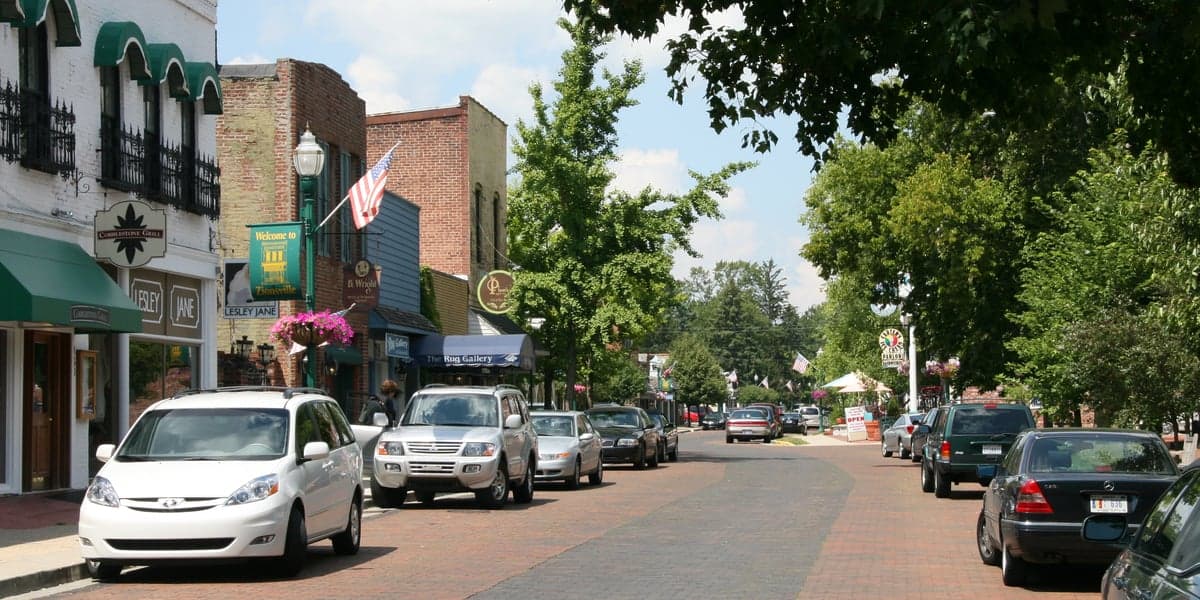
Today, Zionsville, Indiana is a predominantly white, highly educated, and affluent community of 31,442 residents, known for its historic village charm and strong family-oriented character. The city’s population is 86.0% white, with a foreign-born share of just 2.1%, and 71.0% of adults hold a college degree, reflecting a demographic profile shaped by decades of domestic in-migration from within the Midwest rather than international immigration. The population density is low by suburban standards, with large-lot homes and preserved green spaces reinforcing a sense of exclusivity and stability. Distinctive identity markers include a nationally recognized public school system, a walkable brick-paved village center, and a local culture that prizes civic engagement and conservative fiscal values.
How the city was settled and grew
Zionsville was founded in 1852 by William Zion, a local farmer who donated land for a railroad depot along the newly built Indianapolis, Cincinnati & Lafayette Railroad. The original population was almost entirely white, Anglo-American, and Protestant, drawn from surrounding Boone County farms and from the Ohio River Valley. The town’s early economy revolved around the railroad, grain milling, and a small furniture factory, with most residents living in simple frame houses clustered near the depot. The historic Village District, centered on Main Street and the brick-paved paths, was built by these early settlers and remains the city’s symbolic heart. A second wave arrived in the 1920s and 1930s, when Indianapolis professionals began building summer homes and weekend cottages along the newly paved Michigan Road (US 421), settling in what is now the Village Farm area, a neighborhood of larger lots and older homes just north of the original village. Through the mid-20th century, Zionsville remained a small, sleepy town of fewer than 2,000 residents, with virtually no non-white population and a local economy still tied to agriculture and small-scale retail.
Modern era (post-1965)
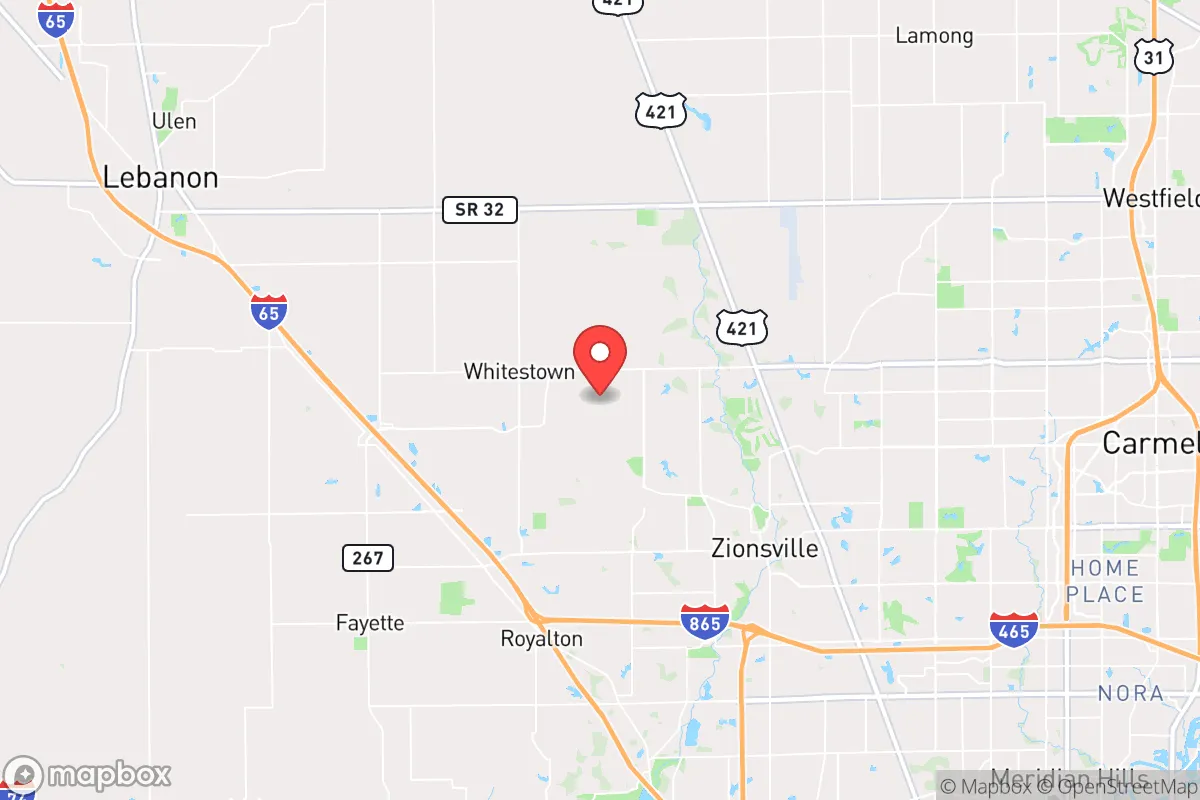
The post-1965 era transformed Zionsville from a rural hamlet into a sought-after Indianapolis exurb. The 1965 Hart-Cellar Act had negligible direct effect here—the foreign-born share remains only 2.1%—but the broader suburbanization of the Indianapolis metro area drove explosive domestic growth. The completion of I-65 in the 1970s, with an interchange at State Road 334, made Zionsville a 25-minute commute from downtown Indianapolis, triggering a wave of white-collar migration. The Oak Ridge subdivision, developed in the 1970s and 1980s, absorbed many of these newcomers: doctors, lawyers, and executives from Eli Lilly, Roche Diagnostics, and other Indianapolis employers. A second major wave came in the 1990s and 2000s, when families seeking top-ranked schools—Zionsville Community Schools consistently ranks among Indiana’s best—fueled development in the Hunt Club and Bridgestone neighborhoods, both master-planned communities with large homes, HOAs, and private amenities. These subdivisions remain overwhelmingly white (over 90% in most census tracts) and highly homogeneous. The city’s small non-white populations are concentrated in specific areas: the Royal Run neighborhood, a newer development near the Boone County line, has the highest share of East/Southeast Asian residents (approximately 4-5%), while Indian-subcontinent families (2.6% citywide) are most visible in the Wynbrooke subdivision, built in the 2010s near the new Zionsville Middle School. The Black population (3.5%) is dispersed but slightly more present in the southern part of the city, near the Whitestown border. Hispanic residents (3.2%) are the most evenly distributed, with small clusters in the Village West area, where some older, smaller homes provide more affordable entry points.
The future
Zionsville’s population is heading toward continued slow growth, likely reaching 35,000-38,000 by 2035, driven by new residential developments on the city’s western and southern fringes. The city is not homogenizing in a simple sense—rather, it is tribalizing into distinct enclaves by housing type and price point. The historic Village District and older neighborhoods like Village Farm are becoming more exclusive as home values rise, while newer subdivisions like Wynbrooke and Royal Run attract a slightly more diverse mix of professionals, including Indian and East/Southeast Asian families. The foreign-born share is expected to rise modestly, perhaps to 3-4% by 2035, but Zionsville will remain far less diverse than Indianapolis or even nearby Carmel (where the foreign-born share is 12%). The Hispanic and Black populations are growing slowly, primarily through natural increase and a trickle of in-migration from Indianapolis, but no single immigrant community is large enough to create an ethnic enclave. Assimilation is the dominant pattern: second-generation children of Indian and Asian professionals are fully integrated into the school system and local social fabric. The next 10-20 years will likely see Zionsville become slightly more diverse at the margins, but the core demographic—white, college-educated, and conservative-leaning—will remain firmly in place.
For someone moving in now, Zionsville is becoming a place where high property values and school quality reinforce demographic stability rather than transformation. The city offers a predictable, safe, and high-amenity environment for families who prioritize education and community cohesion, but those seeking significant racial or economic diversity will find it limited. The population trajectory points toward gradual, managed growth that preserves the city’s character rather than disrupting it.

* Values derived from national, state, county, city and local statistics and may differ in a specific area. Last updated: 2026-04-22T10:06:46.000Z
Narrative content on this page is AI-generated and may contain mistakes. Verify any details that matter before acting on them.
ReloMaps may earn a commission from affiliate links at no extra cost to you.

