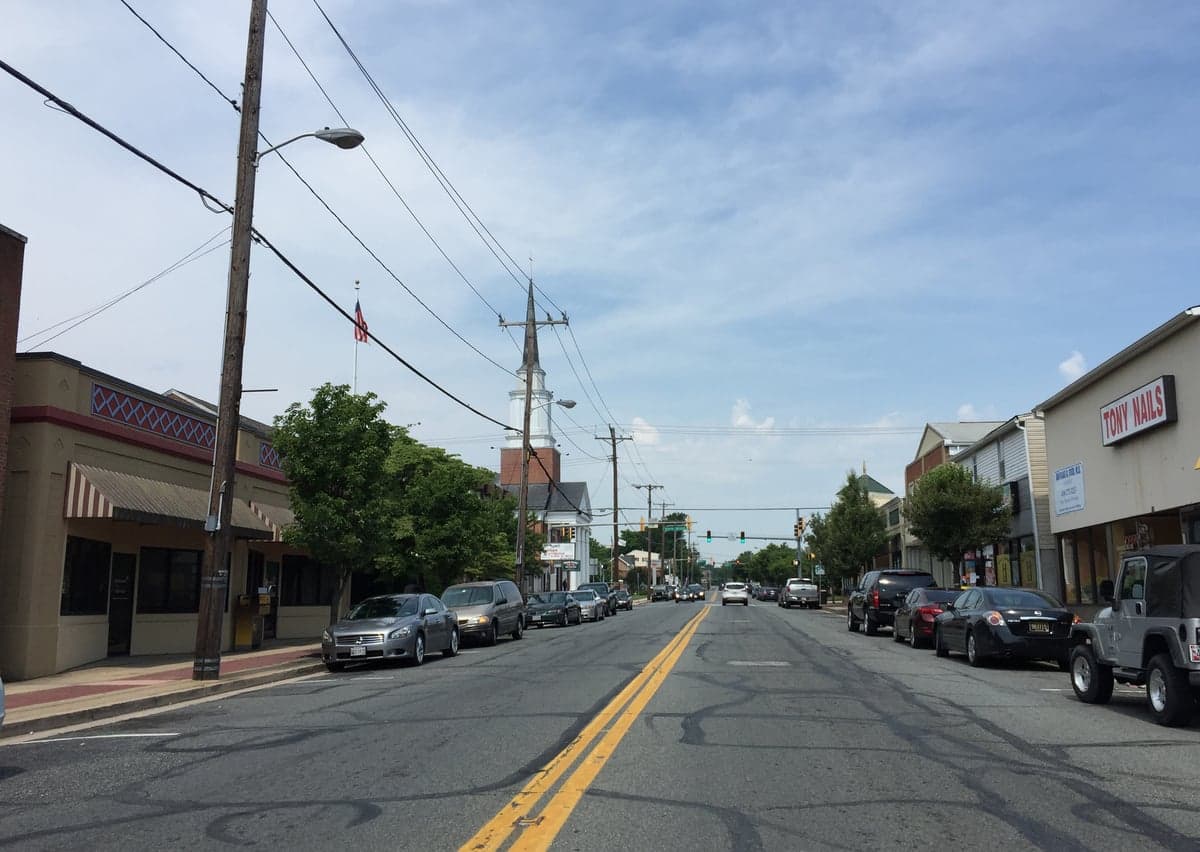
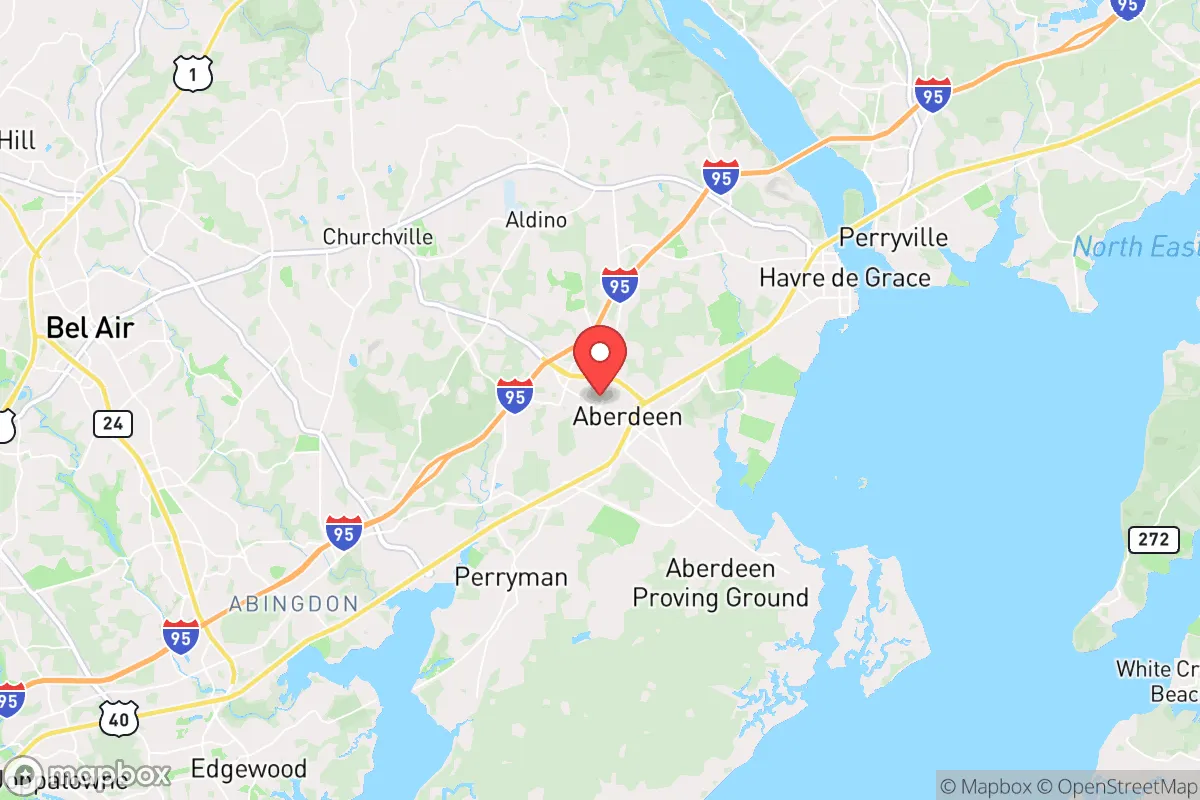
Photo: Wikipedia
Strategic Assessment of Aberdeen, MD
Multiple tactical vulnerabilities. Population density, target proximity, or disaster risk are likely compounding. A retreat property and exit planning is required.
What does the Strategic Assessment tell us?
Our Strategic Assessment grades tactical survivability of an area. Major population centers, military targets, fallout zones, natural disasters, and border exposure all drive risk — lower exposure means a more defensible position in a crisis.
This is heavily inspired by Joel Skousen's Strategic Relocation book. Highly recommended you checkout the book ($)What does this tell us?
Our Strategic Assessment grades tactical survivability of an area. Major population centers, military targets, fallout zones, natural disasters, and border exposure all drive risk — lower exposure means a more defensible position in a crisis.
This is heavily inspired by Joel Skousen's Strategic Relocation book. Highly recommended you checkout the book ($)Strategic Pillars

Key Distances
Regional Safe Places
Below is our recommended "safe zones" in Maryland and the surrounding area based on our strategic heuristics. For most people, it's unrealistic to live in a “safe zone” full-time due to work, family or other personal reasons. They tend to be more rural. However, many of these areas are perfect for second homes and retreat properties that double as a vacation home or even a short-term rental.
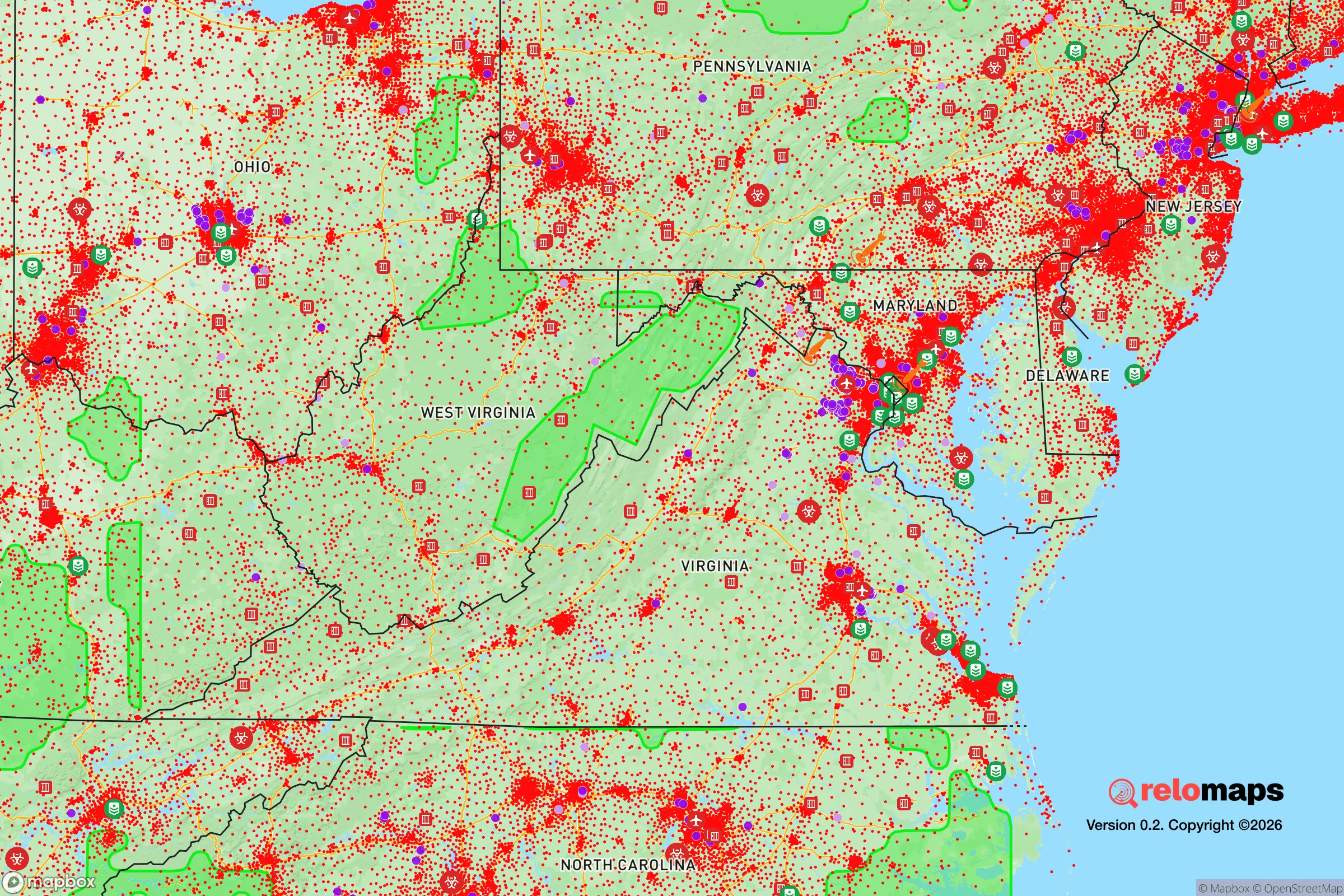
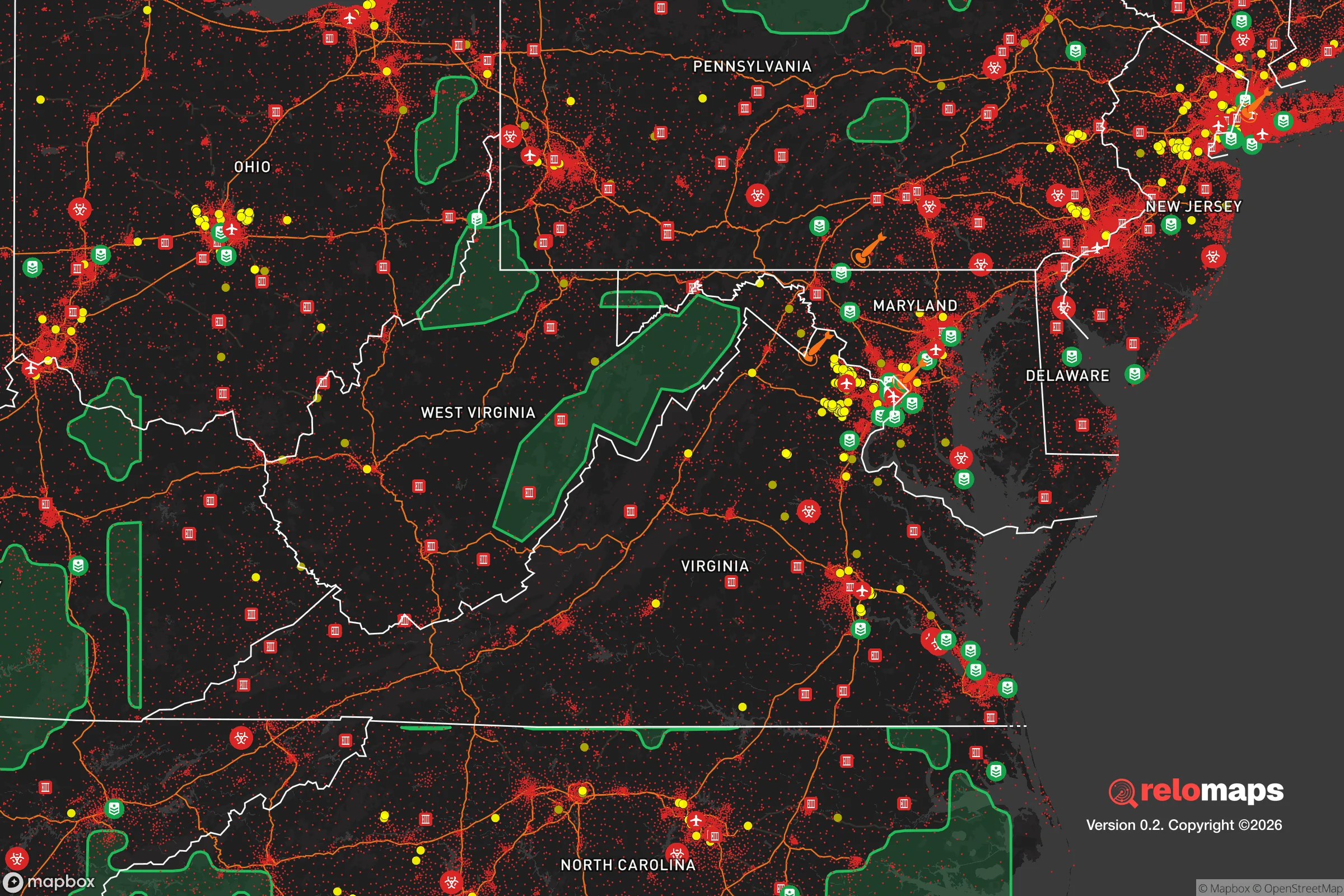


Important Note: For informational purposes only. This does not mean nothing bad ever happens in the green zones. Please use common sense. This is based on public data and modeled with AI. We tried to take a conservative approach but mistakes happen. We update this regularly as new information becomes available.
Solar Generator Recommendations
Backup power matters more here than in safer locations. We've picked three solar generators across budgets and capacity tiers — start with the budget unit if you only need a few essentials, or step up if you want to run a fridge and HVAC for days at a time.

Jackery Portable Power Station Explorer 300
Budget OptionPower on the Go: Weighing only 11 lbs, it's convenient to set up and store with book-sized foldable solar panels

BLUETTI Portable Power Station AC180
Designed for both indoor and outdoor scenarios, AC180 is highly capable as it has a robost capacity and continuous output power.

EF ECOFLOW DELTA Pro Ultra Power Station
Upgraded PickEcoFlow DELTA Pro Ultra is a whole-home energy system designed to grow with your family. Integrated with the Smart Home Panel 2, it scales to meet your evolving energy needs — keeping your home powered, intelligent, and secure through every stage of life.
We earn a commission, at no additional cost to you.
Strategic Assessment Analysis
Aberdeen, Maryland, sits in a precarious but potentially advantageous position for those prioritizing resilience and strategic relocation. Its location along the I-95 corridor, roughly 30 miles northeast of Baltimore and 70 miles south of Philadelphia, offers both a buffer from the immediate chaos of major urban centers and access to critical infrastructure. However, this same proximity to high-value military and industrial targets—including the Aberdeen Proving Ground (APG) itself—creates a complex risk profile that demands careful evaluation. For a conservative-minded prepper, Aberdeen is less a sanctuary and more a calculated outpost: close enough to monitor and exploit regional resources, but close enough to be caught in the blast radius of a major disruption.
Geographic position and natural advantages for a strategic relocation
Aberdeen’s geography is a double-edged sword. The town sits on the western shore of the Chesapeake Bay, with the Susquehanna River feeding into the bay just north of the city. This provides a reliable freshwater source and access to the bay’s rich fisheries—a critical food-security asset in a prolonged crisis. The surrounding terrain is relatively flat, with mixed hardwood forests and agricultural land in Harford County, offering some cover and potential for small-scale farming or foraging. The area’s moderate climate, with four distinct seasons, avoids the extreme heat or cold that can stress off-grid systems, though winter storms and occasional hurricanes (remnants of Atlantic systems) are real concerns. The primary natural advantage is the abundance of surface water—the bay, the river, and numerous creeks—which, with proper filtration, can sustain a household indefinitely. However, the lack of significant elevation or natural barriers means there’s little defensible high ground; the landscape is open and easily traversed, which is a vulnerability if movement becomes contested.
Risks, exposures, and proximity to fallout-relevant landmarks
The elephant in the room is the Aberdeen Proving Ground, a sprawling U.S. Army installation that tests weapons, explosives, and chemical/biological defense systems. In a major conflict or terrorist event, APG is a high-priority target for kinetic or cyber attack. A conventional strike or accidental detonation at the proving ground could produce a localized fallout zone, though the prevailing winds typically blow from the west, pushing contamination toward the bay and away from the town center. More concerning is the proximity to the Peach Bottom Atomic Power Station (about 20 miles north, in Pennsylvania) and the Calvert Cliffs Nuclear Power Plant (about 50 miles south, across the bay). A catastrophic failure at either—whether from accident, sabotage, or EMP-induced grid collapse—could render large swaths of Harford County uninhabitable for years. Additionally, Aberdeen sits within the I-95 "kill box"—a corridor that, in a national emergency, would be choked with fleeing populations, military convoys, and potential ambush points. The town’s rail lines (Amtrak’s Northeast Corridor and CSX freight) are also high-value targets for disruption. For a relocator, the risk calculus is clear: you’re trading proximity to resources for proximity to targets. The 30-mile buffer from Baltimore is enough to avoid the initial wave of urban unrest, but not enough to escape fallout from a major event at APG or the nuclear plants.
Practical resilience for a relocator: food, water, energy, and defensibility
For a single individual or family looking to hunker down, Aberdeen offers a mixed bag. Water is the strongest suit: the bay and Susquehanna are year-round sources, but you’ll need robust filtration (reverse osmosis or ceramic filters) due to agricultural runoff and potential industrial contaminants from APG. Rainwater collection is viable, with average annual precipitation around 45 inches. Food security is moderate. The area has several small farms and farmers’ markets (e.g., the Aberdeen Farmers Market), but the soil is heavy clay in spots, requiring raised beds or significant amendment for gardening. Hunting (deer, waterfowl) and fishing (striped bass, bluefish) are legal and productive, but you’ll need to navigate Maryland’s strict licensing and seasonal limits. Energy resilience is a weak point. The grid is aging and prone to outages from storms or overload; solar panels are feasible (the region gets about 200 sunny days per year), but local permitting can be slow, and HOA restrictions in some subdivisions may limit installations. A backup generator with a 100+ gallon propane tank is a near-necessity. Defensibility is the biggest concern. Most residential areas are suburban sprawl—cul-de-sacs, vinyl siding, and close neighbors. A rural property with acreage is ideal but expensive (median home prices in Harford County are around $400,000). The town itself has a police force, but response times in a widespread crisis would be stretched thin. The best strategy is to secure a property on the northern or western edge of the county, away from the bay and APG, with a clear line of sight to approach routes. Avoid areas near the I-95 exits (Route 22, Route 40) that would become chokepoints for looters or refugees.
Overall, Aberdeen is a high-risk, moderate-reward location for a strategic relocation. It offers genuine advantages in water access and proximity to multiple supply chains, but those are offset by its status as a target-rich environment. For a conservative prepper who values community and wants to be near family or existing support networks in the Mid-Atlantic, it’s a defensible choice—provided you have a solid bug-out plan for the first 72 hours of a major event. If you’re looking for a true retreat, look further west into the Appalachian foothills. But if you need to stay within striking distance of the Northeast corridor while maintaining some semblance of self-sufficiency, Aberdeen can work—if you’re willing to accept the trade-offs and prepare accordingly. The key is to not rely on the town’s infrastructure; treat it as a base camp, not a fortress. Stockpile supplies, build a network of trusted neighbors, and have a pre-planned evacuation route to the west (toward I-83 or US-15) if the situation deteriorates beyond local control. In a world of increasing uncertainty, Aberdeen is a place to watch, not a place to sleep soundly.

* Values derived from national, state, county, city and local statistics and may differ in a specific area. Last updated: 2026-04-22T04:01:32.000Z
Narrative content on this page is AI-generated and may contain mistakes. Verify any details that matter before acting on them.
ReloMaps may earn a commission from affiliate links at no extra cost to you.

