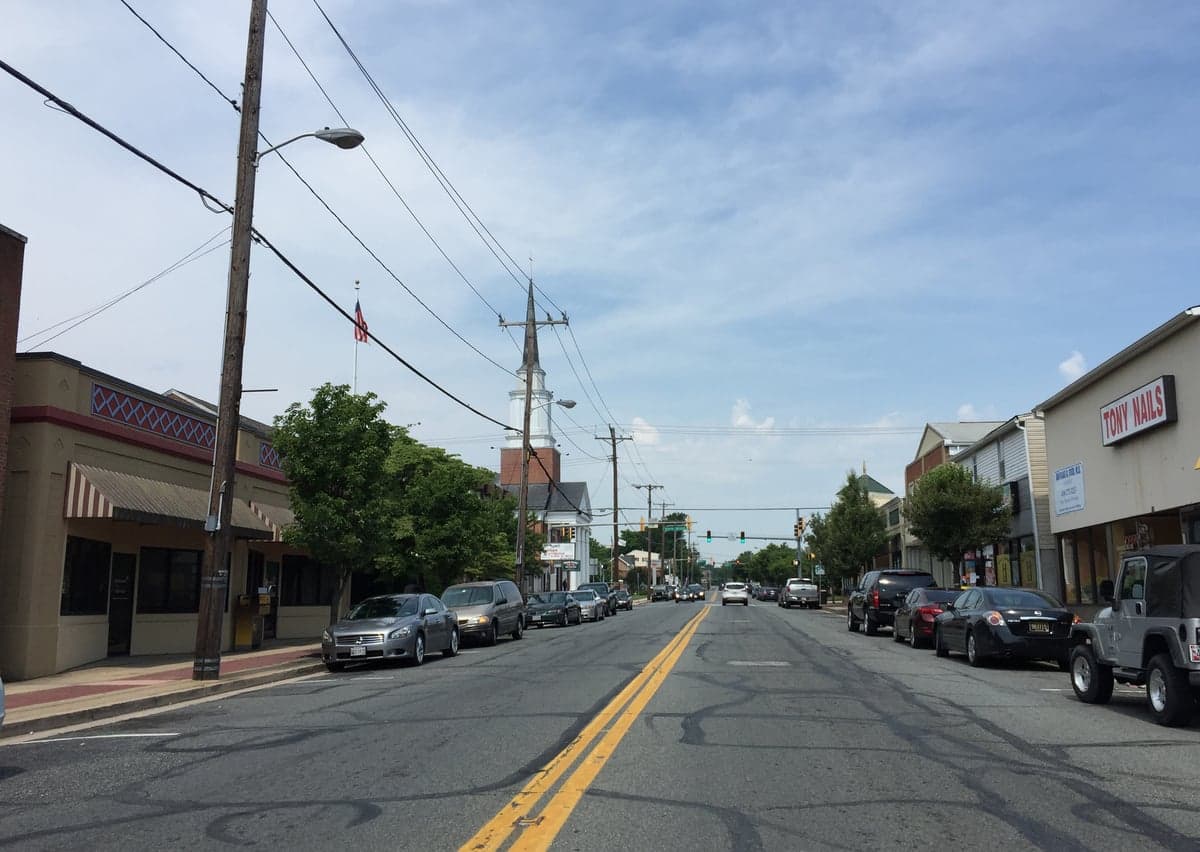
Photo: Wikipedia
Political ClimatePolitical Climate in Aberdeen, MD
District shown is the primary district for this city’s centroid. Cities may span multiple districts.
Local Political AnalysisPolitical Analysis of Aberdeen, MD
Aberdeen, Maryland, has long been a solidly conservative community, and the numbers back that up with a Cook PVI of R+8. That means the area leans about eight points more Republican than the national average, and for a long time, that was the end of the story. But if you’ve been around here for a while, you’ve seen the shift. The political climate isn’t what it was even ten years ago. The old-school, leave-us-alone conservatism that defined Aberdeen is now bumping up against a steady push from progressive policies coming out of Annapolis and, increasingly, from some of the newer folks moving in from Baltimore and D.C. The trajectory is concerning if you value personal freedoms and local control, because the state government keeps trying to impose its will on communities like ours.
How it compares
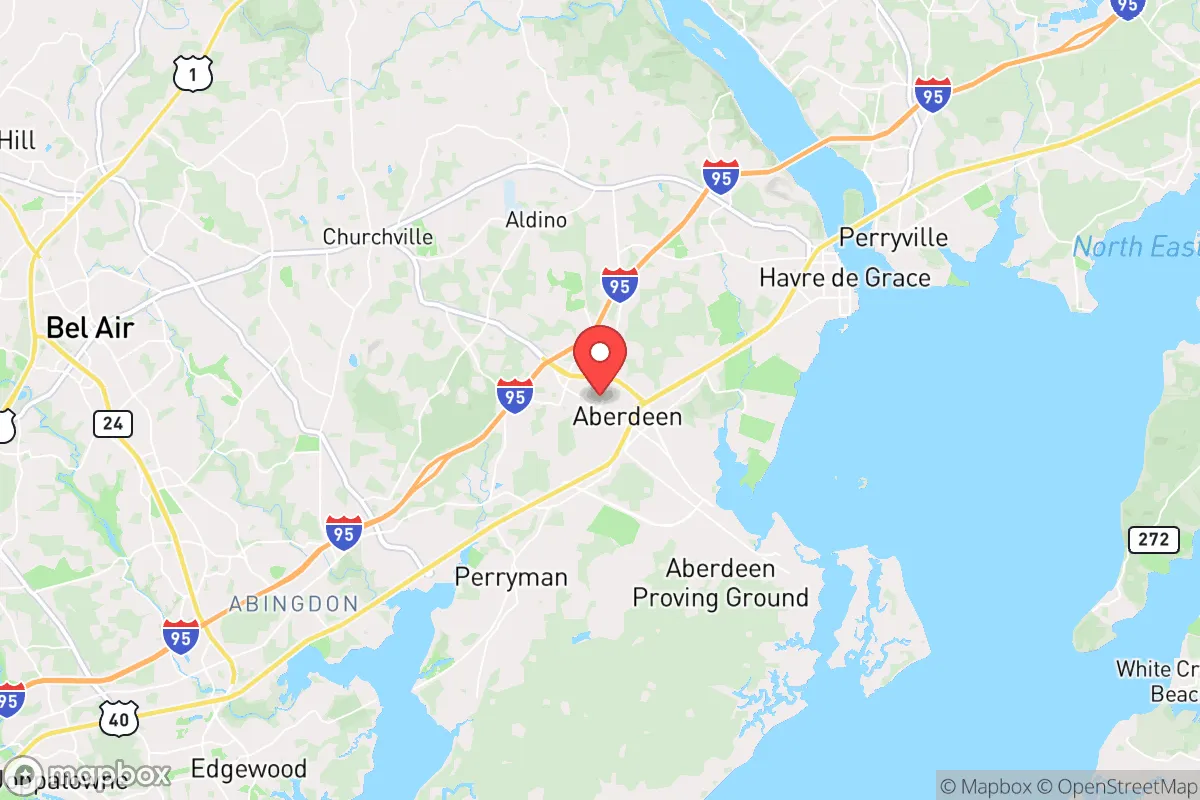
To really understand Aberdeen’s politics, you have to look at the map. We’re in Harford County, which is still reliably red, but we’re sandwiched between two very different worlds. Drive south 25 miles to Baltimore City, and you’re in a deep-blue stronghold where progressive policies on taxes, policing, and zoning are the norm. Head north toward Bel Air, and you’ll find a more traditional, suburban conservative vibe, though even there you see the creep of state-level mandates. The contrast is starkest when you compare Aberdeen to nearby Havre de Grace, which has a more mixed political identity—some libertarian leanings, but also a growing progressive presence along the waterfront. What sets Aberdeen apart is its working-class, military-connected base. The presence of Aberdeen Proving Ground means a lot of folks here are federal employees or veterans who value national security and personal responsibility, not government handouts. That’s a big reason why the R+8 rating holds, but it’s under constant pressure from the state’s broader leftward drift.
What this means for residents
For the people who actually live here, the political climate translates into real, everyday friction. You see it in the constant battles over state gun laws that treat law-abiding citizens like potential criminals. You see it in the push for higher property taxes and zoning changes that make it harder to own a home or run a small business without government interference. The biggest red flag is the growing sense that Annapolis doesn’t care what Aberdeen thinks. They pass mandates on energy, education, and land use that sound good in a press release but land like a ton of bricks on a community that just wants to be left alone to live its life. The shift toward progressive ideology is concerning because it chips away at the very idea of local control—the idea that a town like Aberdeen should decide its own future, not have it dictated from a state capital that’s increasingly out of touch with rural and suburban values.
On the cultural side, Aberdeen still holds onto a few distinctions that set it apart. The annual Ripken World Series brings a family-friendly, all-American vibe that feels increasingly rare. The local politics here still lean toward fiscal conservatism and a healthy skepticism of government overreach. But the long-term trend is worrying. If the state keeps pushing its agenda, and if more people move in from areas where progressive policies are the norm, the old character of Aberdeen could fade. For now, it’s still a place where you can have a conversation about personal freedoms without being labeled an extremist, but that window is closing. Keep an eye on the next few election cycles—that R+8 rating might not hold forever.

State Political ClimatePolitical Climate in Maryland
State Political AnalysisPolitical Environment in the State
Maryland has long been a solidly blue state, but its politics are far more complex than a simple partisan label suggests. The Democratic stronghold is driven overwhelmingly by the Washington, D.C., suburbs and Baltimore City, while the rest of the state — particularly the Eastern Shore, Western Maryland, and the rural counties — votes reliably Republican. Over the past 20 years, the state has shifted leftward on cultural and economic issues, but the divide between the urban core and the rest of the state has only grown sharper, creating a political landscape that feels like two different states under one capitol dome.
Urban vs. rural divide
The political map of Maryland is a textbook case of the urban-rural split. The D.C. suburbs — Montgomery County and Prince George's County — are the engine of Democratic dominance, delivering massive margins that swamp the rest of the state. In 2020, Joe Biden won Montgomery County by over 400,000 votes alone. Baltimore City is another deep-blue stronghold, though its population has been shrinking for decades. Meanwhile, the rural counties tell a different story: Garrett County in the far west voted 74% for Donald Trump in 2020, and Carroll County north of Baltimore has become a Republican redoubt, flipping from purple to solid red over the last decade. The Eastern Shore counties — Worcester, Wicomico, and Queen Anne's — are also reliably Republican, though the shore's growth is bringing more D.C. transplants who are slowly shifting the balance. The key battleground is the suburban ring around D.C. and Baltimore: Anne Arundel County (home to Annapolis) and Howard County have trended blue but still have competitive pockets, while Frederick County has moved from swing to reliably Democratic as it fills with commuters. The result is a state where Democrats hold a supermajority in the legislature and control every statewide office, but where a conservative can still find like-minded neighbors — if they know where to look.
Policy environment
Maryland's policy environment is increasingly progressive, with a tax-and-regulate posture that raises eyebrows among fiscal conservatives. The state has a progressive income tax that tops out at 5.75% for high earners, plus a county-level "piggyback" tax that can push the combined rate over 8%. Property taxes are high, especially in the D.C. suburbs, and the state's estate tax kicks in at $5 million, with no portability. On the regulatory side, Maryland has a strict renewable energy mandate (50% by 2030), a gasoline tax that adjusts with inflation, and a ban on plastic bags statewide. Education policy is dominated by the Blueprint for Maryland's Future, a massive funding plan that pours billions into public schools but has drawn criticism for its top-down mandates and lack of parental accountability. Healthcare is heavily regulated, with a state-run insurance exchange and strict certificate-of-need laws that limit new hospital construction. Election laws are among the most liberal in the country: no-excuse mail-in voting, same-day registration, and automatic voter registration at the DMV. For a conservative, the policy environment feels like a slow but steady expansion of government control over daily life.
Trajectory & freedom
Over the past five years, Maryland has moved decisively toward restricting personal freedoms in several key areas. On gun rights, the state passed the Gun Safety Act of 2023, which bans the carrying of firearms in a long list of "sensitive places" — including hospitals, parks, and any private property without explicit permission — effectively gutting the spirit of the Bruen decision. The state also has a handgun purchase permit requirement and a ban on "assault weapons" that has survived legal challenges. On parental rights, Maryland has moved in the opposite direction of states like Florida: the Transgender Health Equity Act (2023) prohibits insurers from excluding gender-affirming care, and the state's education board has adopted policies that allow students to change their names and pronouns without parental notification. On medical freedom, Maryland has not enacted any broad vaccine mandates post-COVID, but it did maintain a school vaccine requirement that includes COVID-19 for certain health workers. Property rights are under pressure from the state's aggressive zoning reforms, which preempt local control to force higher-density housing near transit stations. The overall trajectory is clear: more regulation, less local control, and a narrowing of the space for individual choice.
Civil unrest & political movements
Maryland has seen its share of political flashpoints. The Freddie Gray protests in Baltimore in 2015 were a major national event, leading to a state of emergency and National Guard deployment. Since then, the city has seen periodic protests over policing and racial justice, though they have diminished in scale. On the right, the Maryland Shall Issue organization has been a persistent force in gun rights litigation, winning several court victories that have slowed but not stopped the state's gun control push. The Eastern Shore has seen a small but vocal secession movement — the "Free State of Maryland" proposal — that has gained no traction but reflects deep frustration with Annapolis. Immigration politics are a live wire: Maryland is a sanctuary state (by executive order), and counties like Prince George's and Montgomery have policies limiting cooperation with ICE. Election integrity has been a recurring concern for conservatives, with the state's universal mail-in ballot system (made permanent in 2021) drawing criticism over ballot harvesting and signature verification. The most visible flashpoint for a new resident would be the constant tension between local and state control — whether it's over school boards, zoning, or mask mandates, the state government in Annapolis frequently overrides local decisions.
Projection
Looking ahead five to ten years, Maryland's political trajectory is likely to continue leftward, but with important caveats. The D.C. suburbs are still growing, driven by federal employment and tech jobs, which will reinforce Democratic dominance. However, the Eastern Shore and Western Maryland are also growing, attracting retirees and remote workers from more expensive states, which could strengthen the Republican base. The wild card is Baltimore City: its population decline is accelerating, and if it loses enough residents to drop below 500,000, it could lose its status as a separate congressional district, potentially flipping a seat to Republican. The state's fiscal situation is a looming concern: the Blueprint for Maryland's Future is projected to cost billions more than current revenue, and the state's pension system is underfunded. A future fiscal crisis could force tax increases or spending cuts, which would likely accelerate out-migration of higher-income residents. For a conservative moving in now, the realistic expectation is that the state will remain blue but that the rural and suburban counties will become more organized and vocal, creating a more polarized but also more politically engaged environment.
Bottom line for a new resident: If you're a conservative moving to Maryland, you're not moving to a red state, but you're also not moving to a monolithic blue one. You'll find your people in Carroll County, on the Eastern Shore, or in the mountains of Garrett County. You'll pay higher taxes and deal with more regulations than you would in Virginia or Pennsylvania. You'll need to be strategic about where you live — school boards, county councils, and local zoning decisions matter a lot here. And you'll need to accept that the state government in Annapolis will often be at odds with your values. But if you value proximity to the Chesapeake Bay, good schools in the right counties, and a strong local community, Maryland can still be a good home — as long as you know what you're signing up for.
* Values derived from national, state, county, city and local statistics and may differ in a specific area. Last updated: 2026-04-22T04:01:32.000Z
Narrative content on this page is AI-generated and may contain mistakes. Verify any details that matter before acting on them.
ReloMaps may earn a commission from affiliate links at no extra cost to you.

