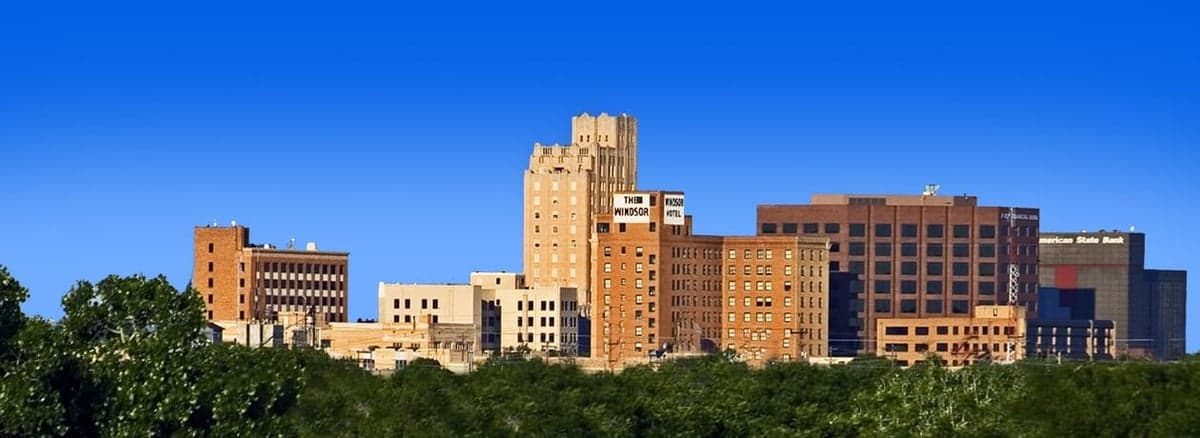
Photo: Wikipedia
Demographics of Abilene, TX
Affluence Level in Abilene, TX
A middle-class area roughly in line with national averages across income, home values, education, and employment.
People of Abilene, TX
The people of Abilene, Texas today number 127,130, forming a community that is 57.3% White, 26.9% Hispanic, 9.9% Black, 1.7% East/Southeast Asian, and 0.6% Indian (subcontinent), with a foreign-born population of 4.4%. The city retains a strong, traditionally conservative character rooted in its ranching, oil, and military history, yet it is gradually diversifying, particularly through Hispanic growth and the presence of three universities and Dyess Air Force Base. Abilene is denser than many West Texas cities, with a population spread across distinct neighborhoods that reflect its sequential settlement waves, from the original railroad corridor to modern suburban subdivisions.
How the city was settled and grew
Abilene was founded in 1881 as a railroad town, a planned stop on the Texas and Pacific Railway that immediately drew cattle ranchers, merchants, and speculators. The original population was overwhelmingly Anglo-American, arriving from the South and Midwest to serve the cattle industry and later cotton farming. The historic Downtown Abilene and the Near North Side (around North 1st and North 2nd Streets) were the first settled areas, housing the railroad workers, shopkeepers, and early professionals. By the early 1900s, a small Black community had formed in the College Heights area near what is now Abilene Christian University, drawn by service jobs and the founding of the university in 1906. The discovery of oil in the Permian Basin in the 1920s and 1930s brought a second wave of Anglo workers and entrepreneurs, expanding the city south and east into neighborhoods like South Abilene and Wylie (now part of the city). The establishment of Dyess Air Force Base in 1952 triggered a third major wave, bringing military families from across the country, many of whom settled in the Dyess area and the developing Southwest Abilene neighborhoods. By 1960, Abilene was a solidly White, Protestant, and conservative city of roughly 90,000, with a small but established Black minority and a tiny Hispanic population.
Modern era (post-1965)
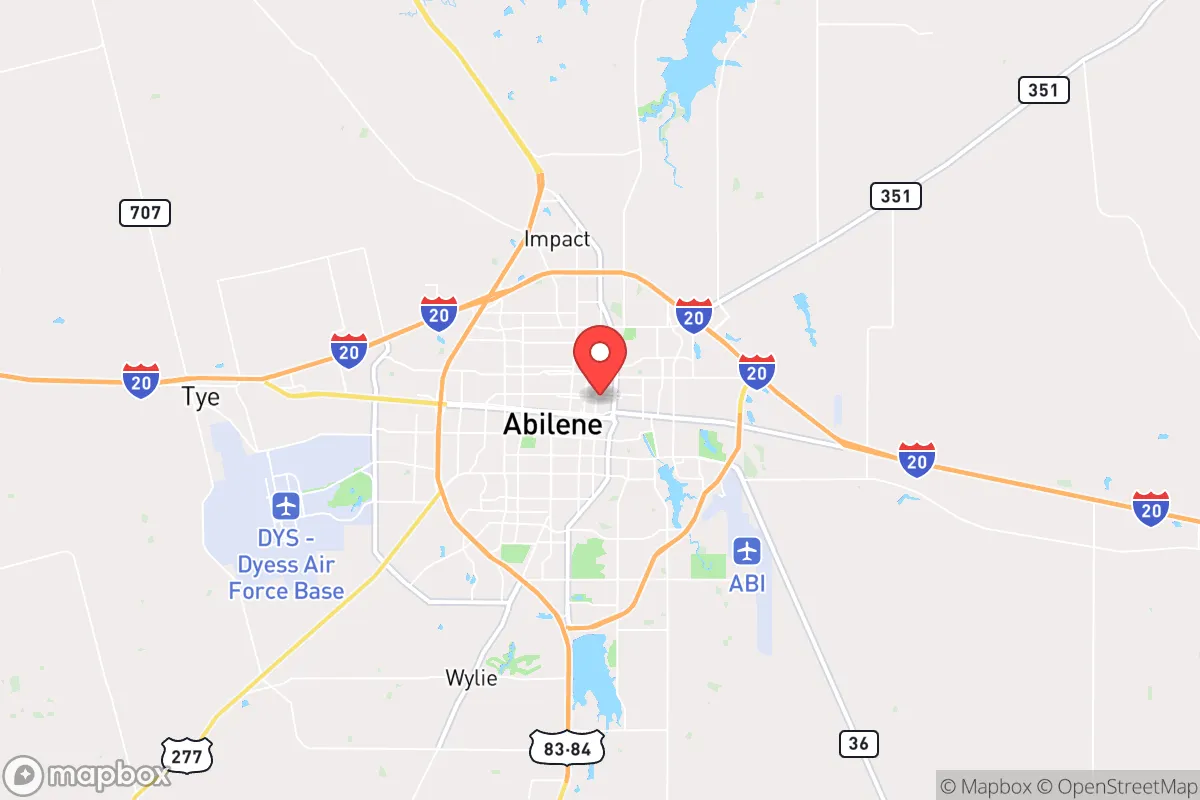
The post-1965 era saw Abilene’s demographic shifts driven less by international immigration and more by domestic migration and natural growth. The Hispanic population began a steady climb from the 1970s onward, as families moved from the Rio Grande Valley and Mexico for agricultural and construction work, settling primarily in the North Abilene corridor along Highway 277 and in the older College Heights neighborhood, which transitioned from predominantly Black to a mix of Hispanic and Black residents. The Black population, which peaked around 12% in the 1990s, has slightly declined to 9.9% as younger generations moved to larger Texas cities like Dallas and Houston. The East/Southeast Asian community (1.7%) is a recent addition, largely composed of professionals and students connected to Abilene Christian University, Hardin-Simmons University, and McMurry University, with a small cluster near the universities in the University District. The Indian subcontinent population (0.6%) is similarly small and university-linked, concentrated in the same area. Suburbanization after 1980 pushed Anglo families into newer developments in Southwest Abilene and the Buffalo Gap Road corridor, creating a more economically and racially stratified city: the southwest is predominantly White and affluent, the north is heavily Hispanic and working-class, and the central and east sides remain mixed but older.
The future
Abilene’s population is slowly diversifying, but the city is not homogenizing; instead, it is becoming more tribalized into distinct enclaves. The Hispanic share is projected to rise toward 30-32% by 2035, driven by higher birth rates and continued domestic migration from South Texas, while the White share will continue a gradual decline. The Black population is expected to remain stable or shrink slightly, as out-migration to larger metros continues. The East/Southeast Asian and Indian communities are likely to grow modestly, tied to university enrollment and medical sector jobs, but will remain small and concentrated near the universities. The foreign-born share (4.4%) is low and will stay low, as Abilene lacks the industrial or service-sector magnets that attract large immigrant populations. The city’s conservative political character is unlikely to change significantly, as the growing Hispanic population in Abilene tends to vote more conservatively than Hispanic populations in larger Texas cities, aligning with the area’s ranching and military culture.
For someone moving in now, Abilene is a stable, moderately diverse West Texas city where neighborhood choice strongly correlates with income and ethnicity. The southwest offers newer homes and a suburban feel, the north is the heart of Hispanic working-class life, and the central and east sides provide older, more affordable housing in mixed neighborhoods. The city is becoming slightly more diverse but remains culturally conservative, with a population that values tradition, faith, and community stability over rapid change.

* Values derived from national, state, county, city and local statistics and may differ in a specific area. Last updated: 2026-04-15T13:58:58.000Z
Narrative content on this page is AI-generated and may contain mistakes. Verify any details that matter before acting on them.
ReloMaps may earn a commission from affiliate links at no extra cost to you.

