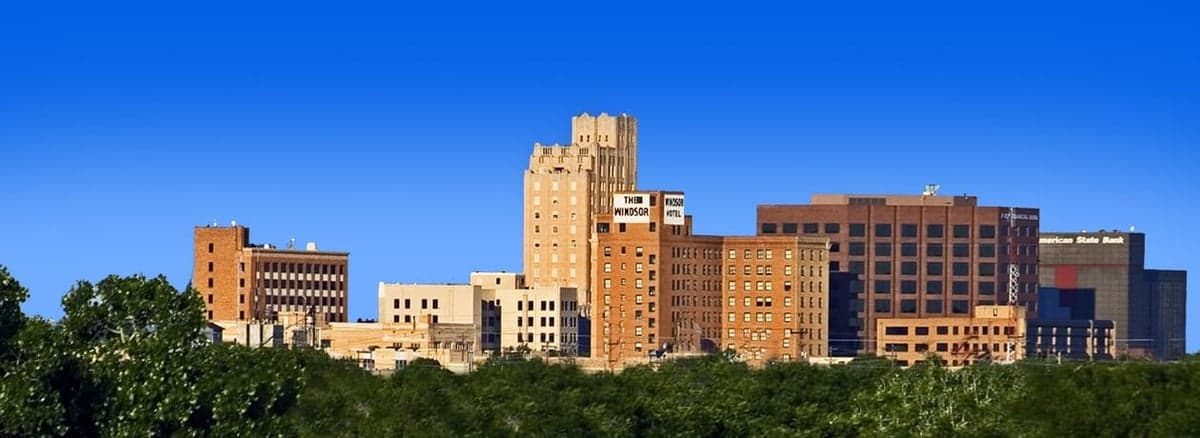
Photo: Wikipedia
Political ClimatePolitical Climate in Abilene, TX
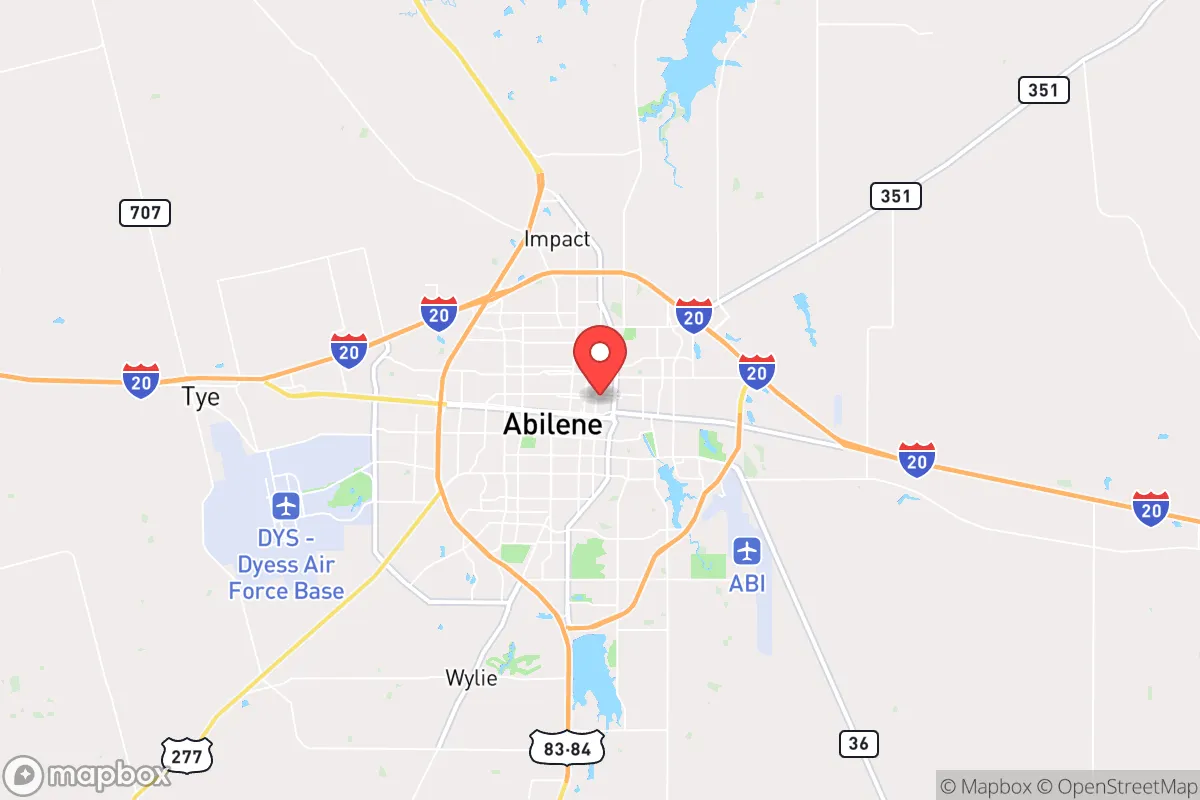
District shown is the primary district for this city’s centroid. Cities may span multiple districts.
Local Political AnalysisPolitical Analysis of Abilene, TX
Abilene is about as solidly conservative as it gets in Texas, and that’s not changing anytime soon. The Cook PVI of R+25 tells you everything you need to know—this area votes Republican by a massive margin, and it’s been that way for decades. You don’t see the kind of political whiplash you get in places like Austin or even Dallas; here, the values are pretty stable, and folks tend to keep the same mindset their parents and grandparents had. If you’re looking for a place where the political winds don’t shift every election cycle, Abilene is it.
How it compares
Drive an hour east to Brownwood, and you’ll find a similar conservative vibe, though maybe a little more rural and less tied to the military base influence. Head south to San Angelo, and it’s still red, but you’ll notice a bit more of a ranching, independent streak—less of the church-and-chamber-of-commerce feel you get in Abilene. The real contrast is if you go two hours west to Lubbock or three hours east to Fort Worth; those places have their own conservative cores, but they’re bigger and more exposed to outside influences. Abilene’s isolation—surrounded by cotton fields and oil country—keeps it insulated from the progressive drift you see in the metroplex. The nearby towns like Clyde or Baird are even more conservative, if you can believe it, with hardly any registered Democrats at all.
What this means for residents
For the people living here, the political climate translates into a pretty hands-off government approach—low taxes, fewer regulations, and a general sense that the county and city officials trust you to run your own life. You won’t see the kind of overreach you hear about in blue states, like heavy-handed zoning or mandates on how you run your business. The downside is that if you’re hoping for any kind of progressive shift—say, on environmental rules or social programs—you’re going to be disappointed. The city council and county commissioners are all conservative, and they’re not interested in changing that. There’s a strong military presence from Dyess Air Force Base, which reinforces that patriotic, pro-freedom mindset. But I’ve noticed a few younger folks moving in from Austin or Dallas, and they sometimes bring ideas that don’t quite fit—like pushing for more bike lanes or public transit. So far, those haven’t gained much traction, but it’s something to keep an eye on.
Culturally, Abilene is still very much a church-going, family-first town. The big policy distinction is that the city has kept its property taxes relatively low compared to other Texas cities of similar size, and there’s a strong resistance to any kind of new sales tax or bond measures that might fund things people see as unnecessary. The local paper and talk radio are reliably conservative, and you’ll hear more about Second Amendment rights and school choice than about climate change or equity initiatives. If you’re worried about government overreach creeping into your daily life, Abilene is a safe bet—for now. But I’d keep an eye on those new arrivals and any state-level shifts, because even here, the culture wars are starting to show up in school board meetings and city hall debates. It’s not what it was 20 years ago, but it’s still a long way from turning purple.

State Political ClimatePolitical Climate in Texas
State Political AnalysisPolitical Environment in the State
Texas has been a reliably Republican state for decades, with the GOP holding every statewide office and both chambers of the legislature since the mid-1990s. But the political climate here is more complicated than a simple red-state label suggests. Over the last 10-20 years, the state has seen a slow but steady shift leftward in its major metropolitan areas, driven by massive in-migration from blue states and a growing Hispanic electorate. While the 2024 presidential election saw Donald Trump carry Texas by about 9 points, down from 11 points in 2020 and 16 points in 2016, the state’s overall trajectory is one of increasing polarization — not a wholesale flip to blue, but a tightening of margins that has made every election cycle more contentious.
Urban vs. rural divide
The political map of Texas is a study in contrasts. The big metros — Houston, Dallas-Fort Worth, San Antonio, and Austin — are the engines of Democratic growth. Austin, in particular, has become a deep-blue island in a red sea, with Travis County delivering 71% of its vote to Joe Biden in 2020. Harris County (Houston) and Dallas County have also trended sharply left, with Democrats now winning them by double digits. Meanwhile, the vast rural and exurban areas — think the Panhandle around Lubbock, the Piney Woods near Tyler, and the Hill Country west of San Antonio — remain overwhelmingly Republican. The real battleground has shifted to the fast-growing suburbs: Collin County (north of Dallas) and Fort Bend County (southwest of Houston) were once GOP strongholds but are now competitive, with Democrats making steady inroads among college-educated voters and Asian-American communities. The 2022 gubernatorial race saw Republican Greg Abbott win by 11 points statewide, but he lost both Harris and Dallas counties — a sign that the urban-rural chasm is widening.
Policy environment
Texas’s policy environment is a mixed bag for conservatives. On the plus side, the state has no personal income tax, a regulatory climate that’s friendly to business, and a right-to-work law that keeps unions weak. Property taxes are high — among the highest in the nation — but the legislature has passed periodic relief measures, including a $12.7 billion cut in 2023. Education policy is a flashpoint: the state has a school choice voucher program that was expanded in 2023, allowing parents to use public funds for private or homeschool expenses, but it remains limited and faces legal challenges. On healthcare, Texas refused to expand Medicaid under Obamacare, leaving roughly 1.5 million uninsured residents, but the state has also passed laws protecting medical freedom, including a 2021 ban on vaccine passports. Election laws tightened after 2020: Senate Bill 1 (2021) restricted mail-in voting, banned 24-hour polling places, and gave partisan poll watchers more access — moves that critics call voter suppression but supporters say ensure integrity. The state also passed a near-total abortion ban (trigger law) in 2021, with no exceptions for rape or incest, and a 2023 law (SB 14) banning gender-transition care for minors.
Trajectory & freedom
On balance, Texas has moved more in the direction of personal freedom on several key fronts over the last five years, but not uniformly. The 2021 permitless carry law (HB 1927) allows most adults to carry a handgun without a license or training — a clear expansion of Second Amendment rights. Parental rights were bolstered by the 2023 law (HB 900) requiring public school libraries to remove books deemed “sexually explicit,” and by the 2022 law (HB 567) giving parents more say in their child’s medical decisions. Medical autonomy got a boost from the 2021 ban on vaccine passports and the 2023 law (SB 29) prohibiting COVID-19 vaccine mandates by private employers. On the other hand, property rights took a hit with the 2023 law (SB 2038) that allows the state to seize land for border wall construction without full compensation — a move that angered some rural landowners. Taxation remains a sore spot: while there’s no income tax, the state’s reliance on property and sales taxes means the overall tax burden is moderate, not low. The trajectory is toward more cultural conservatism (on guns, abortion, and parental rights) but with a growing tension between state-level mandates and local control, especially in blue cities that resist state preemption.
Civil unrest & political movements
Texas has seen its share of political flashpoints. The 2020 Black Lives Matter protests in Austin and Dallas were large and occasionally violent, leading to property damage and a lasting rift between city leaders and state Republicans. The 2021 winter storm and subsequent grid failure sparked protests against both the state’s energy deregulation and local utility companies. Immigration politics are a constant source of tension: Governor Abbott’s Operation Lone Star, launched in 2021, has bused over 100,000 migrants to blue cities like New York and Chicago, and the state has passed laws (SB 4 in 2023) allowing state police to arrest suspected illegal immigrants — a direct challenge to federal authority that’s currently tied up in court. Secession rhetoric flares up periodically, with the Texas Nationalist Movement gaining some traction among grassroots conservatives, but it remains a fringe position. Election integrity remains a hot-button issue: the 2020 and 2022 cycles saw widespread claims of fraud from the right, though no major evidence of systemic problems emerged. A new resident would notice the heavy police presence at polling places in some counties and the ongoing legal battles over voting access.
Projection
Over the next 5-10 years, Texas is likely to become more politically competitive, but not necessarily more liberal. The in-migration from California, New York, and Illinois is bringing a mix of people: some are fleeing high taxes and lockdowns and will vote Republican, while others are progressive professionals who will vote Democratic. The Hispanic electorate, which leans Democratic but is not monolithic, is growing fast — Texas added over 1 million Hispanic residents between 2020 and 2024. The suburbs around Dallas, Houston, and Austin will continue to trend purple, while rural areas will stay deep red. The state legislature is likely to remain under GOP control due to gerrymandering, but the margin in the Texas House could shrink to single digits. Expect more fights over school choice, property tax reform, and immigration enforcement. A new resident moving in now should expect a state that is culturally conservative at the top but increasingly polarized at the local level — with blue cities pushing back against state mandates and red counties doubling down on traditional values.
For a conservative-leaning individual or family, Texas still offers a strong package: no income tax, broad gun rights, parental control over education, and a political leadership that is actively pushing back against federal overreach. But the state is not a monolith — the urban centers are becoming more progressive, and the political battles over immigration, voting, and medical freedom are only going to intensify. If you’re moving here, pick your county carefully: the Hill Country or the Panhandle will feel like a conservative haven, while Austin or Houston will feel like a blue city in a red state. The bottom line is that Texas is still a place where your personal freedoms are broadly protected, but you’ll need to stay engaged to keep it that way.
* Values derived from national, state, county, city and local statistics and may differ in a specific area. Last updated: 2026-04-15T13:58:58.000Z
Narrative content on this page is AI-generated and may contain mistakes. Verify any details that matter before acting on them.
ReloMaps may earn a commission from affiliate links at no extra cost to you.

