 Popular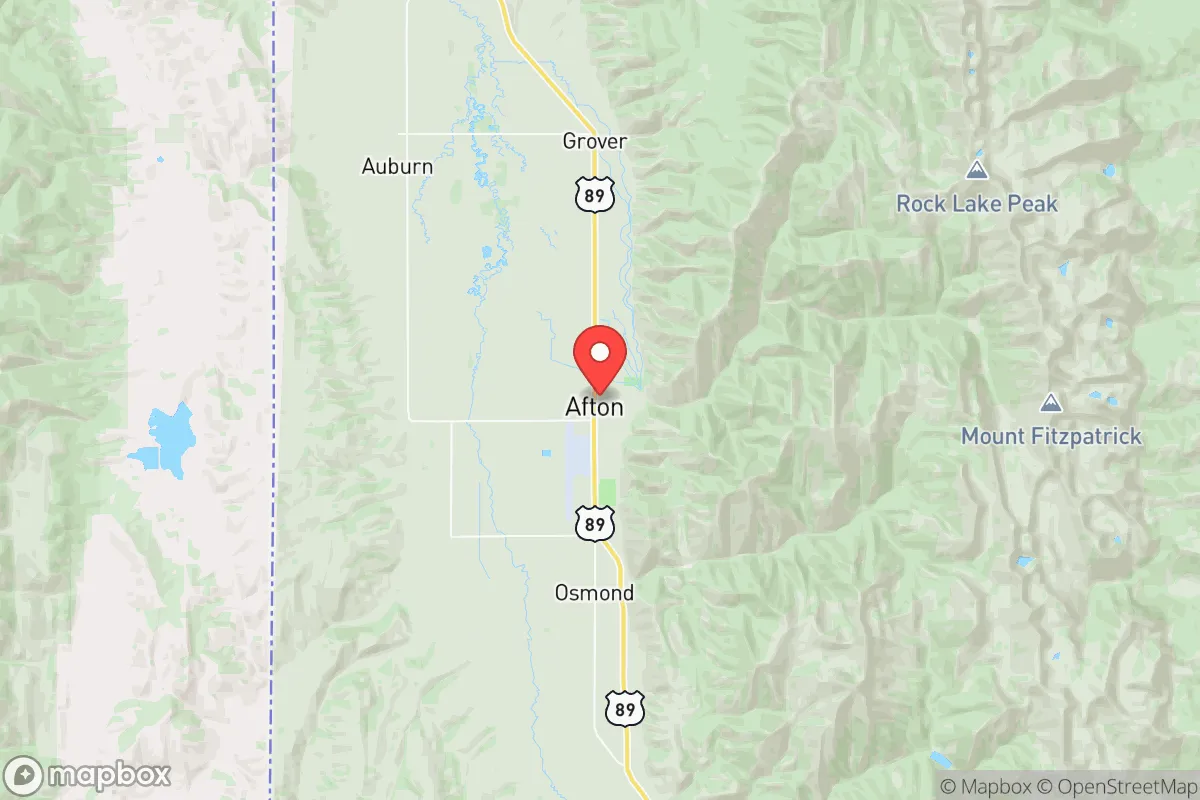
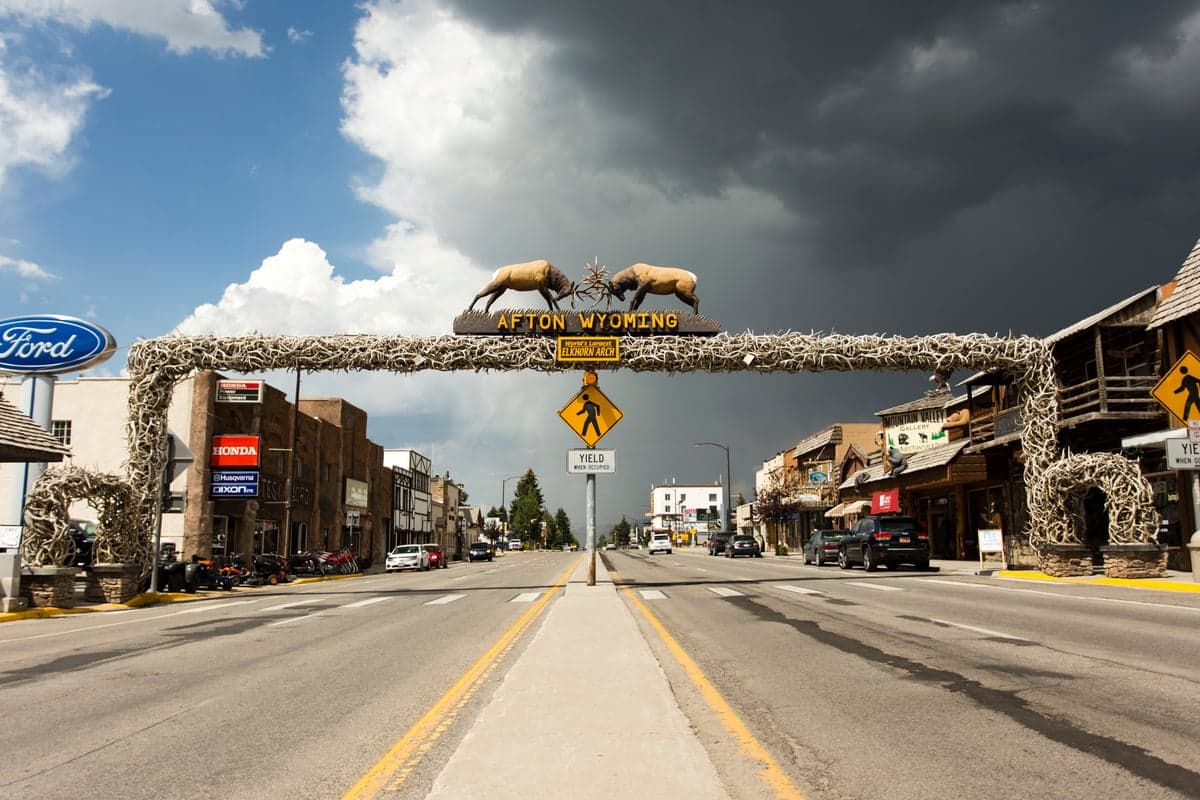
Photo: Wikipedia
Political ClimatePolitical Climate in Afton, WY
District shown is the primary district for this city’s centroid. Cities may span multiple districts.
Inherited from parent state — no local data available.
Local Political AnalysisPolitical Analysis of Afton, WY
Afton, Wyoming, is about as solidly conservative as small-town America gets, and that’s not changing anytime soon. The Cook PVI of R+23 tells you the math, but the feel on the ground is even stronger—this is a place where the Second Amendment isn’t debated, it’s assumed, and where the local economy runs on ranching, hunting, and a deep distrust of federal land management. If you’re looking for a place where personal freedom still means something beyond a bumper sticker, Afton is it.
How it compares
Drive an hour south to Jackson Hole, and you might as well be in another country. Jackson is a liberal enclave fueled by ski tourism and second-home money, where local politics tilt hard toward environmental regulation and progressive social policies. Afton, by contrast, sits in Star Valley, a conservative stronghold that votes reliably red in every election. The contrast isn’t subtle—it’s a daily reminder of how different life can be when government stays out of your business. Neighboring towns like Thayne and Alpine lean the same way as Afton, but the real political line is drawn at the Teton County border. That’s where the overreach starts, and it’s why so many folks here are wary of any policy that sounds like it came from Jackson or, worse, Cheyenne.
What this means for residents
For the people living here, the conservative tilt isn’t abstract—it shapes everything from school board decisions to how the county sheriff handles federal land access. You won’t find mask mandates or vaccine passports in Afton, and the local government has a track record of pushing back against state-level attempts to centralize control over things like property rights and gun laws. That said, there’s a quiet concern among longtime residents that the area’s growth—driven by remote workers fleeing expensive coastal cities—could slowly shift the political balance. A few new families moving in from California or Colorado every year doesn’t flip an R+23 district overnight, but it does introduce ideas that don’t fit the local way of life. The worry is that if that trend accelerates, you’ll start seeing the same kind of zoning fights and land-use restrictions that have already choked places like Park City or Bozeman.
On the cultural side, Afton still holds to a live-and-let-live ethos that’s increasingly rare. The local rodeo, the high school football games, and the church potlucks aren’t political statements—they’re just how the community works. But there’s a growing awareness that preserving that way of life means staying vigilant. The biggest policy distinction here is the relationship with federal land: Afton sits near the Bridger-Teton National Forest, and locals have a long memory of federal overreach on grazing permits and access roads. Any hint of a new wilderness designation or travel management plan gets met with organized opposition. It’s not about being anti-government for the sake of it—it’s about knowing that once the feds lock up land, you don’t get it back. That’s the kind of practical, boots-on-the-ground conservatism that defines Afton, and it’s why most folks here see the current political climate as stable but worth defending.

State Political ClimatePolitical Climate in Wyoming
State Political AnalysisPolitical Environment in the State
Wyoming is the most reliably Republican state in the nation by raw voting margins, with a partisan lean that has only deepened over the past two decades. The state’s dominant coalition is a blend of traditional Western libertarians, ranchers, energy-sector workers, and a growing number of conservative transplants fleeing blue states. In the 2024 presidential election, Donald Trump carried Wyoming with 71% of the vote — a 46-point margin — and the state hasn’t voted for a Democrat for president since Lyndon B. Johnson in 1964. Over the last 10-20 years, the Republican grip has tightened as rural counties have become even more conservative and the small urban centers have shifted rightward, driven by an influx of remote workers and retirees seeking lower taxes and fewer regulations.
Urban vs. rural divide
The political map of Wyoming is defined by a stark urban-rural split, though even the "urban" areas are small by national standards. Cheyenne, the capital and largest city (pop. ~65,000), is the most moderate part of the state — Laramie County voted 62% for Trump in 2024, down from the statewide average, and the city has a visible Democratic minority concentrated around the state government and the University of Wyoming. Casper, the second-largest city, is more conservative, with Natrona County going 69% for Trump. The real engine of Wyoming’s deep-red lean is the vast rural expanse: counties like Sublette (84% Trump), Niobrara (86%), and Hot Springs (82%) are among the most Republican in the nation. Jackson Hole (Teton County) is the sole blue outlier — it voted 62% for Kamala Harris in 2024, driven by wealthy second-home owners and a tourism-based economy that attracts a more progressive workforce. But Teton County’s population is tiny (about 23,000), so its impact on statewide politics is negligible. The growing conservative migration into Sheridan and Buffalo has further solidified the rural-urban divide, as these towns attract fiscal conservatives and Second Amendment advocates from Colorado and California.
Policy environment
Wyoming’s policy environment is a model of limited government, with no state income tax, a low property tax rate (among the lowest in the nation at roughly 0.6% of assessed value), and a sales tax capped at 6%. The state’s regulatory posture is aggressively pro-business and pro-energy — it’s the nation’s top coal producer and a major oil and gas player, and the legislature has repeatedly blocked renewable energy mandates and carbon-reduction schemes. Education policy is decentralized, with local school boards holding significant power; the state has no universal school choice program, but a 2023 law created education savings accounts for special-needs students, and a broader voucher bill is expected in 2025. Healthcare is a mixed bag: Wyoming did not expand Medicaid under the ACA (a point of pride for conservatives), but the state has the highest uninsured rate in the country at 12%. Election laws are among the most secure in the nation — voter ID is required, same-day registration is not allowed, and the state uses paper ballots with hand-count audits in most counties. There is no mail-in voting unless you have an approved excuse. The legislature passed a 2022 law banning ballot drop boxes, and in 2024, it outlawed ranked-choice voting entirely.
Trajectory & freedom
Wyoming is becoming more free in several key areas, particularly on gun rights, parental rights, and medical autonomy. In 2021, the state became a "Second Amendment Sanctuary State" via HB 0093, which prohibits state enforcement of any federal gun law that infringes on the right to keep and bear arms. In 2023, the legislature passed the "Parental Rights in Education" act (SF 117), requiring schools to notify parents of any curriculum involving sexuality or gender identity and to obtain consent before counseling a minor on such matters. On medical freedom, Wyoming enacted a 2022 law (HB 0092) banning vaccine passports and prohibiting employers from mandating COVID-19 vaccines as a condition of employment. Property rights were strengthened in 2023 with the "Private Property Protection Act" (HB 0104), which requires the government to compensate landowners for any regulatory taking that reduces property value by more than 10%. However, there are concerning trends: the state’s reliance on federal mineral royalties (about 40% of the budget) creates a vulnerability to federal overreach, and the 2024 "Data Privacy Act" (SF 0012) gave the state attorney general broad power to regulate online speech, which some libertarians view as a step toward government control of information. On taxation, the 2023 "Property Tax Relief Act" capped annual increases at 5%, but property values have surged 30% since 2020 due to in-migration, so the cap is under strain.
Civil unrest & political movements
Wyoming has seen remarkably little civil unrest compared to other states. The most visible political movement is the "Wyoming Freedom Caucus," a hardline conservative faction in the state legislature that has pushed for nullification of federal gun laws, school choice, and election integrity measures. In 2022, the group successfully ousted several moderate Republicans in primaries, including House Speaker Eric Barlow. There have been no major protests or riots in recent years — the state’s low population density and cultural homogeneity (92% white) mean that flashpoints are rare. Immigration politics are muted, as Wyoming has the smallest foreign-born population in the nation (about 3%), but the legislature passed a 2024 law (HB 0168) requiring all law enforcement to cooperate with ICE detainers and banning sanctuary policies. Election integrity controversies are minimal — the 2020 audit found no evidence of widespread fraud, and the state’s hand-count system is widely trusted. The only notable flashpoint is the ongoing tension around federal land management: the "Transfer of Public Lands" movement, which demands that the federal government cede control of 48% of Wyoming’s land to the state, has strong grassroots support but has stalled in Congress. A new resident would notice a general lack of political signage or activism — Wyoming is a place where people vote but don’t protest.
Projection
Over the next 5-10 years, Wyoming will likely become even more conservative, driven by two demographic trends: the continued influx of right-leaning migrants from Colorado, California, and the Pacific Northwest, and the out-migration of younger, more moderate residents who can’t afford the rising housing costs. The state’s population grew by 2.3% from 2020 to 2024, almost entirely from domestic migration, and the new arrivals are overwhelmingly conservative. This will push the legislature further right, with the Wyoming Freedom Caucus likely to gain a supermajority by 2028. Expect more aggressive nullification bills, a universal school choice program, and a constitutional amendment to require a supermajority for any tax increase. The biggest risk is economic: if the federal government phases out coal or restricts oil and gas drilling, the state’s budget could crater, forcing either a state income tax (a non-starter) or severe cuts to services. A new resident moving in now should expect a state that is politically stable, culturally homogeneous, and increasingly resistant to federal overreach — but also one where the cost of living is rising faster than wages, and where the social safety net is thin. If you value low taxes, gun rights, and minimal government interference in your daily life, Wyoming is likely to remain a top destination for the foreseeable future.
Bottom line for a new resident: Wyoming offers a level of personal freedom that is increasingly rare in the United States — no income tax, strong Second Amendment protections, and a government that mostly stays out of your way. The trade-offs are a limited job market (outside of energy, agriculture, and tourism), harsh winters, and a lack of cultural amenities. If you’re a conservative looking to escape high taxes and progressive policies, Wyoming is a solid bet. Just be prepared for the cold — both the weather and the fact that your neighbors will expect you to mind your own business.
* Values derived from national, state, county, city and local statistics and may differ in a specific area. Last updated: 2026-04-21T11:29:27.000Z
Narrative content on this page is AI-generated and may contain mistakes. Verify any details that matter before acting on them.
ReloMaps may earn a commission from affiliate links at no extra cost to you.

