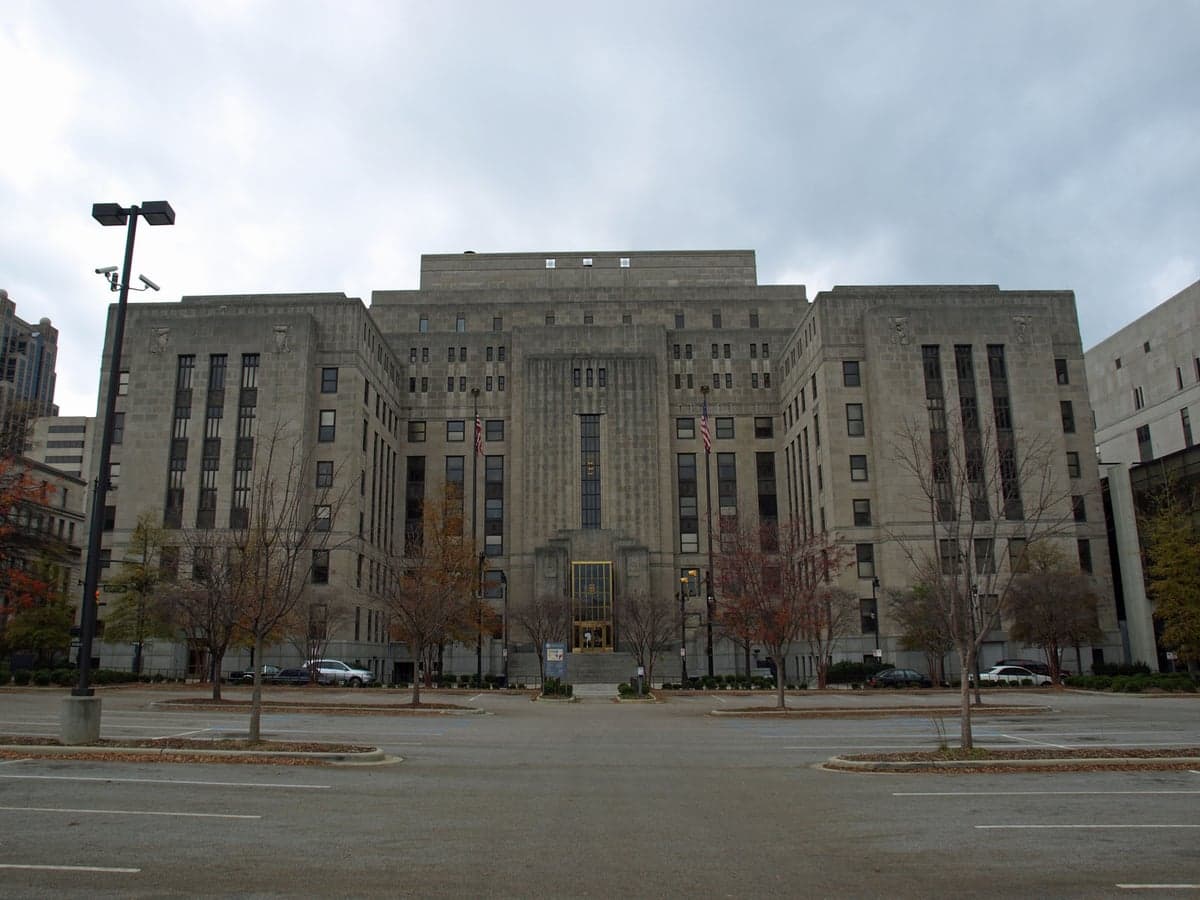
Photo: Wikipedia
Demographics of Jefferson County
Affluence Level in Jefferson County
A below-average socioeconomic profile. Incomes, home values, and educational attainment trail the U.S., with higher poverty and unemployment.
People of Jefferson County
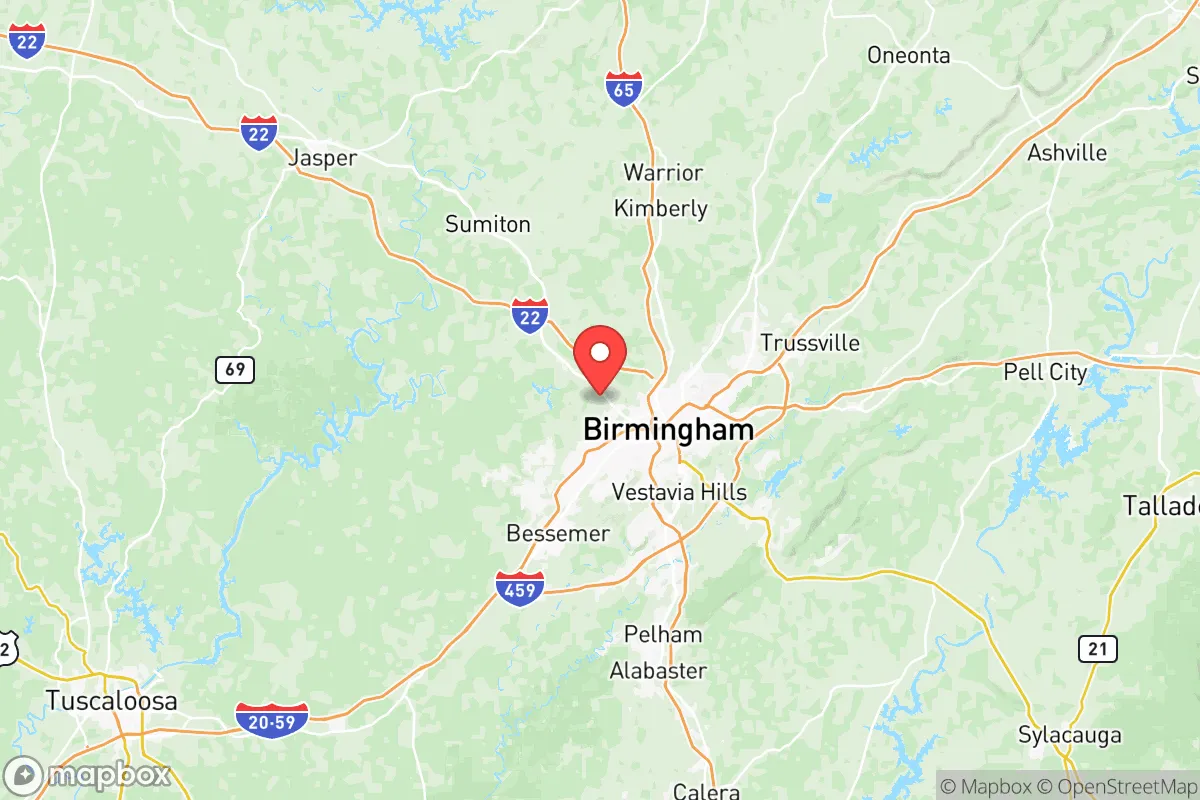
Jefferson County, Alabama, is home to 669,744 residents, a population defined by its deep-rooted Black and White communities, with a majority, with a small but growing Hispanic presence and a modest foreign-born share of just 2.9%. The county’s character is shaped by Birmingham’s industrial legacy and the suburban expansion of communities like Hoover, Vestavia Hills, and Trussville, creating a region that is both historically significant and increasingly suburban. Distinctive identity markers include a strong sense of local pride, a complex racial history, and a population that is more educated than the state average, with 35.9% holding a college degree.
Settlement & growth (pre-1960)
Before American settlement, the area now known as Jefferson County was inhabited by the Cherokee and Creek nations, who used the region for hunting and trade. European contact began with Spanish explorers in the 16th century, but no permanent European settlements were established until the early 19th century. The land was ceded by the Creek Nation in the 1814 Treaty of Fort Jackson, opening it to American settlers.
The first major wave of American settlers arrived in the 1820s and 1830s, primarily Scots-Irish and English farmers from Virginia, the Carolinas, and Georgia. They established small agricultural communities, with the town of Elyton (now part of Birmingham) becoming the county seat in 1821. These early settlers were drawn by the fertile land for cotton farming, and the region’s economy was built on plantation agriculture and slave labor. By 1860, enslaved African Americans made up a significant portion of a significant portion of the population, a demographic reality that would shape the county for generations.
The post-Civil War period brought dramatic change. The discovery of rich iron ore, coal, and limestone deposits in the Jones Valley triggered an industrial boom. In 1871, the city of Birmingham was founded at the intersection of two railroads, and it quickly became the South’s leading industrial center. This drew a new wave of domestic migrants: poor White farmers from rural Alabama and neighboring states, as well as freed African Americans seeking work in the mines and steel mills. By 1900, Birmingham’s population had exploded, and the county’s character shifted from agrarian to industrial. The city of Bessemer, founded in 1887, became a major steel-producing center, attracting a similar mix of workers. Smaller towns like Fairfield and Ensley grew as company towns for U.S. Steel and Tennessee Coal, Iron and Railroad Company (TCI).
European immigration to Jefferson County was modest compared to Northern industrial cities, but still notable. In the late 19th and early 20th centuries, small numbers of Italian, Greek, and Eastern European immigrants arrived, settling in Birmingham’s Birmingham’s working-class neighborhoods like Avondale and Woodlawn. They worked as miners, merchants, and laborers, but their numbers were limited by the South’s relative isolation and the dominance of domestic labor. The Great Migration of African Americans from the rural South to Northern cities actually reduced the Black population share in Jefferson County during the early 20th century, as many left for industrial jobs in Chicago, Detroit, and elsewhere. However, the county’s Black population remained substantial, concentrated in Birmingham’s Smithfield and College Hills neighborhoods.
By 1960, Jefferson County’s population was roughly 40% Black and 60% White, with a tiny foreign-born population. The economy was still heavily industrial, but suburbanization had begun, with White residents moving to new developments in Homewood, Mountain Brook, and Vestavia Hills.
Modern era (post-1965)
The 1965 Hart-Cellar Act had a limited direct impact on Jefferson County, as the region did not become a major destination for post-1965 immigration. The foreign-born population remains low at 2.9%, far below the national average. However, the act’s indirect effects are visible in the county’s small but growing Hispanic and Asian communities.
Hispanic residents now make up 5.2% of the population, up from negligible numbers in 1970. This growth is driven by domestic migration from other U.S. states, particularly Texas and California, as well as direct immigration from Mexico and Central America. These communities are concentrated in Birmingham’s eastern neighborhoods like East Lake and Irondale, and in the city of Pinson, where they work in construction, landscaping, and the service industry. The Asian population is small, with East/Southeast Asian groups at 1.0% and Indian subcontinent residents at 0.8%. These communities are highly educated and concentrated in the suburbs of Hoover and Vestavia Hills, often working in healthcare, engineering, and technology at employers like UAB and Regions Bank.
The most significant demographic shift since 1965 has been domestic: the suburbanization and racial resegregation of the county. White flight from Birmingham accelerated after the 1960s civil rights era, with White families moving to Hoover, Trussville, Pelham, and Alabaster. This transformed Jefferson County from a city-centered county to a sprawling suburban one. Birmingham’s population fell from 340,000 in 1960 to 200,000 by 2020, while the suburbs boomed. The Black population also suburbanized, moving to Midfield, Fairfield, and Bessemer, creating a pattern of racially polarized landscape where many suburbs are predominantly one race. The county’s overall racial composition is now 47.9% White, 42.3% Black, 5.2% Hispanic, and 1.8% Asian/Indian.
The future
Jefferson County’s population is likely to continue its slow growth, driven by suburban expansion and in-migration from other parts of the U.S. The Hispanic population is expected to grow steadily, potentially reaching 8-10% by 2040, as families are drawn to affordable housing and construction jobs. The Asian and Indian communities will likely grow slowly, concentrated in the most affluent suburbs. The Black and White populations are both aging, with younger families increasingly moving to the outer suburbs or leaving the state entirely. The county is not homogenizing; instead, it is tribalizing into distinct enclaves by race and class. The wealthy, predominantly White suburbs of Mountain Brook and Vestavia Hills will remain separate from the working-class, predominantly Black cities of Bessemer and Fairfield. The Hispanic community is forming its own enclaves in Irondale and East Lake. The cultural identity of the county is becoming more fragmented, with each enclave developing its own character.
For a newcomer, Jefferson County offers a choice: the historic, urban environment of Birmingham, the family-oriented suburbs of Hoover or Trussville, or the more rural feel of the county’s northern and western areas. The region’s future is one of continued suburbanization, modest diversification, and persistent racial and economic divides.

* Values derived from national, state, county, city and local statistics and may differ in a specific area. Last updated: 2026-05-19T05:48:49.000Z
Narrative content on this page is AI-generated and may contain mistakes. Verify any details that matter before acting on them.
ReloMaps may earn a commission from affiliate links at no extra cost to you.

