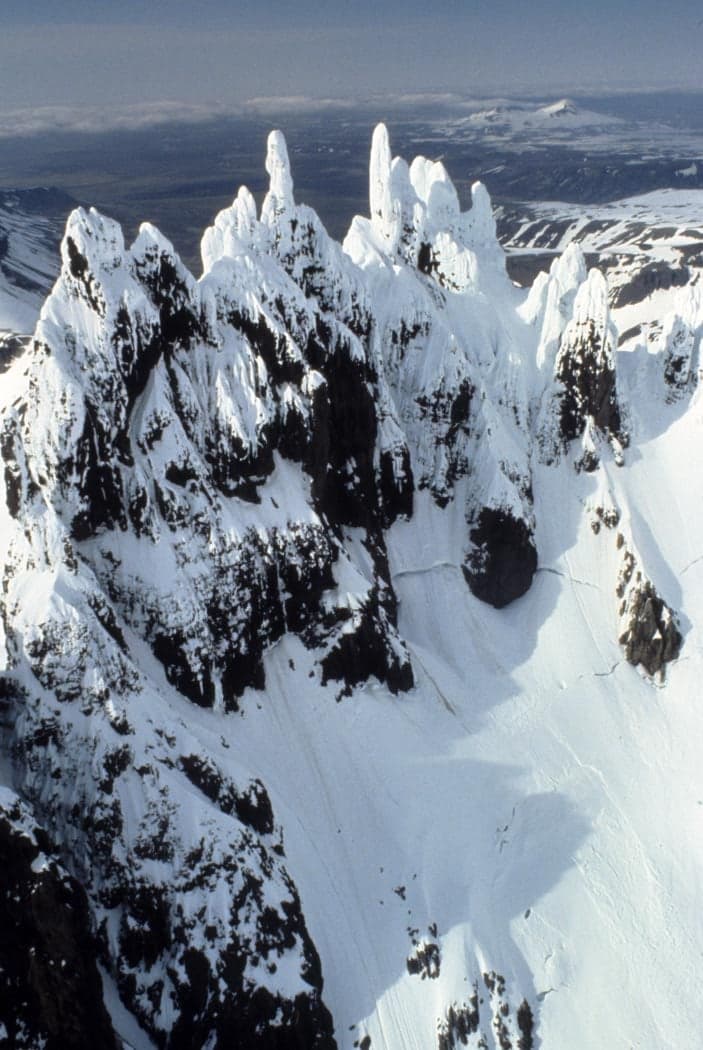
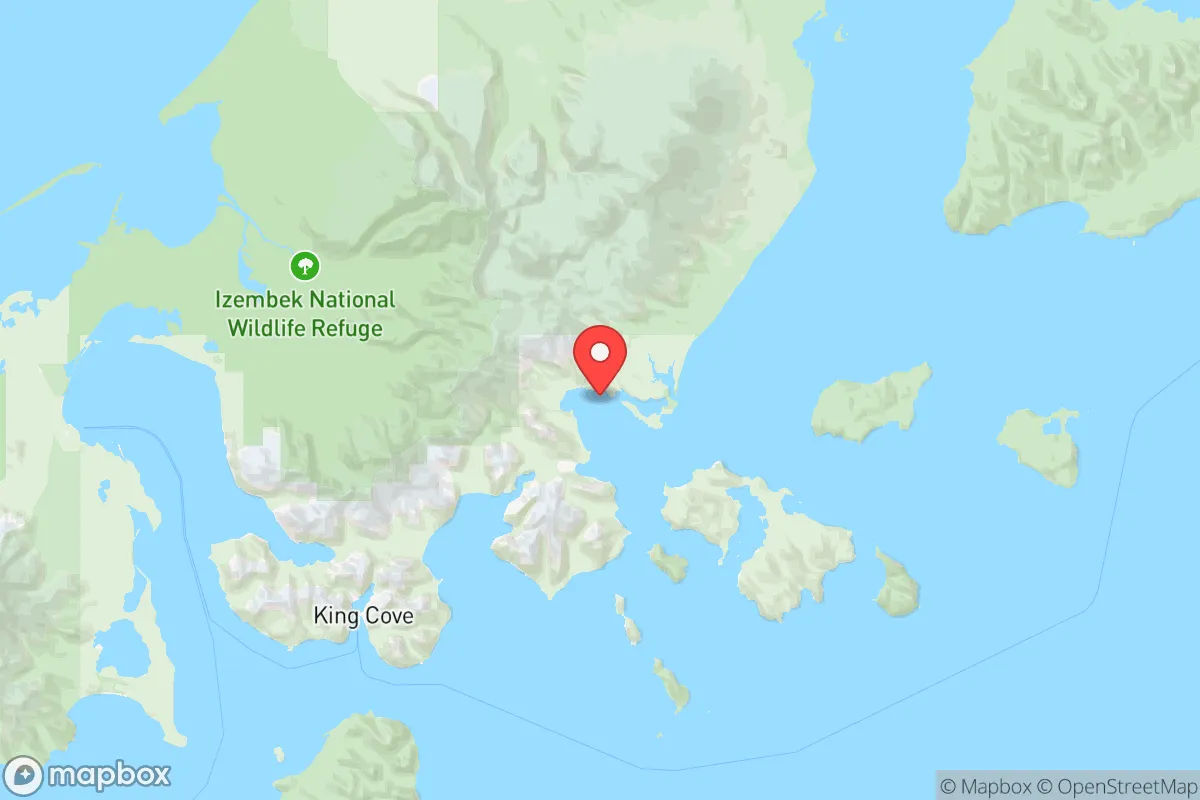
Photo: Wikipedia
Personal Sovereignty in Aleutians East County
Strong independent fundamentals that actively favor personal liberty and low regulation.
What does Personal Sovereignty tell us?
Personal Sovereignty measures your capacity for self-reliance and independence with minimal government friction. Higher scores mean fewer barriers between you and the way you want to live... but it assumes you have the space you need and good neighbors.
What does this tell us?
Personal Sovereignty measures your capacity for self-reliance and independence with minimal government friction. Higher scores mean fewer barriers between you and the way you want to live... but it assumes you have the space you need and good neighbors.
State Policy
Energy independence: Net exporter (350% of energy produced in-state)
Personal Liberty
Homesteading

Personal Liberty Analysis
Aleutians East County, Alaska, offers one of the most uncompromising environments for personal sovereignty in the United States, a place where the state’s constitutional mandate for individual privacy and self-reliance is not just a slogan but a lived reality. For those seeking to escape the creeping regulatory overreach and cultural pressures found in the Lower 48, this region presents a stark alternative: a landscape where government presence is thin, community ties are forged by necessity, and the right to live as you see fit is largely respected by default. The county’s remote geography and small population—roughly 3,400 souls spread across a vast archipelago—mean that the default posture is one of personal responsibility, not bureaucratic oversight. This is not a place for those who need hand-holding, but for strategic relocators who value autonomy above convenience, it represents a rare bastion of freedom in an increasingly managed world.
Tax burden and regulatory posture: How Alaska’s policies protect your income and property
Aleutians East County sits within Alaska, the only state in the union that imposes no state income tax and no statewide sales tax, a foundational advantage for anyone prioritizing financial sovereignty. The county itself does levy a local sales tax—typically around 3% in the hub of Sand Point and King Cove, though rates vary by community—but there is no property tax on real estate, a fact that cannot be overstated for those looking to own land outright without annual government levies. The regulatory posture here is as light as you will find anywhere in the developed world: there are no building codes in unincorporated areas, no state-level zoning mandates that dictate what you can do on your own property, and the permitting process for construction or land use is minimal to nonexistent in most villages. For a prepper or survivalist, this means you can build a cabin, dig a well, or set up a solar array without navigating a labyrinth of permits and inspections. The state’s Permanent Fund Dividend, an annual cash payment to every resident from oil revenues, further bolsters personal autonomy by putting money directly into your pocket with no strings attached. Compare this to the Lower 48, where property taxes alone can consume thousands of dollars annually, and the financial freedom here is immediate and profound.
Self-defense and gun law specifics: Constitutional carry and a culture of preparedness
Alaska is one of the most gun-friendly states in the nation, and Aleutians East County embodies that ethos fully. The state has constitutional carry—no permit required to carry a concealed firearm for anyone 21 or older who can legally possess a gun—and there are no state-level restrictions on magazine capacity, assault weapon features, or the types of firearms you can own. In Sand Point, King Cove, and Cold Bay, firearms are not just a right but a practical necessity for protection against bears and moose, and the culture treats gun ownership as a normal, everyday part of life. There is no waiting period for purchases, no red flag law on the books (as of 2026), and no requirement to register firearms with any government agency. For those concerned about federal overreach, Alaska’s state constitution explicitly protects the right to keep and bear arms as an individual right, and local law enforcement in these small communities is far more focused on community safety than on enforcing federal gun control measures. The practical reality is that in a place where the nearest state trooper may be hours away by plane, self-defense is your own responsibility, and the legal framework fully supports that. If you are moving from a state with restrictive gun laws, the shift here is like stepping into a different century—one where your Second Amendment rights are not up for debate.
Self-reliance and homesteading viability: Lot sizes, zoning, and off-grid feasibility in remote Alaska
Homesteading in Aleutians East County is not a hobby; it is a way of life that the local environment and legal framework actively support. There is no county-wide zoning ordinance that restricts what you can do on your own land, meaning you can raise livestock, build structures, or operate a home business without seeking permission from a planning board. Lot sizes vary dramatically: in Sand Point, residential lots in the town site are typically a quarter-acre or less, but outside the village boundaries, you can find raw land parcels ranging from 5 to 160 acres through state land sales or private transactions. In Akutan, the land is largely owned by the Aleut Corporation or the city, so homesteading there is more limited, but in False Pass and Nelson Lagoon, the lack of formal subdivision means you can essentially claim a piece of ground and build on it with minimal interference. Off-grid living is not just feasible—it is the norm. There is no county-wide electrical grid; most homes rely on diesel generators, solar panels, or wind turbines, and water comes from wells or rainwater catchment. The climate is harsh—cold, wet, and windy—but for those with the skills and mindset, the absence of utility companies and building codes means you are truly your own master. The state’s Remote Communities program and various energy assistance grants can help offset the cost of setting up off-grid systems, but the key point is that no one will stop you from living exactly as you choose on your own land.
Personal liberties: Parental rights, medical autonomy, speech, and property in a low-governance environment
Parental rights in Alaska are among the strongest in the nation, and in Aleutians East County, the small, tight-knit communities reinforce that autonomy. There is no state-level mandate for school curriculum that overrides local control; the Aleutians East Borough School District operates schools in Sand Point, King Cove, and Akutan, but homeschooling is a common and respected choice, with minimal state reporting requirements. Medical autonomy is similarly robust: Alaska has no state-level vaccine mandate for adults, and the county’s remote nature means that healthcare decisions are largely left to individuals and families. The Eastern Aleutian Tribes health system provides care in Sand Point and King Cove, but for serious issues, you are flying to Anchorage, which reinforces the reality that you are responsible for your own health. Free speech is protected by the state constitution, and in these small communities, there is no cancel culture or social pressure to conform to national narratives—people are judged by their competence and character, not their political views. Property rights are sacred here: the state’s right-to-farm law protects agricultural activities from nuisance lawsuits, and there is no county-level planning commission that can tell you what color to paint your house or how many vehicles you can park in your yard. For those who feel suffocated by the regulatory state in the Lower 48, Aleutians East County offers a breath of fresh air—literally and figuratively.
Overall, personal sovereignty in Aleutians East County is not just a legal abstraction but a practical reality that surpasses almost any other region in the United States. The combination of no property tax, constitutional carry, minimal zoning, and a culture of self-reliance creates an environment where government overreach is the exception, not the rule. While the logistical challenges of living in a remote, subarctic environment are real—supply chains are fragile, winters are long, and emergency services are thin—the trade-off is a level of freedom that is increasingly rare. For the strategic relocator who values autonomy over convenience and is willing to put in the work, this county stands as one of the last true frontiers for personal liberty in America.

* Values derived from national, state, county, city and local statistics and may differ in a specific area. Last updated: 2026-05-27T20:23:02.000Z
Narrative content on this page is AI-generated and may contain mistakes. Verify any details that matter before acting on them.
ReloMaps may earn a commission from affiliate links at no extra cost to you.

