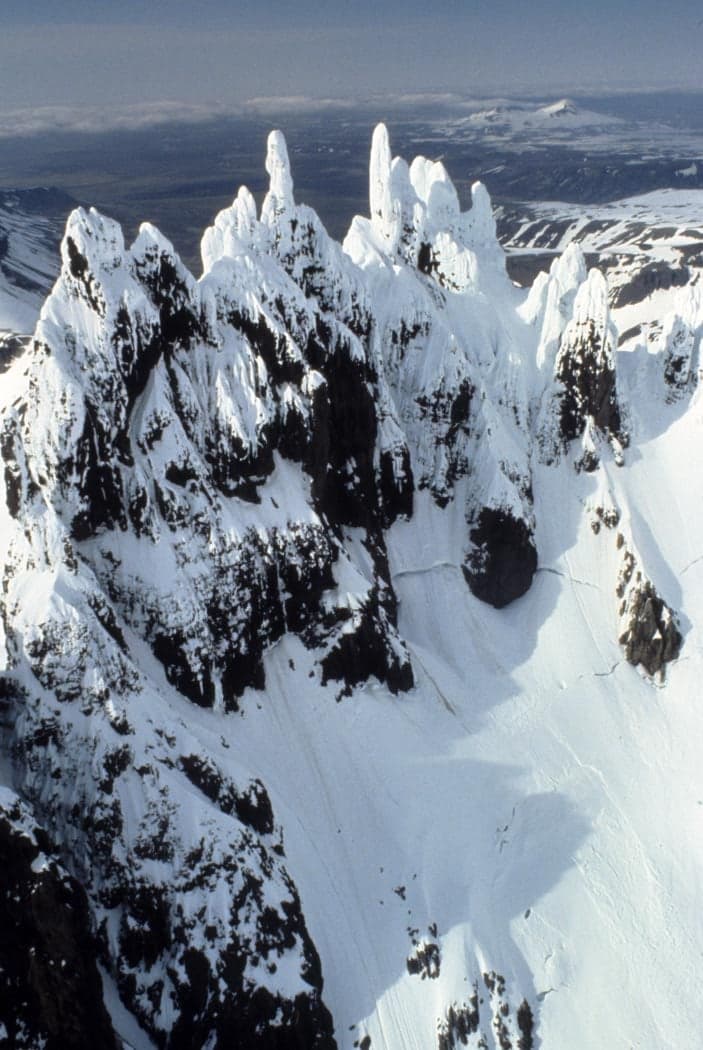
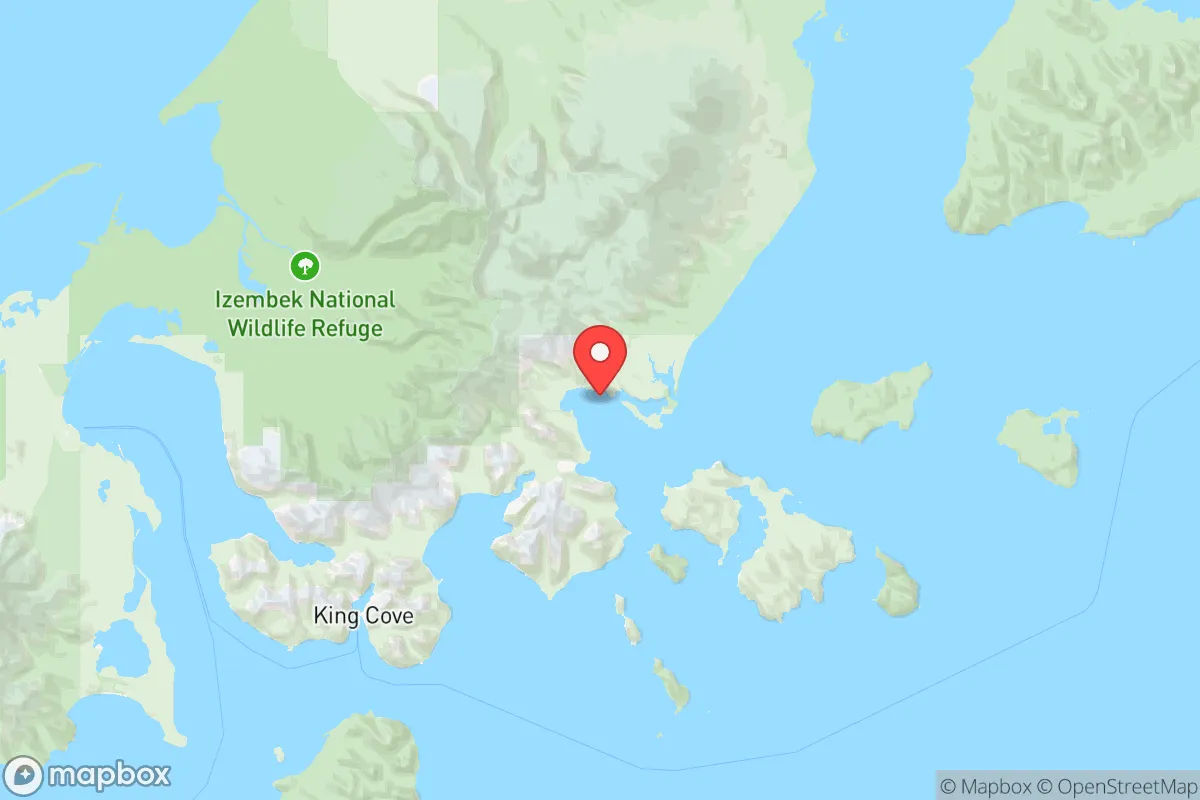
Photo: Wikipedia
Political ClimatePolitical Climate in Aleutians East County
Showing state-level results — no local-only data available.
Local Political AnalysisPolitical Analysis of Aleutians East County
Aleutians East County (officially the Aleutians East Borough) leans solidly Republican, matching Alaska’s overall Cook PVI of R+6—but that number masks a deeper story. The fishing towns here vote reliably red, with Sand Point and King Cove returning 65–70% for Trump in 2020, while Akutan, where the fish processing workforce is younger and more transient, sometimes flirts with swing territory. Over the past decade, though, I’ve watched the same national trends creep in: bureaucratic overreach from Juneau and D.C. tightening regulations on our fishing quotas and fuel storage, and a slow erosion of the self-reliance that’s kept this place running for generations.
How it compares
On paper, Aleutians East and Alaska share the same PVI, but the county is more consistently conservative than Anchorage or Juneau, which have purple enclaves. We don’t have a university town or a big-media market pulling the needle left. Every community here—Cold Bay, False Pass, Nelson Lagoon—is dominated by fisheries, the Coast Guard, and the local school district. Trump won Aleutians East by about 30 points in 2020, compared to 10 points statewide. The difference is that statewide races here are rarely competitive because the Alaska Independence Party and Libertarian candidates siphon votes; in the Borough, it’s straight-ticket GOP. That said, I’ve seen a troubling uptick in progressive organizing, especially around “equity” mandates for the school board and pressure from outside environmental groups trying to block our salmon hatcheries. It’s not a sea change yet, but it’s enough to make you watch your back at Borough assembly meetings.
What this means for residents
For folks living here, the political climate means you can still live free from a lot of the nonsense you’d put up with in Anchorage or Seattle. No mask mandates past 2021, no carbon taxes on your boat fuel, and zoning laws that let you store a skiff in your front yard without a permit. The Borough government focuses on roads, harbors, and schools—it doesn’t meddle. But I worry that the same state-level bills forcing “climate action plans” and “racial equity training” on rural districts will eventually trickle down. The biggest threat to our way of life isn’t from Moscow or Beijing; it’s from Juneau bureaucrats who’ve never set foot on the Alaska Peninsula telling us how to manage our salmon runs. We’ve fought off a few of those overreaches already, but it takes constant vigilance.
Culturally, what sets Aleutians East apart from the rest of Alaska is the deep trust in subsistence and commercial fishing as the foundation of everything. In Sand Point, if a federal agent shows up to check your catch limits, you know him by name. That neighborly trust is eroding as new rules from NOAA and the EPA get written without local input. The long-term trajectory depends on whether we can keep electing people who actually live here—not candidates bankrolled by Outside interest groups. I’m cautiously optimistic: the old-timers still outnumber the transplants, and most of us remember when “government help” meant a bad thing. But if progressive ideology keeps seeping into the school curriculum and fishery management, I’d expect more families to pull up stakes and sell their permits to the big processors. That’s the real worry—losing our kids to the Lower 48 because it’s easier to breathe there than here.

State Political ClimatePolitical Climate in Alaska
State Political AnalysisPolitical Environment in the State
Alaska carries a Cook Partisan Voting Index of R+6, making it a reliably Republican state at the presidential level but with a fierce independent streak that keeps things interesting. The dominant coalition is a mix of libertarian-leaning fiscal conservatives, resource-development advocates, and social moderates who value personal liberty above party loyalty. Over the past 10-20 years, the state has held steady for Republicans in presidential races—Trump won it by 10 points in 2024 after a 10-point win in 2020—but the old "Sourdough" Republican establishment has increasingly given way to a more populist, freedom-focused faction, especially in fast-growing areas like the Matanuska-Susitna Valley and the Kenai Peninsula.
Urban vs. rural divide
The political map breaks down along a stark urban-rural axis. Anchorage, the largest city, is the swingiest battleground; its hillside and Eagle River neighborhoods lean conservative, while midtown and the university districts lean left. Fairbanks, the interior hub, is more reliably Republican, anchored by military families and resource-sector workers, though the University of Alaska campus adds a progressive pocket. Juneau, the capital, is the state's most consistently liberal city, driven by state government employment and a strong environmental-activist presence—it's the only borough that reliably votes Democratic. The real conservative engine is the Mat-Su Borough, which includes Wasilla and Palmer, where population has boomed as people flee Anchorage for lower taxes and more land. This area votes 70-30 Republican and is the heart of Alaska's post-Palin populism. The Kenai Peninsula is similarly red, with Soldotna and Homer's outlying areas voting conservative, though Homer proper has a quirky liberal enclave known as the "Cosmic Hamlet." Rural Bush Alaska, from Bethel to Nome to Utqiaġvik, votes overwhelmingly Democratic due to heavy state and federal dependency, but turnout is low and its electoral weight is small.
Policy environment
Alaska's policy environment is uniquely friendly to personal liberty and economic freedom. There is no state income tax and no state sales tax, a massive draw for relocators. The Permanent Fund Dividend, which pays every resident an annual check from oil revenues, gives residents a direct ownership stake in state resources and creates fierce bipartisan resistance to new taxes. Education policy is mixed: the state has no school choice program like a voucher or education savings account, which has frustrated conservative parents, though homeschool rates are high—about 12% of students—due to the state's rural character and a culture of self-reliance. On healthcare, Alaska expanded Medicaid in 2015 and has a competitive insurance market, but rural access remains poor and costs are high. Election laws are accessible and secure: Alaska uses a top-four open primary followed by ranked-choice voting for general elections, a system voters approved by ballot initiative in 2020. This has produced some centrist outcomes—Lisa Murkowski won reelection in 2022 under RCV—but it has also drawn sharp criticism from the right as a curb on majority rule.
Trajectory & freedom
This is where things get complicated. Alaska has a strong tradition of personal freedom, but recent trends show both expansions and contractions. Gun rights are robust: Alaska is a constitutional carry state, no permit needed for concealed carry, and there are no magazine capacity limits, no red flag law, and no gun registration. In 2024, Governor Mike Dunleavy signed a bill reinforcing Second Amendment protections against federal overreach. Parental rights have seen a win with the passage of a Parents Bill of Rights in 2023, requiring school transparency on curriculum and medical decisions. Medical freedom remains strong; there are no vaccine mandates for adults, and the state pushed back hard against federal COVID mandates in 2021. However, property rights are under persistent threat from the federal government, which owns about 60% of Alaska's land, creating friction over resource development, subsistence access, and the proposed Pebble Mine in the Bristol Bay region. On the negative side, the ranked-choice voting system now makes it harder for a pure conservative candidate to win a statewide primary without cross-party appeal—something many locals view as a reduction in electoral freedom. Dunleavy signed a bill in 2024 that would repeal RCV, but it may face a veto referendum in 2026.
Civil unrest & political movements
Alaska is not a hotbed of civil unrest, but there have been visible flashpoints. The Pebble Mine controversy has produced years of dueling protests, with environmental groups and Bristol Bay tribes standing against pro-development forces—a fight that largely tracks partisan lines. In Anchorage, there have been small but persistent homeless encampment conflicts, with the city's progressive Assembly blocking conservative Mayor Dave Bronson's efforts to clear them. Pro-life activism is visible in the Mat-Su and Kenai, though the state has not passed an abortion ban and the issue remains less heated than in the Lower 48. Election integrity became a flashpoint after 2020, with conservative activists pushing for a return to partisan primaries and single-winner plurality voting; the RCV repeal effort is the main front. Nullification rhetoric is common in Wasilla and Eagle River, especially regarding federal land management and Arctic offshore drilling restrictions. A new resident to Anchorage or Fairbanks would notice occasional protests outside the federal building but little of the daily disruption seen in Seattle or Portland.
Projection
Over the next 5-10 years, Alaska's political center of gravity is shifting north and east out of Anchorage and into the Mat-Su Valley and the Kenai Peninsula. The fastest-growing parts of the state are also the most conservative, with Mat-Su adding about 2,500 new residents annually, many from Anchorage and out of state. This will push the statewide Republican lean even deeper under the hood of the old establishment. However, the ranked-choice voting system, if it survives, will continue to favor centrist and coalitional politics, meaning a far-right primary winner can still lose a general election to a moderate Republican or a coalition Democrat. The big unknowns are federal land policy and oil production: if the Biden-era restrictions on ANWR and the NPR-A are reversed under a future administration, the state's economy and fiscal freedom will strengthen. If not, the state may face budget pressure that reopens talk of income taxes—the real threat to freedom here. In-migration from red states like Texas and Florida will accelerate the conservative drift, but new arrivals should expect a political culture that values personal liberty over partisan affiliation and that rewards self-reliance over government solutions.
For a conservative relocator, Alaska offers a uniquely high ceiling on personal freedom—no income tax, constitutional carry, strong property rights in the private land that exists, and a culture of minding your own business. The trade-offs are the ranked-choice voting system (which may or may not survive), the heavy federal land ownership that limits local control, and the persistent progressive influence in Juneau and the Anchorage Assembly. If you move to Wasilla, Palmer, Soldotna, or Eagle River, you'll find a community that shares your values and is actively defending them. If you land in Anchorage or Juneau, expect to be the minority—but not a marginalized one. Alaska is still Alaska: it rewards the independent, the resourceful, and the free, and it pushes back hardest on those who try to impose their will from a distance.
* Values derived from national, state, county, city and local statistics and may differ in a specific area. Last updated: 2026-05-27T20:23:02.000Z
Narrative content on this page is AI-generated and may contain mistakes. Verify any details that matter before acting on them.
ReloMaps may earn a commission from affiliate links at no extra cost to you.

