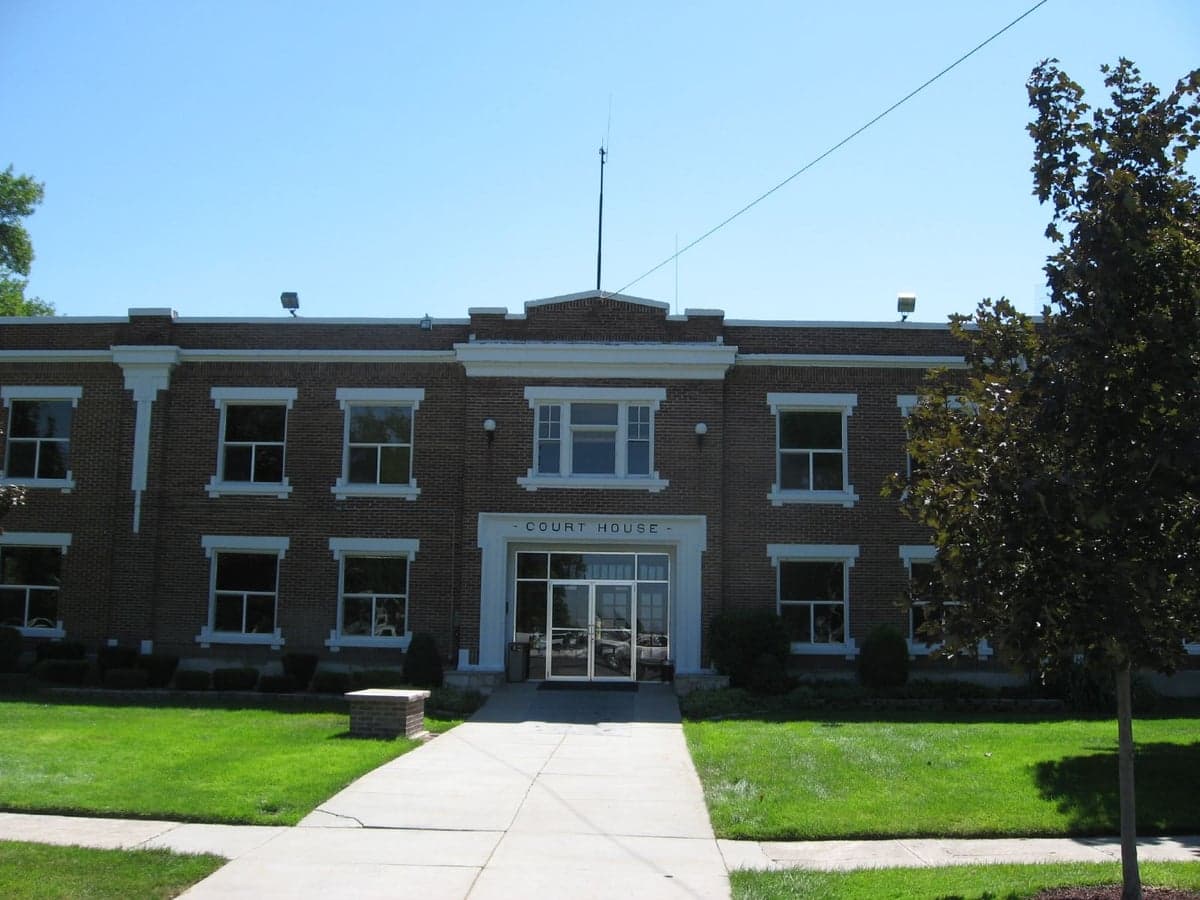
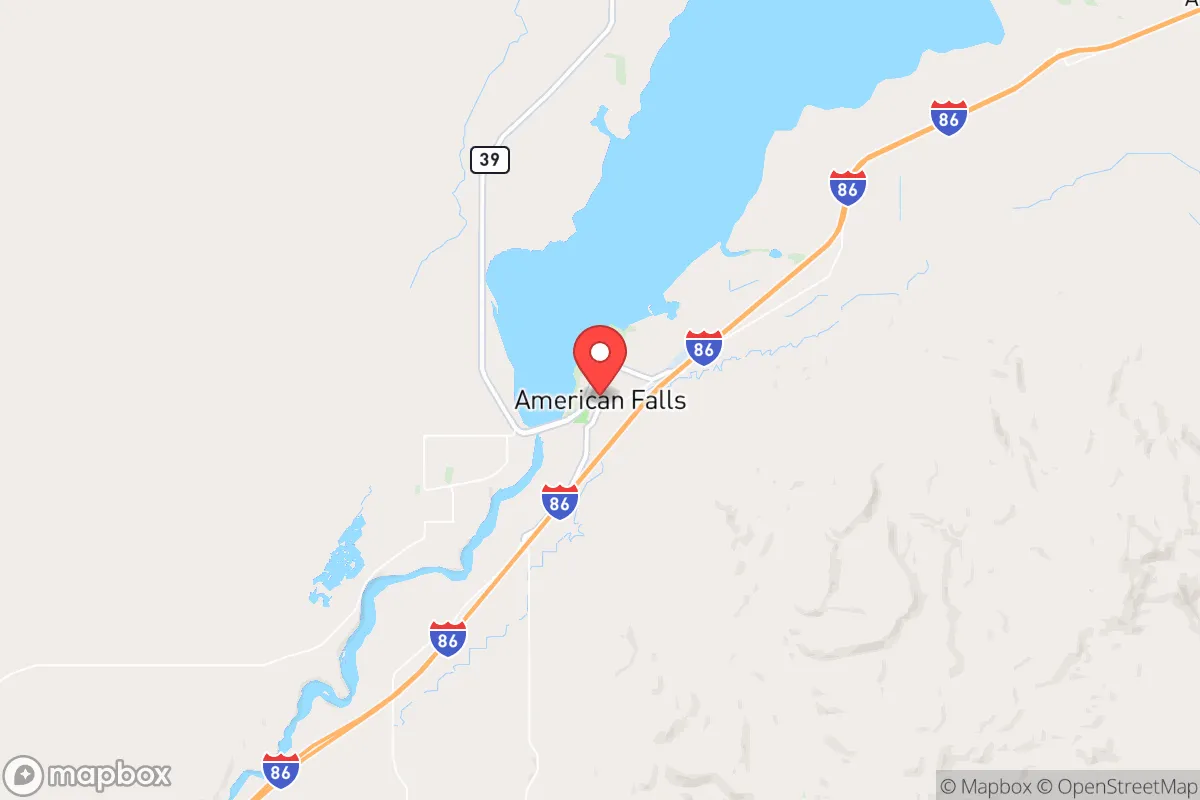
Photo: Wikipedia
Demographics of American Falls, ID
Affluence Level in American Falls, ID
A middle-class area roughly in line with national averages across income, home values, education, and employment.
People of American Falls, ID
The people of American Falls, Idaho, today form a nearly evenly split community between non-Hispanic white residents (47.8%) and Hispanic or Latino residents (48.1%), a demographic balance rare in the Intermountain West. With a population of 4,636, this small city on the Snake River is notably young and family-oriented, but has a low college attainment rate of 13.7%, reflecting its historic role as a working-class agricultural and industrial hub. The city’s identity is shaped by a deep-rooted Hispanic presence that dates back generations, alongside a smaller but stable white population, creating a bilingual, bicultural community that is neither a typical rural Idaho town nor a rapidly diversifying suburb.
How the city was settled and grew
American Falls was originally a railroad town, founded in the 1880s as a stop on the Oregon Short Line Railroad. The first wave of settlers were predominantly Anglo-American homesteaders drawn by the promise of irrigated farmland following the Carey Act of 1894 and the construction of the American Falls Dam (completed 1927). These early families built the original townsite, now largely submerged under the reservoir, and established neighborhoods like Old Town (the pre-dam commercial core) and River Road (the farming corridor south of the railroad). A second major wave arrived during and after World War II, when the U.S. government expanded the nearby Minidoka National Wildlife Refuge and the American Falls Reservoir for irrigation and hydroelectric power, bringing in construction workers and dam operators. The most significant demographic shift began in the 1940s and 1950s, when Mexican-American farmworkers—many from Texas and the Southwest—were recruited to work the expanding sugar beet and potato fields. These families settled in what became known as La Colonia, a historically Hispanic neighborhood south of the railroad tracks, and in the West End near the old sugar factory. By 1960, the Hispanic share of the population had already reached roughly 20%, laying the foundation for today’s near-equal split.
Modern era (post-1965)
After the 1965 Immigration and Nationality Act, the Hispanic population in American Falls grew steadily through both continued labor migration and natural increase. Unlike many Idaho towns that saw a surge of new Asian or Indian immigrants after 1965, American Falls remained overwhelmingly a two-group city: white and Hispanic. The foreign-born share today is 9.3%, almost entirely from Mexico and Central America, with negligible East/Southeast Asian (0.0%) or Indian-subcontinent (0.0%) populations. During the 1970s and 1980s, the construction of the American Falls High School and the expansion of the J.R. Simplot Company potato processing plant anchored the local economy and drew a new wave of Hispanic workers from California and the Pacific Northwest. These later arrivals tended to settle in the Northside neighborhood, a newer subdivision of ranch-style homes built in the 1980s, while older Hispanic families remained concentrated in La Colonia and the West End. The white population, meanwhile, began a slow out-migration to nearby communities like Pocatello (30 miles west) and Blackfoot, seeking larger homes and more homogeneous schools. By 2020, the Hispanic share had risen to 48.1%, while the white share fell to 47.8%, making American Falls one of the few majority-minority cities in Idaho. The Black population remains tiny at 1.5%, and there is no measurable Arab or Asian presence.
The future
Demographic projections suggest American Falls will continue to become more Hispanic over the next 10–20 years, driven by higher birth rates among Hispanic families and ongoing out-migration of white residents to larger regional cities. The city is not tribalizing into distinct ethnic enclaves—La Colonia and the West End remain predominantly Hispanic, but newer subdivisions like Sunset View (built in the 2000s) are more mixed, with white and Hispanic families living side by side. The foreign-born share (9.3%) is likely to plateau or decline slightly as second- and third-generation Hispanic residents become U.S.-born and English-dominant, but the cultural identity of the city will remain strongly Mexican-American. The low college attainment rate (13.7%) suggests that economic mobility will remain a challenge, and the city may struggle to attract new industries or higher-income residents. For a conservative-leaning family moving in now, American Falls offers a stable, working-class community with a strong sense of place and low crime, but with limited economic diversity and a school system that is increasingly bilingual and bicultural.
American Falls is becoming a solidly Hispanic-majority town with a shrinking white minority, a pattern that mirrors many agricultural communities in the West. For a new resident, this means a tight-knit, family-oriented environment where Spanish is commonly heard in stores and schools, but where political and cultural conservatism remains the norm across both ethnic groups. The city is not diversifying into a multi-ethnic melting pot—it is consolidating into a bi-ethnic community where the Hispanic share will likely reach 55–60% by 2040. Anyone moving here should expect a place that is culturally distinct from the rest of Idaho, but deeply rooted in American agricultural and working-class traditions.

* Values derived from national, state, county, city and local statistics and may differ in a specific area. Last updated: 2026-04-19T08:44:16.000Z
Narrative content on this page is AI-generated and may contain mistakes. Verify any details that matter before acting on them.
ReloMaps may earn a commission from affiliate links at no extra cost to you.

