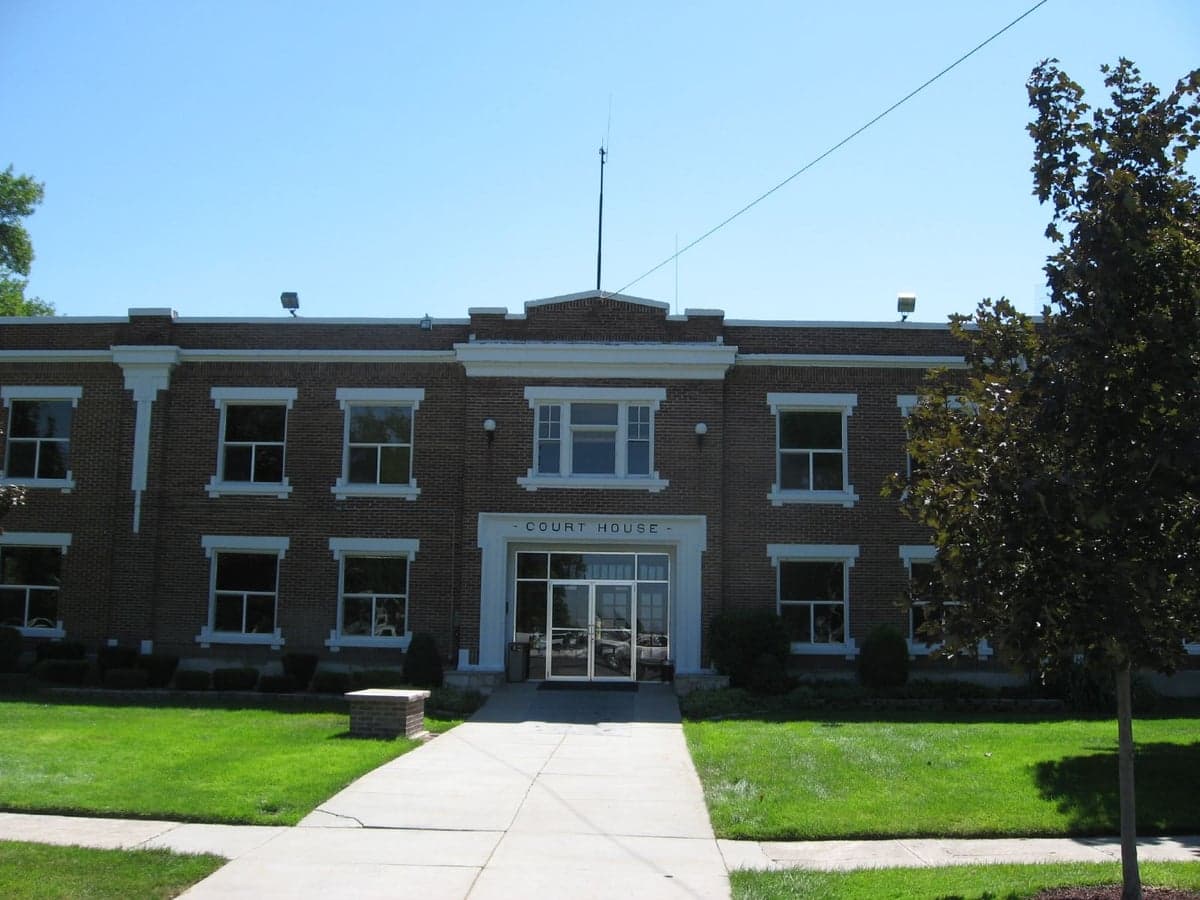
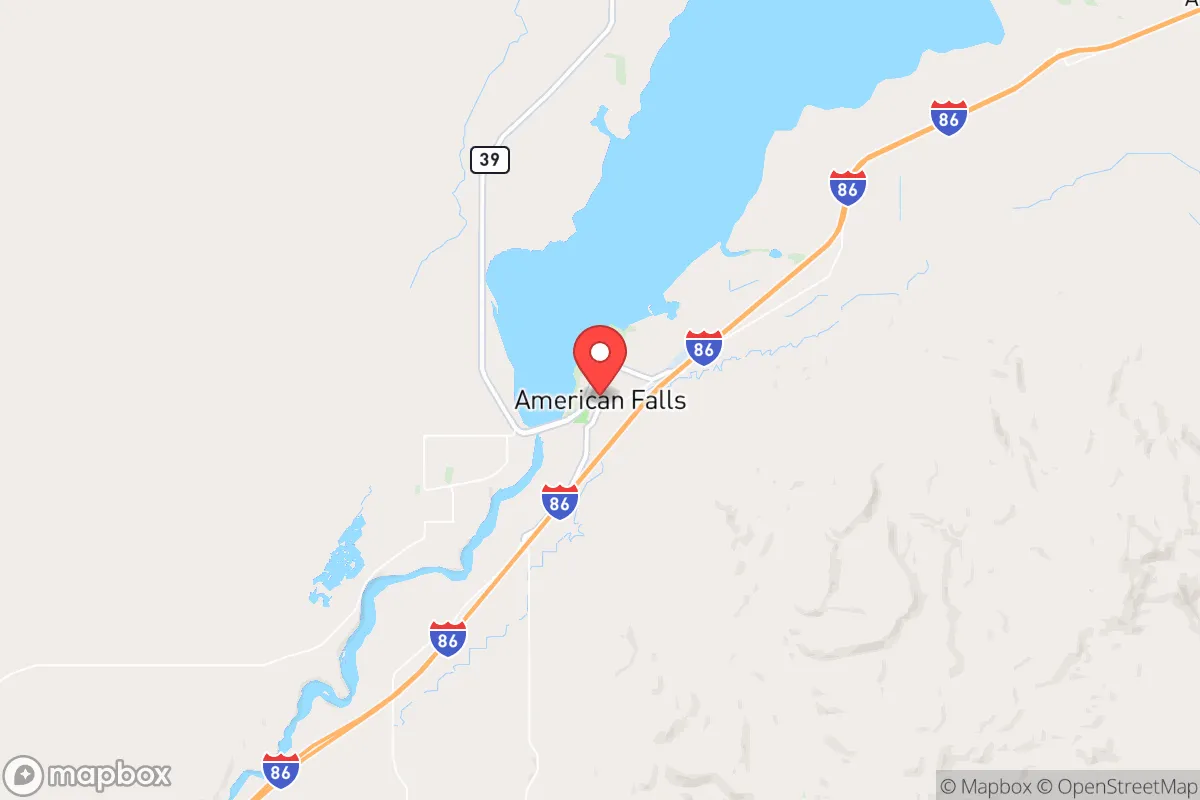
Photo: Wikipedia
Political ClimatePolitical Climate in American Falls, ID
District shown is the primary district for this city’s centroid. Cities may span multiple districts.
Local Political AnalysisPolitical Analysis of American Falls, ID
American Falls, Idaho, is about as solidly conservative as a place gets, and that’s the way most folks here like it. The Cook PVI of R+13 isn’t just a number; it reflects a community that has consistently voted for limited government, local control, and traditional values for decades. You won’t find much hand-wringing over progressive policy shifts here—the real concern is keeping outside influence from creeping in and eroding the freedoms we’ve always taken for granted.
How it compares
Drive thirty miles west to Pocatello, and you’ll notice a different vibe. That city, with its university and larger population, leans more purple, occasionally flirting with progressive candidates on city council or school board races. American Falls, by contrast, is a bulwark. Our county, Power County, votes reliably red in every election cycle, and local offices are held by people who believe in low taxes, Second Amendment rights, and minimal interference in your daily life. The contrast is even sharper if you head north to places like Boise or Sun Valley, where the political climate has shifted noticeably leftward in recent years. Here, we see that as a cautionary tale—a reminder of what happens when you let government overreach take root under the guise of “progress.”
What this means for residents
For the people living here, the conservative tilt isn’t abstract—it shapes everyday life. You won’t see heavy-handed mandates from the county or city about how to run your business or what you can do on your own property. The school board focuses on academic fundamentals, not social experiments. Property taxes stay manageable, and there’s a general trust that local leaders will keep their noses out of your personal business. That said, there’s a growing unease among long-time residents about national trends bleeding into local politics. We’ve seen attempts to push diversity, equity, and inclusion initiatives into rural school districts elsewhere in Idaho, and the concern is that if we don’t stay vigilant, similar overreach could land here. The long-term outlook depends on whether we can keep that outside pressure at bay—so far, we’ve done a good job, but it takes constant attention.
Cultural and policy distinctions
One thing that sets American Falls apart is the strong sense of self-reliance. People here don’t look to the government for solutions; they look to their neighbors, their church, or their own two hands. That’s reflected in local policy: zoning is minimal, business regulations are light, and there’s no appetite for things like rent control or new gun restrictions. The annual Power County Fair and the strong agricultural base reinforce a culture where hard work and personal responsibility are valued over bureaucratic fixes. If you’re considering a move here, understand that this isn’t a place where you’ll find a lot of political hand-holding. It’s a community that expects you to stand on your own, and in return, it’ll leave you alone to live your life the way you see fit. That’s the trade-off, and for most of us, it’s more than worth it.

State Political ClimatePolitical Climate in Idaho
State Political AnalysisPolitical Environment in the State
Idaho has been a reliably red state for decades, but the political climate has intensified significantly over the past 10-20 years. The state’s dominant coalition is a mix of traditional Western libertarians, evangelical conservatives, and a growing wave of out-of-state transplants fleeing progressive policies in places like California, Oregon, and Washington. The result is a state that now leans roughly +30 points Republican in statewide elections, but with a sharpening internal divide between the old-guard “live and let live” conservatives and a newer, more activist conservative movement pushing for aggressive cultural and policy changes.
Urban vs. rural divide
The political map of Idaho is stark. The Treasure Valley, anchored by Boise, Meridian, and Nampa, is the state’s population center and the only region where Democrats can be competitive. Ada County (Boise) has trended purple over the last decade, flipping to Biden in 2020 by a narrow margin before swinging back to Trump in 2024. But even in Boise, the city council and mayor’s office remain firmly progressive, pushing bike lanes, density zoning, and homeless services that many rural residents view as government overreach. Drive 30 minutes outside Boise, and you hit places like Caldwell and Emmett, which are deeply red. The real conservative strongholds are the rural counties: Bonner County (Sandpoint) in the north, Madison County (Rexburg) home to BYU-Idaho, and Bingham County (Blackfoot) in the southeast. These areas vote 75-80% Republican and are the engine of the state’s legislative supermajority. The divide isn’t just urban vs. rural—it’s also north vs. south. The Idaho Panhandle, including Coeur d’Alene and Post Falls, has seen an influx of Californians and Washingtonians, but the political culture there remains more libertarian than the heavily Mormon-influenced southeast.
Policy environment
Idaho’s policy environment is among the most conservative in the nation, but it’s not a monolith. The state has no income tax—a flat 5.8% corporate rate was eliminated in 2018, and the personal income tax was cut to a flat 5.8% in 2022, with further reductions tied to revenue triggers. Property taxes are relatively low, but local levies for schools can vary wildly. The regulatory posture is light: no statewide building codes outside of major cities, no occupational licensing for many trades, and a right-to-work law that keeps unions weak. Education policy is a flashpoint. The state passed a school choice expansion in 2023 via a tax credit for private school expenses, but it’s capped and faces legal challenges. Meanwhile, the legislature has banned critical race theory and “divisive concepts” in public schools, and passed a Parents’ Bill of Rights in 2022 that requires schools to notify parents of any curriculum changes involving sexuality or gender identity. Healthcare is a mixed bag: Idaho expanded Medicaid in 2020 via ballot initiative, but the legislature has since tried to impose work requirements and block funding for abortion providers. Election laws are strict: voter ID is required, same-day registration is not allowed, and the state has a closed primary system that effectively locks out independents. The legislature also passed a law in 2023 banning ranked-choice voting statewide, a preemptive strike against a movement that gained traction in other Western states.
Trajectory & freedom
Idaho is arguably becoming more free in some areas and less in others, depending on your definition. On the plus side for conservatives: the state passed a constitutional carry law in 2016, allowing permitless concealed carry, and in 2023 it passed a “Second Amendment Preservation Act” that prohibits state enforcement of any future federal gun bans. Parental rights were strengthened with the 2022 Parents’ Bill of Rights, and in 2024 the legislature passed a law banning gender transition procedures for minors, overriding a veto from Governor Brad Little. Property rights have been bolstered by a 2021 law limiting the use of eminent domain for private economic development. On the concerning side: the state has seen a creep of government overreach in the name of “public health” and “safety.” During COVID, Governor Little issued a stay-at-home order and mask mandates that many rural counties openly defied. The legislature responded by passing a law in 2021 that limits the governor’s emergency powers, but the tension between local control and state authority remains. The biggest threat to freedom in Idaho right now is the rapid influx of people driving up housing costs and property taxes, which is pricing out long-time residents and forcing local governments to impose growth controls that feel like California-lite. The state also passed a “library materials” law in 2024 that allows parents to sue libraries for making “harmful” materials available to minors—a move that some see as protecting children and others as government censorship.
Civil unrest & political movements
Idaho has a history of fringe movements, but the mainstream political scene is surprisingly stable. The most visible flashpoint in recent years has been the rise of the “People’s Rights” network, founded by Ammon Bundy, which has organized protests against mask mandates, vaccine requirements, and library book policies. In 2022, Bundy’s group staged a weeks-long occupation of the Idaho Statehouse, leading to arrests and a permanent ban from the capitol. The state also saw a surge in white nationalist activity, particularly in the Coeur d’Alene area, where a group called “Patriot Front” was arrested in 2022 for planning a riot at a Pride event. The state’s response has been mixed: the legislature passed a law in 2023 banning “public camping” on state property, which critics say targets homeless populations, but it also funded a new “Office of School Safety” to monitor threats. Immigration politics are less heated than in border states, but the legislature passed a law in 2024 requiring local law enforcement to cooperate with ICE, and there’s a growing movement to declare Idaho a “sanctuary state for the unborn,” which would ban nearly all abortions. Election integrity controversies have been minimal compared to other states, but the 2022 primary saw a high-profile challenge to the state’s closed primary system, which was upheld by the courts. The biggest political movement right now is the “Take Back Idaho” coalition, a group of moderate Republicans and independents trying to break the far-right’s grip on the party, but they’ve had limited success.
Projection
Over the next 5-10 years, Idaho will likely become even more conservative, but with a growing libertarian vs. authoritarian tension within the right. The demographic shift is the key driver: the state is adding about 50,000 new residents per year, mostly from California, Oregon, and Washington. These newcomers are not all liberals—many are conservatives fleeing high taxes and progressive policies—but they bring different expectations about growth, development, and government services. The Treasure Valley will continue to trend purple, with Boise becoming more progressive and the suburbs like Meridian and Eagle staying red. The rural areas will hold firm, but they’re losing population relative to the cities, which could shift the balance of power in the legislature over time. The biggest wildcard is the state’s housing crisis: if prices continue to skyrocket, it could trigger a backlash against growth that empowers anti-development candidates, or it could push the state toward more government intervention in the housing market, which would be a departure from its libertarian roots. The education battle will intensify, with school choice advocates pushing for universal vouchers and public school defenders fighting to preserve funding. Expect more laws on parental rights, gender identity, and library content, as well as a continued push to weaken the governor’s emergency powers. The state’s relationship with the federal government will remain adversarial, particularly on public lands and gun rights.
Bottom line for a new resident: If you’re moving to Idaho for freedom, you’ll find plenty of it—low taxes, light regulation, and a culture that values self-reliance. But don’t expect a libertarian paradise. The state government is increasingly willing to use its power to enforce a specific moral vision, particularly on education, gender, and family policy. The housing market is brutal, and the infrastructure in growing areas is strained. If you’re a conservative who wants to live in a place where your values are reflected in law and your neighbors share your worldview, Idaho is a strong bet. Just be prepared for the growing pains that come with being one of the fastest-growing states in the country.
* Values derived from national, state, county, city and local statistics and may differ in a specific area. Last updated: 2026-04-19T08:44:16.000Z
Narrative content on this page is AI-generated and may contain mistakes. Verify any details that matter before acting on them.
ReloMaps may earn a commission from affiliate links at no extra cost to you.

