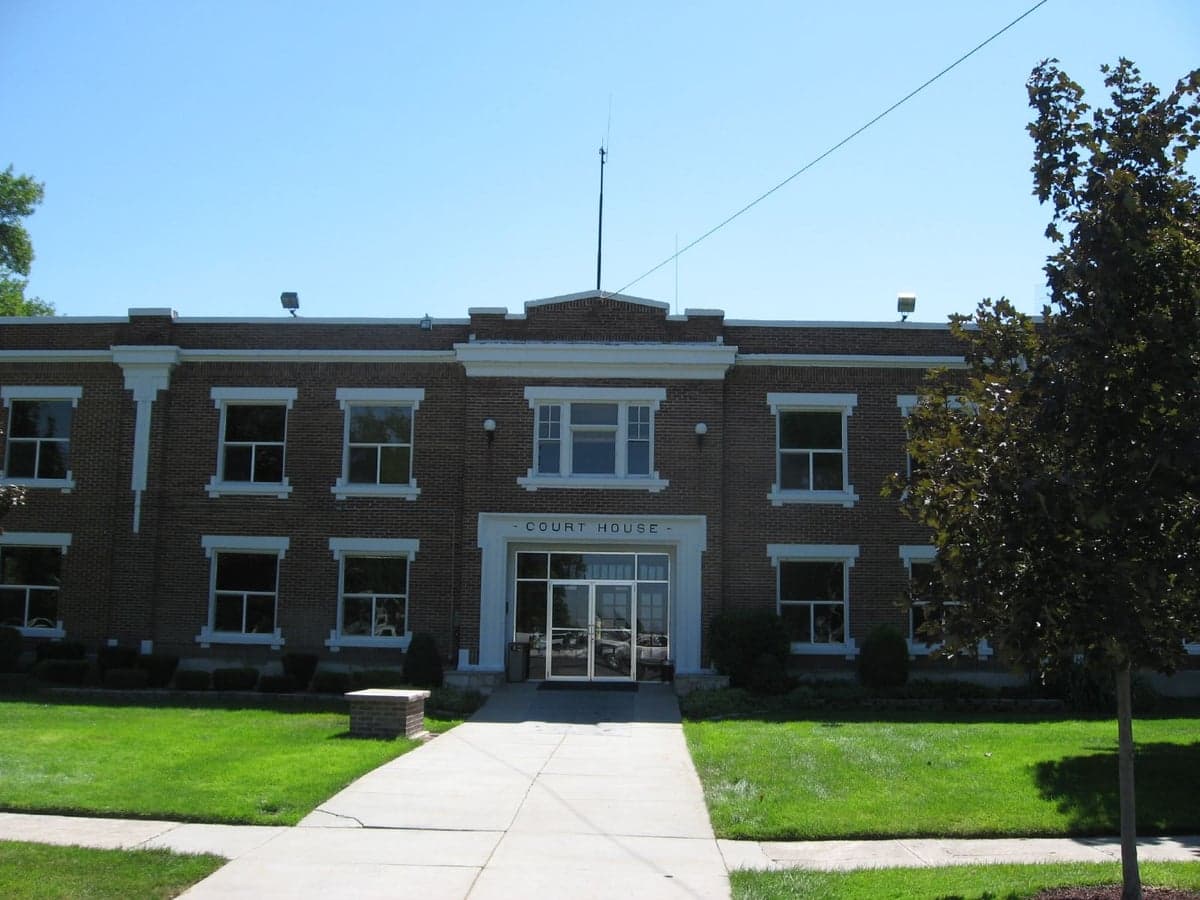
Photo: Wikipedia
Strategic Assessment of American Falls, ID
Strong survivability profile. Good buffer from population centers, with manageable environmental and tactical risks.
What does the Strategic Assessment tell us?
Our Strategic Assessment grades tactical survivability of an area. Major population centers, military targets, fallout zones, natural disasters, and border exposure all drive risk — lower exposure means a more defensible position in a crisis.
This is heavily inspired by Joel Skousen's Strategic Relocation book. Highly recommended you checkout the book ($)What does this tell us?
Our Strategic Assessment grades tactical survivability of an area. Major population centers, military targets, fallout zones, natural disasters, and border exposure all drive risk — lower exposure means a more defensible position in a crisis.
This is heavily inspired by Joel Skousen's Strategic Relocation book. Highly recommended you checkout the book ($)Strategic Pillars

Key Distances
Regional Safe Places
Below is our recommended "safe zones" in Idaho and the surrounding area based on our strategic heuristics. For most people, it's unrealistic to live in a “safe zone” full-time due to work, family or other personal reasons. They tend to be more rural. However, many of these areas are perfect for second homes and retreat properties that double as a vacation home or even a short-term rental.
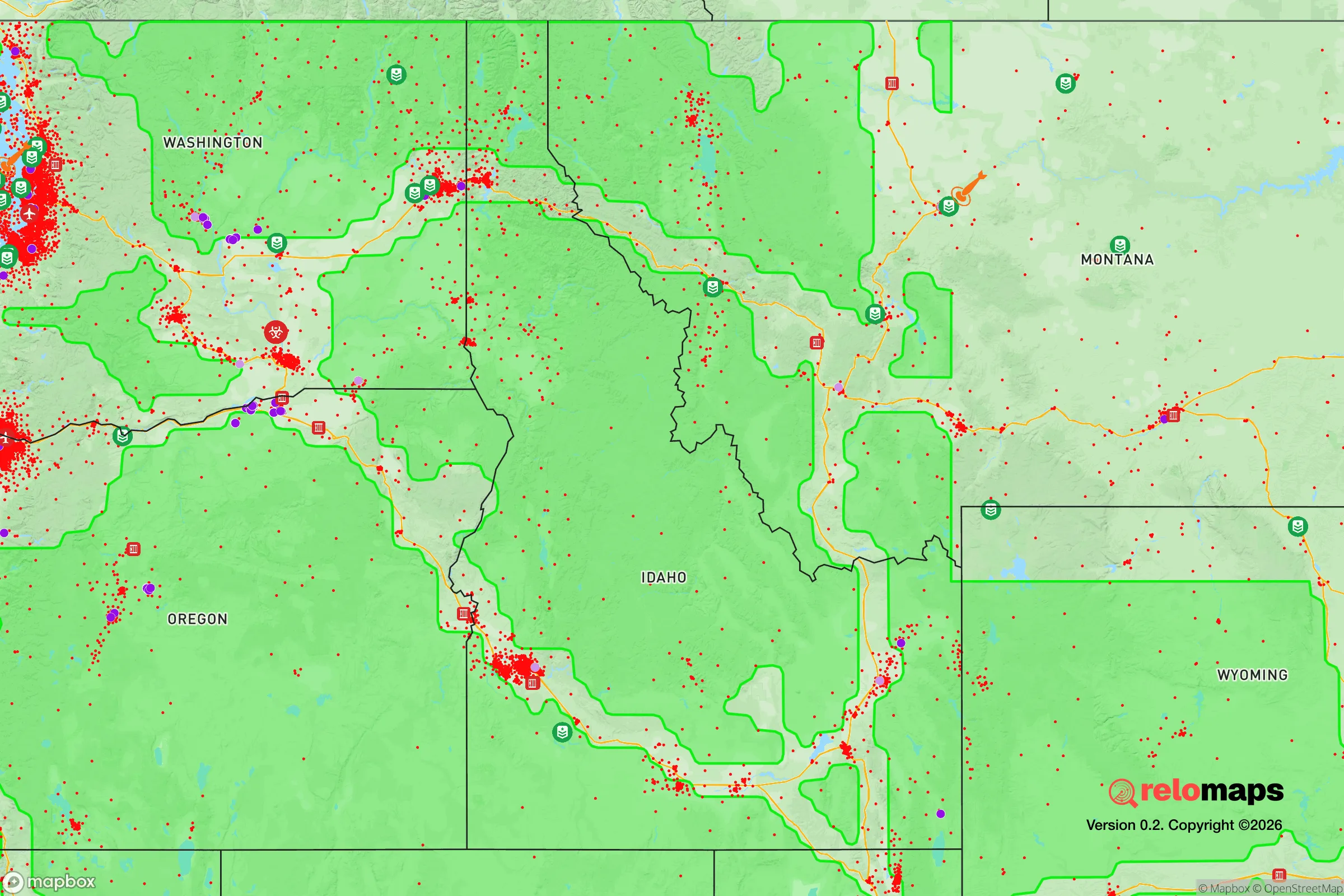
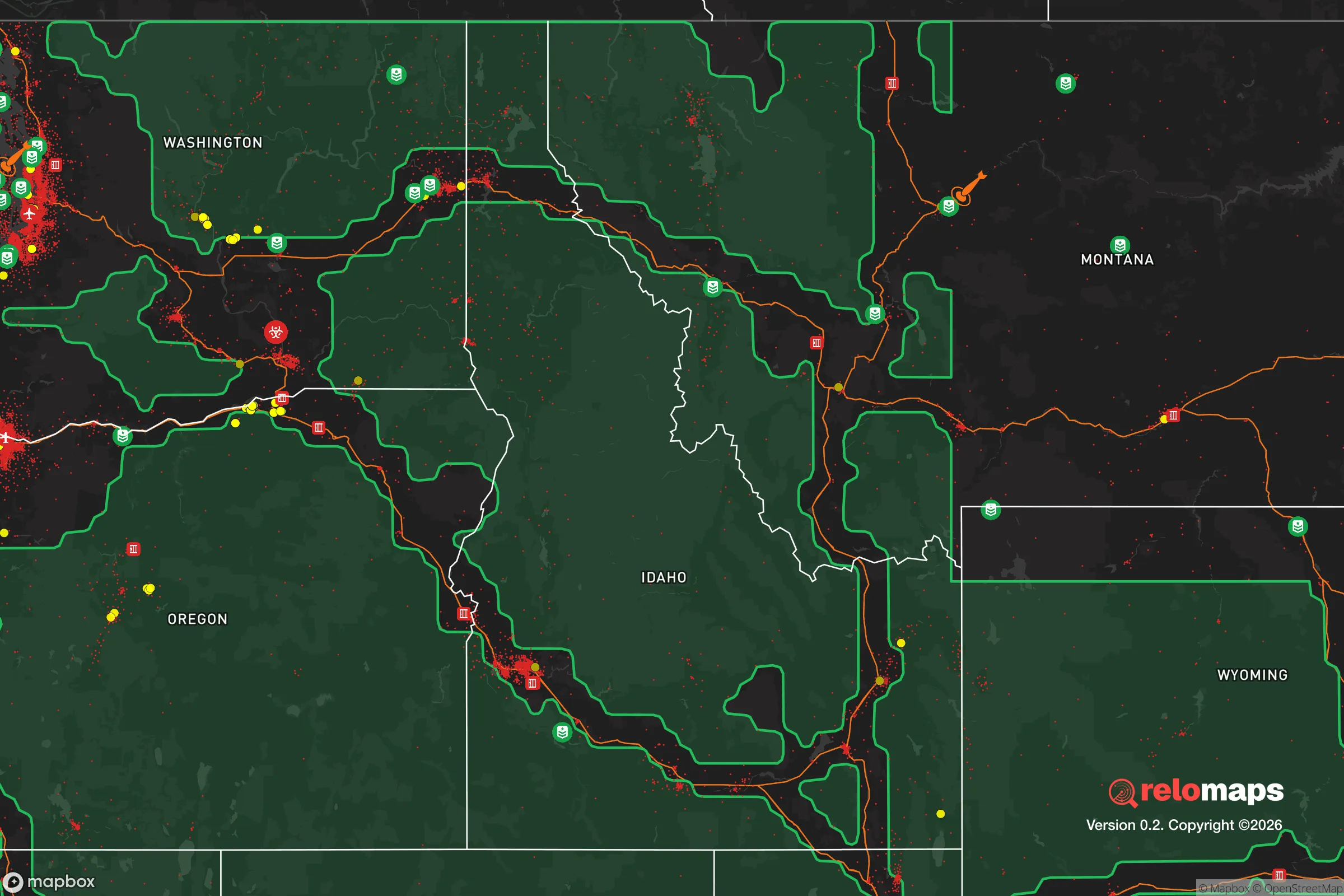


Important Note: For informational purposes only. This does not mean nothing bad ever happens in the green zones. Please use common sense. This is based on public data and modeled with AI. We tried to take a conservative approach but mistakes happen. We update this regularly as new information becomes available.
Solar Generator Recommendations
Backup power matters more here than in safer locations. We've picked three solar generators across budgets and capacity tiers — start with the budget unit if you only need a few essentials, or step up if you want to run a fridge and HVAC for days at a time.

Jackery Portable Power Station Explorer 300
Budget OptionPower on the Go: Weighing only 11 lbs, it's convenient to set up and store with book-sized foldable solar panels

BLUETTI Portable Power Station AC180
Designed for both indoor and outdoor scenarios, AC180 is highly capable as it has a robost capacity and continuous output power.

EF ECOFLOW DELTA Pro Ultra Power Station
Upgraded PickEcoFlow DELTA Pro Ultra is a whole-home energy system designed to grow with your family. Integrated with the Smart Home Panel 2, it scales to meet your evolving energy needs — keeping your home powered, intelligent, and secure through every stage of life.
We earn a commission, at no additional cost to you.
Strategic Assessment Analysis
American Falls, Idaho, presents a compelling case for the strategic relocator seeking a balance between remoteness and accessibility, offering a resilient position in the face of potential national instability. Its location along the Snake River Plain places it within a region known for agricultural self-sufficiency and relative isolation from major metropolitan corridors, while still providing critical infrastructure links. For those assessing long-term survivability, American Falls offers a low-profile, defensible position with access to water, energy, and food production, though it is not without its own strategic vulnerabilities. This analysis examines the area's geographic advantages, exposure to risks, and practical resilience factors for a conservative-minded individual or family preparing for civic unrest, mass casualty events, or large-scale disasters.
Geographic position and natural advantages for long-term security
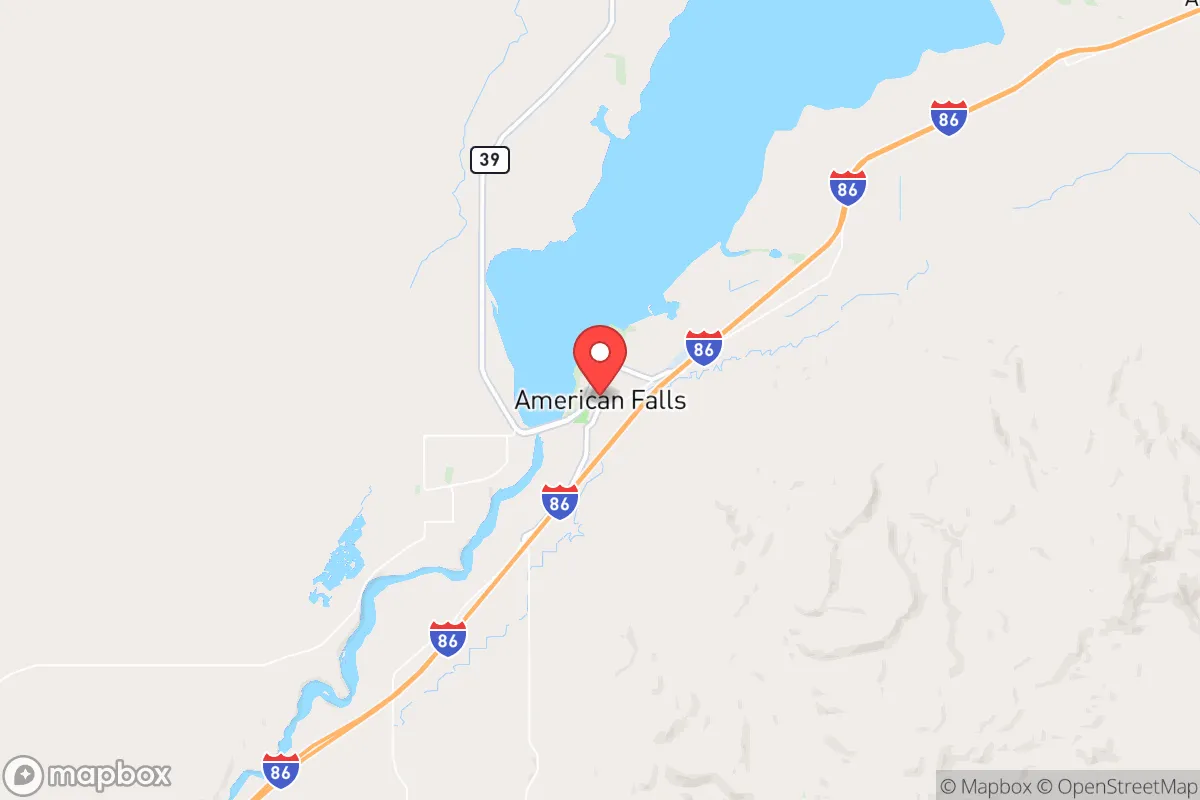
American Falls sits at the intersection of the Snake River and the Oregon Trail corridor, a position that historically provided both sustenance and strategic depth. The town is roughly 25 miles west of Pocatello and 90 miles southeast of Boise, placing it far enough from major population centers to avoid the immediate chaos of urban collapse, yet close enough to access regional medical and supply hubs if needed. The Snake River itself is a critical asset: it provides a reliable water source for drinking, irrigation, and hydroelectric power, with the American Falls Dam generating electricity that feeds into the regional grid. The surrounding landscape is a mix of irrigated farmland and sagebrush steppe, offering ample space for private food production and low population density—roughly 4,500 residents in the city proper, with Power County at around 7,800. The area's elevation (4,400 feet) and semi-arid climate mean fewer natural disaster risks like hurricanes, tornadoes, or wildfires compared to other regions, though winter snow and cold are factors to plan for. For the prepper, the ability to grow crops, raise livestock, and access groundwater without competing with millions of others is a significant advantage.
Risks, exposures, and proximity to fallout-relevant landmarks
No location is without strategic liabilities, and American Falls has several that demand attention. The most immediate concern is the American Falls Dam itself: while it provides power and water, it also represents a single-point-of-failure risk. A catastrophic breach—whether from sabotage, earthquake, or structural failure—would inundate the low-lying areas downstream, including parts of the town and extensive farmland. The dam is classified as a high-hazard potential structure by the U.S. Army Corps of Engineers, meaning failure would likely result in loss of life. Additionally, the town lies within 50 miles of the Idaho National Laboratory (INL) near Idaho Falls, a major nuclear research and waste storage facility. While INL has a strong safety record, any radiological incident—whether accidental or targeted—could affect the region depending on wind patterns. The nearby Mountain Home Air Force Base (about 70 miles west) is another potential target in a conflict scenario, though its distance reduces direct fallout risk. On the civil unrest front, American Falls is far from the typical flashpoints of Portland, Seattle, or Salt Lake City, but the Interstate 84 corridor running through town could become a chokepoint for refugee movement or supply chain disruptions during a crisis. The town's reliance on a single major highway for resupply is a vulnerability that should be factored into any relocation plan.
Practical resilience for a relocator: food, water, energy, and defensibility
For the individual or family serious about self-sufficiency, American Falls offers a strong foundation. Water access is excellent: the Snake River provides surface water, and the local aquifer is generally reliable for wells, though new well permits can be subject to state regulation. The semi-arid climate means water storage and conservation are essential, but the river's flow is consistent year-round. Food production is a major plus: Power County is agricultural, with potatoes, wheat, barley, and alfalfa as primary crops, and local farmers' markets and co-ops provide fresh produce. The growing season is short (about 120 frost-free days), but cold-hardy crops and greenhouse setups can extend it. Energy resilience is mixed: the grid is fed by hydro, natural gas, and some wind, but rural areas are prone to outages during winter storms. Solar panels with battery storage are a wise investment, as the region gets over 200 sunny days per year. Defensibility is moderate: the town's layout is compact, with open farmland surrounding it, making it difficult to approach undetected but also offering few natural barriers. A rural property with a good line of sight and a well-stocked root cellar would be ideal. The local population is predominantly conservative, with a strong sense of community and self-reliance—neighbors are likely to band together in a crisis, which is a double-edged sword depending on your social integration. The nearest major trauma center is in Pocatello (Portneuf Medical Center), about 30 minutes away, which is acceptable for routine emergencies but a concern for mass casualty events.
Overall, American Falls represents a solid middle-ground option for the strategic relocator who wants to avoid the extremes of deep wilderness or urban proximity. It offers reliable water, agricultural potential, and a low-profile existence in a region that is politically and culturally aligned with conservative values. The primary trade-offs are the dam and INL risks, which require situational awareness and a contingency plan (e.g., a bug-out location further east or south). For those willing to invest in off-grid infrastructure and build local relationships, American Falls provides a defensible, resource-rich base from which to weather the coming storms—whether they be economic, social, or environmental. It is not a fortress, but it is a place where preparation and community can make the difference between surviving and thriving.

* Values derived from national, state, county, city and local statistics and may differ in a specific area. Last updated: 2026-04-19T08:44:16.000Z
Narrative content on this page is AI-generated and may contain mistakes. Verify any details that matter before acting on them.
ReloMaps may earn a commission from affiliate links at no extra cost to you.

