
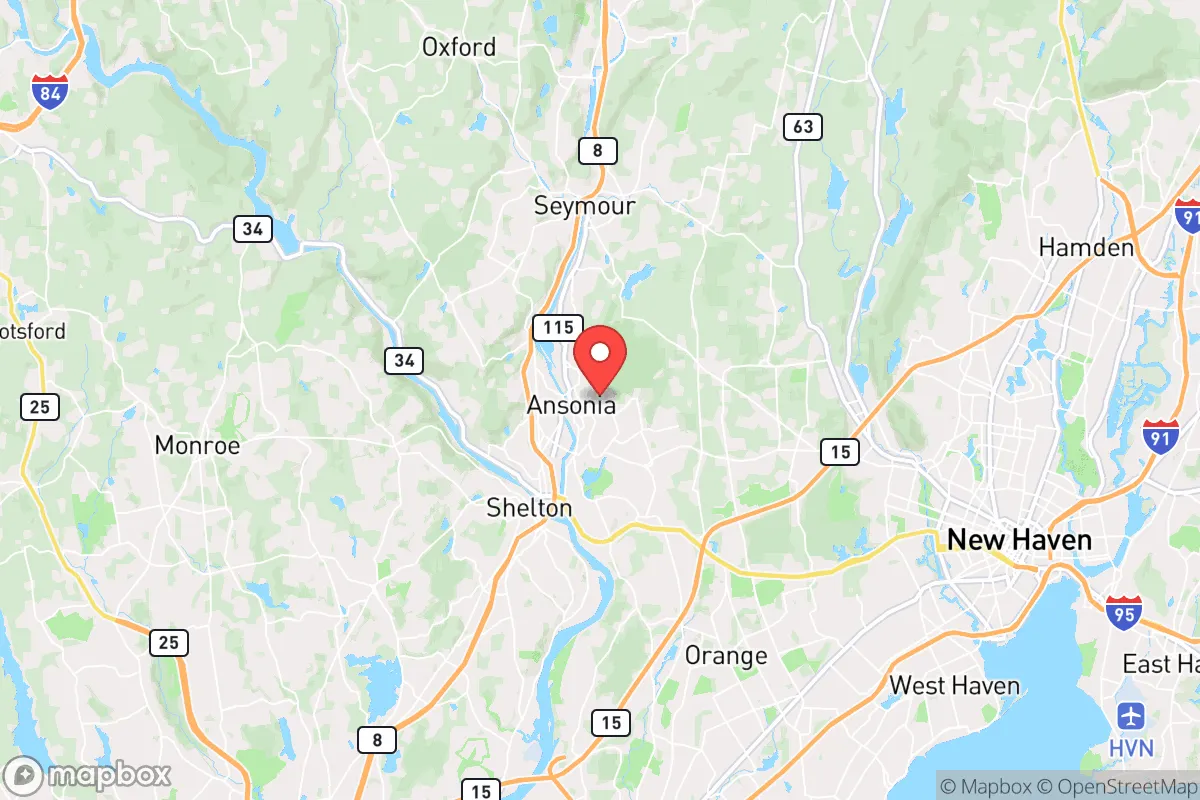
Photo: Wikipedia
Personal Sovereignty in Ansonia, CT
Viable for self-reliance. Generally workable, though some barriers may limit total independence.
What does Personal Sovereignty tell us?
Personal Sovereignty measures your capacity for self-reliance and independence with minimal government friction. Higher scores mean fewer barriers between you and the way you want to live... but it assumes you have the space you need and good neighbors.
What does this tell us?
Personal Sovereignty measures your capacity for self-reliance and independence with minimal government friction. Higher scores mean fewer barriers between you and the way you want to live... but it assumes you have the space you need and good neighbors.
State Policy
Energy independence: Importer (5% of energy produced in-state)
Personal Liberty
Homesteading

Personal Liberty Analysis
Ansonia, Connecticut, presents a mixed picture for those prioritizing personal sovereignty, where state-level overreach significantly constrains local autonomy. While the city itself is a small, working-class community in the Naugatuck Valley, its residents operate under Connecticut’s dense web of state mandates—from restrictive gun laws to high tax burdens—that limit individual freedom. For a survivalist or prepper mindset, Ansonia offers a relatively affordable entry point into the Northeast, but the trade-offs in regulatory compliance and diminished self-reliance are substantial. The overall autonomy environment here is one of managed compliance, not rugged independence, making it a location to approach with clear eyes and a strategic plan for navigating state-level intrusions.
Tax burden and regulatory posture: How Connecticut’s fiscal policies impact your freedom
Connecticut’s tax burden is among the highest in the nation, and Ansonia residents feel this acutely. The state imposes a progressive income tax with rates up to 6.99%, a sales tax of 6.35%, and property taxes that, while lower than some neighboring towns, still average around 33 mills. For a prepper focused on financial self-reliance, this means a significant portion of income is diverted to state coffers before you can allocate it to supplies, land, or emergency funds. The regulatory posture extends beyond taxes: Connecticut has stringent building codes, environmental regulations, and business licensing requirements that can stifle small-scale homesteading or home-based enterprises. For example, any significant land modification—like installing a rainwater catchment system or building a root cellar—requires permits and inspections, adding layers of bureaucratic friction. This environment favors those who can navigate red tape rather than those seeking to operate entirely off-grid.
Self-defense and gun law specifics: Navigating Connecticut’s restrictive firearm environment
Connecticut’s gun laws are among the most restrictive in the country, directly impacting personal sovereignty in self-defense. The state requires a permit to purchase any firearm, a background check for all sales (including private transfers), and a 14-day waiting period for long guns. Ansonia residents must also comply with the state’s assault weapons ban, which prohibits many common semi-automatic rifles and standard-capacity magazines. Carrying a concealed handgun requires a separate permit, which involves an 8-hour safety course, fingerprinting, and a local police review—a process that can take months. For a survivalist, this means building a defensive arsenal requires significant lead time and legal diligence. Open carry is effectively prohibited, and “stand your ground” laws do not exist; Connecticut imposes a duty to retreat in public spaces. The practical takeaway: self-defense planning in Ansonia must prioritize legal compliance over immediate readiness, and any prepper stockpile must be carefully managed to avoid running afoul of state statutes.
Self-reliance and homesteading viability: Lot sizes, zoning, and off-grid feasibility in Ansonia
Ansonia is a densely developed urban city of about 6 square miles, with most residential lots averaging 0.1 to 0.25 acres. This severely limits homesteading potential. Zoning is primarily residential, with strict prohibitions on keeping livestock, chickens, or bees in most neighborhoods. Off-grid systems like solar panels are permitted but require building permits and must meet utility interconnection standards, making true energy independence difficult. Rainwater collection for potable use is restricted by state health codes, and composting toilets face regulatory hurdles. For a prepper seeking land for food production or a bug-out location, Ansonia’s small lots and urban density are a liability. However, the city’s proximity to more rural areas in the Litchfield Hills (30-45 minutes north) offers an alternative: buy a small plot there for a retreat while maintaining a residence in Ansonia for work or logistics. The key is that self-reliance within city limits is largely symbolic—think container gardening and emergency food storage—rather than substantive homesteading.
Personal liberties: Parental rights, medical autonomy, speech, and property protections
Connecticut’s state government has a history of asserting authority over personal liberties, which directly affects Ansonia residents. On parental rights, the state mandates comprehensive sex education in public schools, with no opt-out for specific content, and has expanded vaccine requirements for school attendance, including COVID-19 shots for certain age groups. Medical autonomy is further constrained by strict telemedicine laws and a state-run health insurance exchange that limits private options. Free speech is generally protected, but the state has enacted laws against “hate speech” that some critics argue chill political discourse. Property rights are the weakest link: Connecticut’s aggressive eminent domain powers and environmental regulations can restrict land use, and the state’s estate tax (starting at $9.1 million) can erode generational wealth transfer. For a conservative-leaning individual, these policies create an environment where personal decisions—from healthcare to education—are subject to state oversight, reducing the sphere of private choice.
Overall, Ansonia’s personal sovereignty profile is a study in trade-offs. It offers lower housing costs than many Connecticut towns and a blue-collar community ethos, but it sits within a state that consistently ranks among the worst for individual freedom according to indices like the Cato Institute’s “Freedom in the 50 States.” Compared to areas in the South or Midwest, where property rights, gun laws, and tax burdens are more favorable to self-reliance, Ansonia demands a higher level of legal vigilance and financial sacrifice. For a prepper or survivalist, it is not a destination for off-grid living or minimal government interference, but it can serve as a base of operations for those willing to work within the system while building resilience through community networks and careful planning. The strategic move here is to treat Ansonia as a launchpad—not a final redoubt—and to keep a close eye on state-level legislation that could further erode the liberties that remain.

* Values derived from national, state, county, city and local statistics and may differ in a specific area. Last updated: 2026-04-30T13:09:23.000Z
Narrative content on this page is AI-generated and may contain mistakes. Verify any details that matter before acting on them.
ReloMaps may earn a commission from affiliate links at no extra cost to you.

