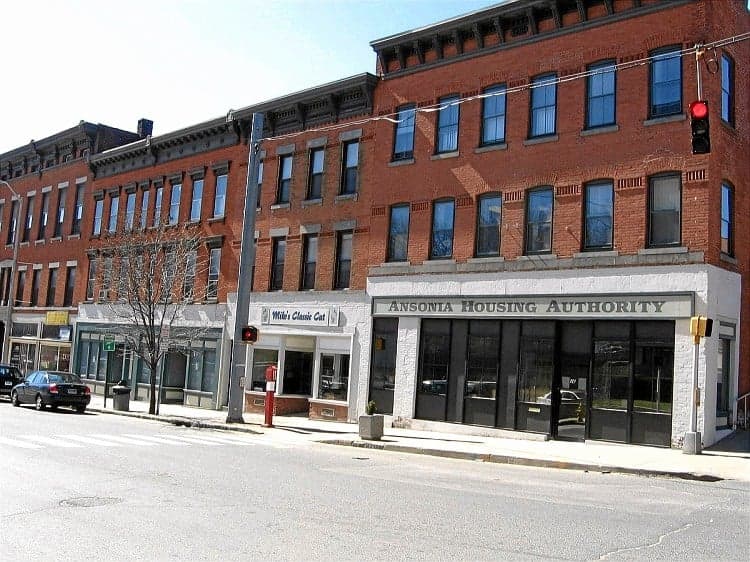
Photo: Wikipedia
Political ClimatePolitical Climate in Ansonia, CT
District shown is the primary district for this city’s centroid. Cities may span multiple districts.
Local Political AnalysisPolitical Analysis of Ansonia, CT
Ansonia, Connecticut, has a Cook PVI of D+8, meaning it leans reliably Democratic by about eight points compared to the national average. But if you’ve lived here as long as I have, you know that label doesn’t tell the whole story. This used to be a blue-collar, union town where folks voted for the person, not the party, and a lot of us still carry that independent streak. Over the last decade or so, though, the political climate has shifted noticeably toward progressive policies, and that’s got a lot of longtime residents worried about where things are headed.
How it compares
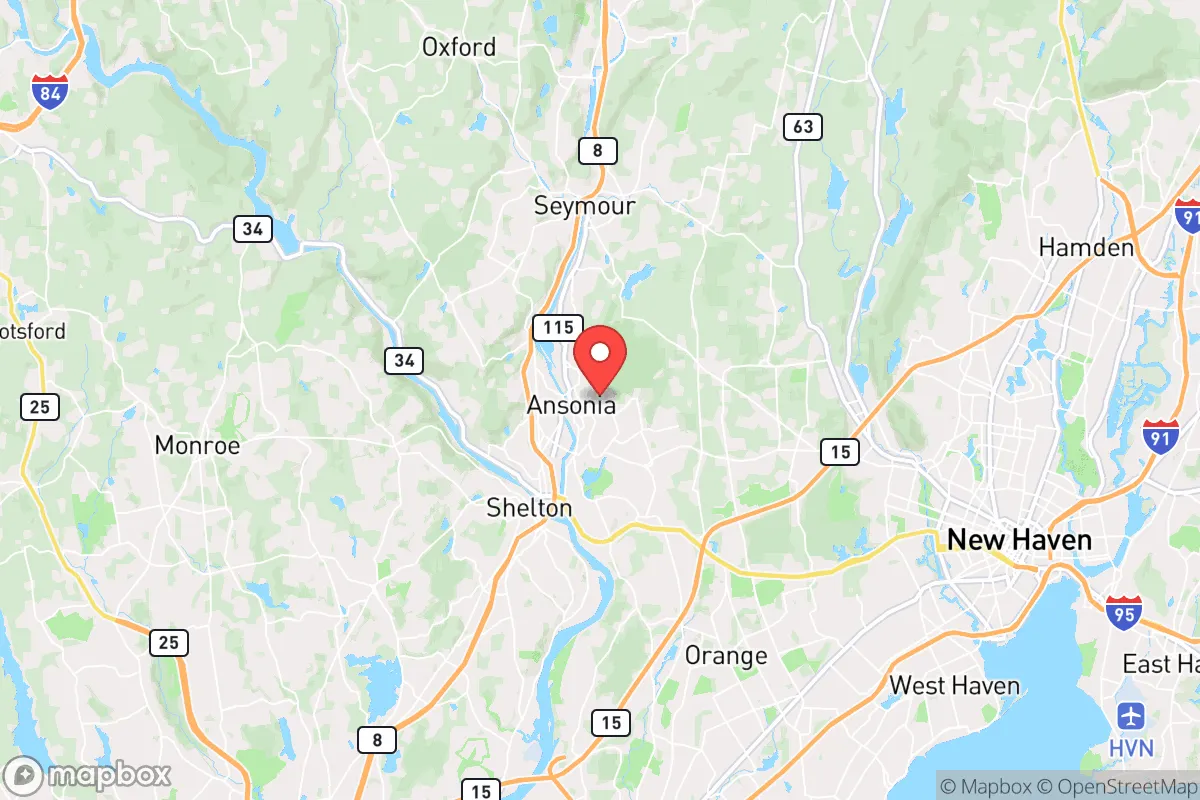
To really get Ansonia’s politics, you’ve got to look at the towns around it. Head west a few miles to Derby, and you’ll see a similar D+ lean, but it’s a bit more moderate—still plenty of old-school Democrats who aren’t afraid to push back on tax hikes or zoning overreach. Go north to Seymour or Oxford, and you’re in solidly Republican territory, where the local governments are more focused on keeping taxes low and letting people run their own lives. Ansonia sits right in the middle, but the city council and school board have been drifting leftward, especially on spending and social issues. It’s not like New Haven to the south, which is a full-on progressive stronghold, but the gap is closing faster than most of us are comfortable with.
What this means for residents
For the average family here, the biggest red flag is how the local government has started reaching into everyday life. We’ve seen new zoning rules that make it harder to run a small business out of your home or add a rental unit to your property—things that used to be no-brainers for folks trying to make ends meet. The school board has pushed curriculum changes that feel more about social engineering than teaching kids to read and do math. And property taxes? They’ve crept up year after year, even as services don’t seem to improve. A lot of us remember when Ansonia was a place where you could buy a modest house, fix it up yourself, and raise a family without the town telling you how to live. Now, it feels like every new ordinance or policy is another step toward government overreach—more rules, more fees, more oversight on things that used to be private choices.
If you’re thinking of moving here, you need to know that the political culture is changing fast. The old guard of fiscally conservative, socially moderate Democrats is fading out, replaced by younger activists and transplants who see government as the answer to every problem. That means more regulations on housing, more mandates on businesses, and a general attitude that the town knows better than you do. It’s not a disaster yet—Ansonia still has its charm and a strong sense of community—but the trajectory is concerning. Long-term, I’d expect the progressive push to accelerate, especially if the state keeps sending money to cities that toe the party line.
One thing that sets Ansonia apart is its strong Catholic and ethnic heritage—Italian, Polish, Irish families who’ve been here for generations. That cultural conservatism still shows up in things like opposition to certain school policies or skepticism of big government programs. But it’s a quiet resistance, not an organized one. The local Democratic machine is well-funded and well-connected, so pushing back feels like shouting into the wind. If you value personal freedom, low taxes, and a government that stays out of your way, Ansonia is still livable—but keep an eye on the city council meetings. That’s where the future of this town is being decided, and it’s not looking like the place I grew up in.

State Political ClimatePolitical Climate in Connecticut
State Political AnalysisPolitical Environment in the State
Connecticut has shifted from a classic swing state to a reliably blue stronghold over the past two decades, with Democrats now holding every statewide office and supermajorities in both legislative chambers. The state voted for Hillary Clinton by 14 points in 2016, Joe Biden by 20 points in 2020, and Kamala Harris by roughly the same margin in 2024, reflecting a hardened partisan alignment that leaves conservatives as a distinct minority in state politics. The real story, however, is the growing geographic and cultural chasm between the wealthy, liberal southwestern corner and the rest of the state, which still harbors significant conservative and independent sentiment.
Urban vs. rural divide
The political map of Connecticut is essentially a tale of two Connecticuts. The southwestern corridor—Fairfield County towns like Stamford, Greenwich, and New Canaan—votes overwhelmingly Democratic, driven by high-income professionals who work in New York City and embrace progressive social and fiscal policies. These towns routinely deliver 65-75% of their votes to Democratic presidential candidates. The state's other urban centers—Hartford, New Haven, and Bridgeport—are deep blue strongholds, powered by large minority populations, union households, and public-sector workers. Meanwhile, the eastern half of the state, including Windham County and towns like Killingly and Plainfield, votes reliably Republican, as do the Litchfield Hills in the northwest, with towns like Litchfield and Cornwall often going red by 10-15 points. The suburban ring around Hartford—places like Glastonbury, Simsbury, and Farmington—has trended blue over the last decade, flipping from purple to solidly Democratic as college-educated voters moved left. The result is a state where Democrats dominate the population centers and Republicans are increasingly confined to rural and exurban areas, making statewide wins nearly impossible for the GOP.
Policy environment
Connecticut's policy environment is among the most progressive in New England, with a tax burden that ranks among the highest in the nation. The state levies a progressive income tax topping out at 6.99%, a 6.35% sales tax, and some of the highest property taxes in the country, with effective rates often exceeding 2.5% of home value. In 2023, the legislature passed a major expansion of paid family and medical leave, funded by a 0.5% payroll tax on all workers, which conservatives argue is an unfunded mandate on small businesses. Education policy is dominated by the state's powerful teachers' unions, which successfully blocked significant school choice expansion, though a limited number of magnet schools and charter schools exist in Hartford and New Haven. Healthcare is heavily regulated, with the state running its own health insurance exchange and imposing strict rate review on insurers. Election laws have moved toward convenience voting: no-excuse absentee voting was expanded in 2023, and early voting was implemented for the first time in 2024, moves that conservatives worry reduce ballot security. The state also has some of the strictest gun laws in the country, including a 2023 ban on open carry and a requirement for safe storage, which gun rights advocates view as an infringement on Second Amendment rights.
Trajectory & freedom
Over the past five years, Connecticut has moved decisively toward greater government control over personal and economic life, which is concerning for those who value individual liberty. The 2023 passage of Public Act 23-53 banned the open carry of firearms and expanded the state's assault weapons ban, making Connecticut one of the most restrictive states for gun owners. In 2021, the legislature passed a law requiring all public schools to adopt a curriculum on "culturally responsive teaching," which critics argue promotes critical race theory and undermines parental authority. On medical freedom, the state imposed one of the strictest COVID-19 vaccine mandates in the country, requiring all healthcare workers and school employees to be vaccinated, with no testing alternative. Property rights have been eroded by a 2022 law that allows municipalities to impose rent control on certain apartments, a move that landlords argue violates their right to set prices. On the positive side for conservatives, the state did pass a modest tax cut in 2023, reducing the income tax rate for middle-class earners from 5% to 4.5%, and eliminated the estate tax for estates under $9.1 million, which helps small business owners and farmers. But the overall trajectory is toward more regulation, higher taxes, and less personal autonomy, which is why many conservatives are leaving for states like Florida and Texas.
Civil unrest & political movements
Connecticut has seen relatively little large-scale civil unrest compared to other states, but there have been notable flashpoints. In 2020, Hartford and New Haven experienced several nights of protests following the George Floyd killing, with some property damage and arrests, though the state's Democratic leadership largely supported the protests. The state's sanctuary city policies are a major point of contention: New Haven has been a sanctuary city since 2017, and Hartford and Bridgeport have similar policies, limiting cooperation with federal immigration enforcement. This has led to tensions with the Trump administration and among residents who feel the state is too welcoming to illegal immigrants. On the right, the Connecticut Citizens Defense League (CCDL) has been a vocal force, organizing large rallies at the state capitol in Hartford to oppose gun control measures, drawing thousands of attendees. The 2023 open carry ban sparked a protest that shut down the capitol for a day. Election integrity has been a persistent issue, with conservatives pointing to the state's use of drop boxes and the 2023 expansion of no-excuse absentee voting as vulnerabilities, though no major fraud has been proven. The most visible political movement is the growing number of "town committee" activists on both sides, with local Republican committees in Litchfield County and Windham County becoming more organized and vocal.
Projection
Over the next 5-10 years, Connecticut is likely to become even more Democratic and progressive, driven by demographic trends and in-migration patterns. The state's population is aging and shrinking, with the 2020 census showing a loss of one congressional seat, and the people moving in tend to be younger, more diverse, and more liberal, often from New York City. The southwestern corner will continue to pull the state left, while rural areas will become even more Republican but less populous. The state's fiscal situation is precarious—pension liabilities for state workers exceed $40 billion, and the state's credit rating is among the worst in the country—which will likely force future tax increases or service cuts, further driving out middle-class families. The Democratic supermajority in the legislature means that progressive policies on gun control, education, and healthcare will continue to expand, with little check from the governor's office. A new resident moving in now should expect to find a state where their taxes will likely rise, their personal freedoms will be increasingly circumscribed by state regulation, and their political voice will be a minority one. The only realistic hope for conservatives is a shift in the national political environment that forces the state to moderate, but that seems unlikely given the current trajectory.
For a conservative considering a move to Connecticut, the bottom line is this: you will be living in a state where your values are not reflected in state policy, where your taxes will be high, and where your personal freedoms—especially regarding guns, education, and medical choices—will be limited. If you can afford the high cost of living and are willing to be a political minority, the state offers excellent schools in certain suburbs, beautiful natural scenery, and proximity to New York City. But if you value low taxes, limited government, and a culture that respects individual liberty, you will likely find Connecticut increasingly frustrating and may want to look elsewhere.
* Values derived from national, state, county, city and local statistics and may differ in a specific area. Last updated: 2026-04-30T13:09:23.000Z
Narrative content on this page is AI-generated and may contain mistakes. Verify any details that matter before acting on them.
ReloMaps may earn a commission from affiliate links at no extra cost to you.

