Photo: Wikipedia
Political ClimatePolitical Climate in Anthony, NM
District shown is the primary district for this city’s centroid. Cities may span multiple districts.
Local Political AnalysisPolitical Analysis of Anthony, NM
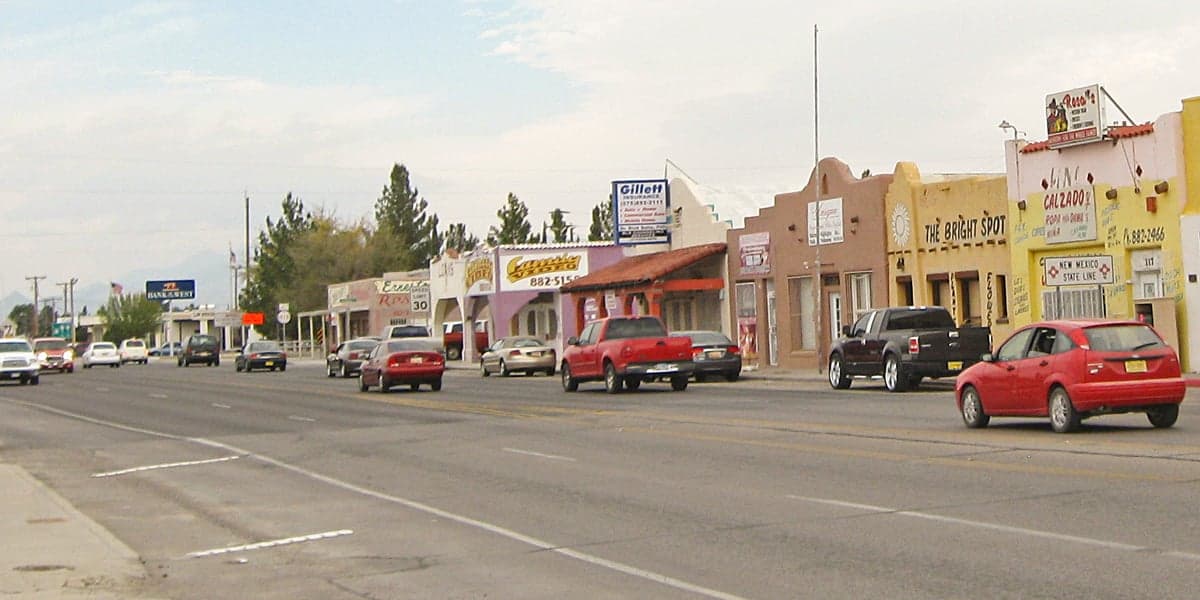
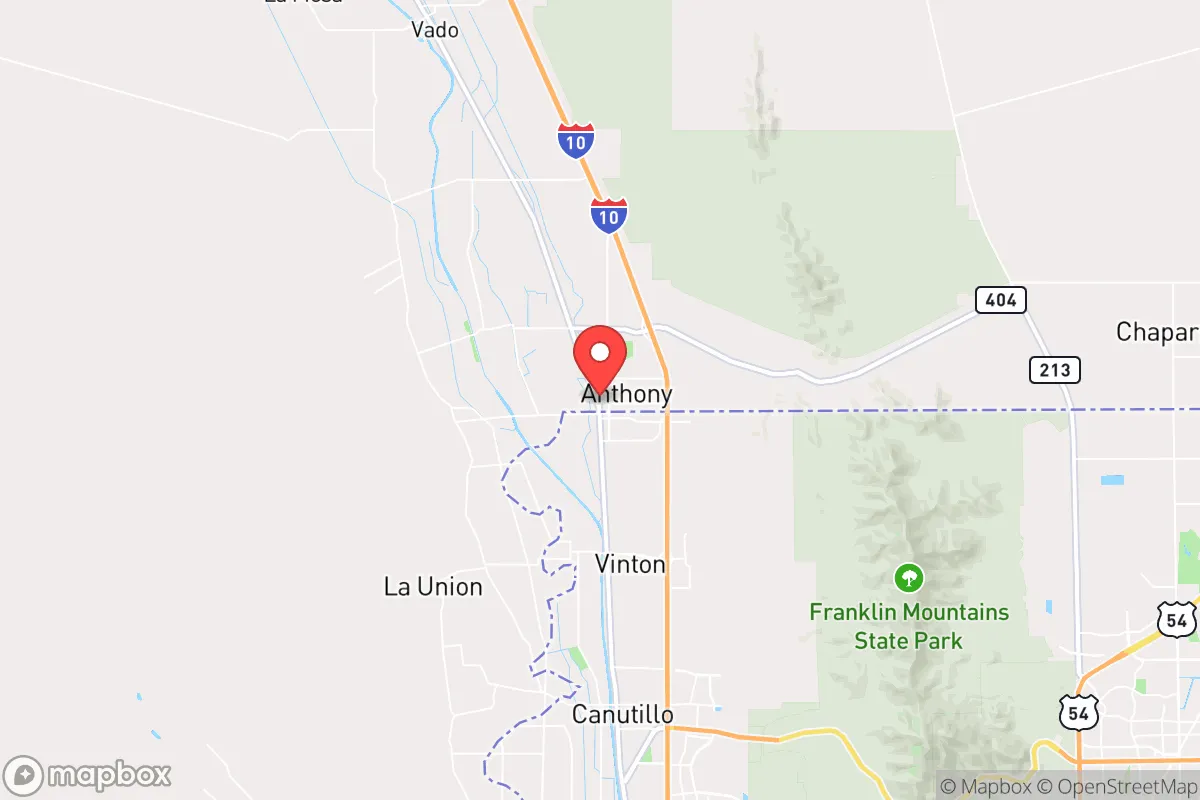
Anthony, New Mexico, sits right on the state line with Texas, and politically, it’s a place that’s been pulled in two directions for a while now. The Cook PVI rating of EVEN tells you the story: this isn’t a deep blue or deep red stronghold, but a true swing area where elections are decided by a few hundred votes. For a long time, the community leaned conservative, with folks valuing their Second Amendment rights, low taxes, and a general distrust of government meddling. But over the last decade, you’ve seen a slow creep of progressive policies coming out of Santa Fe and even from some local school board seats, which has a lot of us worried about the direction we’re heading.
How it compares
Drive ten miles north to Las Cruces, and you’re in a completely different world—a college town that votes reliably blue and has embraced things like sanctuary city policies and higher local taxes. Head south across the state line into El Paso, Texas, and you’re in a major urban center that’s been solidly Democratic for generations. Anthony, by contrast, is a rural border community where people still wave the Gadsden flag and talk about property rights at the feed store. The contrast is stark: while Doña Ana County as a whole leans left, Anthony’s precincts often break for conservative candidates, especially on issues like gun rights and school choice. The real tension comes from the state legislature in Santa Fe, which keeps pushing mandates on everything from energy regulations to public health orders that feel like they were written for Albuquerque, not for a small town like ours.
What this means for residents
For the folks who’ve lived here their whole lives, the biggest concern is that our local values are being steamrolled by outside interests. You see it in the push for higher minimum wages that hurt small businesses, in the constant attempts to restrict firearm ownership, and in the way the state government tries to dictate how we run our schools. The silver lining is that Anthony’s EVEN rating means every vote really does count—your voice matters more here than in a deep blue district where your ballot gets swallowed up. But the trend is concerning: younger voters moving in from Las Cruces or El Paso tend to bring progressive ideas with them, and if we don’t stay engaged, we could see Anthony shift blue in the next decade. That would mean higher taxes, more regulations on our land and businesses, and a loss of the personal freedoms that make this area worth living in.
Culturally, Anthony still holds onto a lot of the old-school conservative values: church attendance is high, the local gun club is always busy, and there’s a strong sense of neighbor helping neighbor without the government getting involved. The biggest policy distinction you’ll notice is how the town handles land use and property rights—there’s a lot of pushback against any kind of zoning or environmental regulations that would tell you what you can do on your own land. That’s the kind of freedom that’s getting harder to find in New Mexico, and it’s what keeps a lot of us here despite the political headwinds. If you’re thinking about moving to Anthony, just know that you’ll need to stay politically active if you want to keep it the way it is—because the fight for the soul of this town is far from over.

State Political ClimatePolitical Climate in New Mexico
State Political AnalysisPolitical Environment in the State
New Mexico has long been a reliably blue state in presidential elections, voting Democratic by margins of 10-11 points in both 2020 and 2024, but that top-line number hides a deeply fractured political landscape. The dominant coalition is a fragile alliance of urban progressives from Albuquerque and Santa Fe, tribal communities, and a small but vocal labor union presence, all held together by a growing Hispanic electorate that has historically leaned Democratic but is increasingly up for grabs. Over the last 20 years, the state has shifted from a moderate, pro-business Democratic stronghold under Governor Bill Richardson to a far more progressive, high-regulation environment under Governor Michelle Lujan Grisham, with the state legislature becoming a laboratory for left-wing policy experiments that have accelerated since 2019.
Urban vs. rural divide
The political map of New Mexico is a study in stark contrasts. Bernalillo County, home to Albuquerque, casts roughly one-third of all votes in the state and reliably delivers 55-60% Democratic margins, powered by government workers at Sandia National Labs, the University of New Mexico, and a growing tech sector. Santa Fe County is even more lopsided, routinely voting 70-75% Democratic, driven by a mix of wealthy retirees, artists, and state government employees. On the flip side, the eastern plains and southeastern corner—places like Hobbs, Carlsbad, and Roswell—vote 70-80% Republican, fueled by oil and gas workers, ranchers, and a strong evangelical presence. The rural north, including Taos and Las Vegas (NM), is a Democratic stronghold due to Native American and Hispanic working-class voters, while the southwestern bootheel around Deming and Lordsburg is more competitive but still leans red. The real battleground is the fast-growing Rio Rancho suburb northwest of Albuquerque, which has trended purple as families flee the city for lower taxes and better schools, but still votes about 52-48 Republican in most races.
Policy environment
New Mexico’s policy environment has shifted dramatically leftward since 2019, when Democrats gained a trifecta in the statehouse. The state now has a progressive income tax with a top rate of 5.9% on income over $210,000, and a gross receipts tax (GRT) that functions like a sales tax but is applied to many services, often pushing effective rates above 8% in cities like Albuquerque and Santa Fe. Property taxes remain relatively low by national standards, but the state has aggressively expanded government programs: free in-state college tuition for residents through the Lottery Scholarship and the new Opportunity Scholarship, universal free school meals, and a massive expansion of Medicaid under the Affordable Care Act. On education, the state has embraced progressive curricula, including ethnic studies requirements and a ban on corporal punishment, while parental rights groups have clashed with school boards over library books and transgender policies. Election laws are among the most permissive in the nation: same-day voter registration, automatic voter registration at the DMV, no-excuse absentee voting, and 14 days of early voting are all standard. The state also has a sanctuary law (the 2019 New Mexico Immigrant and Refugee Act) that limits local law enforcement cooperation with federal immigration authorities.
Trajectory & freedom
Over the past five years, New Mexico has become noticeably less free across multiple dimensions. The 2021 Energy Transition Act effectively mandates a 100% carbon-free electricity grid by 2045, which has already driven up electricity rates and forced the closure of the San Juan Generating Station, costing hundreds of high-paying union jobs in the Four Corners region. On gun rights, the state passed a red-flag law in 2020 and a 2023 law requiring a 7-day waiting period for firearm purchases, though it remains a shall-issue state for concealed carry. The 2023 Reproductive Health Care Act removed nearly all restrictions on abortion, including late-term procedures, and the state has become a destination for out-of-state patients. Parental rights took a hit with the 2023 law banning conversion therapy for minors and a 2024 law that allows minors to consent to certain medical procedures without parental notification, which has sparked intense backlash. On the positive side for conservatives, the state has no personal income tax on Social Security benefits and has a relatively low corporate income tax rate of 5.9%, though the GRT remains a burden. The 2024 legislative session saw a failed attempt to repeal the state’s right-to-work law, but the fight is far from over.
Civil unrest & political movements
New Mexico has seen its share of political flashpoints. The 2020 protests in Albuquerque turned violent, with the toppling of a statue of Spanish conquistador Juan de Oñate and several nights of arson and looting, leading to a heavy police response and ongoing tensions between the city’s progressive mayor and the police union. The state’s sanctuary policy has made it a focal point in the immigration debate, with the Border Patrol frequently clashing with local activists in Las Cruces and Sunland Park. In 2023, the governor’s temporary ban on carrying firearms in public parks and playgrounds—which was quickly blocked by a federal judge—sparked armed protests at the state capitol. The election integrity movement is active, with groups like the New Mexico Election Integrity Project pushing for voter ID laws and ballot security, though the Democratic-controlled legislature has blocked all such efforts. The rural counties of Lea, Eddy, and Chaves have passed symbolic resolutions supporting the Second Amendment and opposing state mandates, but these carry no legal weight. The state also has a small but vocal secessionist movement in the eastern plains, with some residents pushing for a “New Mexico 51” statehood proposal that would split the state along the Rio Grande, though this remains fringe.
Projection
Looking ahead 5-10 years, New Mexico is likely to continue its leftward drift, but with increasing friction. The state’s heavy reliance on federal spending (about 40% of the state budget comes from the feds) and oil and gas revenue (roughly 35% of general fund revenue) creates a volatile mix—if a national recession or a green energy transition hits oil prices, the state’s progressive spending spree will face a reckoning. In-migration is modest, with most newcomers coming from California and Texas, and they tend to be either retirees seeking low property taxes or remote workers drawn to Santa Fe’s culture, both of which lean left. The Hispanic vote, which is about 50% of the electorate, is slowly trending more Republican, especially among younger men and in rural areas, but not fast enough to flip the state. The most likely scenario is that New Mexico remains a solidly blue state in presidential elections, but with a growing Republican presence in the state legislature as rural and suburban seats become more competitive. For a conservative moving in, expect to pay higher taxes, deal with more regulations, and navigate a school system that is increasingly at odds with traditional values, but you’ll find like-minded communities in the eastern plains, the oil patch, and the Rio Rancho suburbs.
Bottom line for a new resident: New Mexico offers stunning landscapes, a low cost of living, and a relaxed lifestyle, but the political climate is increasingly hostile to conservative values. If you’re moving here, choose your county carefully—Eddy, Lea, or Otero counties will feel much more like home than Santa Fe or Albuquerque. Get involved in local school boards and county commissions, because that’s where the real fights over parental rights and property rights are happening. And keep an eye on the state’s finances: the oil boom won’t last forever, and when it ends, the tax hikes will come for everyone.
* Values derived from national, state, county, city and local statistics and may differ in a specific area. Last updated: 2026-04-19T02:56:29.000Z
Narrative content on this page is AI-generated and may contain mistakes. Verify any details that matter before acting on them.
ReloMaps may earn a commission from affiliate links at no extra cost to you.

