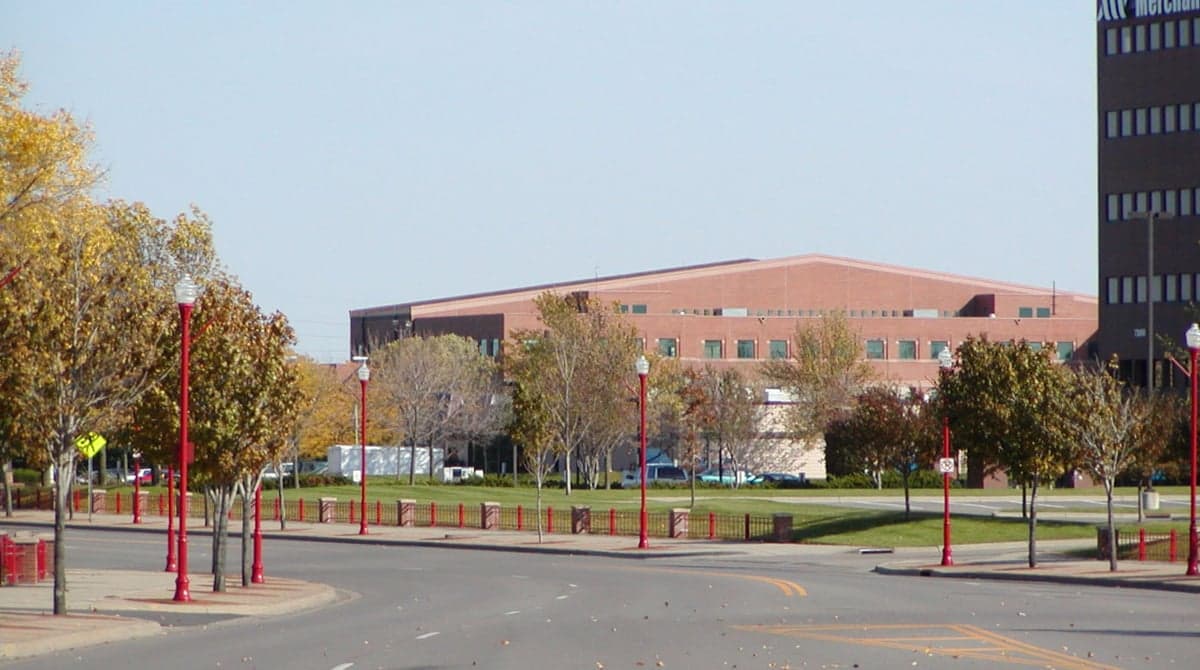
Photo: Wikipedia
Personal Sovereignty in Apple Valley, MN
Viable for self-reliance. Generally workable, though some barriers may limit total independence.
What does Personal Sovereignty tell us?
Personal Sovereignty measures your capacity for self-reliance and independence with minimal government friction. Higher scores mean fewer barriers between you and the way you want to live... but it assumes you have the space you need and good neighbors.
What does this tell us?
Personal Sovereignty measures your capacity for self-reliance and independence with minimal government friction. Higher scores mean fewer barriers between you and the way you want to live... but it assumes you have the space you need and good neighbors.
State Policy
Energy independence: Importer (20% of energy produced in-state)
Personal Liberty
Homesteading

Personal Liberty Analysis
Apple Valley, Minnesota, offers a mixed bag for those prioritizing personal sovereignty, where a strong local sense of community and relatively low crime rates coexist with a state-level political environment that increasingly favors expansive government authority. For the survivalist or prepper mindset, the city itself provides a stable, orderly base, but the real constraints on autonomy come from the state capitol in St. Paul, which has steadily tightened its grip on individual rights in areas from taxation to self-defense. This analysis breaks down the key sovereignty factors—tax burden, gun laws, homesteading potential, and personal liberties—so you can weigh whether Apple Valley’s suburban stability is worth the trade-offs in personal freedom.
Tax burden and regulatory posture: How much of your income and property stays yours?
Minnesota’s tax climate is a significant drag on personal sovereignty, and Apple Valley residents feel it directly. The state imposes a progressive income tax with rates climbing to 9.85% on high earners, and property taxes in Dakota County are above the national average—expect to pay roughly 1.1% to 1.3% of your home’s assessed value annually. While there is no state sales tax on groceries or clothing, the general sales tax is 6.875%, and local options can push it higher. For a prepper focused on financial independence, this means a substantial portion of your income is diverted to government programs you may not support. The regulatory posture is similarly heavy: Minnesota has strict environmental and building codes, and the state’s energy mandates (like the 2023 law requiring 100% carbon-free electricity by 2040) will likely drive up utility costs. On the plus side, Apple Valley’s city government is relatively efficient and not known for overreach—zoning is predictable, and business licensing is straightforward. But the state-level tax burden is a clear negative for anyone seeking to maximize personal control over their resources.
Self-defense and gun law specifics: Can you keep and bear arms without state interference?
This is the most contentious sovereignty issue in Apple Valley. Minnesota is a “shall-issue” state for concealed carry permits, meaning if you pass a background check and complete a training course, the county sheriff must issue your permit. That’s a solid baseline. However, the state has no constitutional carry—you must have a permit to carry a handgun in public. More concerning for the prepper: Minnesota has a “red flag” law (Extreme Risk Protection Order) that allows law enforcement or family members to petition a court to temporarily seize your firearms if you’re deemed a risk. This law has been used increasingly since its 2023 expansion, and it represents a direct threat to the right to keep and bear arms. Additionally, the state bans “large-capacity” magazines (over 10 rounds for rifles, over 15 for handguns) and requires a 30-day waiting period for handgun purchases. Apple Valley itself is a safe city—violent crime is low—so the practical need for defensive firearms is less acute than in urban cores, but the legal environment is eroding. For the survivalist, this is a yellow flag: you can still own and carry, but the state has tools to disarm you without a criminal conviction.
Self-reliance and homesteading viability: Lot sizes, zoning, and off-grid feasibility
Apple Valley is a classic suburb, and that limits homesteading potential. Most residential lots are 0.25 to 0.5 acres, with some larger parcels in the older sections near the Minnesota River bluffs. Zoning is strictly residential—raising chickens is allowed (with a permit and limits on roosters), but larger livestock like goats or pigs are prohibited in standard subdivisions. Gardening is fine, but don’t expect to put in a serious food forest or a root cellar without HOA or city approval. Off-grid living is essentially impossible: the city requires connection to municipal water and sewer, and solar panels are allowed but must comply with building codes and HOA rules if applicable. For the prepper seeking true self-reliance, this is a major limitation. You can supplement with a large garden, rain barrels, and a backup generator, but you’re still tied to the grid and local government for utilities. If you want acreage for a homestead, you’ll need to look at townships outside the metro, like rural areas of Dakota or Scott County, where zoning is looser and well-and-septic systems are standard.
Personal liberties: Parental rights, medical autonomy, speech, and property
This is where Apple Valley’s state-level context becomes most restrictive for a conservative audience. On parental rights, Minnesota has moved aggressively in recent years: the 2023 “Trans Refuge” law allows minors to receive gender-affirming care without parental consent in some circumstances, and the state’s education code mandates LGBTQ-inclusive curricula in public schools. For parents who want control over their children’s medical and educational decisions, this is a direct challenge. Medical autonomy is similarly constrained—Minnesota has strict vaccine mandates for school attendance (though philosophical exemptions exist for some), and the state’s health department has broad emergency powers. Free speech is generally protected, but the state has enacted laws against “hate speech” that some legal experts argue could chill political expression. Property rights are solid at the local level—eminent domain is rare in Apple Valley—but state environmental regulations can restrict what you do on your land (e.g., wetland protections, tree removal permits). For the survivalist, the overall picture is one of creeping state control: you can live quietly and keep to yourself, but the legal framework is increasingly hostile to traditional conservative values of family autonomy and medical freedom.
In the broader context of the Upper Midwest, Apple Valley offers a decent baseline for personal sovereignty—low crime, stable property values, and a functional local government—but it sits within a state that is actively expanding its reach into your wallet, your gun safe, and your family decisions. Compared to a place like rural South Dakota or even western Wisconsin, the trade-offs are clear: you get better infrastructure and community services, but you surrender more control to the state. For the prepper or survivalist, Apple Valley is a viable option only if you’re willing to stay under the radar, keep your legal affairs in order, and accept that your ultimate autonomy is limited by laws you didn’t vote for. If you value maximum personal sovereignty above all else, the surrounding rural counties or a move to a more liberty-friendly state may be worth the sacrifice in convenience.

* Values derived from national, state, county, city and local statistics and may differ in a specific area. Last updated: 2026-04-29T19:26:47.000Z
Narrative content on this page is AI-generated and may contain mistakes. Verify any details that matter before acting on them.
ReloMaps may earn a commission from affiliate links at no extra cost to you.

