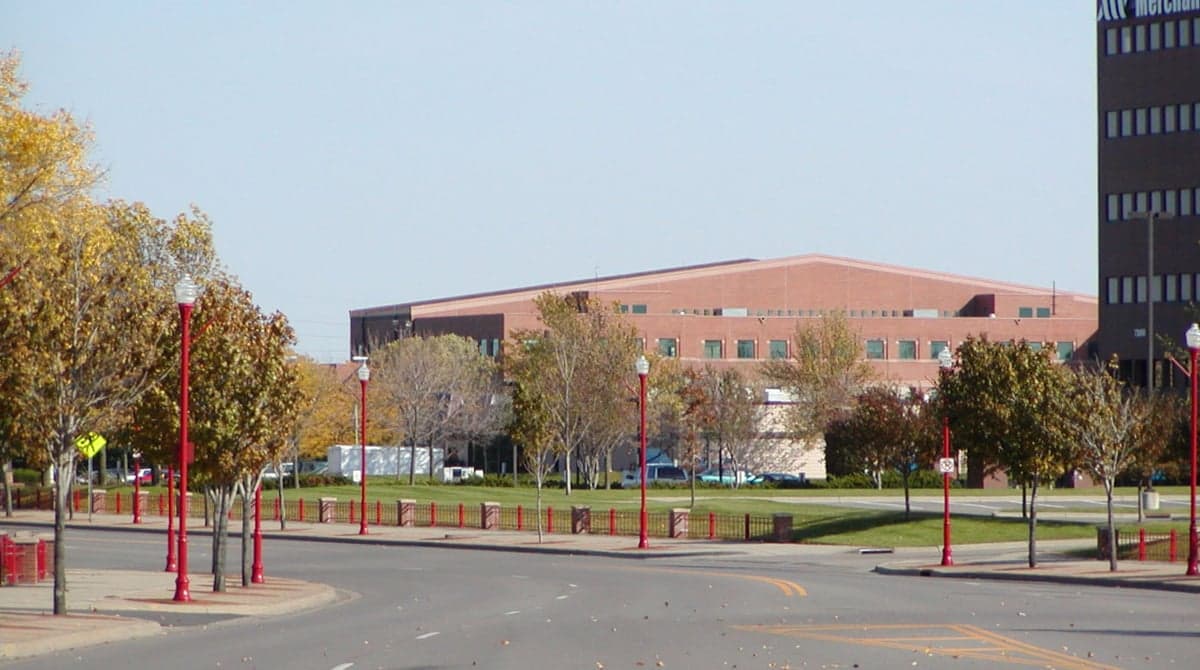
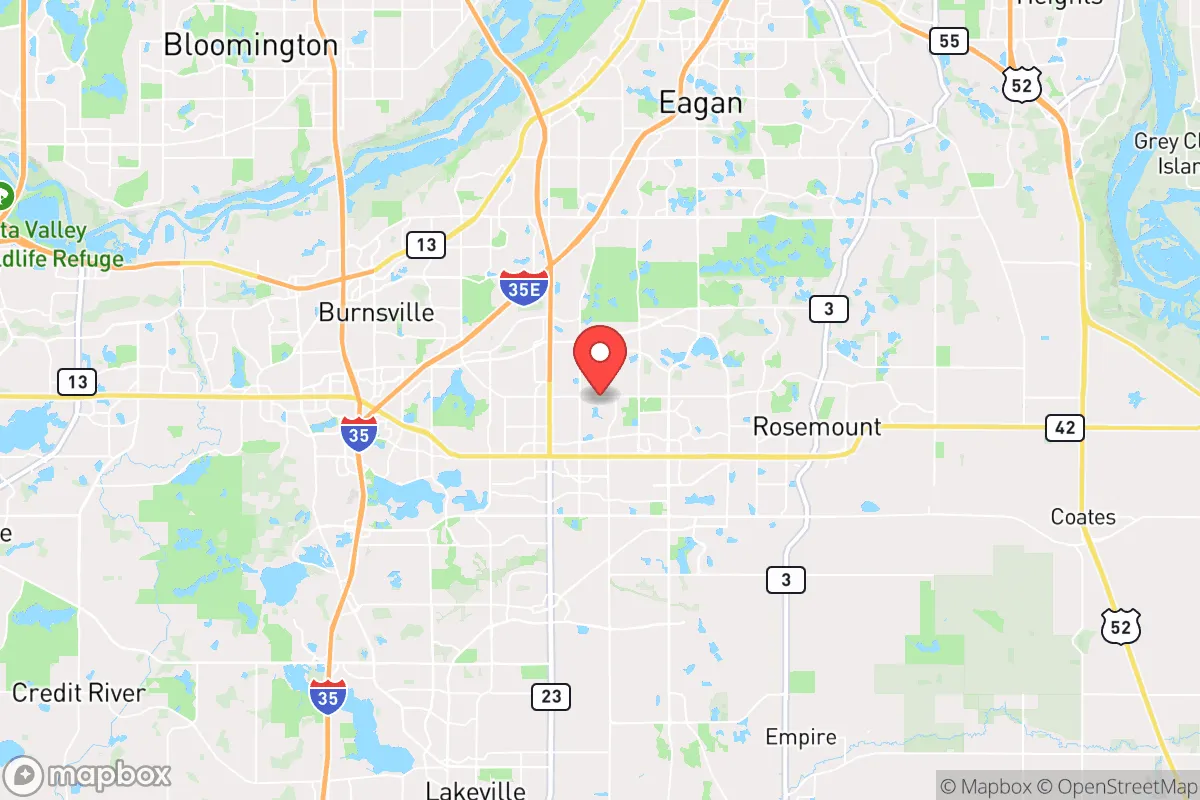
Photo: Wikipedia
Quality of Life in Apple Valley, MN
A high quality of life with strong walkability, manageable living costs, healthy neighborhood signals, and solid amenity access.
What does Quality of Life tell us?
Quality of Life blends cost of living, nearby amenities, socioeconomic signals, and neighborhood character. City-level scores represent the whole municipality; individual neighborhoods can differ.
What does this tell us?
Quality of Life blends cost of living, nearby amenities, socioeconomic signals, and neighborhood character. City-level scores represent the whole municipality; individual neighborhoods can differ.
Cost of Living
37% above national average
The Real Cost of Living in Apple Valley, MN for 2026
| Tier | Individual | Family (4) |
|---|---|---|
| Survival | $27k | $50k |
| Comfortable | $69k | $101k |
| Luxury | $158k+ | $245k+ |
| Elite (Top 5%) | $186k+ | $288k+ |
98%
The Area Signal
A metric tracking the socioeconomic signals of the area.
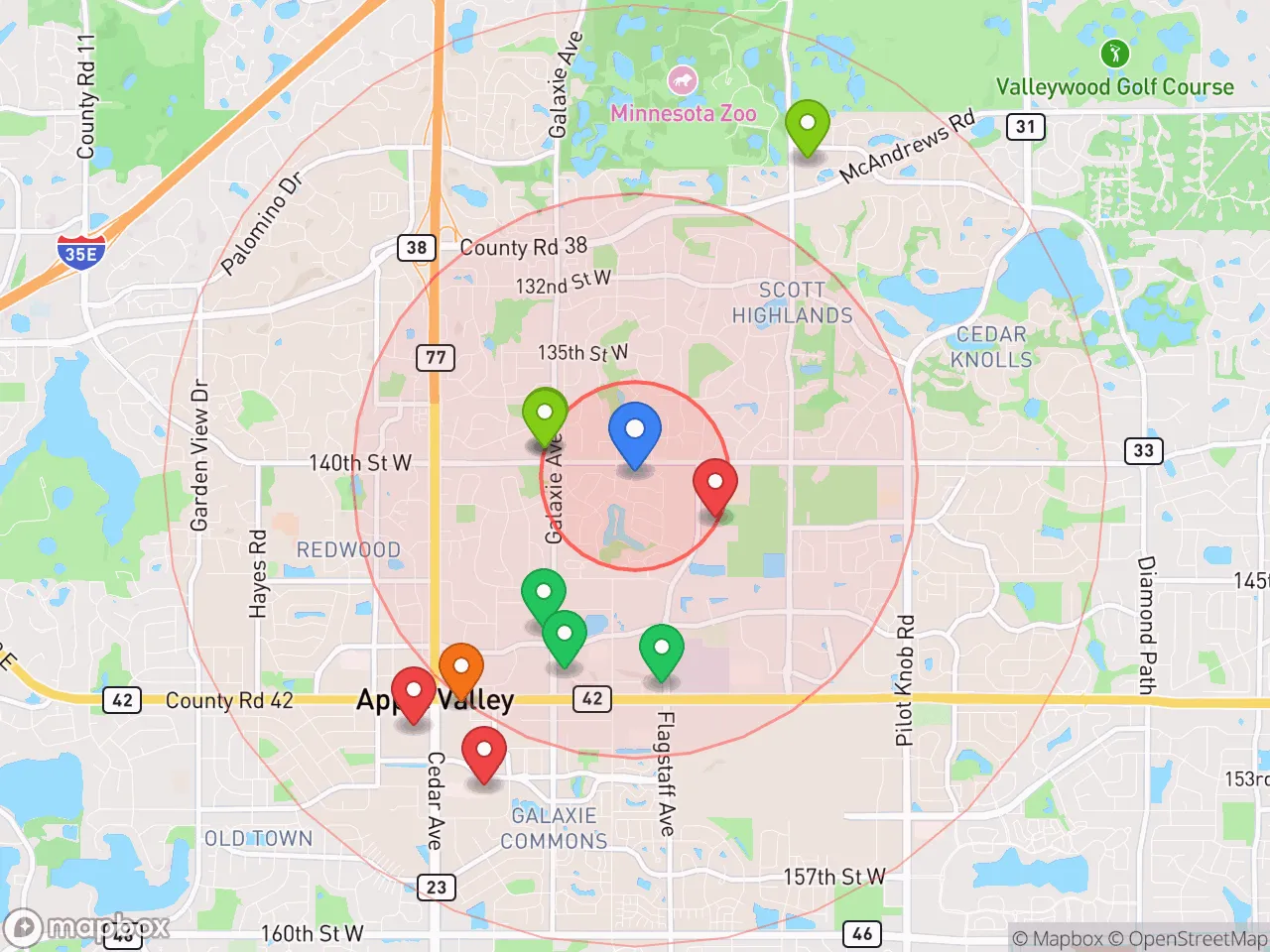
Hobbies
Explore the areaGroceries
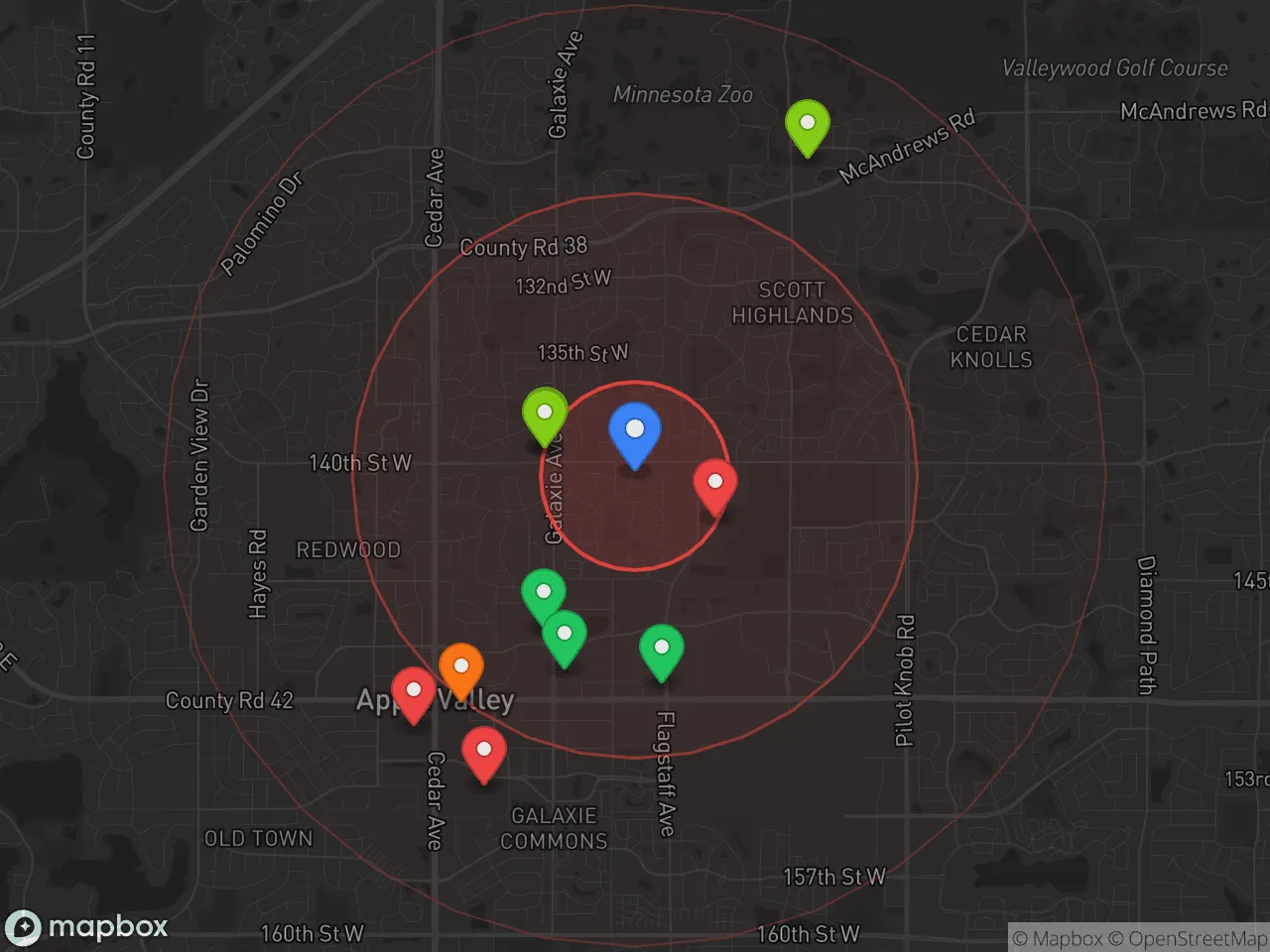
6 within 10 miles
Gas
20 within 10 miles
Hospital
20 within 20 miles
Airport
JFK — John F. Kennedy Memorial
Post Office
USPS — Saint Paul, MN
Critical Amenities
Quality-of-Life Analysis
Apple Valley, Minnesota, presents a distinctly upper-middle-class quality of life, anchored by a cost of living index of 137 (37% above the national average) and a population of professionals, families, and long-term residents who prioritize strong schools, low crime, and suburban convenience. The city’s demographic profile skews toward married couples with children, with a median household income well above the state average, reflecting a community that has traded urban intensity for spacious homes, reliable services, and proximity to the Twin Cities job market. This is not a place for bargain hunters, but for those who can afford the premium for stability and amenities.
Cost of living, housing, and affordability compared to nearby suburbs
Apple Valley’s housing market is the primary driver of its elevated cost of living. The median home value sits at $354,200, roughly 15% higher than the national median, while the median rent of $1,678 per month places it among the pricier suburbs south of the Mississippi River. Compared to neighboring Lakeville (median home value ~$410,000) and Eagan (~$370,000), Apple Valley offers slightly more attainable pricing, though it remains significantly more expensive than Burnsville (~$310,000) or Rosemount (~$340,000). The average commute of 26 minutes is typical for the south metro area, with most residents driving to jobs in Bloomington, Minneapolis, or St. Paul via Interstate 35E or Cedar Avenue. Property taxes in Dakota County are moderate for the region, but the combination of higher home prices and state income tax means that affordability is a genuine concern for renters and first-time buyers; the city’s rental vacancy rate has hovered around 3-4% in recent years, keeping upward pressure on lease prices.
Parks, schools, and what daily life is like for families
Daily life in Apple Valley revolves around its well-regarded public school system (Independent School District 196), which consistently earns above-average ratings for test scores and college readiness, particularly at Apple Valley High School and Eastview High School. The city operates over 40 parks, with the 160-acre Lebanon Hills Regional Park offering hiking, fishing, and cross-country skiing that rivals state park quality. The retail spine along Cedar Avenue and County Road 42 provides big-box shopping, grocery stores, and the Apple Valley Transit Station, which connects to the Metro Transit bus network. For dining and entertainment, residents frequent the Minnesota Zoo (located within city limits) and the Ames Center for performing arts. The rhythm is distinctly suburban: weekend soccer games at Johnny Cake Ridge Park, summer concerts at the Central Park Amphitheater, and a reliance on personal vehicles for most errands. The city’s crime rate is roughly 60% lower than the national average, a key factor in its reputation as a safe, family-oriented community.
Apple Valley is best suited for families and professionals who value top-tier public schools, abundant green space, and a low-crime environment, and who have the income to absorb the above-average housing costs. Empty-nesters and retirees may find the property taxes and commute less appealing, while young singles or renters on a tight budget will likely find better value in Burnsville or Rosemount. For those who can afford the premium, Apple Valley delivers a predictable, high-quality suburban lifestyle with strong community ties and easy access to the Twin Cities’ employment centers.

Crime in Apple Valley, MN
Generally safer than 69% of comparable U.S. locations.
Violent CrimeViolent Crime Analysis
Property CrimeProperty Crime Analysis
Crime Analysis
Apple Valley, Minnesota, reports a violent crime rate of 198.1 incidents per 100,000 residents and a property crime rate of 1,450.2 per 100,000, placing it in a moderate safety tier for a Minneapolis-Saint Paul suburb. While these figures are lower than the national average for violent crime, the property crime rate is a notable concern, particularly given the city's proximity to the broader Twin Cities metro area. The overall safety picture is mixed: Apple Valley is generally quieter than inner-ring suburbs like Minneapolis or Saint Paul, but residents should remain vigilant about theft and property-related offenses.
Crime in context
Apple Valley's violent crime rate of 198.1 per 100,000 is roughly 43% below the national average of 350 per 100,000, but it sits slightly above the Minnesota state average of approximately 240 per 100,000. Property crime, however, tells a different story: at 1,450.2 per 100,000, it is about 25% higher than the national average of 1,160 per 100,000 and significantly above the Minnesota state average of roughly 1,200 per 100,000. This disparity reflects a pattern seen in many suburbs of large metro areas, where property crime—especially vehicle break-ins and package theft—is driven by proximity to urban centers with higher overall crime rates. The presence of progressive district attorneys in Dakota County and the broader metro area, who often prioritize diversion programs and reduced sentencing for non-violent offenders, may contribute to a higher recidivism rate for property crimes, as repeat offenders face fewer consequences.
What residents experience
For daily life in Apple Valley, the most common safety issues are property-related: theft from vehicles, burglary, and vandalism are the offenses residents are most likely to encounter. Violent crime is rare but not absent—assaults and robberies do occur, often concentrated near commercial corridors like Cedar Avenue (County Road 23) and the Minnesota Zoo area. The city's police department maintains a visible presence, but the broader metro's liberal judicial philosophy means that even when arrests are made, offenders are frequently released on low bail or given probation, increasing the likelihood of repeat incidents. Residents should take proactive measures: lock vehicles, install security cameras, and avoid leaving valuables in plain sight. The city's community policing efforts and neighborhood watch programs help mitigate risk, but they cannot fully offset the systemic leniency in the justice system that keeps property crime rates elevated.
Neighborhood-level variation in Apple Valley is modest but worth noting. Areas east of Cedar Avenue, particularly near the Dakota County Technical College and the city's older housing stock, tend to report slightly higher property crime rates, while newer developments west of Johnny Cake Ridge Road and near the Thompson County Park are generally quieter. The city's overall safety profile is typical for a Minnesota suburb of its size—better than the urban core but worse than exurban towns like Lakeville or Farmington. For families and professionals considering relocation, Apple Valley offers a reasonable safety baseline, but the persistent property crime and the metro area's progressive criminal justice policies are factors that should weigh into the decision, especially for those who prioritize strict law enforcement and victim-centered outcomes.
* Values derived from national, state, county, city and local statistics and may differ in a specific area. Last updated: 2026-04-29T19:26:47.000Z
Narrative content on this page is AI-generated and may contain mistakes. Verify any details that matter before acting on them.
ReloMaps may earn a commission from affiliate links at no extra cost to you.

