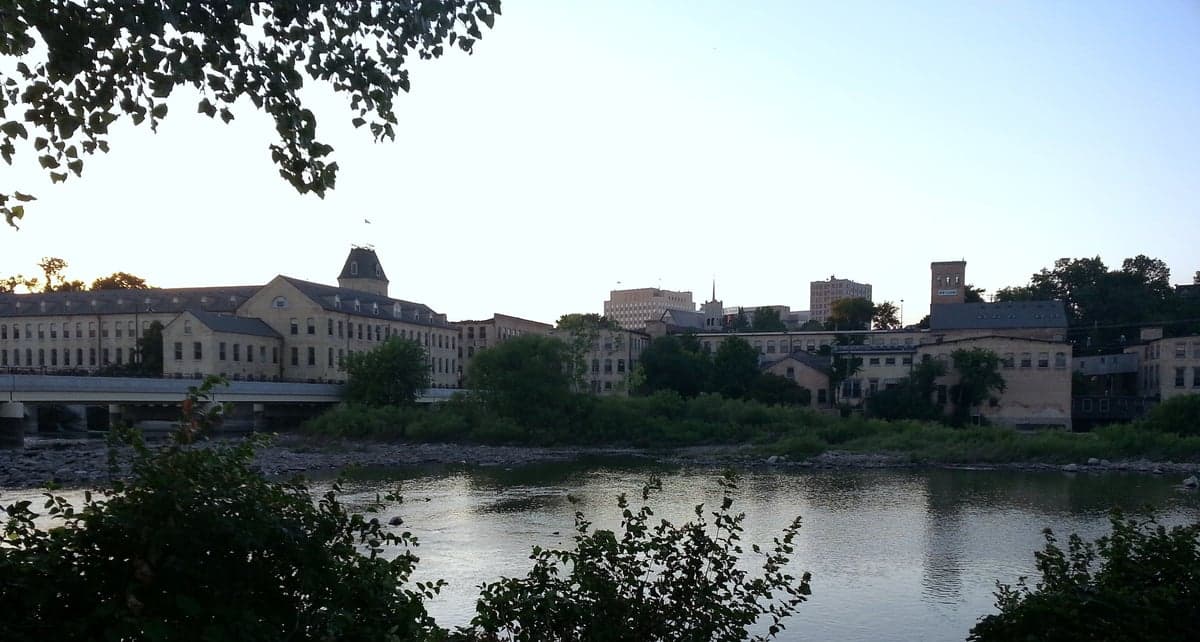
Photo: Wikipedia
Political ClimatePolitical Climate in Appleton, WI
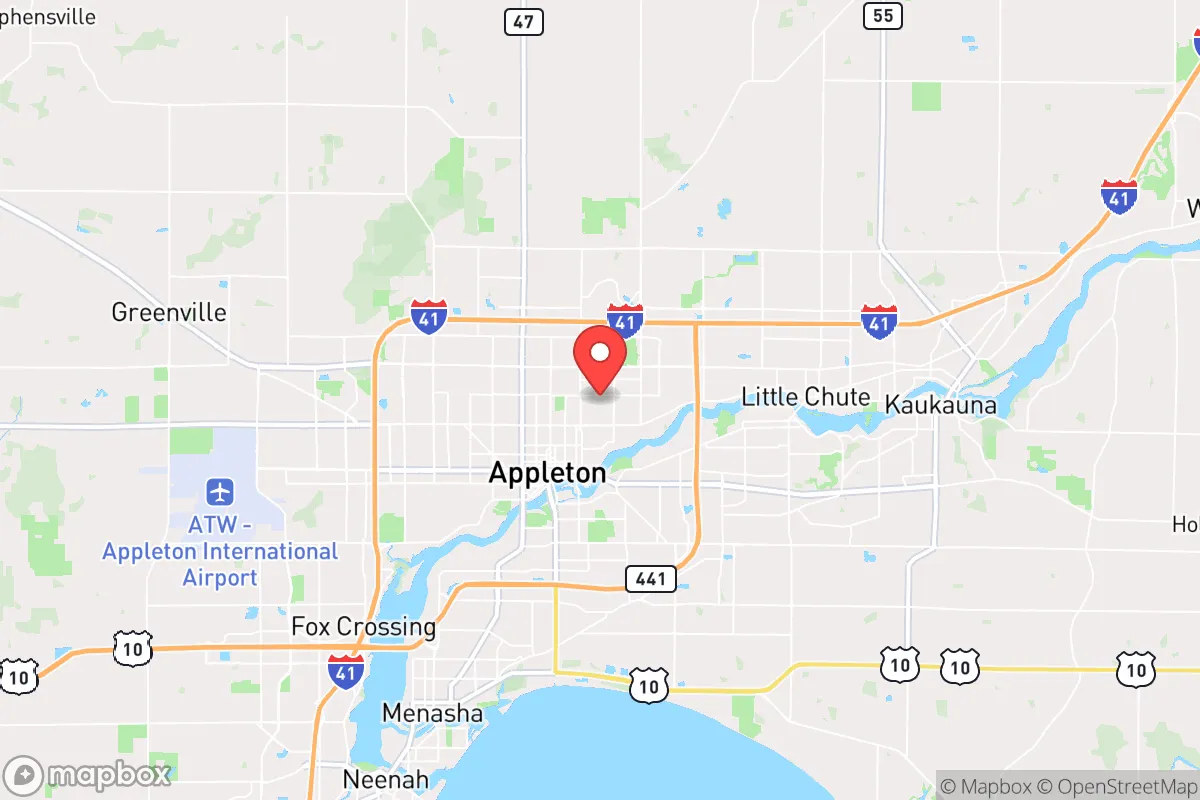
District shown is the primary district for this city’s centroid. Cities may span multiple districts.
Local Political AnalysisPolitical Analysis of Appleton, WI
Appleton, Wisconsin, has long been a reliably conservative stronghold in the Fox Valley, but like many communities across the Midwest, it’s seen a noticeable shift in recent years. The area carries a Cook Partisan Voting Index of R+8, meaning it votes about eight points more Republican than the national average—a solid red lean that has held steady through most elections. That said, the political climate here isn’t as simple as it used to be. You’ve got a growing progressive presence, especially among younger residents and newcomers drawn to the downtown revitalization, and that’s starting to nudge the local conversation in ways that feel a little uncomfortable for those of us who value limited government and personal freedoms.
How it compares
If you drive just 20 minutes south to Oshkosh or 30 minutes north to Green Bay, you’ll find similar R+8 to R+10 territory, but the vibe is different. Appleton’s political identity sits in a kind of tug-of-war between its traditional manufacturing and agricultural roots and the influx of white-collar professionals and college students from Lawrence University. Compare that to the more rural towns like Hortonville or Shiocton, where the conservative lean is deeper and more uniform—those areas haven’t seen the same cultural drift. Meanwhile, the city of Neenah to the east is a bit more moderate, but still reliably red. The real contrast is with Madison, about 90 minutes south, which is a deep blue island. Appleton’s shift isn’t as dramatic, but it’s enough to make you wonder if the old guard is losing its grip.
What this means for residents
For folks who moved here to escape the overreach you see in bigger cities, the creeping progressive influence is a real concern. Local school board meetings have become battlegrounds over curriculum and parental rights, with some pushing for policies that feel like they’re testing the limits of common sense. Property taxes have crept up, and there’s been talk of new zoning rules that could limit what you can do with your own land—things that would have been unthinkable a decade ago. On the flip side, the conservative majority still holds the line on most fiscal issues, and the county board remains a reliable check on state-level mandates. For now, the balance is intact, but it’s a watch-and-see situation. If you value your Second Amendment rights or want to keep your business free from heavy-handed regulations, Appleton is still a decent bet, but you’ll want to keep an eye on local elections.
Culturally, Appleton has always prided itself on being a place where you can raise a family without the chaos of bigger metros. The Fox Cities Performing Arts Center and the downtown farmers market are great, but there’s a growing push for more “inclusive” policies that sometimes feel like they’re trying to remake the town in a different image. The local paper, the Post-Crescent, has leaned left in its editorial stance, which rubs a lot of long-timers the wrong way. Still, the community’s backbone remains its churches, small businesses, and the paper mill workers who’ve been here for generations. If the trend toward progressive governance continues, Appleton risks losing the very character that made it a great place to live—but for now, it’s still a place where your voice matters, especially if you show up to vote.

State Political ClimatePolitical Climate in Wisconsin
State Political AnalysisPolitical Environment in the State
Wisconsin has long been a classic swing state, but over the past 10-20 years, it has hardened into a near-perfect 50/50 battleground, with a deep urban-rural split that makes every election a knife fight. The state’s political soul is divided between the reliably blue, union-heavy Milwaukee metro and Dane County (Madison), and the increasingly red, exurban, and rural rest of the state. The 2024 presidential race saw Wisconsin tip back to the GOP by a razor-thin margin, reflecting a decade-long trend where the state’s conservative-leaning rural and small-town base has grown more energized, while the progressive strongholds have become more concentrated and intense. For a conservative considering a move, this means you’re landing in a state where your vote truly matters, but where the cultural and policy battles are fought block by block.
Urban vs. rural divide
The political map of Wisconsin is a textbook case of the urban-rural chasm. The Democratic firewall is built on Milwaukee County (home to Milwaukee, which voted +40 points for Biden in 2020) and Dane County (Madison, which voted +60 points for Biden). These two counties alone generate nearly half the state’s Democratic votes. The GOP’s strength is spread across the rest of the state, anchored by the WOW counties (Waukesha, Ozaukee, Washington) — the conservative suburban ring around Milwaukee that votes +20 to +30 points Republican. Beyond that, the rural northwoods and the Driftless Region in the southwest are deeply red. A key flashpoint is the Fox Valley (Appleton, Green Bay, Oshkosh) — once a swing region, it has shifted right in recent cycles, with Brown County (Green Bay) flipping from Obama to Trump. The I-94 corridor from Milwaukee to Madison is the state’s political fault line, where exurban towns like Brookfield and Delafield are solidly red, while the college towns of Whitewater and Platteville lean blue. The divide isn’t just about votes — it’s about lifestyle: rural residents feel ignored by Madison’s progressive agenda, while urbanites see rural areas as backward. This tension defines every legislative session.
Policy environment
Wisconsin’s policy environment is a mixed bag for conservatives — some wins, some frustrating compromises. On taxes, the state has a flat income tax of 4.4% (down from a progressive structure in 2023), a major victory for fiscal conservatives. Property taxes are moderate, but local school referendums often drive them up. The regulatory posture is generally business-friendly, with right-to-work laws intact and a relatively low corporate tax rate. However, the state’s education policy is a battleground: Governor Tony Evers (D) has expanded school choice slowly, but the state still has a robust voucher program in Milwaukee and Racine. Healthcare is a sore spot — Wisconsin expanded Medicaid under the Affordable Care Act, and the state runs its own exchange, which conservatives see as government overreach. Election laws are a hot topic: Wisconsin has strict voter ID requirements (a win for election integrity), but also allows no-excuse absentee voting and same-day registration, which some conservatives view as vulnerable to fraud. The state’s gun laws are relatively permissive — open carry is legal without a permit, and concealed carry requires a license (shall-issue). The legislature has passed a “constitutional carry” bill multiple times, but Evers has vetoed it each time. This is a clear example of a conservative-leaning legislature being blocked by a Democratic governor.
Trajectory & freedom
Wisconsin’s trajectory on personal freedom is a tug-of-war. On the plus side, the state has seen significant expansion of parental rights — in 2023, the legislature passed a bill requiring schools to notify parents of any changes to a student’s health or well-being (including gender identity), though Evers vetoed it. The state also has a strong school choice program, giving parents control over where their kids learn. On the downside, medical autonomy took a hit during COVID — Evers issued a statewide mask mandate and business closures, which the conservative-leaning Supreme Court struck down in 2020 (Wisconsin Legislature v. Palm). That ruling was a major win for liberty, but it showed how quickly executive power can be abused. Property rights are generally strong, though local zoning in liberal cities like Madison can be restrictive. The biggest freedom concern for conservatives is the erosion of election integrity — the 2020 election saw massive private funding (Zuckerberg bucks) flow into Milwaukee and Madison, and the legislature has been unable to pass stricter ballot security measures due to Evers’ vetoes. The state’s gun rights are stable but not expanding, and the tax burden is moderate but not low. Overall, Wisconsin is a state where freedom is defended fiercely in the legislature but constantly under threat from the executive branch.
Civil unrest & political movements
Wisconsin has been a flashpoint for civil unrest and political movements. The 2020 Kenosha riots after the Jacob Blake shooting were a national story — businesses burned, a curfew imposed, and the Kyle Rittenhouse trial became a symbol of self-defense rights. The 2020-2021 protests in Madison over the Capitol Square saw left-wing activists clash with police, and the state Capitol was vandalized. On the right, the Wisconsin Republican Party has been energized by grassroots groups like the Wisconsin Institute for Law & Liberty (WILL) and the Tea Party Patriots, which have pushed for election integrity and school choice. Immigration politics are less visible here than in border states, but the issue is heating up — Evers has vetoed bills requiring local law enforcement to cooperate with ICE, and some cities like Madison have declared themselves “sanctuary cities.” Election integrity remains the top concern: the 2020 election saw the state’s Supreme Court split 4-3 on key rulings, and the legislature has launched multiple investigations into the 2020 election (the Michael Gableman probe). The 2024 election saw a record number of poll watchers and legal challenges, and the state’s new legislative maps (drawn by the state Supreme Court in 2024) have shifted the balance slightly toward Democrats, which conservatives see as a gerrymander in reverse. A new resident will notice the political tension in everyday conversations — it’s a state where people are passionate and engaged.
Projection
Over the next 5-10 years, Wisconsin is likely to remain a purple state, but with a slight rightward tilt driven by in-migration from Illinois and other blue states. The WOW counties are growing, and the Fox Valley is becoming more conservative as young families move out of Milwaukee. However, the Milwaukee and Madison metros are also growing, driven by corporate relocations (like the Foxconn project in Racine, though it fizzled) and university expansion. The 2024 legislative maps will likely give Democrats a few more seats, but the GOP’s structural advantage in rural areas is durable. The biggest wild card is demographics: Wisconsin’s population is aging and white, but the state is seeing a slow influx of Hispanic and Asian immigrants, who tend to vote more Democratic. The 2026 gubernatorial election will be critical — if a Republican wins, expect a wave of conservative legislation on school choice, gun rights, and election integrity. If Evers or another Democrat wins, expect continued gridlock. For a conservative moving in now, expect to live in a state where your vote is decisive, but where you’ll need to stay engaged in local politics to protect your freedoms.
Bottom line for a new resident: Wisconsin offers a high quality of life with strong communities, good schools (especially in the suburbs), and a relatively low cost of living. But it’s not a red state — it’s a battlefield. If you’re moving here, pick your county carefully. The WOW counties (Waukesha, Ozaukee, Washington) are the safest bet for a conservative lifestyle, with low taxes, good schools, and like-minded neighbors. The Fox Valley (Appleton, Green Bay) is a solid second choice, with a more moderate but still conservative vibe. Avoid Madison and Milwaukee unless you’re prepared for progressive policies and higher taxes. And get involved — your vote and your voice matter more here than almost anywhere else in the country.
* Values derived from national, state, county, city and local statistics and may differ in a specific area. Last updated: 2026-04-21T10:10:59.000Z
Narrative content on this page is AI-generated and may contain mistakes. Verify any details that matter before acting on them.
ReloMaps may earn a commission from affiliate links at no extra cost to you.

