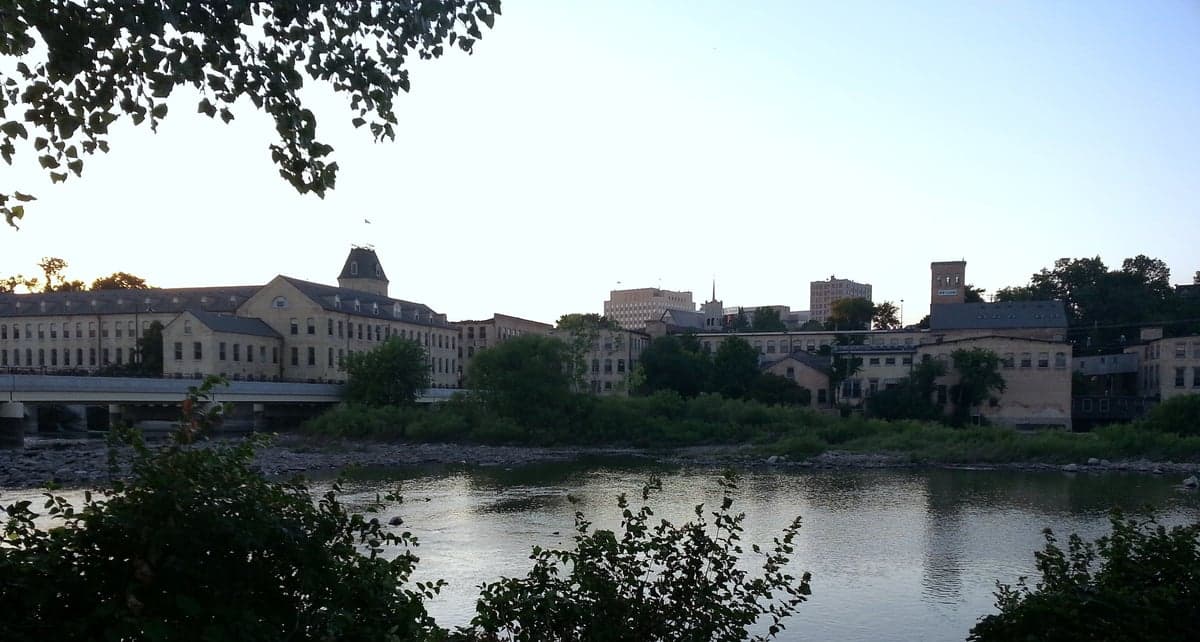
Photo: Wikipedia
Quality of Life in Appleton, WI
Above-average quality of iife. The area offers a reasonable cost of living, decent mobility, and a mix of neighborhood amenities.
What does Quality of Life tell us?
Quality of Life blends cost of living, nearby amenities, socioeconomic signals, and neighborhood character. City-level scores represent the whole municipality; individual neighborhoods can differ.
What does this tell us?
Quality of Life blends cost of living, nearby amenities, socioeconomic signals, and neighborhood character. City-level scores represent the whole municipality; individual neighborhoods can differ.
Cost of Living
21% below national average
The Real Cost of Living in Appleton, WI for 2026
| Tier | Individual | Family (4) |
|---|---|---|
| Survival | $15k | $29k |
| Comfortable | $41k | $60k |
| Luxury | $140k+ | $217k+ |
| Elite (Top 5%) | $202k+ | $313k+ |
128%
The Area Signal
A metric tracking the socioeconomic signals of the area.
Hobbies
Explore the areaGroceries
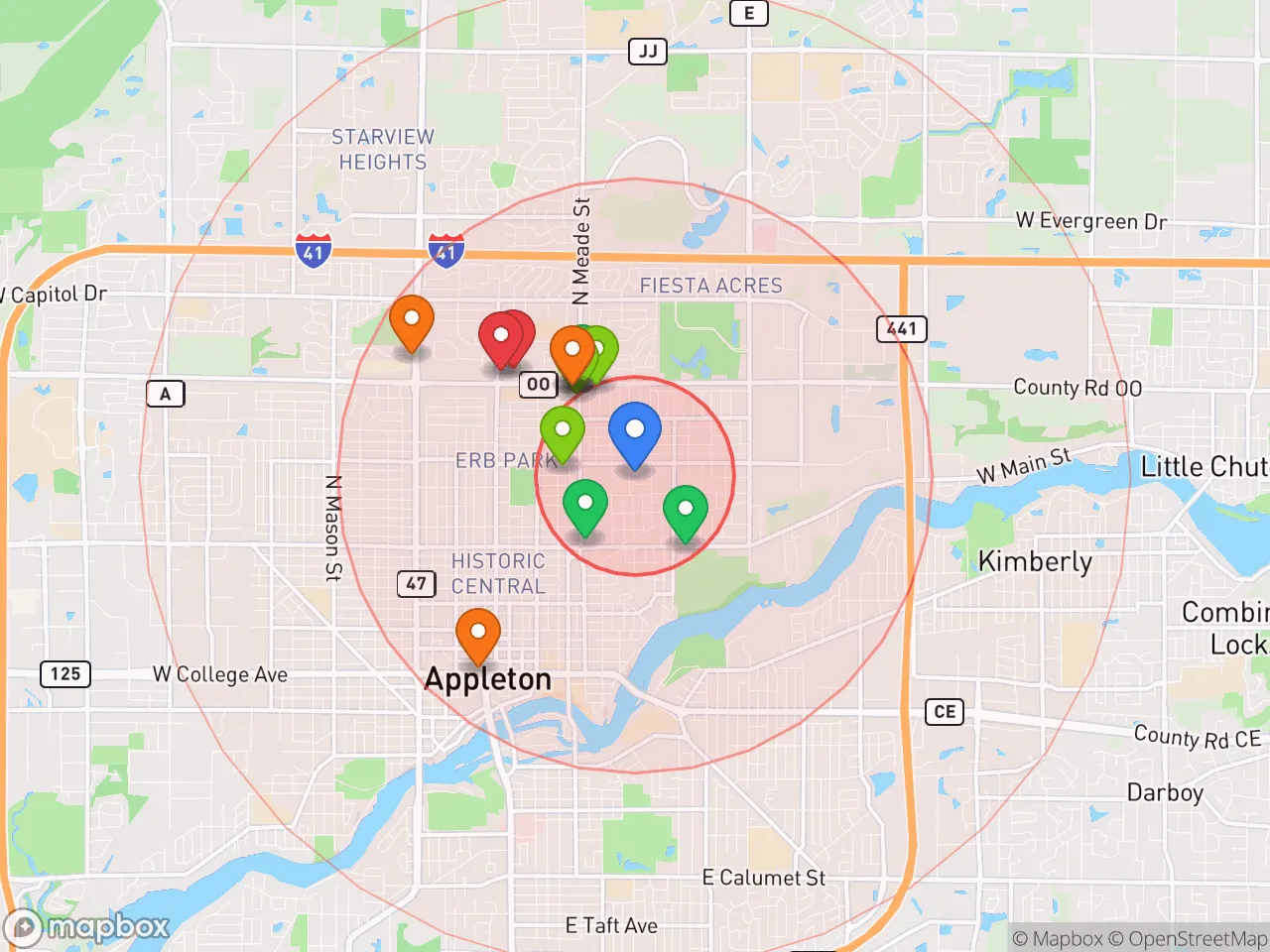
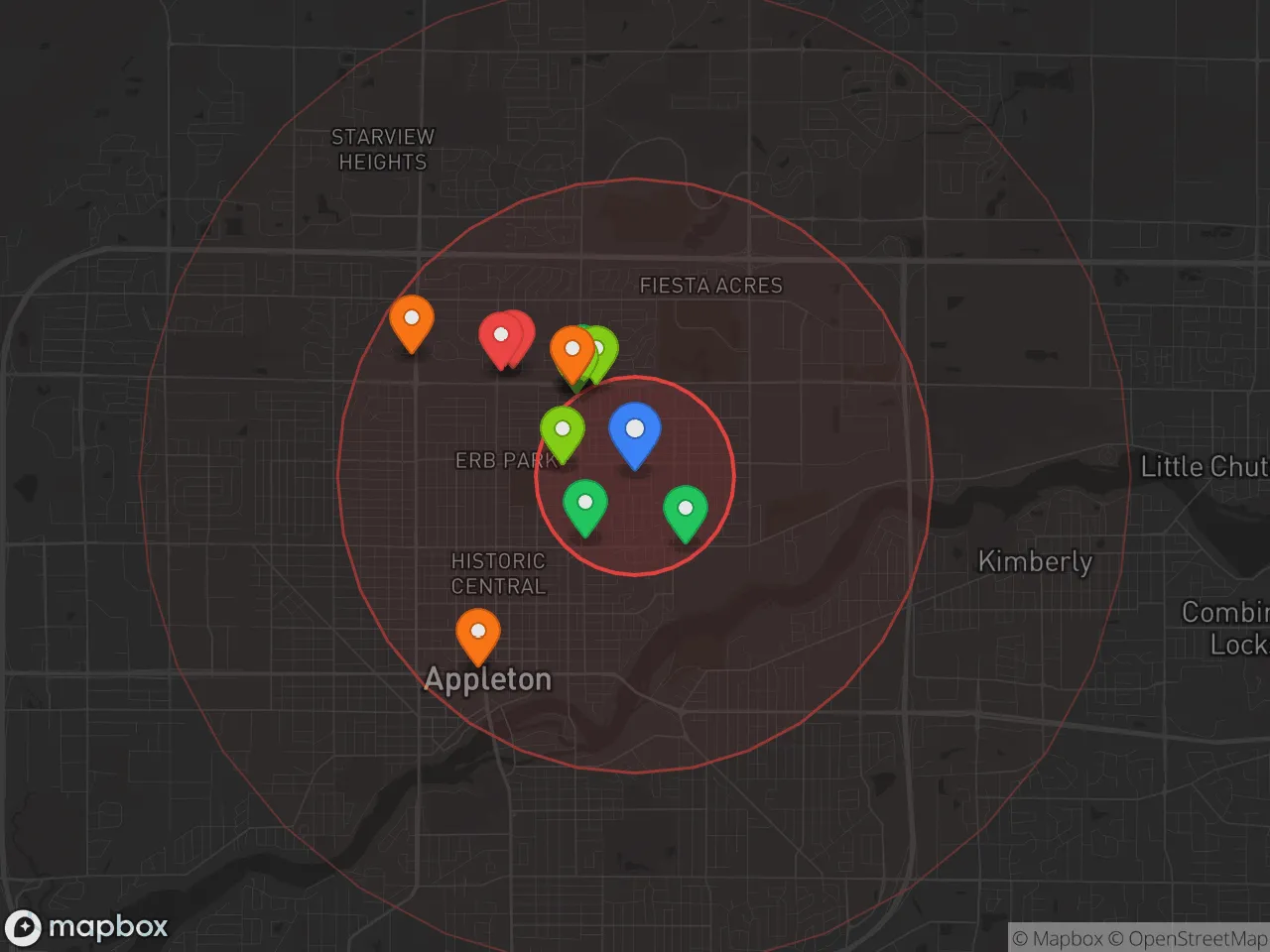
5 within 10 miles
Gas
20 within 10 miles
Hospital
8 within 20 miles
Airport
ORD — O'Hare International
Post Office
USPS — Appleton, WI
Critical Amenities
Quality-of-Life Analysis
Appleton, Wisconsin, offers a quality of life that blends Midwestern affordability with a surprisingly robust cultural and economic scene, attracting a mix of young professionals, growing families, and retirees seeking a lower-stress, higher-value alternative to larger metros. With a cost of living index of 79 (21% below the U.S. average), the city provides a tangible financial cushion that allows residents to prioritize homeownership, savings, and leisure. The population skews educated and family-oriented, anchored by a strong manufacturing and healthcare job base, yet retains a progressive, college-town energy thanks to Lawrence University and the Fox Cities regional identity.
Cost of living, housing affordability, and how Appleton compares to nearby cities
Appleton’s affordability is its most defining quality-of-life advantage, particularly when stacked against national averages and even other Wisconsin cities like Madison or Milwaukee. The median home value sits at $211,500, a figure that buys a well-maintained three-bedroom bungalow or a newer townhome in a family-friendly subdivision—a stark contrast to the $400,000+ entry points common in Madison’s market. Renters also benefit, with a median rent of $957, well below the national median of roughly $1,200, making it feasible for single earners and young couples to live alone without a roommate. The average commute of just 19.4 minutes further amplifies the financial and time savings; residents can live in a quiet neighborhood like Grand Chute or Menasha and still reach downtown Appleton or the Fox River Mall in under 20 minutes. Compared to Green Bay (roughly 30 miles north), Appleton’s housing is slightly pricier but offers a denser job market and more dining/entertainment options, while versus the Fox Cities suburbs like Neenah or Kimberly, Appleton itself provides the most rental variety and walkable downtown inventory.
What daily life is like for families: schools, amenities, and community rhythm
Daily life in Appleton revolves around a strong public school system, a walkable downtown core, and an unusually high density of parks and trails for a city its size. The Appleton Area School District consistently ranks among Wisconsin’s top performers, with schools like Houdini Elementary and Appleton East High School drawing families to specific neighborhoods. Beyond academics, the city punches above its weight in amenities: the Fox Cities Performing Arts Center hosts Broadway tours, the Building for Kids Children’s Museum is a regional draw, and the Fox River Trail provides a paved 25-mile corridor for biking and running that connects Appleton to Kaukauna and Green Bay. The community rhythm is distinctly seasonal—summer brings the Appleton Farmers Market on College Avenue and concerts at Jones Park, while winter shifts to indoor activities like curling at the Appleton Curling Club or hockey at the Tri-County Ice Arena. For everyday errands, the city offers a mix of national chains and local independents, with the Fox River Mall serving as the retail anchor and College Avenue providing a walkable strip of coffee shops, bookstores, and farm-to-table restaurants.
Appleton is best suited for people who value financial breathing room and a slower, community-oriented pace without sacrificing access to culture, good schools, or outdoor recreation. It is an ideal fit for remote workers who can leverage the low cost of living while earning a national salary, for families who want a safe, well-resourced environment for raising children, and for retirees seeking a walkable, amenity-rich small city with a strong medical network (including ThedaCare Regional Medical Center). Those who thrive here are typically comfortable with four distinct seasons, appreciate a civic culture that balances conservative fiscal habits with progressive social values, and prioritize a short commute and affordable home over the buzz of a major metropolis.

Crime in Appleton, WI
Lower crime rates than 85% of comparable U.S. locations.
Violent CrimeViolent Crime Analysis
Property CrimeProperty Crime Analysis
Crime Analysis
Appleton, Wisconsin, reports a violent crime rate of 175.3 incidents per 100,000 residents and a property crime rate of 866.1 per 100,000, figures that sit below national averages but warrant a closer look at local justice policies. While the city is often perceived as a safe family-oriented community in the Fox River Valley, its status as a liberal-leaning urban center in a largely conservative state introduces specific public safety dynamics. The presence of progressive district attorneys and judges in the region raises legitimate concerns about recidivism and the prioritization of offender rehabilitation over public protection, a pattern that can erode safety over time.
Crime in context
Appleton’s violent crime rate of 175.3 per 100,000 is roughly half the national average of 380 per 100,000, placing it in a safer tier compared to similarly sized Midwestern cities. However, its property crime rate of 866.1 per 100,000, while below the national figure of approximately 1,950 per 100,000, still reflects a notable volume of thefts and burglaries that affect daily life. When compared to the state of Wisconsin’s overall violent crime rate of about 290 per 100,000, Appleton performs better, but the gap narrows when factoring in property offenses. The city’s crime profile benefits from its relatively affluent economy and strong employment base, anchored by employers like Kimberly-Clark and Appleton Inc., yet the broader trend of progressive criminal justice reforms in Outagamie County introduces uncertainty. Liberal policies, such as reduced cash bail and diversion programs for repeat offenders, have been linked to higher rates of property crime in similar jurisdictions, and Appleton is not immune to these effects.
What residents experience
For those living in Appleton, the most tangible safety concerns revolve around property crime—theft from vehicles, package thefts, and occasional break-ins—rather than violent confrontations. Residents in neighborhoods near the downtown core and along College Avenue report more frequent incidents of vandalism and car break-ins, particularly at night. The city’s reliance on progressive prosecution strategies, including deferred prosecution agreements for non-violent offenders, means that many property criminals face minimal consequences, leading to a revolving-door effect that frustrates victims and undermines community trust. Violent crime, while rare, is not absent: aggravated assaults and robberies occur sporadically, often concentrated in areas with higher poverty rates, such as parts of the south side. Families and retirees should note that the overall risk of becoming a violent crime victim is low, but the cumulative impact of unchecked property crime can degrade quality of life over time.
Neighborhood-level variation is significant in Appleton. The east side and areas near the Lawrence University campus tend to have lower crime rates, benefiting from higher property values and active neighborhood watch programs. In contrast, the north and south sides, particularly around the former industrial corridors, see elevated property crime and occasional drug-related offenses. Progressive judicial leniency in Outagamie County has a disproportionate effect on these lower-income neighborhoods, where repeat offenders cycle through the system without meaningful deterrence. Prospective residents should research specific blocks and consult local police reports, as safety can shift dramatically within a few streets. For those prioritizing security, the east side and newer subdivisions on the city’s periphery offer the most stable environment, while downtown-adjacent areas require more vigilance.
* Values derived from national, state, county, city and local statistics and may differ in a specific area. Last updated: 2026-04-21T10:10:59.000Z
Narrative content on this page is AI-generated and may contain mistakes. Verify any details that matter before acting on them.
ReloMaps may earn a commission from affiliate links at no extra cost to you.

