Photo: Wikipedia
Quality of Life in Boone County
A livable area that tracks near national norms for affordability, walkability, and neighborhood health.
What does Quality of Life tell us?
Quality of Life measures an area by evaluating factors like cost of living, nearby amenities, country club access, airport proximity, socioeconomic signals and neighborhood character. For large states, this is a general average — quality of life can vary dramatically between metro areas, suburbs, and rural communities within the same state.
What does this tell us?
Quality of Life measures an area by evaluating factors like cost of living, nearby amenities, country club access, airport proximity, socioeconomic signals and neighborhood character. For large states, this is a general average — quality of life can vary dramatically between metro areas, suburbs, and rural communities within the same state.
Cost of Living
39% below national average
112%
The Real Cost of Living in Boone County for 2026
| Tier | Individual | Family (4) |
|---|---|---|
| Survival | $11k | $21k |
| Comfortable | $33k | $48k |
| Luxury | $92k+ | $143k+ |
| Elite (Top 5%) | $109k+ | $169k+ |
Quality-of-Life Analysis
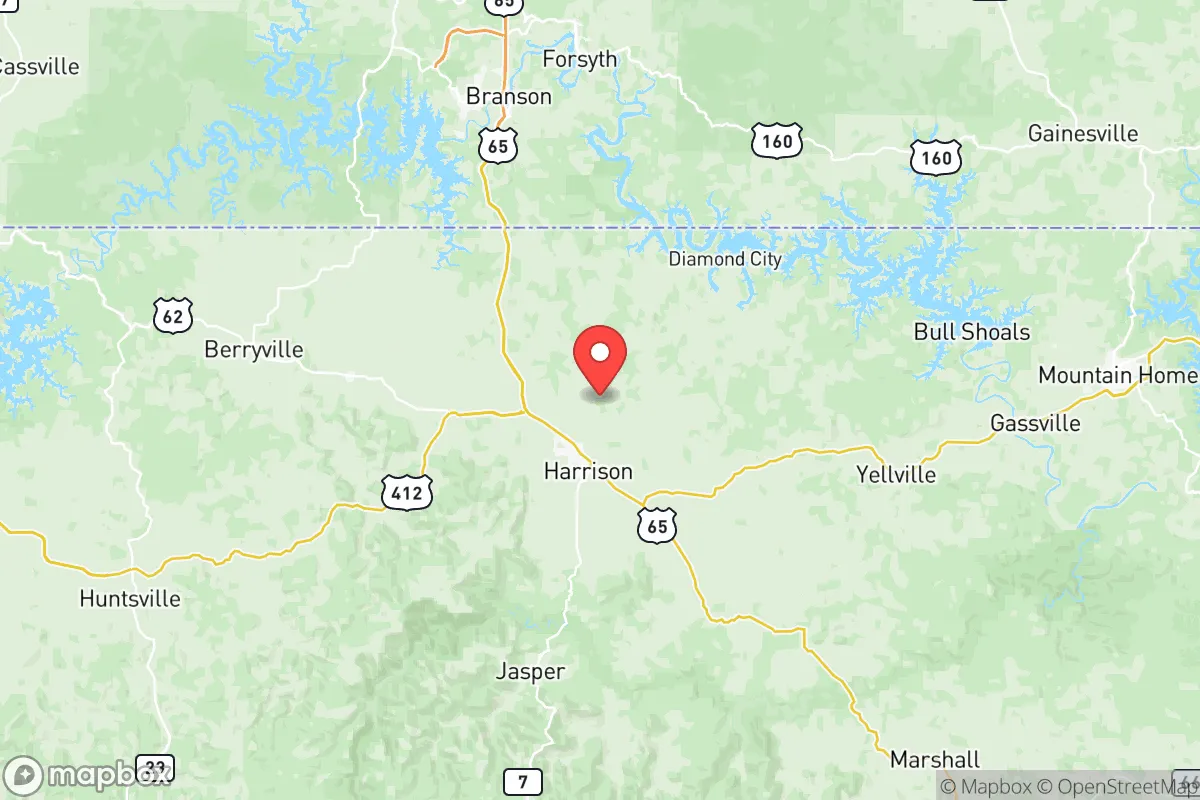
Boone County, Arkansas, offers a quality-of-life spectrum that spans from the walkable, amenity-rich hub of Harrison to the quiet, unincorporated crossroads of Olvey and the remote Ozark hollows near the Buffalo National River. The county’s overall cost of living index of 61 (100 = US average) and median home value of $169,300 make it one of the most affordable places in the nation, attracting a mix of remote workers seeking low overhead, retirees drawn to the lakes and mountains, and families looking for a slower pace. The character of daily life shifts dramatically depending on whether you live within Harrison’s city limits, in a bedroom community like Bellefonte, or on a gravel road in the southern part of the county.
Largest town(s) & population centers
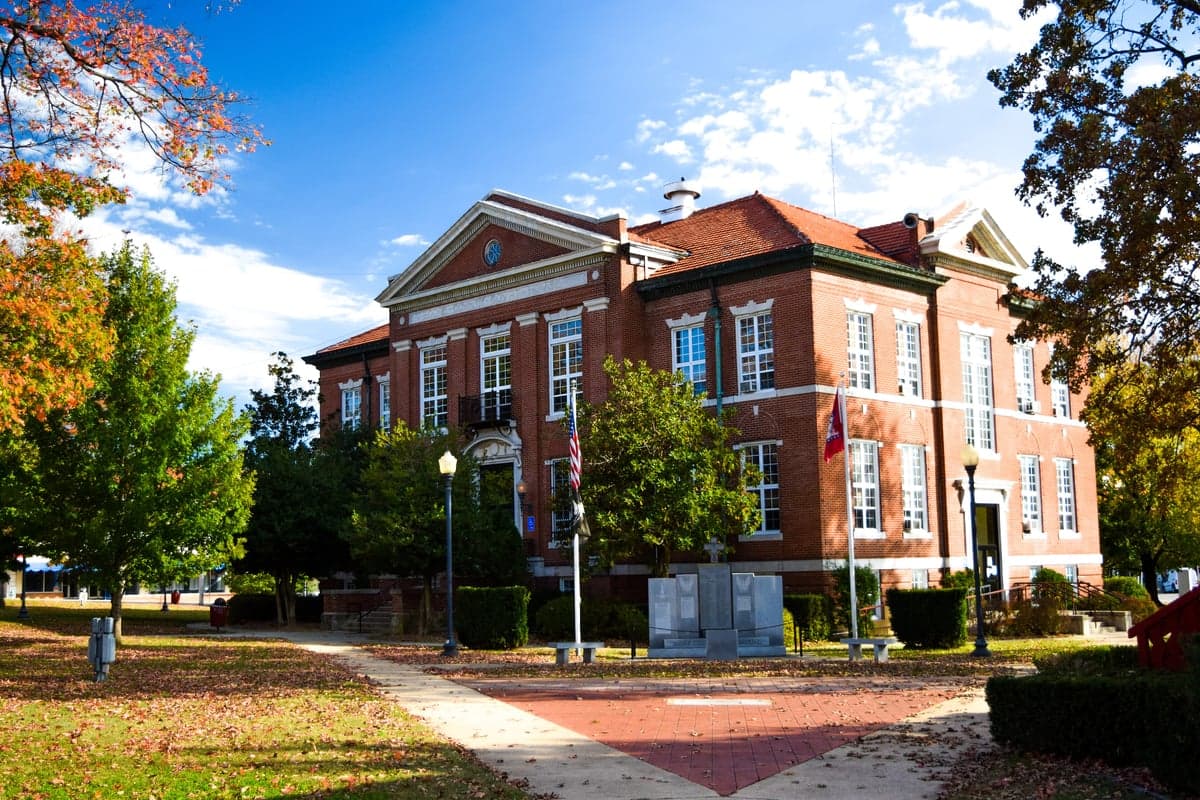
Harrison is the county seat and the only incorporated city with a population over 10,000, serving as the commercial and cultural anchor for the entire region. Daily life here revolves around the historic downtown square, which hosts a weekly farmers market, local restaurants, and the Lyric Theater. The city provides the county’s only major grocery chains, a regional hospital (North Arkansas Regional Medical Center), and the North Arkansas College campus. Commute times average just 19.4 minutes countywide, and Harrison residents can reach most jobs, schools, and shopping within a 10- to 15-minute drive. The median rent of $715 and median home value of $169,300 mean that even a single-income household can afford a three-bedroom house in town, though newer subdivisions on the north side near Highway 65 command higher prices. The town leans conservative politically and has a strong evangelical church presence, which shapes the social calendar and community norms.
Smaller towns & rural pockets
Outside Harrison, the county’s smaller incorporated towns offer distinct lifestyles. Bellefonte (population ~450) sits just west of Harrison and feels like a small-town bedroom community, with older homes on larger lots and a quiet main street. Valley Springs (population ~200) is a crossroads settlement with a post office and a K-12 school district that draws families from the surrounding farmlands. Zinc (population ~100) and Alpena (population ~400) are even more remote, with no grocery stores and limited services; residents drive 20–30 minutes to Harrison for most errands. Unincorporated areas like Olvey and Erie are essentially clusters of houses at rural intersections, where life is defined by well water, septic systems, and gravel roads. The southern part of the county, near the Buffalo National River, is almost entirely rural, with large tracts of Ozark National Forest land and seasonal tourism from floaters and hikers. These areas offer deep quiet and dark skies but require self-sufficiency for trash disposal, emergency services, and internet access.
Cost & lifestyle range
The cost spread across Boone County is narrower than in many metro areas, but real differences exist. At the higher end, newer subdivisions in Harrison’s north side (near the Walmart Supercenter and hospital) see home values of $200,000–$300,000, with monthly mortgage payments still well below the national median. These areas offer sidewalks, city water, and fiber-optic internet from local providers. At the lower end, older homes in Zinc or Alpena can sell for under $100,000, and rental houses in rural pockets often go for $500–$600 per month. The trade-off is access: a family in Zinc may drive 25 minutes for a gallon of milk, while a Harrison resident can walk to the library. Property taxes are low across the county (roughly 0.5% of assessed value), and no county sales tax is levied on groceries. The lifestyle range is best understood as a trade-off between convenience and solitude: Harrison provides walkability and services, while the smaller towns and rural areas offer land, privacy, and lower entry costs for first-time buyers.
Boone County is best suited for people who value low cost of living, outdoor recreation (especially fishing on Bull Shoals Lake and hiking in the Ozarks), and a conservative, community-oriented social fabric. Remote workers and retirees with a vehicle will find the most flexibility, able to choose between Harrison’s amenities and the seclusion of the county’s southern hollows. Families should weigh school quality carefully, as Harrison’s schools are better funded than those in Valley Springs or Alpena. For anyone willing to trade urban convenience for financial breathing room and natural beauty, Boone County delivers a wide range of viable options.

Crime in Boone County
Crime rates similar to the national median for U.S. locations.
Violent CrimeViolent Crime Analysis
Property CrimeProperty Crime Analysis
Crime Analysis
Boone County, Arkansas, reports a violent crime rate of 523.1 per 100,000 residents and a property crime rate of 1,634.7 per 100,000, placing it above both the state and national averages for violent offenses. While the county is not among the most dangerous in the state, these figures indicate a notably higher risk of serious crime compared to the U.S. median, particularly in its largest town, Harrison. The overall safety picture is mixed: rural areas and smaller communities like Alpena, Bellefonte, and Zinc generally experience far fewer incidents, while the county's primary population center drives the statistics upward.
Crime in context
Boone County’s violent crime rate of 523.1 per 100,000 is roughly 50% higher than the national average of 380 per 100,000 and significantly exceeds the Arkansas state average of approximately 480 per 100,000. Property crime, at 1,634.7 per 100,000, sits close to the national median but is elevated relative to many neighboring counties in the Ozarks. The disparity is largely concentrated in Harrison, the county seat and only incorporated city of significant size, where over 80% of the county's reported violent incidents occur. By contrast, towns like Valley Springs and Everton report crime rates that are a fraction of Harrison’s, often below 100 violent crimes per 100,000. The Fourteenth Judicial District, which covers Boone County, operates under a conservative prosecutorial philosophy, which is a positive factor for public safety—district attorneys in this region generally prioritize strict enforcement and longer sentences, helping to keep recidivism lower than in more progressive jurisdictions.
What residents experience
Residents in Boone County’s unincorporated areas and smaller towns describe a quiet, low-crime daily life, with property crimes like burglary and vehicle theft being the most common concerns. In Harrison, however, the experience is markedly different: assaults account for the majority of violent crimes, and drug-related offenses—particularly methamphetamine and opioid trafficking—are a persistent driver of both violent and property crime. The Harrison Police Department has increased patrols in the downtown corridor and along Highway 62/65, but residents in neighborhoods near the city center report occasional thefts and vandalism. The county’s sheriff’s office provides law enforcement to the outlying areas, where response times can be longer but incidents are rarer. For families and retirees considering relocation, the safest choice is to look at properties in Alpena or Bellefonte, where crime is virtually nonexistent, rather than within Harrison’s city limits.
Neighborhood-level variation is pronounced. The safest areas are the rural stretches west of Harrison toward the Newton County line and the communities along the Buffalo National River corridor, where violent crime is almost unheard of. The highest-crime pockets are in Harrison’s older residential districts near the railroad tracks and the commercial zones along North Main Street. Property crime rates in Harrison’s core are roughly triple those of the county’s rural precincts, and the disparity has widened since 2020. Prospective residents should also note that Boone County’s judicial system, under the conservative leadership of the Fourteenth Judicial District, avoids the soft-on-crime policies seen in some urban Arkansas counties—a meaningful advantage for those prioritizing long-term safety and accountability.
* Values derived from national, state, county, city and local statistics and may differ in a specific area. Last updated: 2026-06-12T18:58:57.000Z
Narrative content on this page is AI-generated and may contain mistakes. Verify any details that matter before acting on them.
ReloMaps may earn a commission from affiliate links at no extra cost to you.

