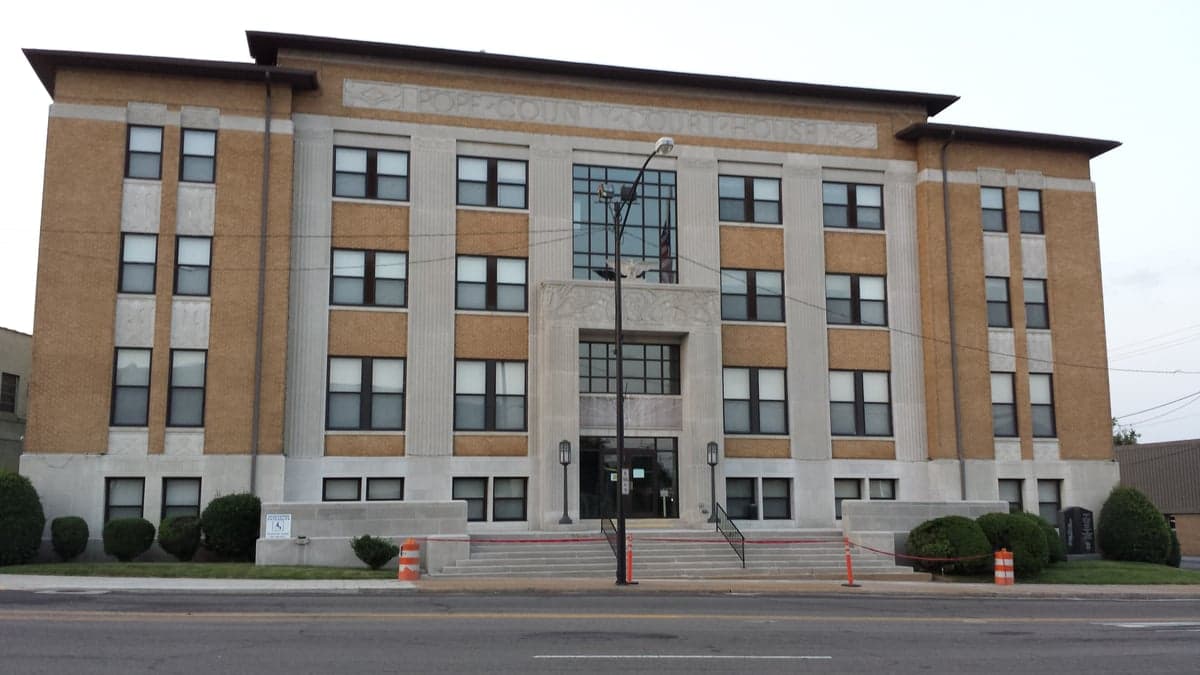
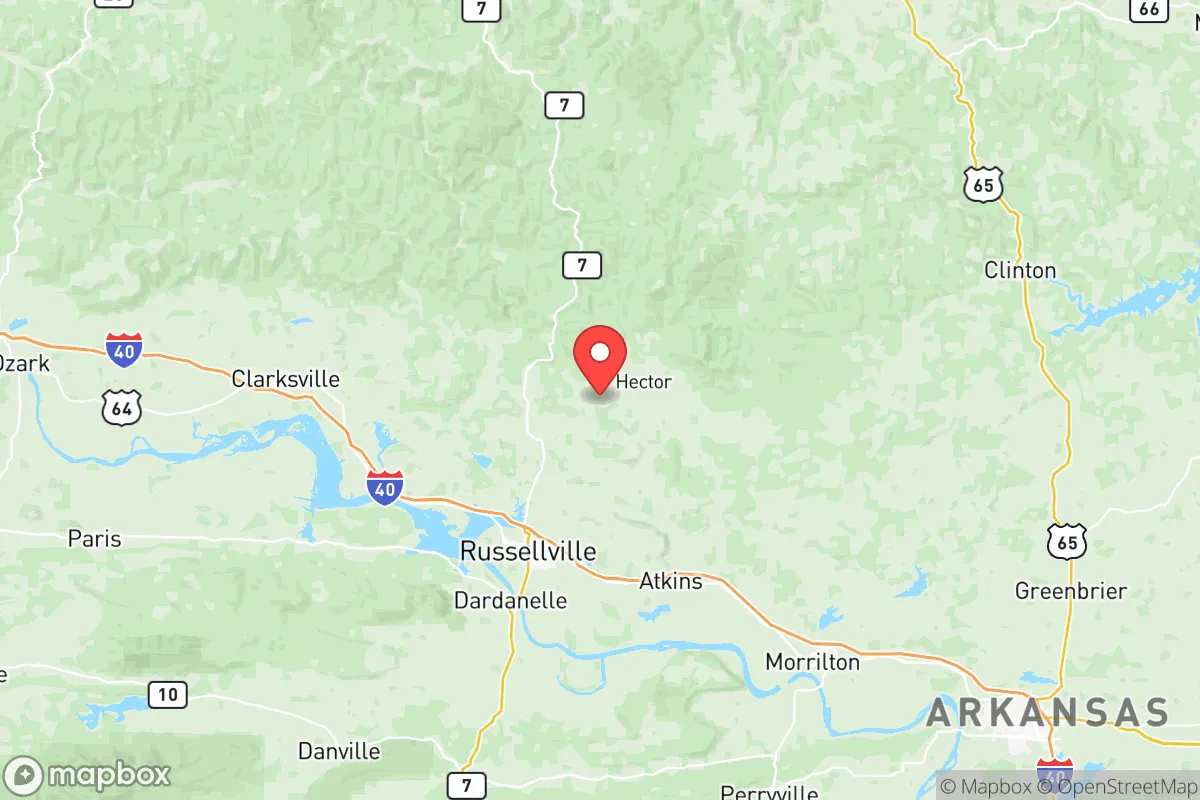
Photo: Wikipedia
Demographics of Pope County
Affluence Level in Pope County
A middle-class area roughly in line with national averages across income, home values, education, and employment.
People of Pope County
The people of Pope County, Arkansas, today number 63,830, forming a community that is predominantly white (81.3%) with a growing Hispanic minority (10.6%) and small Black (2.2%) and East/Southeast Asian (0.8%) populations. The county's character is rooted in its Ozark foothills geography and a history of subsistence farming, timber, and manufacturing, giving it a distinctly rural and conservative identity centered on the county seat of Russellville. With only 3.1% foreign-born residents and a college attainment rate of 24.6%, Pope County remains less diverse and less educated than the national average, but its population is slowly shifting as new industries and domestic migrants reshape the region.
Settlement & growth (pre-1960)
Long before European settlement, the area now known as Pope County was part of the hunting and trading grounds of the Osage and Quapaw nations, who used the Arkansas River valley for seasonal camps and travel. The first permanent American settlers arrived in the 1810s and 1820s, primarily Scots-Irish and English families moving west from Tennessee, Kentucky, and the Carolinas. These early pioneers were drawn by cheap land grants and the fertile bottomlands along the Arkansas River, establishing small farms and river ports at places like Norristown (now a ghost town) and Dover, one of the county's oldest surviving settlements.
Pope County was formally created in 1829, named after Governor John Pope of Arkansas Territory. The county seat was initially at Scottsville, but by 1841 it had moved to Russellville, which grew as a trading center for the surrounding agricultural economy. The population remained overwhelmingly native-born white throughout the 19th century, with a small number of enslaved Black people working on cotton plantations along the river. After the Civil War, the county saw modest growth as timber and coal mining became important industries, drawing a few European immigrants — primarily German and Irish — to work in the mines around Atkins and London.
The arrival of the railroad in the 1870s and 1880s transformed the county. The Little Rock and Fort Smith Railroad connected Russellville to regional markets, and new towns like Pottsville and Hector sprang up along the line. The railroad also brought a small wave of Italian and Polish laborers, though most moved on after construction ended. By 1900, the county's population had reached roughly 21,000, still overwhelmingly white and native-born. The early 20th century saw the rise of the Arkansas River Valley's apple and peach orchards, and later, the establishment of Arkansas Tech University in Russellville in 1909, which began to draw a slightly more educated population to the county seat.
The Dust Bowl and Great Depression of the 1930s brought a new wave of migrants to Pope County: displaced farmers from Oklahoma and the Texas Panhandle, often called "Okies," who sought work in the county's timber camps and on the construction of the Arkansas River navigation system. World War II and the postwar period saw the expansion of manufacturing, with plants like the Arkansas Kraft Corporation (later Green Bay Packaging) opening in Russellville in the 1950s, attracting workers from surrounding rural areas. By 1960, the county's population had grown to about 28,000, still overwhelmingly white and native-born, with a small but stable Black community concentrated in Russellville and Atkins.
Modern era (post-1965)
The 1965 Hart-Cellar Act had a limited direct impact on Pope County, as the area did not attract the large-scale immigration seen in coastal or Sun Belt metros. The foreign-born population remains low at 3.1%, and the county's demographic shifts since 1965 have been driven more by domestic migration and natural increase than by international arrivals. The most significant change has been the growth of the Hispanic population, which rose from negligible levels in 1970 to 10.6% today, driven primarily by Mexican immigrants and their descendants who came to work in poultry processing plants in Russellville and Atkins, as well as in construction and agriculture.
The domestic migration story of the past 50 years is one of slow suburbanization and the expansion of Russellville as a regional hub. The completion of Interstate 40 through the county in the 1960s made Russellville more accessible to Little Rock (about 80 miles east) and Fort Smith (about 60 miles west), and the city grew as a bedroom community for workers commuting to the Arkansas River Valley's industrial plants. The 1970s and 1980s saw the arrival of new manufacturing employers, including a ConAgra poultry plant and later a Lockheed Martin facility in nearby Camden (though that is in Ouachita County, not Pope), which drew workers from across the region. The county's Black population, which had been slowly declining since the Great Migration, stabilized at around 2.2%, with most Black residents living in Russellville and the rural community of Dover.
The East/Southeast Asian population (0.8%) and Indian subcontinent population (0.2%) are very small and largely concentrated in Russellville, where a handful of professionals work at Arkansas Tech University or in the medical field. There is no significant ethnic enclave for either group. The white population, while still dominant at 81.3%, has declined slightly as a share of the total due to Hispanic growth and an aging native-born population. The county's college attainment rate of 24.6% is below the national average of roughly 33%, reflecting the area's historical reliance on manufacturing and agriculture rather than knowledge-economy jobs.
The future
Pope County's population is projected to grow slowly, reaching perhaps 68,000–70,000 by 2040, driven primarily by natural increase and modest domestic migration from other parts of Arkansas and the South. The Hispanic share of the population is expected to continue rising, potentially reaching 15–18% by 2040, as younger Hispanic families have higher birth rates and as the poultry and manufacturing sectors continue to attract immigrant labor. The white population will likely decline slightly as a share but remain the overwhelming majority. The Black, East/Southeast Asian, and Indian subcontinent populations are expected to remain small and stable, with no major new immigration waves anticipated.
The county's cultural identity is likely to remain conservative and rural, but with a growing Hispanic influence in Russellville and Atkins, where Spanish-language churches, markets, and community organizations are becoming more visible. The expansion of Arkansas Tech University and the potential for new industrial development along the I-40 corridor could bring a slightly more diverse and educated population to the county, but Pope County is unlikely to experience the rapid demographic transformation seen in Northwest Arkansas (Bentonville, Fayetteville) or central Arkansas (Little Rock). The county's low cost of living, relatively low crime rates, and access to outdoor recreation in the Ozark National Forest will continue to attract domestic migrants from more expensive parts of the country, but these newcomers are likely to be predominantly white and middle-aged.
For someone moving to Pope County now, the area offers a stable, predominantly white, and culturally conservative community with a growing Hispanic minority and a small but present Black and Asian population. The county is becoming slightly more diverse over time, but the pace of change is slow, and the dominant cultural and political character remains deeply rooted in its Scots-Irish and Southern heritage. New residents should expect a community that values tradition, church, and family, with a growing appreciation for the Hispanic families who are increasingly integral to the local economy and social fabric.

* Values derived from national, state, county, city and local statistics and may differ in a specific area. Last updated: 2026-08-08T18:33:51.000Z
Narrative content on this page is AI-generated and may contain mistakes. Verify any details that matter before acting on them.
ReloMaps may earn a commission from affiliate links at no extra cost to you.

