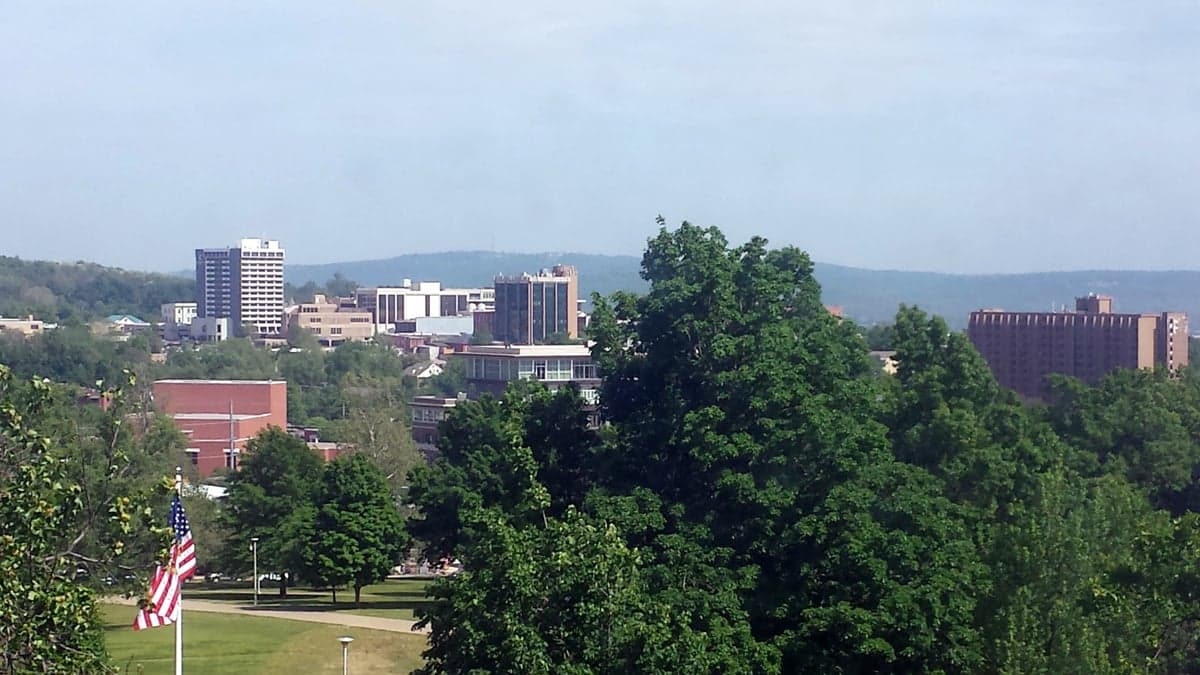
Photo: Wikipedia
Find The Best Places To Live
in Fayetteville
PRO TIP! You can paste a Zillow or Redfin link to get info on that property.
What It's Like Living in Fayetteville, AR
Fayetteville feels like a college town that grew up without losing its soul. The University of Arkansas is the gravitational center, but the city has developed its own identity beyond campus — a place where young professionals, families, and retirees coexist in a landscape of rolling Ozark hills and brick-paved streets. With roughly 97,000 residents and a median age just under 29, it’s a youthful, educated community where nearly half the adults hold a college degree, yet it retains a grounded, small-city feel that appeals to conservatives looking for a slower pace without sacrificing culture or opportunity.
Daily Rhythm: What Life Actually Looks Like
Most mornings here start with coffee from Onyx Coffee Lab on the downtown square or a quick stop at Hammontree’s Grilled Cheese for lunch. The average commute is just 18 minutes, so people actually have time for breakfast at home or a walk around the Razorback Regional Greenway, a 40-mile trail system that connects Fayetteville to neighboring towns. Weekends often revolve around the Fayetteville Farmers’ Market on the square — one of the best in the state — where you’ll find local produce, artisan bread, and live music from April through November. Families spend Saturday mornings there before heading to Lake Fayetteville for paddleboarding or a picnic, while singles and couples gravitate toward Dickson Street for live music at George’s Majestic Lounge or a craft beer at Fossil Cove Brewing Co. The median household income sits at $59,074, which goes further here than in many cities — the cost of living is 98 on the national index, meaning everyday expenses are slightly below average, though home prices have climbed to a median of $322,500, reflecting the area’s growing popularity.
Sports & Community: Razorback Fever and Friday Night Lights
Sports are not just entertainment here — they’re a civic religion. Arkansas Razorbacks football and basketball dominate the calendar, and on game days, the entire city shifts its rhythm. Traffic thickens around Donald W. Reynolds Razorback Stadium and Bud Walton Arena, and bars like Brewski’s and Smoke & Barrel Tavern fill with fans in cardinal red. But it’s not just college sports: Fayetteville High School football draws huge crowds, and the Northwest Arkansas Naturals (a Kansas City Royals affiliate) play in nearby Springdale for a more relaxed baseball experience. For the outdoorsy, the Ozark National Forest and Devil’s Den State Park are 30 minutes away, offering hiking, mountain biking, and kayaking that rival anything in the region. The city’s Parks and Recreation Department maintains over 50 parks, including Wilson Park with its historic stone castle and community pool — a favorite for young families.
What’s There to Do: Festivals, Music, and Local Flavor
Fayetteville punches above its weight in entertainment. The Bentonville Film Festival is 20 minutes north, but the city hosts its own gems: Bikes, Blues & BBQ every September draws 400,000 visitors for motorcycle rallies and live music, while the Fayetteville Roots Festival celebrates Americana and local food. The Walton Arts Center brings Broadway tours and national acts, and the Fayetteville Public Library — one of the most impressive in the state — hosts author talks and community events. Dining is surprisingly strong: The Farmer’s Table serves farm-to-table Southern fare, Wright’s Barbecue is a cult favorite, and Hugo’s has been a Dickson Street staple for burgers and atmosphere since the 1970s. For a quieter night, locals hit Maxine’s Tap Room for live jazz or Pinpoint for oysters and cocktails.
Pros and Cons of Living Here
- Pros: Low cost of living relative to national averages, short commutes, strong sense of community, excellent public schools (Fayetteville Public Schools are consistently top-rated in Arkansas), abundant outdoor recreation, and a vibrant local food and music scene. The city is also a regional hub for jobs in retail, logistics, and education — Walmart headquarters is 30 minutes north in Bentonville, and the University of Arkansas is the largest employer.
- Cons: The violent crime rate is 444.3 per 100,000 residents — higher than the national average, though concentrated in specific areas and often property-related. Summers are humid and hot, with July highs averaging 90°F, and tornado season (March–May) requires awareness. Traffic on I-49 and College Avenue can back up during peak hours and Razorback game days. Some longtime residents grumble about rising home prices and the influx of out-of-state transplants, particularly from California and Texas, which has shifted the local culture slightly more progressive — though the county still leans conservative overall.
Fayetteville is a place where you can have a career, raise kids, and still find time to hike a mountain on a Tuesday afternoon. It’s not for someone who wants big-city anonymity or a hyper-political environment — but for those who value community, the outdoors, and a slower but still engaged pace of life, it’s hard to beat. The median home value of $322,500 means you’ll need a solid down payment, but the 18-minute commute and low cost of living make the trade-off worthwhile for most who settle here.

Similar small cities to Fayetteville
* Values derived from national, state, county, city and local statistics and may differ in a specific area. Last updated: 2026-04-29T02:32:23.000Z
Narrative content on this page is AI-generated and may contain mistakes. Verify any details that matter before acting on them.
ReloMaps may earn a commission from affiliate links at no extra cost to you.

