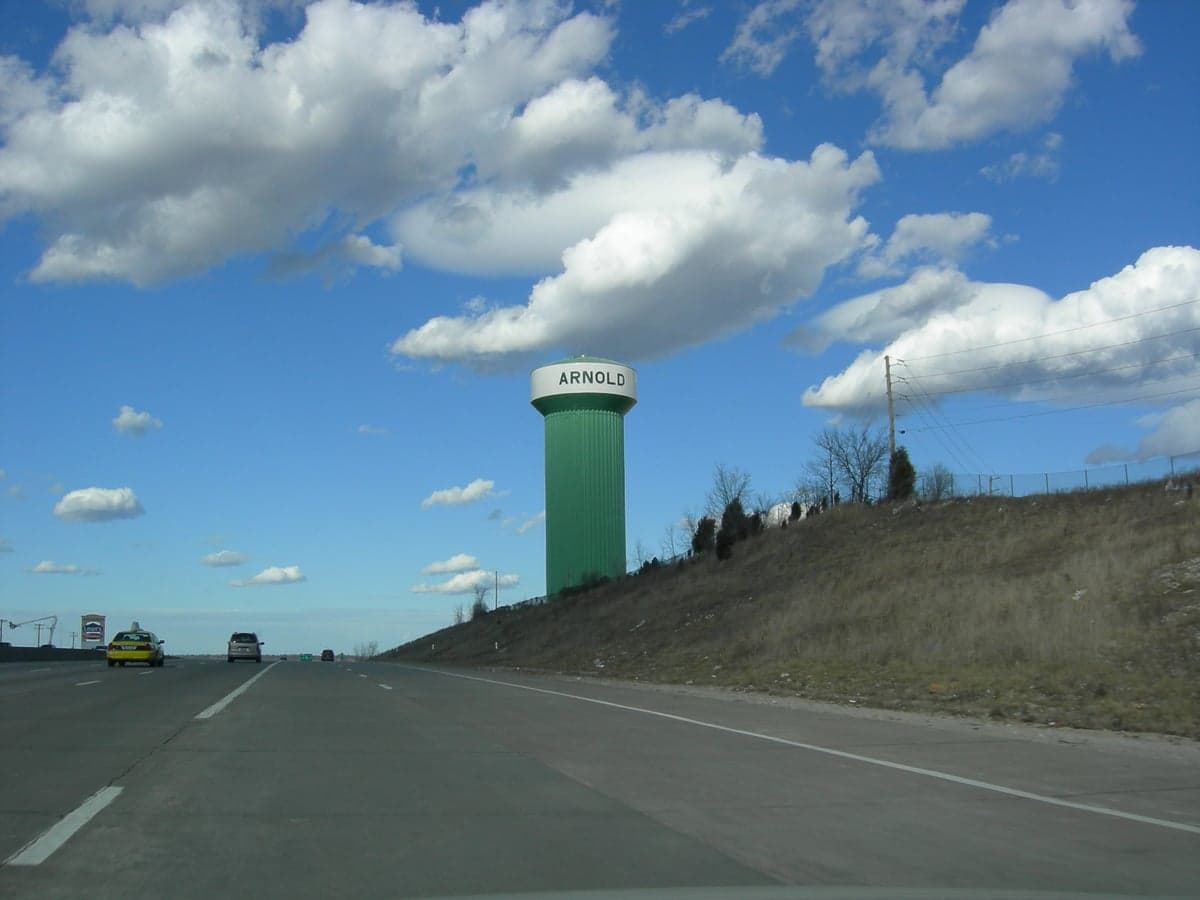
Photo: Wikipedia
Strategic Assessment of Arnold, MO
Meaningful friction. Expect exposure to either population pressure, blast zones, or natural disaster risk. Consider buying a retreat property.
What does the Strategic Assessment tell us?
Our Strategic Assessment grades tactical survivability of an area. Major population centers, military targets, fallout zones, natural disasters, and border exposure all drive risk — lower exposure means a more defensible position in a crisis.
This is heavily inspired by Joel Skousen's Strategic Relocation book. Highly recommended you checkout the book ($)What does this tell us?
Our Strategic Assessment grades tactical survivability of an area. Major population centers, military targets, fallout zones, natural disasters, and border exposure all drive risk — lower exposure means a more defensible position in a crisis.
This is heavily inspired by Joel Skousen's Strategic Relocation book. Highly recommended you checkout the book ($)Strategic Pillars

Key Distances
Regional Safe Places
Below is our recommended "safe zones" in Missouri and the surrounding area based on our strategic heuristics. For most people, it's unrealistic to live in a “safe zone” full-time due to work, family or other personal reasons. They tend to be more rural. However, many of these areas are perfect for second homes and retreat properties that double as a vacation home or even a short-term rental.


Important Note: For informational purposes only. This does not mean nothing bad ever happens in the green zones. Please use common sense. This is based on public data and modeled with AI. We tried to take a conservative approach but mistakes happen. We update this regularly as new information becomes available.
Solar Generator Recommendations
Backup power matters more here than in safer locations. We've picked three solar generators across budgets and capacity tiers — start with the budget unit if you only need a few essentials, or step up if you want to run a fridge and HVAC for days at a time.

Jackery Portable Power Station Explorer 300
Budget OptionPower on the Go: Weighing only 11 lbs, it's convenient to set up and store with book-sized foldable solar panels

BLUETTI Portable Power Station AC180
Designed for both indoor and outdoor scenarios, AC180 is highly capable as it has a robost capacity and continuous output power.

EF ECOFLOW DELTA Pro Ultra Power Station
Upgraded PickEcoFlow DELTA Pro Ultra is a whole-home energy system designed to grow with your family. Integrated with the Smart Home Panel 2, it scales to meet your evolving energy needs — keeping your home powered, intelligent, and secure through every stage of life.
We earn a commission, at no additional cost to you.
Strategic Assessment Analysis
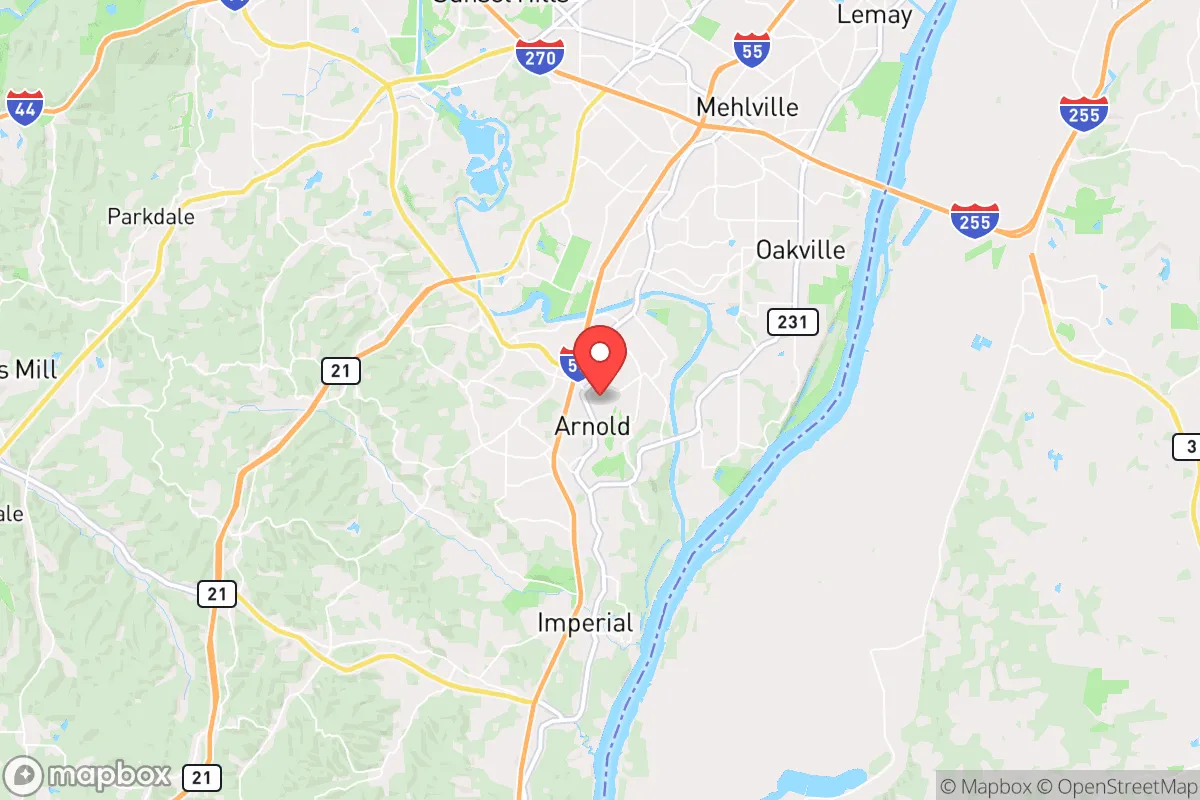
Arnold, Missouri, sits in a deceptive pocket of the Midwest that offers more strategic depth than its modest population of 21,000 suggests. Positioned roughly 25 miles south of St. Louis along the Mississippi River, this Jefferson County town benefits from being far enough from the urban core to avoid the worst of a metropolitan collapse, yet close enough to leverage its infrastructure if needed. For a relocator thinking in terms of grid-down scenarios, civil unrest, or regional supply chain disruptions, Arnold provides a solid baseline of resilience — but only if you understand its specific geographic advantages and the real risks that come with being within the blast-shadow of a major city.
Geographic position and natural advantages for long-term stability
Arnold’s location is its strongest card. The town sits on a bluff line above the Mississippi River floodplain, which means most residential areas are naturally elevated and less prone to the catastrophic flooding that plagues low-lying communities like nearby Kimmswick or Herculaneum. This elevation also provides decent line-of-sight advantages for communications and observation, especially in the hilly terrain west of town toward the Meramec River corridor. The surrounding Jefferson County landscape is a mix of hardwood forest, limestone bluffs, and rural farmland — terrain that offers natural cover and defensible positions if things go sideways. The Meramec River, which joins the Mississippi just north of Arnold, provides a secondary water source that is less industrialized and easier to filter than the big river. For a prepper, the ability to draw from two separate watersheds without relying on municipal treatment plants is a tangible advantage. The area also sits within the Missouri Ozarks transition zone, meaning the soil is workable for small-scale agriculture, and the growing season runs from April to October — long enough to produce meaningful food stores. Arnold itself is a suburban bedroom community, but within a 15-minute drive west, you’re into genuine rural territory with fewer neighbors and more operational security.
Risks, exposures, and proximity to fallout-relevant landmarks
The biggest liability for Arnold is its proximity to St. Louis and the industrial corridor along the Mississippi River. The city of St. Louis is roughly 25 miles north, and while that distance provides some buffer, it is not enough to escape the fallout from a major event — whether that’s a nuclear detonation, a chemical release from one of the many riverfront industrial plants, or a cascading infrastructure failure. The Jefferson County area is directly downwind of the St. Louis metro under prevailing westerly and northwesterly winds, which means any airborne contamination from an urban disaster would sweep through Arnold within hours. Additionally, the Mississippi River itself is a double-edged sword: it provides water and transport, but it also concentrates risk. The river carries barge traffic with hazardous materials, and the nearby Lemay Wastewater Treatment Plant and St. Louis-area chemical storage facilities are potential targets for sabotage or accidental release. Arnold is also within 50 miles of the Callaway Nuclear Plant (Fulton, MO) and the Prairie Island Nuclear Plant (Minnesota, but within the broader risk zone for long-range fallout). For a relocator with a survivalist mindset, the calculus is clear: Arnold offers a decent buffer from the immediate blast zone, but you must plan for evacuation or shelter-in-place protocols for airborne threats. The town’s location along Interstate 55 and Route 141 also means it sits on a primary evacuation corridor out of St. Louis — which is a benefit for getting out, but a liability if the roads clog with fleeing urbanites during a crisis.
Practical resilience for a relocator: food, water, energy, and defensibility
For day-to-day resilience, Arnold has a mix of strengths and gaps. The town has multiple grocery stores, including a Walmart Supercenter and a Schnucks, but these are first-order collapse points — they will empty within hours of a major event. The real value is in the surrounding rural areas. Within a 20-minute drive, you can access farm supply stores, feed stores, and hardware outlets that stock seeds, tools, and fencing materials. The Jefferson County Farmers Market operates seasonally, and local farms in the Hillsboro and Festus areas offer direct-to-consumer meat and produce. Water is the more complicated variable. Arnold’s municipal water comes from the Mississippi River via the Jefferson County Public Water Supply District #1, which is vulnerable to contamination and power loss. A well is the gold standard here, and many properties in the unincorporated areas west of Arnold have private wells with depths of 100-300 feet — sufficient for a family with proper filtration. If you’re buying in Arnold proper, you’ll likely be on city water, so plan for storage and purification. Energy infrastructure is moderately reliable. The area is served by Ameren Missouri, and power outages from storms are common but usually restored within 24 hours. For a prepper, solar panels with battery storage are a solid investment here, as the region gets about 200 sunny days per year — not great, but workable. Defensibility is where Arnold’s suburban layout becomes a liability. The town is a typical grid of cul-de-sacs and strip malls, which makes it hard to secure a perimeter. However, the hilly terrain and tree cover west of town offer natural choke points. The ideal setup is a property on a dead-end road with a well, septic, and a wood-burning stove, located on the western edge of the county near the St. Francois Mountains. That’s where the real strategic value lies — Arnold as a staging ground, not a final redoubt.
The overall strategic picture for Arnold is one of cautious viability. It is not a remote bunker location, nor is it a high-risk urban trap. It occupies a middle ground that works for a relocator who wants to stay within striking distance of St. Louis for work or family, but who also has a plan to bug out to the Ozarks if the situation deteriorates. The town’s resilience is average for a Midwest suburb, but its proximity to multiple water sources, farmland, and rural escape routes gives it a flexibility that many similar towns lack. For a conservative-leaning individual or family who values self-reliance and is willing to invest in off-grid infrastructure, Arnold offers a reasonable starting point — just don’t mistake it for a fortress. The real test will be how quickly you can transition from suburban convenience to rural survival when the lights go out. If you’re looking for a place that balances normalcy with preparedness, Arnold deserves a spot on your short list. Just keep your bug-out bag packed and your eyes on the wind direction.

* Values derived from national, state, county, city and local statistics and may differ in a specific area. Last updated: 2026-04-23T00:59:28.000Z
Narrative content on this page is AI-generated and may contain mistakes. Verify any details that matter before acting on them.
ReloMaps may earn a commission from affiliate links at no extra cost to you.

