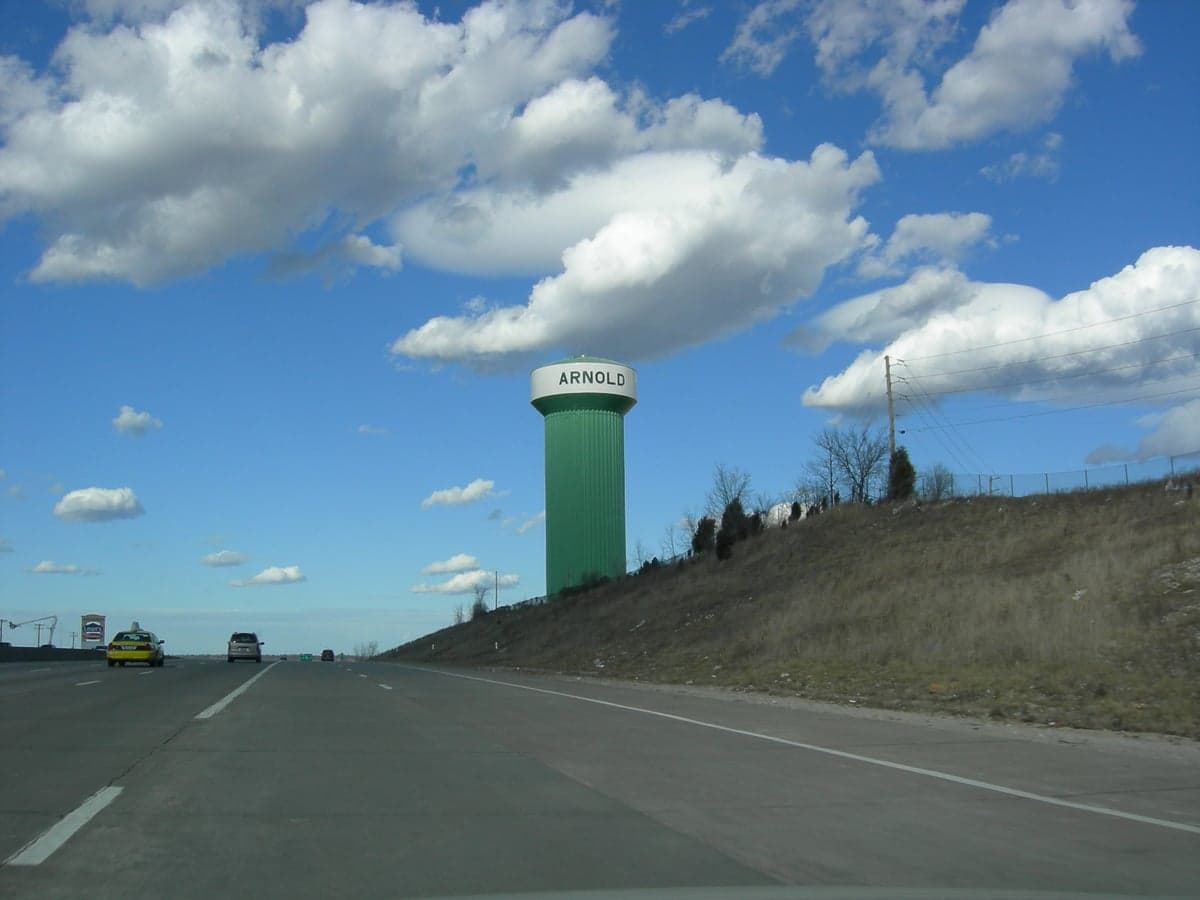
Photo: Wikipedia
Political ClimatePolitical Climate in Arnold, MO
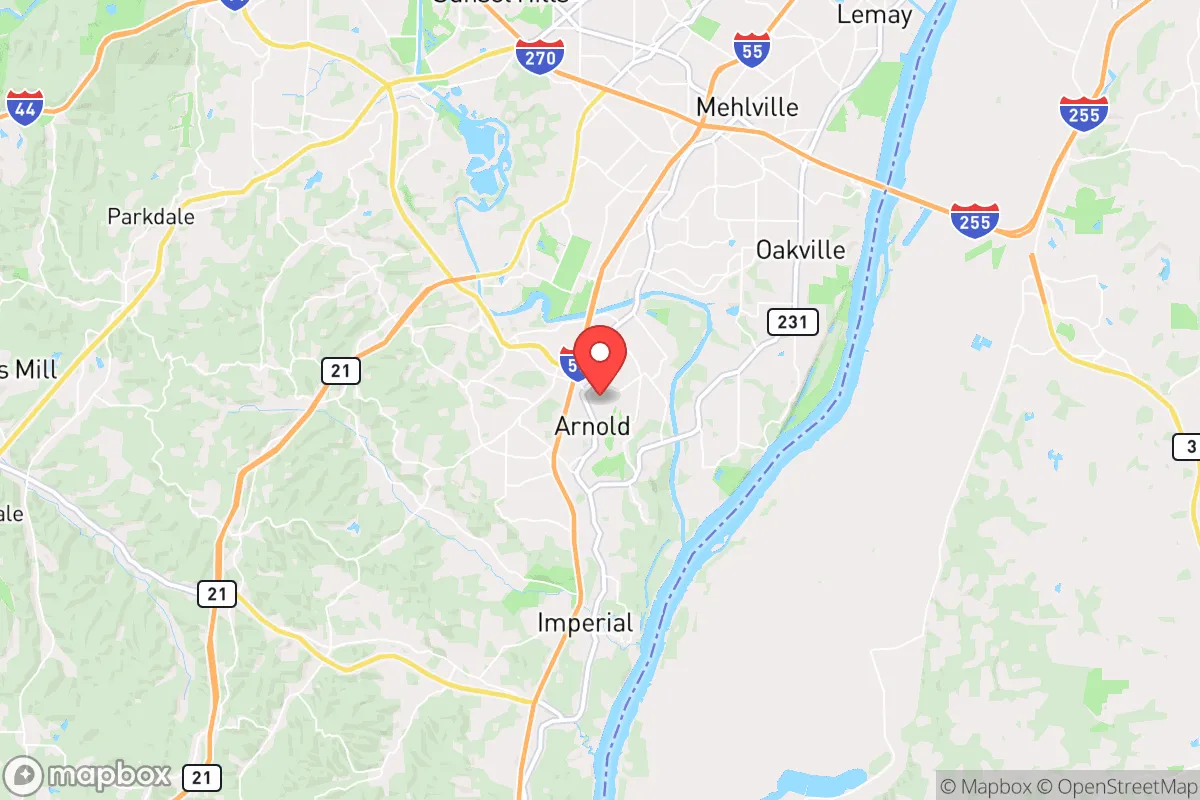
District shown is the primary district for this city’s centroid. Cities may span multiple districts.
Local Political AnalysisPolitical Analysis of Arnold, MO
Arnold, Missouri, is about as solidly conservative as it gets in Jefferson County, and that's not changing anytime soon. The Cook PVI of R+27 tells you everything you need to know—this isn't a purple area or a swing district; it's a place where Republican candidates routinely win by double digits, and the local culture reflects that. If you're looking for a place where traditional values and limited government are still the norm, Arnold is it. But like a lot of the St. Louis suburbs, you can feel the pressure from the city creeping in, and that's something to keep an eye on.
How it compares
Drive 20 minutes north into St. Louis County, and you're in a completely different world. Places like Kirkwood or Webster Groves lean blue, with progressive policies on taxes, zoning, and schools that would never fly here. Even nearby Fenton, just across the Meramec River, has a more moderate, sometimes split political vibe. Arnold stays red because the people here value personal responsibility and don't want government telling them how to run their lives. The contrast is stark: you go from neighborhoods where people wave American flags and keep their yards neat to areas where "diversity, equity, and inclusion" signs are the norm. That's not an exaggeration—it's the reality of living on the edge of the metro area.
What this means for residents
For the people who live here, the political climate means lower taxes, fewer regulations, and a general hands-off approach from local government. You won't see the kind of overreach you get in St. Louis County, where mask mandates, business closures, and strict housing codes became the standard during the pandemic. Arnold's city council and Jefferson County officials tend to push back against state-level mandates that feel like federal overreach. That said, there's a growing concern among long-time residents that the county's rapid growth—new subdivisions, more retail, more traffic—could bring in folks from the city who don't share those values. If that happens, you might see the local school board or city council start to shift, and that's a real worry for anyone who moved here to get away from that stuff.
One thing that stands out culturally is the strong Second Amendment support. You don't get the side-eye for carrying here like you would in some parts of the county. The local gun shops and shooting ranges are busy, and the annual gun shows draw crowds from all over. There's also a noticeable resistance to any talk of "defunding the police"—Arnold's PD is well-supported, and the community generally backs law enforcement. On the flip side, you won't find much in the way of progressive activism. No big climate protests, no drag story hours at the library, no push for rent control. It's a place where people mostly want to be left alone to work, raise their families, and enjoy their weekends without the government breathing down their necks. If that sounds like your kind of place, you'll fit right in. Just keep an eye on the ballot box—because the fight to keep Arnold conservative is real, and it's not over.

State Political ClimatePolitical Climate in Missouri
State Political AnalysisPolitical Environment in the State
Missouri has long been considered a bellwether state, but over the past 15-20 years it has shifted decisively from a purple swing state to a solidly red one. The Show-Me State now leans Republican by about 10 points in statewide races, with the GOP controlling the governorship, both legislative chambers, and all but one of its congressional seats. This trajectory accelerated after 2016, as rural and exurban voters consolidated behind conservative candidates, while the state’s two major metros—St. Louis and Kansas City—remain Democratic strongholds. For a conservative relocating here, the overall picture is favorable, but the political geography is far from uniform, and recent trends warrant a close look.
Urban vs. rural divide
The political map of Missouri is a study in stark contrasts. The state’s two largest cities—St. Louis and Kansas City—anchor deep-blue islands in a sea of red. St. Louis City and County together cast roughly 25% of the state’s vote, and they reliably deliver Democratic margins of 60-70%. Kansas City’s Jackson County is similarly lopsided. Meanwhile, the rest of the state—from the Ozarks to the Bootheel—votes overwhelmingly Republican. The suburbs are where the real action is. St. Charles County, just west of St. Louis, has flipped from a swing area to a solid GOP base, voting +20 points for Trump in 2024. Greene County (Springfield) is a conservative anchor in the southwest, while Boone County (Columbia) remains a liberal outlier thanks to the University of Missouri. The rural-urban divide is so pronounced that a drive from downtown St. Louis to the Jefferson County line feels like crossing into a different political universe.
Policy environment
Missouri’s policy posture is broadly conservative, with a few notable wrinkles. The state has a flat income tax that was cut from 5.3% to 4.8% in 2023, with a path to 4.5% by 2027—a clear win for taxpayers. There is no state property tax on vehicles, and property taxes on real estate are among the lowest in the Midwest. The regulatory climate is business-friendly, with a right-to-work law (repealed by ballot measure in 2018 but still reflecting the state’s pro-business tilt) and minimal zoning restrictions outside major metros. On education, Missouri has a robust charter school presence in St. Louis and Kansas City, and a growing school choice movement—the Missouri Empowerment Scholarship Accounts program launched in 2022, offering tax-credit scholarships for private school tuition. Healthcare policy is mixed: the state expanded Medicaid under the 2020 ballot measure (Amendment 2), which conservatives opposed, but the legislature has since tightened eligibility and work requirements. Election laws are solid: voter ID is required, absentee ballots require a notary or witness, and the state purges inactive voters regularly. For a conservative, the policy environment is largely aligned with limited government principles, though the Medicaid expansion remains a sore point.
Trajectory & freedom
Missouri has been on a clear trajectory toward greater personal freedom over the past decade, particularly on Second Amendment and parental rights issues. In 2016, the state passed constitutional carry (permitless concealed carry), and in 2021 it enacted a Second Amendment Preservation Act (SAPA), which declares federal gun laws that infringe on the right to keep and bear arms as null and void in Missouri. This law has been challenged in court but remains in effect, signaling a strong pro-gun stance. On parental rights, the Missouri Parents’ Bill of Rights (2022) requires schools to notify parents of any curriculum involving sexual orientation or gender identity and prohibits instruction on these topics in K-3. The state also banned gender-affirming care for minors in 2023 (SB 49), a move that aligns with conservative views on medical autonomy. On taxation, the income tax cuts mentioned above are a positive sign, but property taxes have crept up in fast-growing suburbs like O’Fallon and Wentzville. The overall trend is toward more liberty, but the Medicaid expansion and a 2020 vote to legalize medical marijuana (with a 2022 vote for recreational use) show that voters sometimes buck the legislature on specific issues.
Civil unrest & political movements
Missouri has seen its share of political flashpoints, most notably in the St. Louis area. The 2014 Ferguson unrest, following the Michael Brown shooting, exposed deep racial and political divides that still resonate. Protests and property damage in the Delmar Loop and downtown St. Louis have been recurring, though they have diminished since 2020. On the right, the Missouri Freedom Caucus has become a powerful force in the state legislature, pushing for stricter immigration enforcement, election integrity measures, and resistance to federal overreach. Immigration politics are relatively quiet—Missouri is not a border state and has no sanctuary cities—but the legislature has passed laws requiring local law enforcement to cooperate with ICE. Election integrity remains a hot topic: the 2020 and 2022 cycles saw lawsuits over mail-in ballot procedures, and the state has tightened rules since. A new resident in Springfield or Jefferson City will find a generally calm political atmosphere, but in St. Louis, the occasional protest or political rally is part of the landscape. The state’s nullification rhetoric, particularly around SAPA, is a point of pride for many conservatives but a source of legal uncertainty.
Projection
Looking ahead 5-10 years, Missouri is likely to become even more conservative, driven by two key trends. First, in-migration from blue states—particularly Illinois—is accelerating. Counties like St. Charles and Lincoln County are seeing an influx of families fleeing high taxes and crime in Chicago and St. Louis. These newcomers tend to be conservative-leaning, reinforcing the state’s red tilt. Second, the rural population is stable while urban cores are shrinking or stagnant, which amplifies the GOP’s electoral advantage. The state will likely continue to cut taxes, expand school choice, and resist federal mandates on guns and healthcare. However, the Medicaid expansion is here to stay, and the legal battle over SAPA could eventually force a compromise. The biggest wildcard is the St. Louis region: if the city’s population decline continues, its political influence will wane, but if it stabilizes, the Democratic base will remain a counterweight. For a conservative moving in now, expect a state that is increasingly aligned with your values, but with persistent blue pockets that will keep the culture war alive in local school boards and county commissions.
Bottom line for a new resident: Missouri offers a strong conservative policy environment with low taxes, gun rights, and parental control over education. The political climate is stable and trending red, but you’ll need to choose your location carefully—stick to the suburbs and rural areas for a like-minded community, and be prepared for the occasional urban protest or legislative fight over federal overreach. It’s a state where your vote counts, your voice matters, and the trajectory is firmly in your favor.
* Values derived from national, state, county, city and local statistics and may differ in a specific area. Last updated: 2026-04-23T00:59:28.000Z
Narrative content on this page is AI-generated and may contain mistakes. Verify any details that matter before acting on them.
ReloMaps may earn a commission from affiliate links at no extra cost to you.

