Photo: Wikipedia
Demographics of Athens, AL
Affluence Level in Athens, AL
A middle-class area roughly in line with national averages across income, home values, education, and employment.
People of Athens, AL
The people of Athens, Alabama, today number 27,474, forming a community that is predominantly White (68.4%) with a significant Black minority (17.1%) and a growing Hispanic population (8.7%). The city’s character is rooted in its role as the Limestone County seat and a regional hub for manufacturing and logistics, giving it a practical, working-class identity with a noticeable Southern conservative tilt. With only 3.0% foreign-born and 30.8% college-educated, Athens remains a relatively insular, family-oriented town where newcomers are often drawn by affordable housing and industrial jobs rather than urban amenities.
How the city was settled and grew
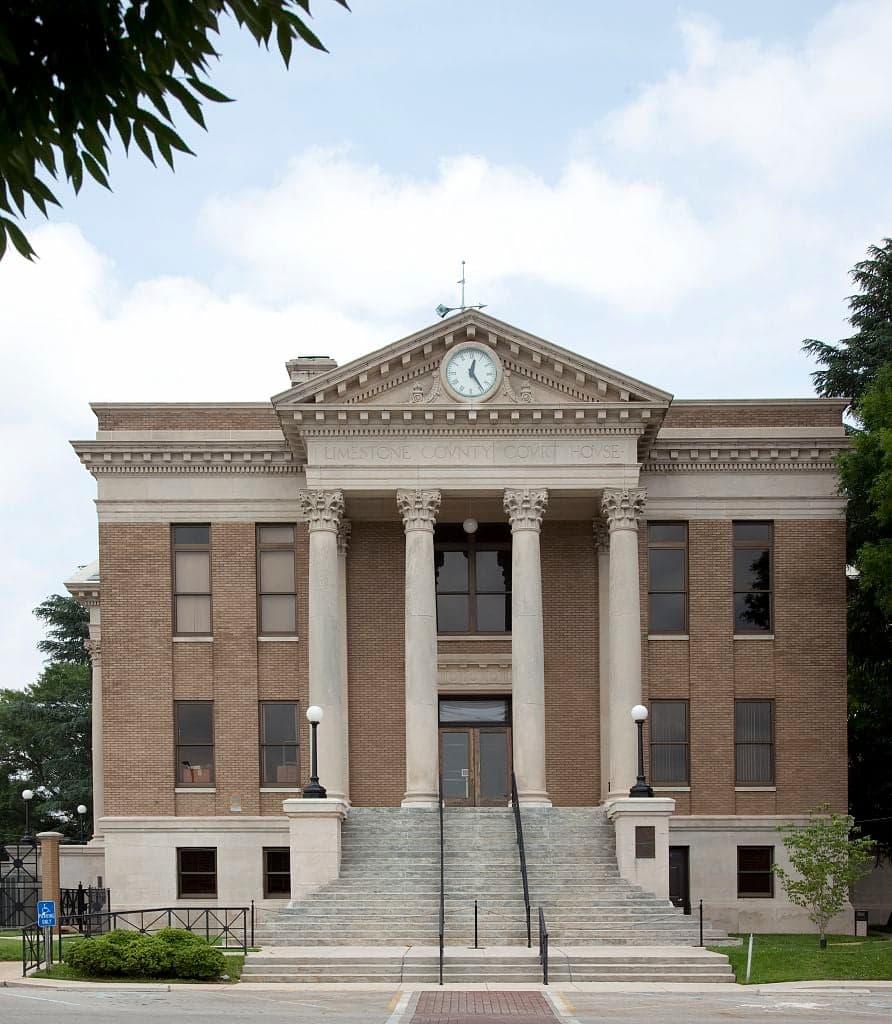
Athens was founded in 1818 as the county seat of Limestone County, part of the post-Native American removal land rush in the Tennessee Valley. The original settlers were primarily Scots-Irish and English farmers from Virginia, the Carolinas, and Tennessee, drawn by the fertile blackland prairie soil and the promise of cotton cultivation. These early families built the historic Athens State University area and the Downtown Historic District, where Greek Revival homes and antebellum structures still stand. The arrival of the Memphis and Charleston Railroad in the 1850s spurred a second wave of merchants and tradesmen, many of whom settled in the Westside neighborhood near the depot. The post-Civil War period saw a small but steady influx of freed Black families, who established the Eastside community around Jefferson Street, building churches and schools that remain cultural anchors. By 1900, the population was roughly 1,000, overwhelmingly native-born and agrarian.
Modern era (post-1965)
The 1965 Immigration and Nationality Act had minimal direct impact on Athens, as the city’s foreign-born share remains low at 3.0%. Instead, the modern era has been defined by domestic in-migration. The 1970s and 1980s saw a wave of White families moving from rural Limestone County into the Greenbrier and Oakdale subdivisions, drawn by new manufacturing plants like the 3M facility and the expansion of the Browns Ferry Nuclear Plant. The Black population, which had been concentrated in Eastside, began spreading into the Northside area near U.S. Highway 31 as housing desegregation took hold. The most notable demographic shift since 2000 has been the growth of the Hispanic population, now 8.7%, driven by construction and poultry processing jobs. These families have clustered in the South Limestone corridor and the Hobbs Street area, where Spanish-language stores and churches have opened. The Asian population remains tiny at 0.9%, primarily Vietnamese and Filipino families working in engineering and healthcare, with no distinct ethnic enclave. The Indian-subcontinent population is negligible at 0.1%.
The future
Athens is likely to continue its slow, steady growth, with the population projected to reach 30,000–32,000 by 2035. The city is not homogenizing into a single melting pot but is instead developing distinct enclaves: the historic White and Black neighborhoods remain largely intact, while the Hispanic community is consolidating in South Limestone. The foreign-born share is expected to rise modestly to 4–5% as Hispanic families grow through higher birth rates and continued migration for industrial work. The East/Southeast Asian and Indian populations will likely remain below 2% combined, as there is no major tech or university draw to attract them. The college-educated share may inch up to 35% as remote workers from Huntsville (20 miles east) seek cheaper housing, but Athens will remain a blue-collar town at heart. The biggest unknown is whether the Hispanic population will assimilate into existing neighborhoods or continue forming a separate enclave, which will shape the city’s social and political dynamics.
For someone moving in now, Athens is becoming a more diverse but still predominantly White and Black Southern town, where the Hispanic community is the only immigrant group of real scale. The city offers stability, low crime, and a conservative social fabric, but newcomers should expect a community where neighborhoods still reflect historical settlement patterns. The next decade will test whether Athens integrates its growing Hispanic population into the broader civic life or remains a collection of distinct enclaves.

* Values derived from national, state, county, city and local statistics and may differ in a specific area. Last updated: 2026-04-19T18:42:49.000Z
Narrative content on this page is AI-generated and may contain mistakes. Verify any details that matter before acting on them.
ReloMaps may earn a commission from affiliate links at no extra cost to you.

