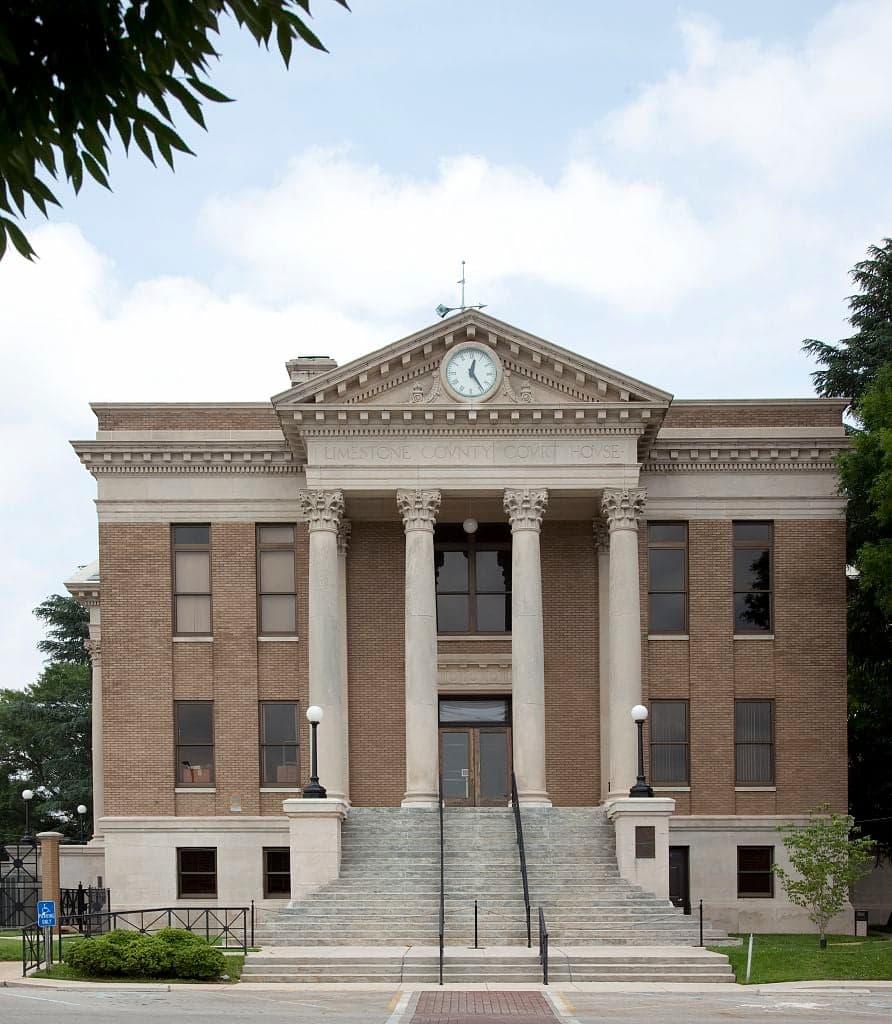
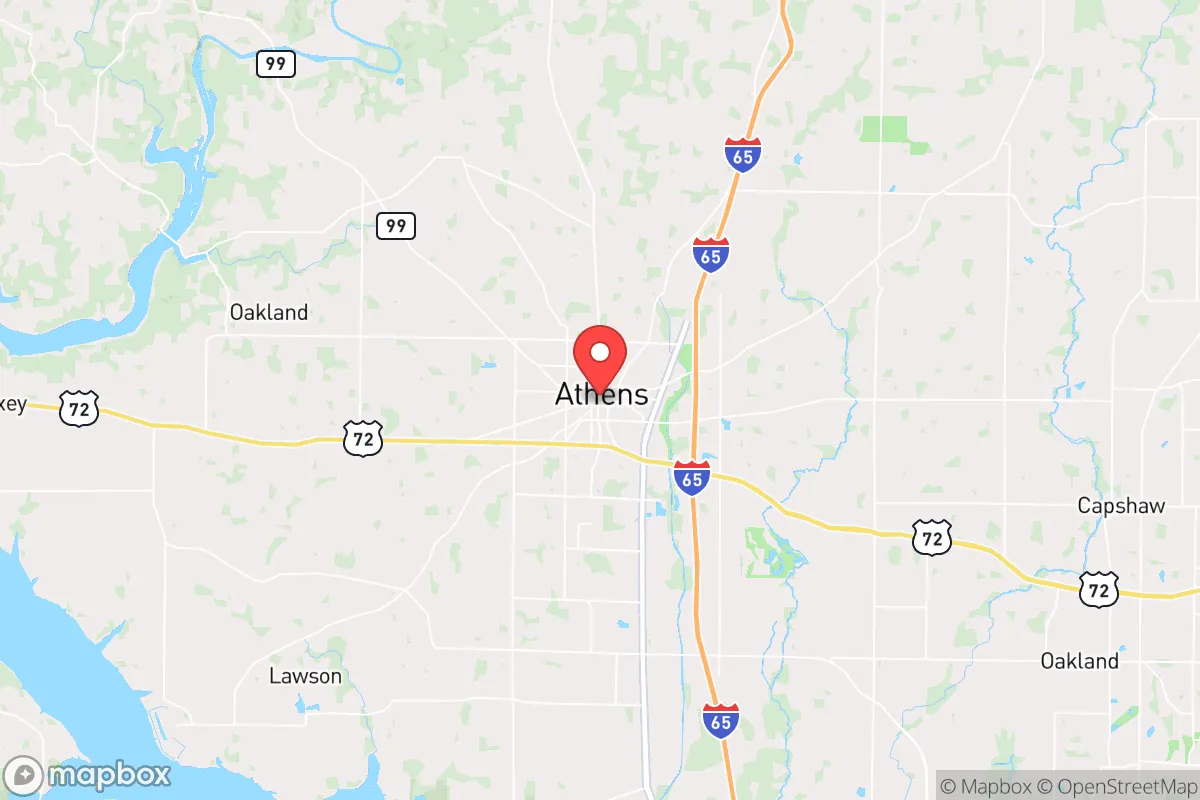
Photo: Wikipedia
Political ClimatePolitical Climate in Athens, AL
District shown is the primary district for this city’s centroid. Cities may span multiple districts.
Local Political AnalysisPolitical Analysis of Athens, AL
Athens, Alabama, sits solidly in the red, with a Cook PVI of R+15 that reflects a deep-rooted conservative tradition in Limestone County. This isn't a recent shift; it's the way things have been for generations, with local elections often decided in the Republican primary and a general distrust of federal overreach that runs through the community. You'll find folks here who remember when the county was reliably Democratic on paper, but that was a different kind of Democrat—one who voted for school prayer and against gun control. The trajectory has been a steady march rightward, and while the national GOP has its own internal fights, Athens remains a place where the core principles of limited government and personal responsibility still hold strong.
How it compares
Drive 20 miles south to Huntsville, and you'll feel the difference immediately. That city's explosive growth, fueled by defense and tech jobs at Redstone Arsenal, has brought in a wave of out-of-state transplants and a more moderate-to-liberal tilt, especially in the newer suburbs. Athens, by contrast, has largely avoided that cultural shift. We're more like our neighbors to the west in Decatur or the rural communities in Elkmont and Ardmore—places where the Second Amendment isn't debated, it's assumed, and where the idea of a county commission telling a small business what to do is met with a hard no. The contrast is stark: Huntsville might vote for a Republican mayor, but the city council debates things like sanctuary city policies and bike lanes, while Athens is still focused on keeping property taxes low and the sheriff's office well-funded.
What this means for residents
For the people who live here, the political climate translates into a tangible sense of freedom. You don't have to worry about your local government dictating how you run your household or your business. The school board isn't pushing critical race theory or gender ideology; they're focused on reading, writing, and arithmetic. Property rights are respected, and you can build a fence, keep a few chickens, or fly whatever flag you want without a permit battle. That said, there's a growing unease. The same national trends that are pushing progressive policies into blue states are creeping into local conversations, and you'll hear longtime residents grumble about "the county going the way of Huntsville" if we're not careful. The concern is that outside money and influence could erode the local control that makes Athens a good place to raise a family.
One cultural distinction worth noting is the strong, quiet influence of the local churches. They're not just Sunday-morning institutions; they're the backbone of community life, from food banks to youth sports. This isn't a place where you'll find a lot of loud political activism, but you will find a deep-seated belief that government should stay out of the church and the home. The biggest policy fights in recent years have been over zoning and school funding—not social issues—because most folks here agree on the fundamentals. The real test will be in the next decade, as the population grows and the pressure to "modernize" (read: adopt more progressive policies) increases. For now, Athens remains a pocket of sanity in a state that's already pretty conservative, but the watchword is vigilance. We're keeping an eye on the ballot box, because that's where the fight for our way of life is won or lost.

State Political ClimatePolitical Climate in Alabama
State Political AnalysisPolitical Environment in the State
Alabama has long been one of the most reliably conservative states in the nation, with a Republican trifecta controlling the governorship, legislature, and supreme court for over a decade. The state’s political DNA is deeply rooted in traditional values, limited government, and a strong sense of local autonomy, but the last 10-20 years have seen a steady consolidation of GOP power, driven by suburban growth in places like Auburn and Madison, and a rural base that remains fiercely resistant to federal overreach. While the state hasn’t flipped blue in a presidential race since 1976, the real story is how the conservative coalition has shifted from a “yellow dog Democrat” past to a solidly red present, with the 2020 election seeing Donald Trump win Alabama by over 25 points.
Urban vs. rural divide
The political map of Alabama is a textbook study in the urban-rural split, but with a Southern twist. The major metros—Birmingham, Montgomery, and Mobile—are the state’s blue dots, with Jefferson County (Birmingham) and Montgomery County consistently voting Democratic in statewide races. However, these cities are surrounded by deep-red suburbs and exurbs that often cancel out the urban vote. For example, Shelby County, just south of Birmingham, is one of the most reliably Republican counties in the nation, with a 2020 margin of +40 for Trump. Meanwhile, the rural Black Belt—counties like Lowndes and Greene—votes overwhelmingly Democratic, driven by African American majorities, but these areas have low population and turnout. The real political engine is the fast-growing corridor between Huntsville and Madison, where defense and aerospace jobs have attracted a conservative-leaning, educated workforce that votes solidly red. The divide isn’t just about party—it’s about culture: urban centers push for more government services and progressive social policies, while rural and suburban Alabama sees that as a threat to personal freedom and local control.
Policy environment
Alabama’s policy environment is a mixed bag for conservatives. On the plus side, the state has no state income tax on retirement income, a flat 5% income tax on wages, and one of the lowest property tax rates in the country—around 0.4% of home value on average. That’s a huge win for personal financial freedom. The regulatory posture is business-friendly, with a right-to-work law and minimal zoning restrictions in most rural areas. However, the state’s education system is a sore spot: Alabama ranks near the bottom nationally in K-12 outcomes, and the state’s heavy reliance on local property taxes means wealthy suburbs like Vestavia Hills and Mountain Brook have excellent schools, while rural and inner-city districts struggle. The state has expanded school choice through charter schools and the Alabama Accountability Act, which provides tax credits for private school tuition, but the fight over education freedom is ongoing. On healthcare, Alabama did not expand Medicaid under the Affordable Care Act, which keeps government out of the system but leaves a coverage gap for low-income adults. Election laws are strict: voter ID is required, and the state has purged inactive voters from rolls, which conservatives see as protecting election integrity but progressives call suppression. The legislature also passed a near-total abortion ban in 2019 (the Human Life Protection Act), which is currently tied up in court but reflects the state’s strong pro-life stance.
Trajectory & freedom
Alabama’s trajectory on personal freedom is a tale of two trends. On one hand, the state has expanded gun rights significantly: in 2022, Alabama became a permitless carry state, meaning law-abiding citizens can carry a concealed firearm without a license or training requirement. That’s a clear win for Second Amendment advocates. Parental rights have also been strengthened—the 2021 “Parental Rights in Education” law (often called the “Don’t Say Gay” bill by critics) prohibits classroom instruction on sexual orientation and gender identity in K-5, which many conservatives see as protecting children from government overreach. On the other hand, the state has seen creeping centralization: the Alabama Department of Education has increased its control over local curriculum standards, and the state’s medical marijuana program, passed in 2021, is so heavily regulated that it’s been slow to roll out, frustrating advocates of medical freedom. Property rights are generally strong, with no statewide zoning in unincorporated areas, but some cities like Birmingham have imposed short-term rental restrictions that limit what homeowners can do with their property. The biggest concern for freedom-minded residents is the state’s high sales tax (average 9.2%, including local taxes), which hits low-income families hardest and feels like a hidden tax on daily life. Overall, Alabama is moving in a more libertarian direction on guns and education, but the tax burden and regulatory creep in urban areas are red flags.
Civil unrest & political movements
Alabama has a quieter political landscape than many states, but it’s not without flashpoints. The most visible recent unrest came in 2020 after George Floyd’s death, when protests in Birmingham and Montgomery turned into clashes with police, including the toppling of a Confederate monument in Birmingham’s Linn Park. That event sparked a statewide debate over historical symbols, with the legislature passing the Alabama Memorial Preservation Act in 2021, which prohibits the removal of monuments older than 40 years—a clear conservative response to what many saw as mob rule. Immigration politics are less heated here than in border states, but there’s a strong undercurrent: the 2011 HB 56 law, which was one of the toughest anti-illegal immigration laws in the country, was largely gutted by courts, but the sentiment remains. The state has no sanctuary cities, and local law enforcement in places like Baldwin County (Gulf Shores) actively cooperates with ICE. Election integrity is a hot topic: after 2020, the legislature passed a law banning curbside voting and limiting absentee ballot drop boxes, which conservatives say prevents fraud but progressives call voter suppression. There’s also a growing “constitutional sheriff” movement in rural counties like Marshall and DeKalb, where sheriffs have publicly stated they won’t enforce federal gun laws they see as unconstitutional. These flashpoints are real, but they’re more about legal battles than street violence—new residents won’t see daily unrest, but they’ll hear the political rhetoric at local diners and church potlucks.
Projection
Over the next 5-10 years, Alabama is likely to become even more conservative, but with a twist. The biggest demographic shift is the influx of out-of-state transplants, particularly to the Huntsville area, where the defense and tech boom is drawing people from California, Texas, and the Northeast. These newcomers tend to be fiscally conservative but socially moderate, which could soften the state’s hardline stances on issues like marijuana legalization or gambling. However, the rural and suburban base is deeply entrenched, and the state’s Republican supermajority in the legislature shows no signs of weakening. The real battle will be over education: as more families move to suburbs like Madison and Auburn, pressure will grow for school choice expansion, including Education Savings Accounts (ESAs), which are currently being debated. On taxes, there’s a growing movement to eliminate the state income tax entirely, following the lead of Tennessee and Florida, but the state’s reliance on sales tax makes that a tough sell. The biggest wildcard is the federal courts: Alabama’s abortion ban and new congressional map (which was redrawn to include a second majority-Black district after a Supreme Court ruling) could shift the political landscape. Expect more fights over election laws, parental rights, and local control, but the overall direction is toward more personal freedom on guns and education, with a cautious approach to government expansion.
For a new resident, the bottom line is this: Alabama offers a low-cost, low-regulation lifestyle with strong protections for gun rights and parental authority, but you’ll pay for it with high sales taxes and a struggling public school system in many areas. If you’re moving to Huntsville or Auburn, you’ll find a thriving conservative community with good jobs and decent schools. If you’re heading to rural areas, you’ll get maximum freedom but fewer services. The state’s politics are stable and predictable—you won’t see sudden leftward shifts—but the culture wars over education and history will continue to simmer. Just know that your vote will matter more in local primaries than in general elections, and that the real power in Alabama is at the county commission and school board level. It’s a place where you can live your life without much government interference, as long as you’re willing to navigate the local tax and education landscape.
* Values derived from national, state, county, city and local statistics and may differ in a specific area. Last updated: 2026-04-19T18:42:49.000Z
Narrative content on this page is AI-generated and may contain mistakes. Verify any details that matter before acting on them.
ReloMaps may earn a commission from affiliate links at no extra cost to you.

