Photo: Wikipedia
Demographics of Athol, ID
Affluence Level in Athol, ID
A middle-class area roughly in line with national averages across income, home values, education, and employment.
People of Athol, ID
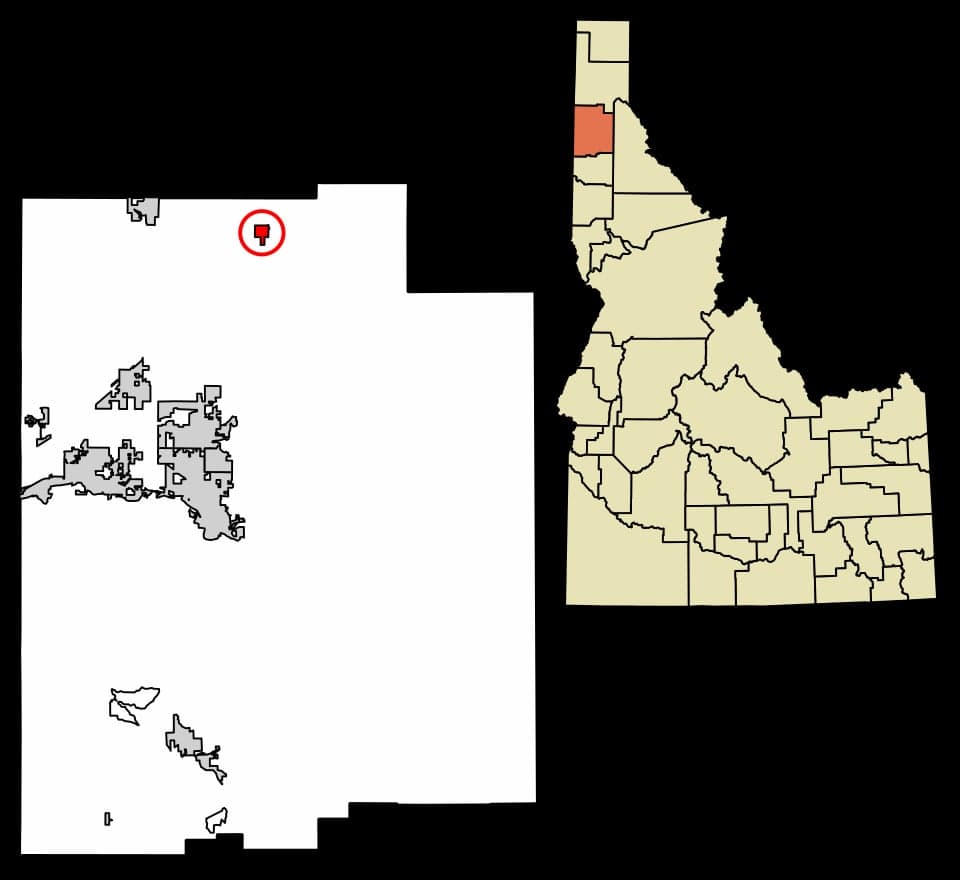
The people of Athol, Idaho, today number just 830 residents, forming a small, tight-knit community with a distinctly rural, predominantly white character. The population is 74.9% white and 10.0% Hispanic, with a very low 16.8% holding a college degree, reflecting a working-class identity rooted in the area's agricultural and timber history. With zero foreign-born residents and a median age that skews older, Athol remains a quiet, insular place where family ties and local networks define daily life. The city's identity is less about urban amenities and more about space, simplicity, and a conservative cultural baseline that has remained largely unchanged for generations.
How the city was settled and grew
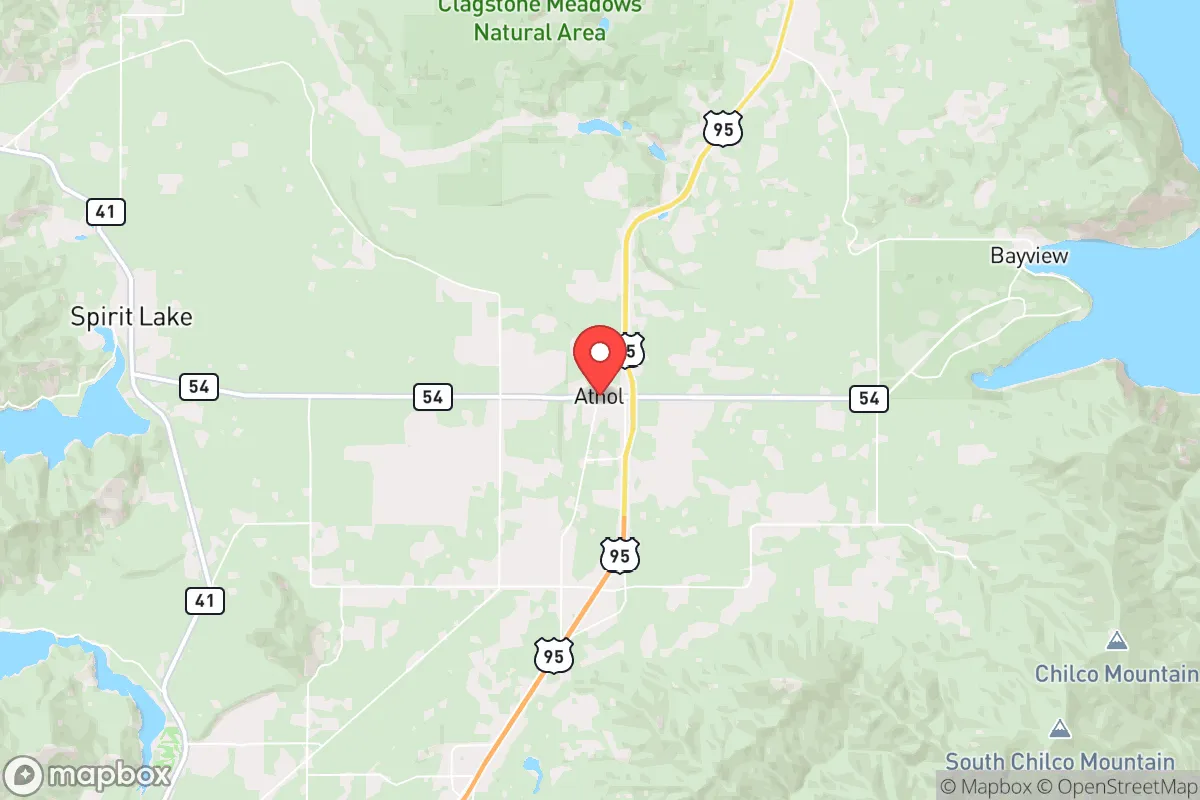
Athol's settlement began in the late 19th century, driven by the Northern Pacific Railway's arrival in 1882, which opened the region to homesteaders and timber operations. The original population was almost entirely of Northern European descent—Scandinavian, German, and English homesteaders—who were drawn by cheap land and the promise of work in the surrounding pine forests. The earliest homes clustered around the railroad depot in what is now Old Town Athol, a historic district along Highway 54 where the original general store and post office still stand. A second wave of settlers, primarily farmers and mill workers, arrived in the 1910s and 1920s, establishing the East Side Addition neighborhood, a grid of modest homes east of the railroad tracks that remains the city's most densely populated area. By 1950, Athol's population hovered around 400, and the community was almost entirely white, with a handful of Hispanic families working seasonal agricultural jobs on nearby potato and hay farms.
Modern era (post-1965)
After the 1965 Immigration and Nationality Act, Athol saw virtually no influx of foreign-born residents—the city's foreign-born population remains 0.0% today. Instead, the modern era has been defined by domestic in-migration from other parts of the Pacific Northwest, particularly retirees and families seeking lower housing costs and a slower pace of life. The Silverwood Estates subdivision, developed in the 1990s just west of the city limits, absorbed many of these newcomers, offering larger lots and newer homes that attracted a slightly more affluent, but still overwhelmingly white, demographic. The Hispanic population grew modestly from 2% in 1990 to 10% today, concentrated in the Meadow Creek Mobile Home Park on the city's southern edge, where many residents work in construction, landscaping, and the nearby Silverwood Theme Park. The East/Southeast Asian population, at 1.6%, is a very small presence, with most families living in scattered single-family homes in the Ponderosa Heights area, a quiet subdivision built in the early 2000s. No Black or Indian subcontinent residents are recorded in the data, and the city's racial homogeneity has remained a defining feature through the modern period.
The future
Athol's population is projected to grow slowly, driven by spillover from Coeur d'Alene and Spokane as housing costs push people farther into rural Kootenai County. The city's demographic future is likely to remain predominantly white, with the Hispanic share potentially rising to 12-15% over the next decade as agricultural and service-sector jobs continue to attract families. The Northwood Addition, a new 40-lot subdivision approved in 2024, is expected to draw mostly white retirees and remote workers, reinforcing the area's cultural conservatism. The population is not becoming more diverse in a broad sense—the foreign-born share will likely stay near zero, and the East/Southeast Asian population is too small to drive significant change. Instead, the cultural identity is evolving toward a more exurban, commuter-oriented lifestyle, with residents increasingly working in Coeur d'Alene or Post Falls while returning to Athol for its lower taxes and quieter nights. The next 10-20 years will likely see a slightly older, slightly more Hispanic, but still overwhelmingly white and politically conservative community.
For someone moving in now, Athol offers a stable, low-diversity environment where the pace of change is slow and the social fabric is built on long-standing local relationships. The city is becoming a bedroom community for the broader Coeur d'Alene metro area, but it retains a distinctly rural, working-class identity that appeals to those seeking affordability and distance from urban pressures. New residents should expect a place where newcomers are welcomed slowly, where the school system is small and tight-knit, and where the cultural and political landscape leans heavily conservative.

* Values derived from national, state, county, city and local statistics and may differ in a specific area. Last updated: 2026-07-31T01:56:42.000Z
Narrative content on this page is AI-generated and may contain mistakes. Verify any details that matter before acting on them.
ReloMaps may earn a commission from affiliate links at no extra cost to you.

