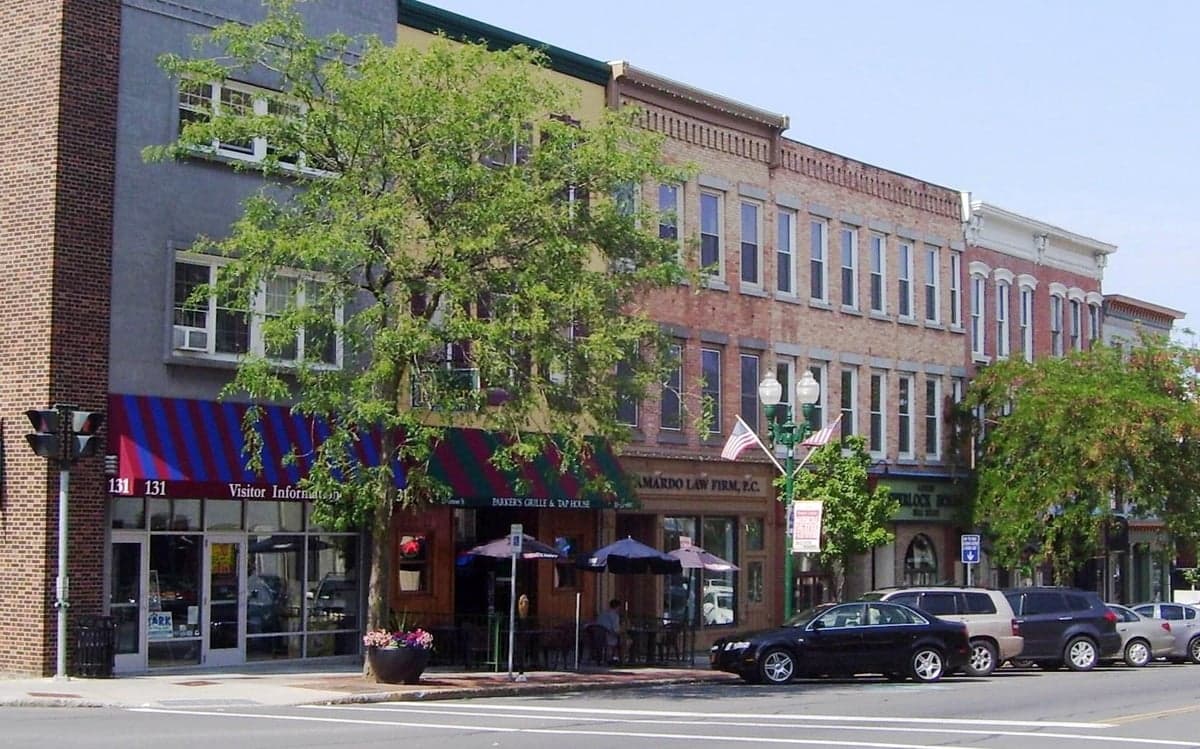
Photo: Wikipedia
Political ClimatePolitical Climate in Auburn, NY
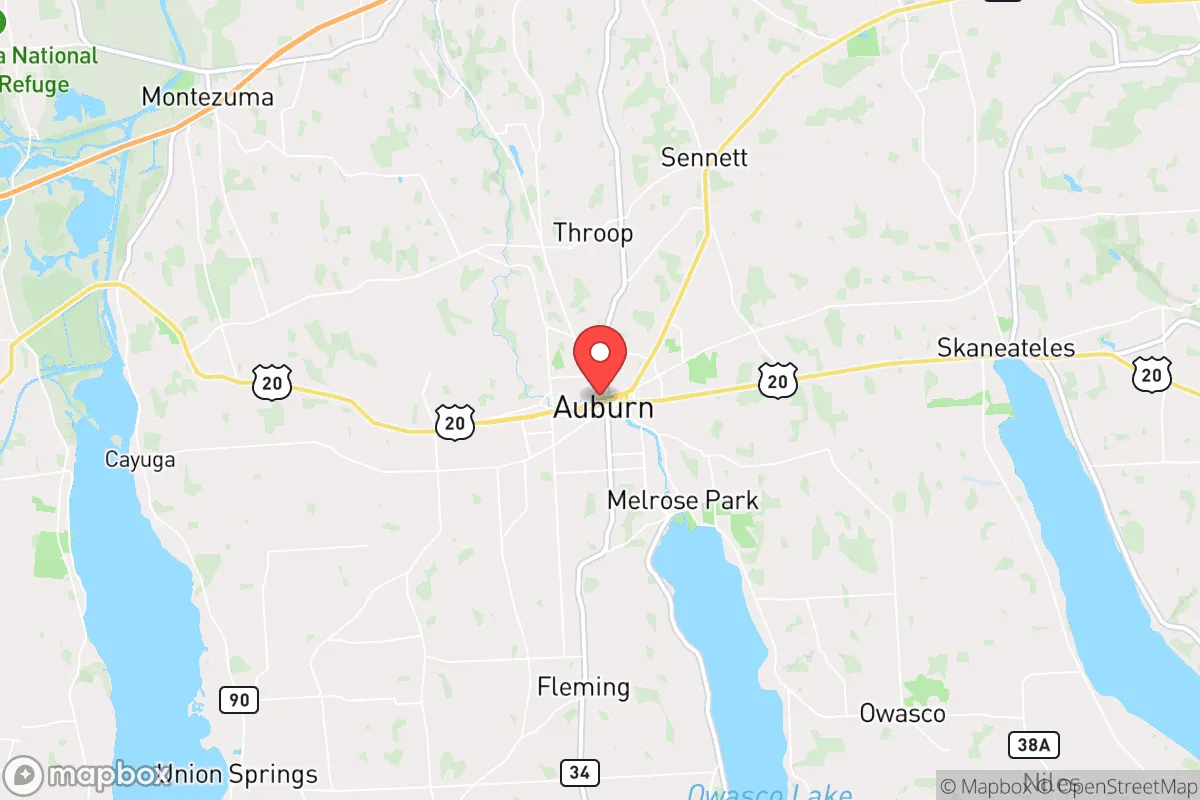
District shown is the primary district for this city’s centroid. Cities may span multiple districts.
Local Political AnalysisPolitical Analysis of Auburn, NY
Auburn, New York, sits in a political bubble that’s been shifting left for a while now. The Cook PVI rating of D+4 tells you the city leans reliably Democratic, but that number doesn’t capture how much the local culture has changed. Drive ten minutes out of town into the surrounding Cayuga County countryside, and you’ll find a much more conservative, common-sense vibe—places like Skaneateles or Genoa still vote red and keep their noses out of your business. But inside Auburn’s city limits, the progressive agenda has taken hold, and it’s not just about elections anymore; it’s about how the government is creeping into daily life.
How it compares
Compared to nearby cities like Syracuse (D+12) or Ithaca (D+30), Auburn looks almost moderate on paper, but that’s a low bar. The real contrast is with the townships and villages just a few miles away. In the 2024 election, Cayuga County as a whole voted about 52% Republican, but Auburn’s precincts went 60% Democratic. That split means you’ve got two different worlds sharing the same zip code. In the rural areas, people still believe in personal responsibility and limited government. In Auburn, you’re seeing more zoning overreach, more local ordinances that tell you what you can do with your property, and a school board that’s been pushing DEI training and gender ideology curriculum—stuff that would never fly in the surrounding towns. The contrast is stark, and it’s growing every year.
What this means for residents
For someone who values personal freedoms, living in Auburn means constantly watching your back. The city council has been cozy with state-level mandates from Albany, which means you’re dealing with things like strict rental registration schemes, noise ordinances that target backyard gatherings, and a push for “complete streets” policies that prioritize bike lanes over parking—whether residents want them or not. Property taxes are already high in New York, but Auburn adds its own layer of fees and regulations that make it harder to run a small business or even fix up your own home without a permit. The police department has been defunded in spirit if not in name, with budget cuts that have slowed response times in the neighborhoods that actually need them. If you’re a gun owner, forget it—the city’s local laws stack on top of the state’s already restrictive SAFE Act, making it a hassle to exercise your Second Amendment rights even on private land.
Long-term, I see Auburn doubling down on this path. The progressive wave isn’t slowing down; it’s accelerating as younger, more activist transplants move in from the bigger cities, drawn by cheap housing but bringing big-government ideas with them. The school system is already a battleground, with parents fighting over library books and curriculum transparency. If you’re thinking of moving here, I’d say look hard at the surrounding towns first—you can still get the beauty of the Finger Lakes without the political baggage. Auburn’s a nice place to visit for the history and the lake, but as a place to raise a family with traditional values? It’s becoming a tougher sell every election cycle.

State Political ClimatePolitical Climate in New York
State Political AnalysisPolitical Environment in the State
New York State has been a solidly Democratic stronghold for decades, but the political picture is far more complex than the statewide numbers suggest. The state hasn't voted Republican in a presidential election since 1984, and Democrats hold supermajorities in both legislative chambers. However, the real story is the growing chasm between the five boroughs of New York City and the rest of the state—a divide that has only widened since the pandemic. Over the last 10-20 years, the state has lurched sharply left on social and economic policy, driven almost entirely by the city's political machine, while upstate and suburban counties have been steadily trending red or, at best, staying purple.
Urban vs. rural divide
The political map of New York is a tale of two states. New York City, with its 8.5 million residents, dominates state politics—it alone accounts for roughly 40% of the state's vote. The city's five boroughs (Manhattan, Brooklyn, Queens, the Bronx, and Staten Island) are overwhelmingly Democratic, with Staten Island being the only one that occasionally flirts with Republican candidates. The immediate suburbs—Nassau and Suffolk Counties on Long Island, and Westchester County north of the city—are the true battlegrounds. These areas have been trending away from Democrats, with Long Island flipping several congressional seats red in 2022 and 2024. Upstate, the picture is even starker. Cities like Buffalo, Rochester, Syracuse, and Albany are Democratic strongholds, but the vast rural and exurban areas—the Finger Lakes, the Southern Tier, the North Country, and the Mohawk Valley—are deeply red. Counties like Otsego, Wyoming, and Orleans routinely vote 65-70% Republican. The divide isn't just about party ID; it's about culture, economics, and a growing sense that Albany doesn't listen to anyone outside the five boroughs.
Policy environment
New York's policy environment is a textbook case of progressive governance with a heavy hand. The state has the highest combined state and local tax burden in the nation, with income tax rates topping out at 10.9% and property taxes that are among the worst in the country. The regulatory posture is aggressive: the state has a strict rent control regime in New York City, a ban on natural gas hookups in new construction (effective 2026), and some of the nation's toughest environmental regulations under the Climate Leadership and Community Protection Act. On education, the state mandates a "culturally responsive-sustaining" framework that many conservatives view as ideological indoctrination, and it was one of the first states to adopt the Common Core standards. Healthcare is dominated by the state's massive Medicaid program, which covers roughly one in four New Yorkers and consumes a huge chunk of the budget. Election laws are among the most liberal in the country: no-excuse absentee voting, early voting, automatic voter registration, and same-day registration are all in place. The state also passed the John Lewis Voting Rights Act in 2022, which gives the attorney general broad power to intervene in local election administration.
Trajectory & freedom
Over the last decade, New York has become less free by almost any measure. The 2019 bail reform law eliminated cash bail for most misdemeanors and non-violent felonies, leading to a surge in repeat offending and a crisis of confidence in public safety. The state has also tightened gun laws repeatedly, culminating in the 2022 Concealed Carry Improvement Act, which requires "good moral character" for a permit and bans firearms in a long list of "sensitive locations" including Times Square, subways, and private businesses unless the owner explicitly allows them. On parental rights, the state passed a law in 2022 that prohibits schools from notifying parents if a child changes their gender identity or pronouns, overriding parental authority. Medical autonomy took a hit with the state's strict COVID-19 mandates, which included a vaccine mandate for healthcare workers that survived legal challenges and remains in effect. Property rights are under constant pressure from rent control expansion and the 2019 Housing Stability and Tenant Protection Act, which made it nearly impossible for landlords to evict non-paying tenants. The only bright spot for conservatives was the 2024 repeal of the "pandemic-era" emergency powers that had given the governor unilateral authority to issue mandates.
Civil unrest & political movements
New York has been a flashpoint for political activism on both sides. The 2020 Black Lives Matter protests in New York City were some of the largest and most destructive in the country, with looting and property damage that led to a lasting backlash in the suburbs. The state's sanctuary policies—which limit cooperation between local law enforcement and federal immigration authorities—have been a constant source of tension, particularly in upstate communities that have seen an influx of migrants bused from the city. In 2022, the state saw a wave of "parental rights" activism, with groups like the New York Parents Union pushing back against school mask mandates and LGBTQ curriculum. There have also been secessionist murmurs: the "Break Up New York" movement, which proposes splitting the state into two or three separate entities, has gained traction in rural counties, though it remains a fringe idea. Election integrity remains a hot-button issue, with Republicans pointing to the state's mail-in voting expansion and the 2020 election, where then-President Trump's vote share in New York City was significantly lower than in 2016, raising questions about ballot harvesting and chain of custody.
Projection
Over the next 5-10 years, New York's trajectory is likely to continue its leftward drift, but with increasing friction. The state is losing population—roughly 500,000 residents since 2020—and those leaving are disproportionately higher-income, tax-sensitive individuals and families. The in-migration is largely from international immigrants and lower-income domestic movers, which tends to reinforce the Democratic coalition. However, the suburbs are becoming more competitive, and if Republicans can hold onto the Long Island and Hudson Valley seats they flipped in 2022, the state could see a more balanced congressional delegation. The real wildcard is the state's fiscal health: with a $9 billion budget deficit projected for 2026, the state may be forced to raise taxes further or cut services, which could accelerate the exodus. A new resident moving in now should expect a state where the cost of living is high, the regulatory environment is dense, and the cultural climate is increasingly progressive, but where there are still pockets of conservative life—particularly in the rural north and west.
For a conservative-leaning individual or family, the bottom line is this: New York is a beautiful state with world-class natural resources, strong schools in many districts, and a vibrant economy in certain sectors. But you will be paying a premium for those benefits—in taxes, in regulatory hassle, and in a political culture that often feels hostile to traditional values. If you're considering a move, look closely at the county-level politics: Erie County (Buffalo) is a blue island in a red region, while Ontario County (Canandaigua) and Columbia County (Hudson) offer more conservative-friendly environments. And be prepared for the fact that your vote for governor or senator will almost certainly not count in the statewide tally—your real influence will be at the local and county level, where the fight for sanity is still being waged.
* Values derived from national, state, county, city and local statistics and may differ in a specific area. Last updated: 2026-05-01T13:39:35.000Z
Narrative content on this page is AI-generated and may contain mistakes. Verify any details that matter before acting on them.
ReloMaps may earn a commission from affiliate links at no extra cost to you.

