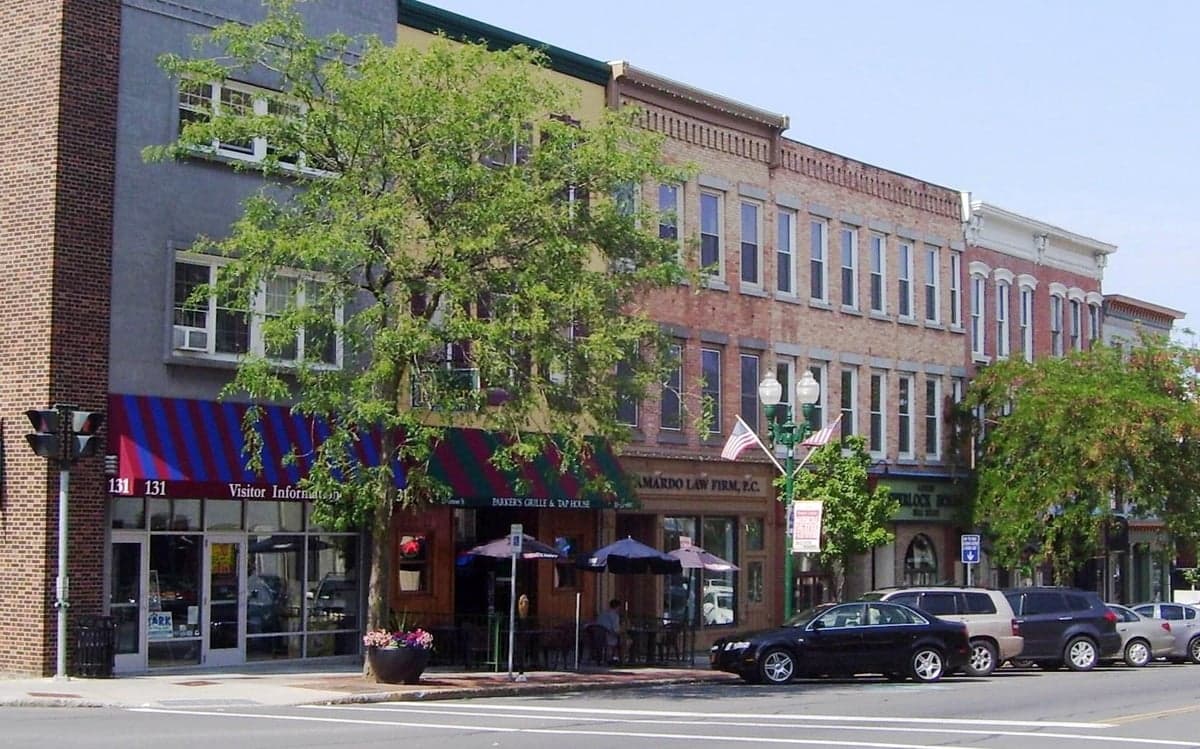
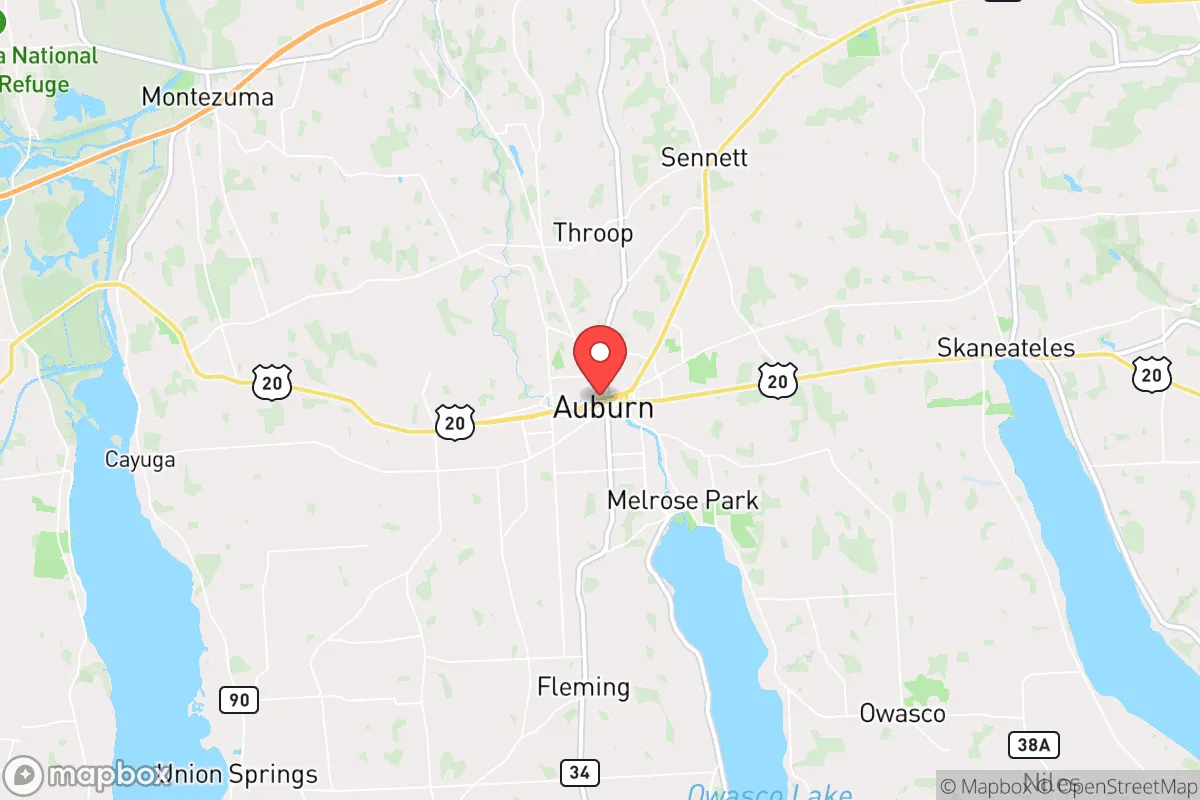
Photo: Wikipedia
Quality of Life in Auburn, NY
A high quality of life with strong walkability, manageable living costs, healthy neighborhood signals, and solid amenity access.
What does Quality of Life tell us?
Quality of Life blends cost of living, nearby amenities, socioeconomic signals, and neighborhood character. City-level scores represent the whole municipality; individual neighborhoods can differ.
What does this tell us?
Quality of Life blends cost of living, nearby amenities, socioeconomic signals, and neighborhood character. City-level scores represent the whole municipality; individual neighborhoods can differ.
Cost of Living
35% below national average
The Real Cost of Living in Auburn, NY for 2026
| Tier | Individual | Family (4) |
|---|---|---|
| Survival | $14k | $26k |
| Comfortable | $28k | $41k |
| Luxury | $87k+ | $135k+ |
| Elite (Top 5%) | $103k+ | $159k+ |
120%
The Area Signal
A metric tracking the socioeconomic signals of the area.
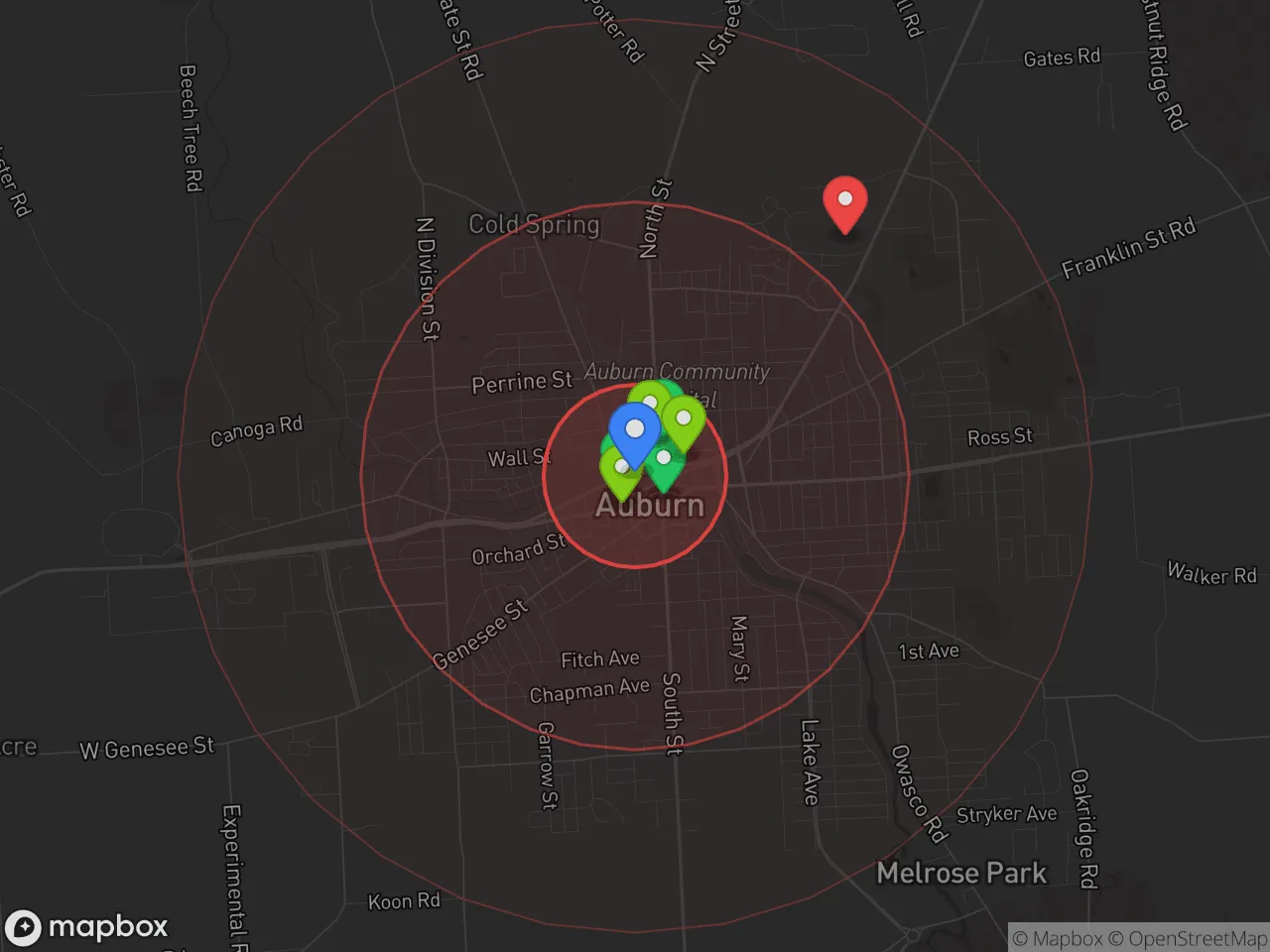
Hobbies
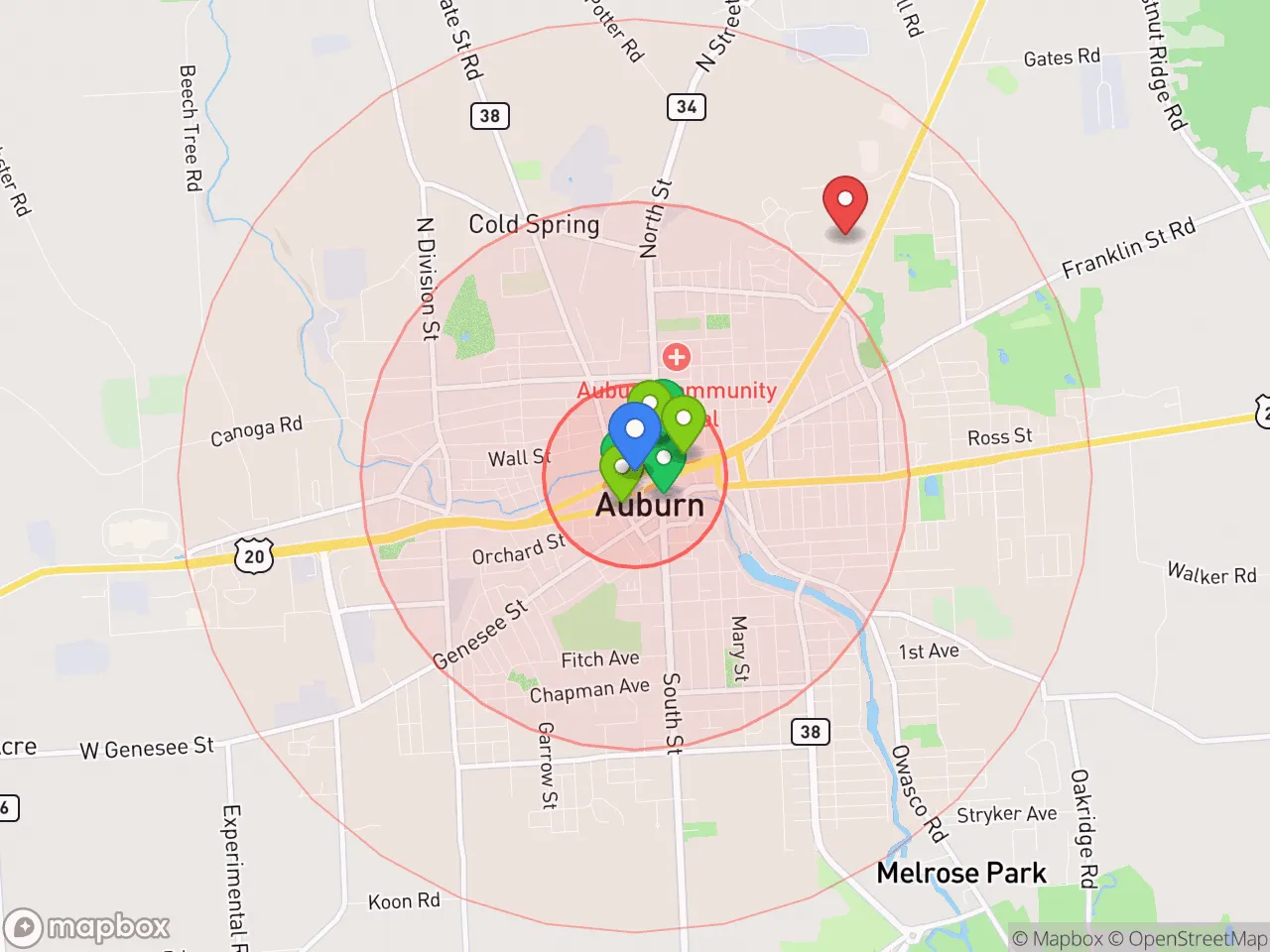
Explore the areaGroceries
3 within 10 miles
Gas
16 within 10 miles
Hospital
1 within 20 miles
Airport
EWR — Newark Liberty International
Post Office
USPS — Auburn, NY
Critical Amenities
Quality-of-Life Analysis
Auburn, New York, offers a quality of life defined by genuine affordability and a slower, community-oriented pace, attracting a mix of working-class families, retirees, and professionals seeking value over prestige. With a cost of living index of 65—well below the national average of 100—the city provides a financial cushion that is increasingly rare in the Northeast. The population skews older and more rooted than the national average, with a significant number of long-term residents and a growing cohort of remote workers drawn by the low housing costs and proximity to the Finger Lakes.
How housing costs and everyday expenses compare to nearby cities
The most striking aspect of life in Auburn is its housing market. The median home value sits at $143,600, a figure that is roughly half the national median and dramatically lower than in nearby cities like Syracuse ($175,000) or Rochester ($195,000). For renters, the median rent of $867 is similarly accessible, making it possible for a single earner on a modest salary to live without a roommate. The average commute of just under 20 minutes is a major quality-of-life bonus, especially compared to the 30+ minute averages common in the Syracuse or Rochester suburbs. This short drive time means residents spend less on gas and vehicle wear, further stretching a household budget. While property taxes in Cayuga County are above the national average (a common trade-off in New York State), the low purchase price keeps monthly mortgage payments manageable for most buyers.
What daily life is like for families, retirees, and remote workers
Auburn’s daily rhythm is anchored by its walkable downtown, Owasco Lake, and a handful of solid public schools. The Auburn Enlarged City School District serves roughly 4,000 students and offers several specialized programs, including a well-regarded pre-K and a career and technical education center. For families, the city provides a safe, predictable environment where children can walk to neighborhood parks and libraries. Retirees benefit from the low cost of living and access to healthcare through Auburn Community Hospital, a 99-bed facility that handles most routine needs. Remote workers, a growing demographic, appreciate the reliable high-speed internet from Spectrum and the ability to afford a home with a dedicated office—something that would be financially out of reach in larger metros. The city’s amenities include the Schweinfurth Art Center, the Cayuga Museum of History and Art, and the Emerson Park Pavilion on Owasco Lake, which hosts summer concerts and a farmers market. Dining is modest but functional, with local staples like the Prison City Pub & Brewery offering a gathering spot for the community.
The type of person who thrives in Auburn is someone who values financial breathing room and a close-knit community over urban excitement or career intensity. It is an ideal fit for first-time homebuyers priced out of Syracuse or Rochester, for retirees on a fixed income who want lake access without lakefront prices, and for remote workers who prioritize a short commute and a low-stress environment. Those seeking a vibrant nightlife, high-end dining, or a fast-paced professional scene will find Auburn too quiet. But for anyone whose definition of a good quality of life includes owning a home, having a 20-minute commute, and living within a 45-minute drive of two major cities, Auburn delivers a rare combination of affordability and livability.

Crime in Auburn, NY
Generally safer than 63% of comparable U.S. locations.
Violent CrimeViolent Crime Analysis
Property CrimeProperty Crime Analysis
Crime Analysis
Auburn, New York, presents a mixed safety profile for potential residents. The city's violent crime rate of 275.8 incidents per 100,000 people is notably lower than the national average, but its property crime rate of 1,235.3 per 100,000 is significantly higher, indicating a greater risk of theft and vandalism. As a small city within the orbit of the Syracuse metropolitan area, Auburn's crime dynamics are influenced by broader regional trends and local justice policies.
Crime in context
When compared to state and national benchmarks, Auburn's violent crime rate is roughly 26% below the U.S. average of approximately 380 per 100,000, and it also falls below the New York state average. However, the property crime rate is a clear concern, sitting about 30% above the national average of roughly 1,950 per 100,000. This disparity means residents face a higher-than-typical likelihood of burglary, larceny, and motor vehicle theft. The city's location near a major metro area, combined with the progressive judicial philosophies common in New York's upstate counties, can create a challenging environment for public safety. Lenient sentencing and a focus on rehabilitation over incarceration for property offenders often result in repeat offenses, directly undermining community security.
What residents experience
For those living in Auburn, the most tangible safety concern is property crime. Residents frequently report issues with package theft, car break-ins, and vandalism, particularly in areas near downtown and major thoroughfares. Violent crime, while less common, is not absent and tends to be concentrated in specific pockets. The local justice system, influenced by progressive district attorneys and judges, often prioritizes diversion programs and reduced bail for non-violent offenders. This approach, while intended to reduce incarceration rates, can lead to a perception that property crimes are not taken seriously, emboldening repeat offenders and frustrating victims. Daily life for many involves taking extra precautions: securing vehicles, installing home security systems, and remaining vigilant after dark in certain neighborhoods.
Neighborhood-level variation is significant. Areas like the historic South Street district and the outskirts near Owasco Lake generally experience lower crime rates, while sections closer to the city's core, particularly around State Street and the former industrial zones, see higher incident numbers. Prospective residents should research block-by-block data and speak with local police or neighborhood associations, as safety can change dramatically within a few blocks. The overarching concern remains that a progressive criminal justice philosophy, while well-intentioned, can erode the deterrent effect of law enforcement, making property crime a persistent issue for the community.
* Values derived from national, state, county, city and local statistics and may differ in a specific area. Last updated: 2026-05-01T13:39:35.000Z
Narrative content on this page is AI-generated and may contain mistakes. Verify any details that matter before acting on them.
ReloMaps may earn a commission from affiliate links at no extra cost to you.

