 Popular
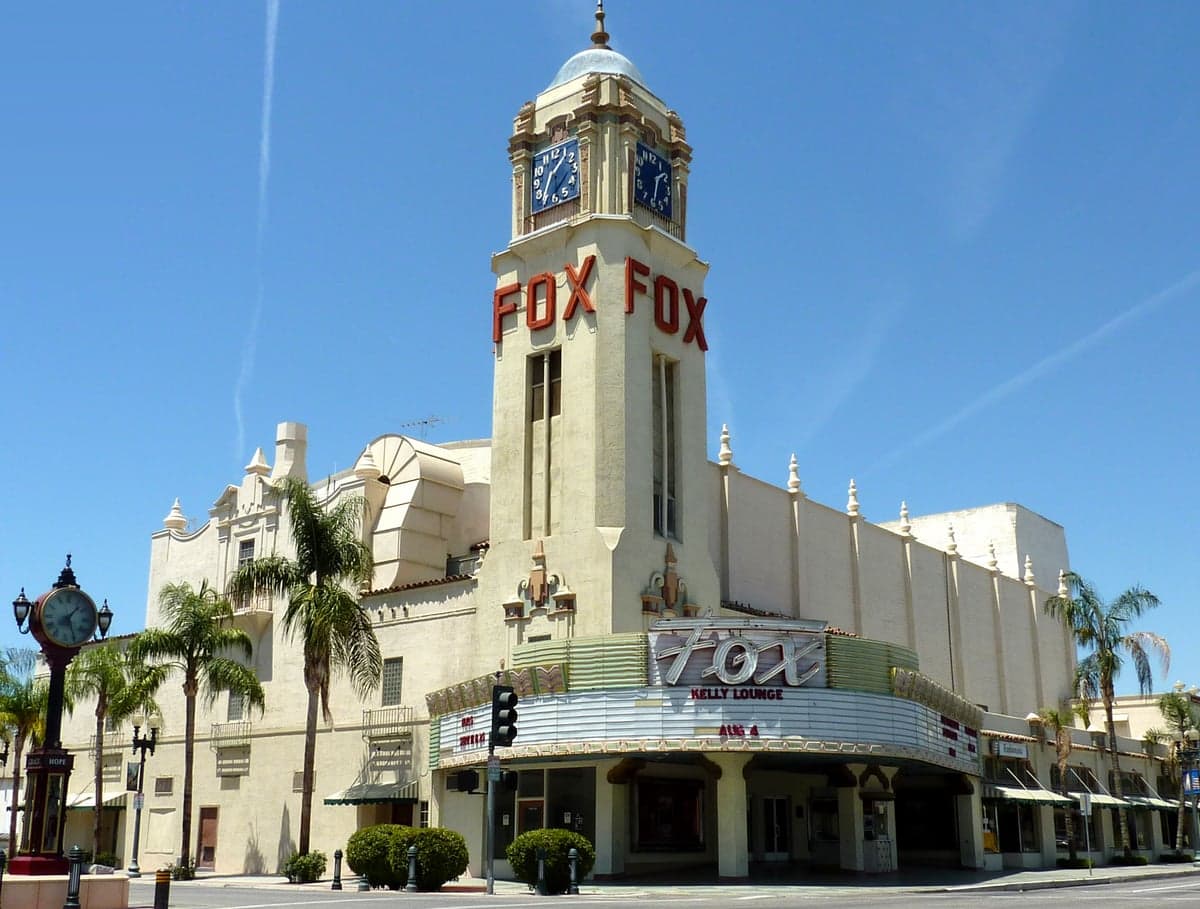
Photo: Wikipedia
Demographics of Bakersfield, CA
Affluence Level in Bakersfield, CA
A middle-class area roughly in line with national averages across income, home values, education, and employment.
People of Bakersfield, CA
The people of Bakersfield, California, today form a predominantly Hispanic (53.6%) and working-class population of 408,366, marked by a distinctive regional identity rooted in oil, agriculture, and country music. The city is notably less diverse than California as a whole, with a White non-Hispanic share of 29.0%, a Black population of 5.8%, and smaller East/Southeast Asian (4.5%) and Indian subcontinent (2.9%) communities. Only 23.3% of adults hold a bachelor’s degree, reflecting a blue-collar character that sets Bakersfield apart from coastal California metros. The city’s identity is deeply tied to the “Bakersfield Sound” in country music, conservative political leanings, and a sense of isolation from the rest of the state.
How the city was settled and grew
Bakersfield was founded in 1869 by Thomas Baker, a lawyer and farmer, as a small agricultural outpost on the Southern Pacific Railroad. The original settlers were predominantly White Anglo-American homesteaders and ranchers drawn by the fertile San Joaquin Valley soil. The discovery of oil in the Kern River field in 1899 transformed the town, sparking a boom that attracted a wave of White migrants from the U.S. South and Midwest, as well as European immigrants (Italian, Portuguese, Basque) who settled in the Old Town Kern district near the railroad depot. During the Dust Bowl of the 1930s, tens of thousands of “Okies” and “Arkies” from Oklahoma, Arkansas, and Texas fled to Bakersfield, settling in working-class neighborhoods like Oildale (north of the Kern River) and East Bakersfield. These migrants, mostly White and Protestant, brought a rural Southern culture that still shapes the city’s politics and music. By 1950, Bakersfield was nearly 90% White, with a small Black community (about 5%) concentrated in the Westside neighborhood near the railroad tracks.
Modern era (post-1965)
The 1965 Hart-Cellar Immigration Act and the expansion of California’s agricultural economy reshaped Bakersfield’s population. Beginning in the 1970s, large numbers of Mexican and Central American immigrants arrived to work in the fields and oil fields, settling in the South Bakersfield neighborhoods around Brundage Lane and White Lane. By 1990, the Hispanic share had risen to roughly 30%, and by 2026 it stands at 53.6%. The White non-Hispanic population, once dominant, has fallen to 29.0% as many longtime families moved to outlying suburbs like Rosedale (southwest) or left the region entirely. The Black population grew modestly through domestic migration from the South and California’s coastal cities, concentrating in the Central Bakersfield area around California Avenue. The East/Southeast Asian community (4.5%) is largely Filipino and Vietnamese, with a small enclave near the Stockdale Highway corridor. The Indian subcontinent population (2.9%) is newer, driven by professionals in healthcare and engineering, and is more dispersed across the southwest part of the city. The foreign-born share is 10.4%, well below the California average of 27%, indicating that most growth now comes from U.S.-born children of immigrants rather than new arrivals.
The future
Bakersfield’s population is trending toward a Hispanic-majority future, with the White share projected to continue declining as older residents age out and younger Hispanic families grow. The city is not tribalizing into stark ethnic enclaves; instead, neighborhoods like South Bakersfield are becoming more uniformly Hispanic, while Rosedale and Northwest Bakersfield remain predominantly White and middle-class. The Indian and East/Southeast Asian communities are small but growing slowly, largely through professional migration tied to the expanding healthcare and logistics sectors. The Black population has plateaued at around 5-6%. The city’s overall growth rate has slowed to about 0.5% annually, as the agricultural and oil economies mature and younger residents leave for coastal job markets. Over the next 10-20 years, Bakersfield will likely become a solidly Hispanic-majority city with a persistent White minority, a stable Black community, and small but visible Asian and Indian enclaves. The foreign-born share is unlikely to rise dramatically because the city lacks the high-tech job base that draws immigrants to the Bay Area or Los Angeles.
For someone moving in now, Bakersfield offers a relatively affordable, family-oriented environment with a strong sense of local identity, but it remains a place where economic opportunity is tied to agriculture, energy, and logistics rather than the knowledge economy. The population is becoming more Hispanic and younger, while the political culture stays conservative and the social fabric remains working-class. New arrivals should expect a city that is culturally distinct from coastal California, with a slower pace and a population that values self-reliance and community ties over cosmopolitan diversity.

* Values derived from national, state, county, city and local statistics and may differ in a specific area. Last updated: 2026-04-19T20:55:11.000Z
Narrative content on this page is AI-generated and may contain mistakes. Verify any details that matter before acting on them.
ReloMaps may earn a commission from affiliate links at no extra cost to you.

