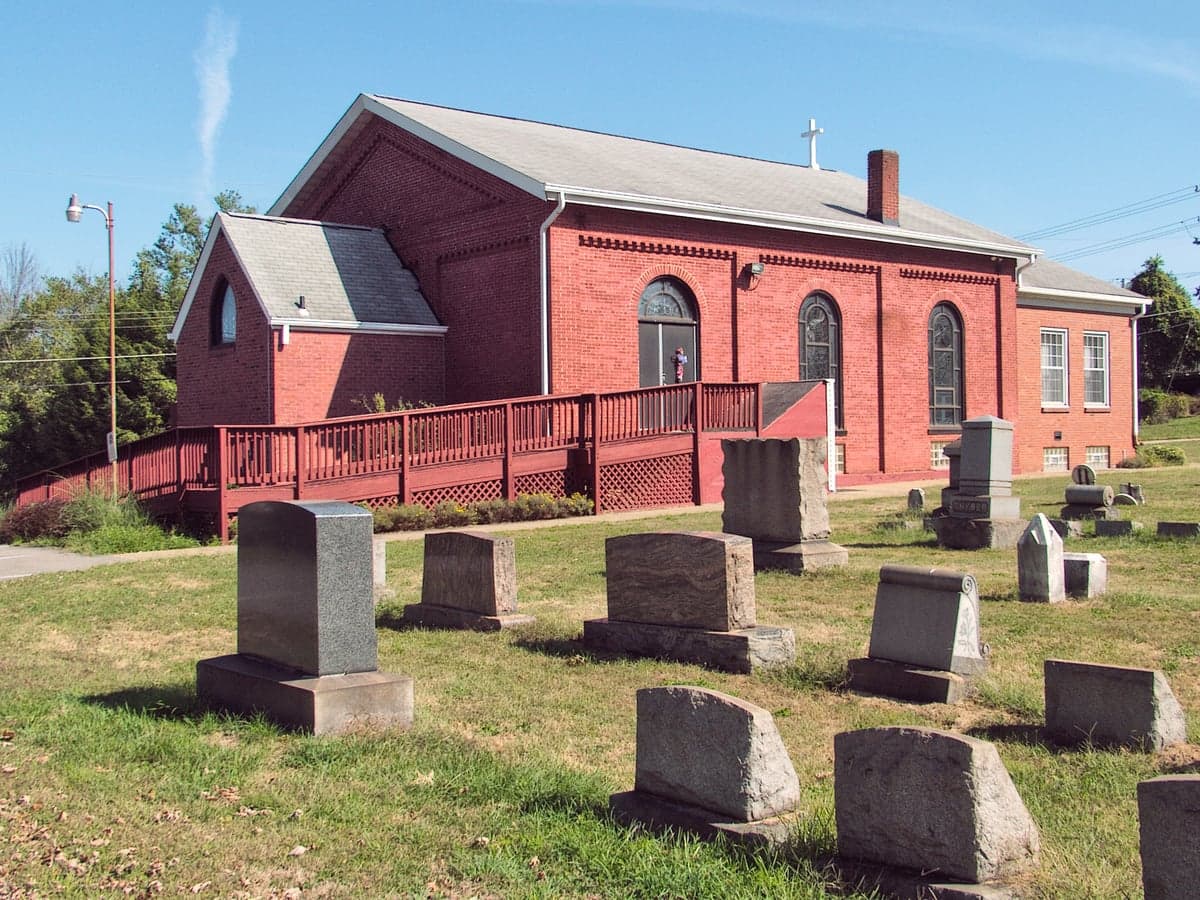
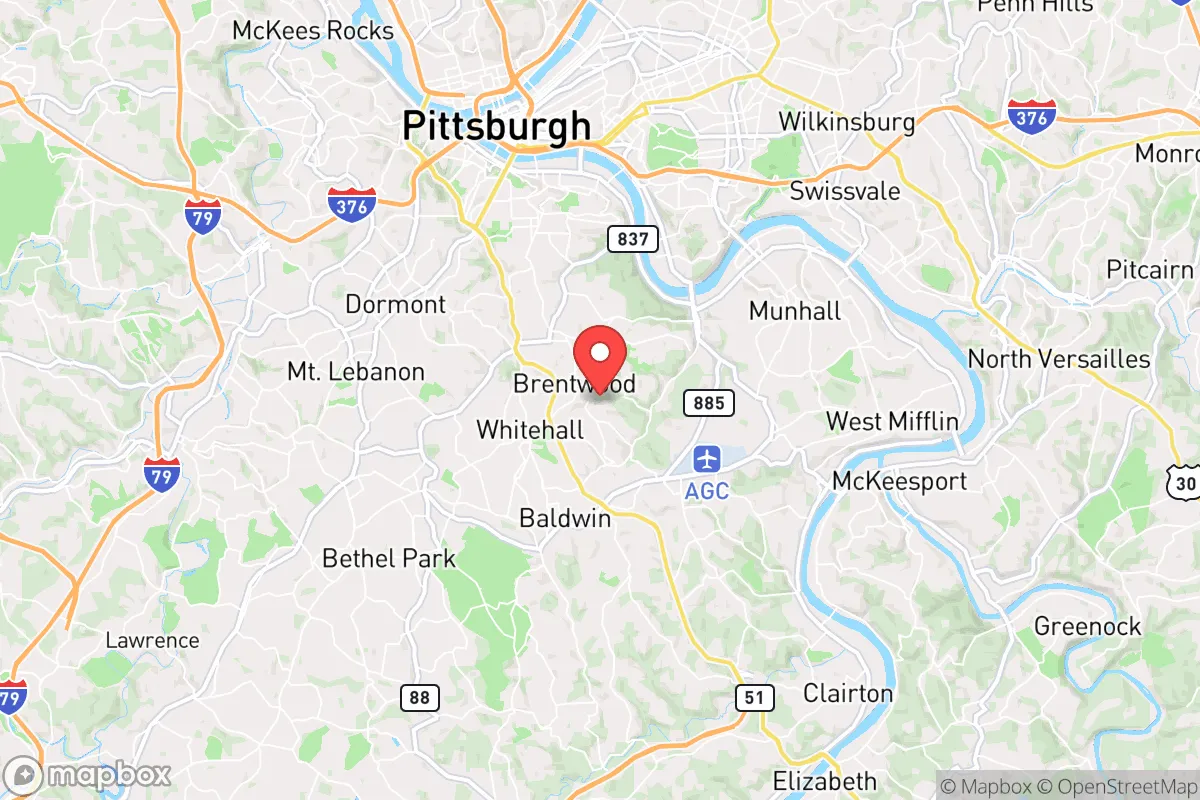
Photo: Wikipedia
Demographics of Baldwin, PA
Affluence Level in Baldwin, PA
A middle-class area roughly in line with national averages across income, home values, education, and employment.
People of Baldwin, PA
The people of Baldwin, Pennsylvania, today form a dense, middle-class suburban community of 21,159 residents that is notably more diverse than many of its neighboring Pittsburgh suburbs. The city’s character is defined by a strong white majority (80.6%) alongside a significant Indian-subcontinent population (7.7%) and smaller Black (4.1%), Hispanic (2.4%), and East/Southeast Asian (0.9%) communities. With 32.8% of adults holding a college degree, Baldwin is a moderately educated, family-oriented enclave where longtime residents and newer immigrant groups coexist in distinct neighborhoods, creating a patchwork of ethnic and generational identities.
How the city was settled and grew
Baldwin’s human history begins not with colonial settlement but with post-World War II suburban expansion. The area was originally part of Baldwin Township, a rural farming district, until the 1950s when Pittsburgh’s industrial boom and the construction of the Liberty Tunnels and Parkway East made commuter suburbs viable. The city was incorporated in 1950, and its first major population wave came from white ethnic families—primarily of German, Irish, and Italian descent—who left Pittsburgh’s crowded city neighborhoods for new single-family homes. These families built the core of what are now Baldwin Borough and Whitehall, the latter a neighborhood that developed rapidly with ranch-style houses and small shopping plazas. The original settlers were drawn by affordable land, proximity to steel mills and factories in the Monongahela Valley, and the promise of good public schools. By 1960, the population had surged past 20,000, and the city’s identity as a stable, working-to-middle-class suburb was cemented.
Modern era (post-1965)
The 1965 Hart-Cellar Act reshaped Baldwin’s demographics, though the change was gradual. The first significant non-white arrivals were Indian-subcontinent professionals—engineers, doctors, and IT workers—who began moving into the Brentwood and Castle Shannon border areas in the 1980s and 1990s, drawn by affordable housing and good school ratings. This wave accelerated after 2000, with Indian families clustering in the Baldwin Highlands neighborhood, where newer townhomes and split-level homes offered space for extended families. Meanwhile, East/Southeast Asian communities (Chinese, Korean, Vietnamese) arrived in smaller numbers, settling near the Baldwin-Whitehall School District’s central corridor. The Black population grew modestly, from under 1% in 1990 to 4.1% today, with most households locating in the Baldwin Manor area, a mid-century development of duplexes and apartments. The Hispanic population (2.4%) is the smallest and most dispersed, with no single ethnic enclave. Importantly, the white population has declined from over 95% in 1970 to 80.6% today, driven by both out-migration of younger families to farther exurbs and the natural aging of the original ethnic white cohort.
The future
Baldwin’s population is heading toward greater ethnic diversification, but not rapid homogenization. The Indian-subcontinent community is the fastest-growing segment, projected to reach 10-12% of the population by 2035, driven by chain migration and the area’s reputation for good schools and safe streets. This group is increasingly moving into Baldwin Township proper, where newer infill construction and renovated homes attract second-generation families. The white population will continue its slow decline, but the city is not tribalizing into hostile enclaves—rather, neighborhoods like Brentwood and Baldwin Highlands are becoming quietly integrated, with Indian and white families living side by side. The East/Southeast Asian and Black populations are plateauing, with little new in-migration expected. The foreign-born share (4.3%) is modest and unlikely to spike, as Baldwin lacks the low-rent housing or ethnic institutions that attract large new immigrant waves. Over the next decade, the city will likely become a more diverse, slightly older suburb, with the median age rising as the original white ethnic families age in place.
For someone moving in now, Baldwin is becoming a stable, moderately diverse suburb where the old ethnic white identity is fading and a new, Indian-influenced middle-class character is emerging. It is not a melting pot—neighborhoods still carry distinct ethnic footprints—but it is a place where different groups coexist without friction, anchored by shared priorities of schools, safety, and property values. The city’s future is one of gradual demographic blending, not rapid transformation, making it a predictable choice for families seeking a suburban base with a bit more diversity than the typical Pittsburgh bedroom community.

* Values derived from national, state, county, city and local statistics and may differ in a specific area. Last updated: 2026-05-01T10:13:31.000Z
Narrative content on this page is AI-generated and may contain mistakes. Verify any details that matter before acting on them.
ReloMaps may earn a commission from affiliate links at no extra cost to you.

