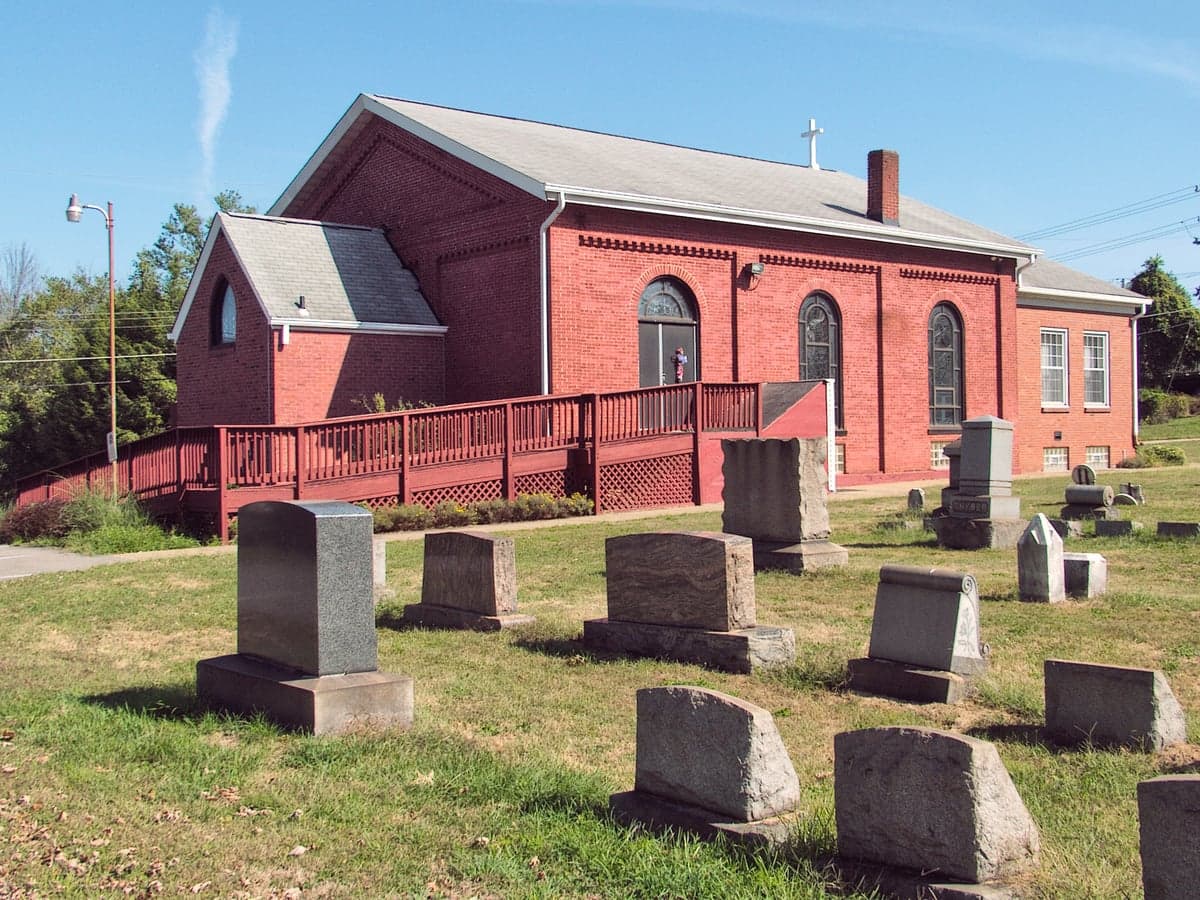
Photo: Wikipedia
Personal Sovereignty in Baldwin, PA
Strong independent fundamentals that actively favor personal liberty and low regulation.
What does Personal Sovereignty tell us?
Personal Sovereignty measures your capacity for self-reliance and independence with minimal government friction. Higher scores mean fewer barriers between you and the way you want to live... but it assumes you have the space you need and good neighbors.
What does this tell us?
Personal Sovereignty measures your capacity for self-reliance and independence with minimal government friction. Higher scores mean fewer barriers between you and the way you want to live... but it assumes you have the space you need and good neighbors.
State Policy
Energy independence: Net exporter (150% of energy produced in-state)
Personal Liberty
Homesteading

Personal Liberty Analysis
Baldwin, Pennsylvania offers a mixed bag for those prioritizing personal sovereignty, with the state’s heavy regulatory hand often clashing with the borough’s quieter, suburban character. While you won’t find the same level of outright government overreach as in deep-blue urban centers, Pennsylvania’s statewide policies on taxes, firearms, and emergency powers create a baseline of control that residents must navigate. For a survivalist or prepper mindset, Baldwin provides a decent foundation for self-reliance—think solid lot sizes and a community that leans toward minding its own business—but it’s not a libertarian paradise. The real test is whether the local culture and practical realities can offset the commonwealth’s appetite for regulation.
Tax burden and regulatory posture: how much of your income and property stays yours
Pennsylvania’s flat state income tax of 3.07% is a relative bright spot, keeping more of your earnings out of government hands compared to neighboring states like Ohio or New York. But Baldwin sits in Allegheny County, where property taxes are a different story. The combined local millage rates—borough, county, and school district—push effective property tax rates above 2% of assessed value, which is high for the region. For a prepper looking to hold land and build improvements, that annual bite adds up fast. Sales tax is a modest 6% (7% in Pittsburgh proper), so day-to-day purchases aren’t heavily penalized. On the regulatory side, Pennsylvania’s Uniform Construction Code means you’re dealing with state-mandated building codes even for minor structures like sheds or fences. Zoning in Baldwin is typical for a first-ring suburb: residential lots are generally 0.25 to 0.5 acres, with strict rules on accessory structures, livestock, and home-based businesses. If you’re planning a workshop, root cellar, or chicken coop, expect to pull permits and possibly face pushback from the borough’s code enforcement. The state’s emergency powers, notably the governor’s ability to issue prolonged disaster declarations (as seen during COVID), remain a concern—local officials in Baldwin have limited ability to push back against Harrisburg mandates.
Self-defense and gun law specifics: what you can keep, carry, and build
Pennsylvania is a “shall issue” state for concealed carry permits, meaning Baldwin residents can obtain a License to Carry Firearms (LTCF) with a clean background check and no subjective “good cause” requirement. That’s a solid win for personal defense. Open carry is legal without a permit, though it’s wise to check local ordinances—Baldwin itself doesn’t ban it, but some adjacent municipalities have restrictions. The state preempts local gun laws, so Pittsburgh’s failed attempts at magazine bans and firearm registration don’t apply here. However, Pennsylvania does have a universal background check system for handguns (private sales require a check through a licensed dealer), and long gun sales between individuals are still unregulated. For preppers building a defensive arsenal, the state’s ban on “assault weapons” is nonexistent—you can own AR-15s, standard-capacity magazines, and suppressors (with a federal tax stamp). Stand-your-ground laws are in effect, with no duty to retreat in any place you’re legally allowed to be. Castle doctrine applies to your home and vehicle. The catch: Pennsylvania’s Uniform Firearms Act includes a few traps, like the prohibition on carrying in courthouses and schools without specific exemptions. For a survivalist, the legal landscape is workable but requires staying current—especially if the state legislature shifts toward more restrictions, as has been proposed in recent sessions.
Self-reliance and homesteading viability: lot sizes, zoning, and off-grid feasibility
Baldwin’s residential lots average around a quarter-acre, which limits large-scale homesteading but still allows for significant self-reliance. You can raise chickens (typically up to 4-6 hens, no roosters, with a permit), maintain a substantial vegetable garden, and install rainwater collection barrels—though the borough’s code requires them to be covered and not create breeding grounds for mosquitoes. Composting is allowed but must be contained and odor-free. Off-grid living is a tougher sell: Pennsylvania’s building codes mandate connection to the municipal water and sewer system in most of Baldwin, and solar panels require electrical permits and grid-tie approval. Going fully off-grid with batteries and no utility hookup would likely run afoul of occupancy codes. For a prepper, the practical path is grid-tied solar with battery backup, a deep pantry, and a well-stocked workshop. The borough’s proximity to rural areas in Washington and Westmoreland counties (15-20 minutes south) offers a better option for those wanting acreage for livestock, orchards, or a bunker. Baldwin itself is more about suburban resilience—neighborly barter, community gardens, and local gun clubs—than full homesteading. The Allegheny County Health Department also regulates well water and septic systems, so any rural property you buy nearby will have its own set of permits and inspections.
Personal liberties: parental rights, medical autonomy, speech, and property
Pennsylvania’s parental rights are protected by state law, but not as strongly as in some southern or midwestern states. Parents have the right to direct their child’s education, including homeschooling (with a notarized affidavit and annual evaluations), and to opt out of certain school activities. Baldwin’s school district, Baldwin-Whitehall, has been generally responsive to parental concerns, but the state’s Department of Education can override local decisions on curriculum and health mandates. Medical autonomy is a gray area: Pennsylvania has no state-level vaccine mandate for adults, but during public health emergencies, the governor can impose restrictions (as seen with COVID-era mask mandates and business closures). For a prepper, this means stocking up on antibiotics, first-aid supplies, and telemedicine options is wise—local doctors are available, but the state’s regulatory environment can limit off-label or experimental treatments. Free speech is protected under the First Amendment, and Baldwin’s local government hasn’t shown a pattern of suppressing political expression. Property rights are generally respected, but the borough’s zoning board has authority to deny variances for non-standard uses (e.g., running a firearms training business from home). The biggest threat to personal sovereignty here is the state’s ability to preempt local decisions—if Harrisburg passes a law restricting firearm components or mandating vaccine passports, Baldwin can’t opt out. For a conservative-leaning individual, the borough’s culture is more live-and-let-live than activist, which can be a double-edged sword: less government interference day-to-day, but also less organized resistance to state overreach.
Overall, Baldwin offers a moderate level of personal sovereignty relative to other Pittsburgh suburbs and most of the Northeast. It’s not a sovereign citizen’s haven—you’ll still pay significant property taxes, follow building codes, and deal with state-level emergency powers. But for a survivalist or prepper who values a quiet, low-drama environment with decent gun laws, a flat income tax, and a community that generally respects personal space, it’s a viable option. The key is to treat Baldwin as a base camp: use its suburban stability for daily life, but look to rural properties within a 30-minute drive for serious off-grid projects or bug-out locations. Compared to areas like rural Montana or Texas, you’re trading some freedom for proximity to jobs, healthcare, and supply chains. If the state’s regulatory creep accelerates, Baldwin’s residents will feel it—but for now, it’s a place where a prepared individual can live with a reasonable degree of autonomy, as long as they keep one eye on Harrisburg.

* Values derived from national, state, county, city and local statistics and may differ in a specific area. Last updated: 2026-05-01T10:13:31.000Z
Narrative content on this page is AI-generated and may contain mistakes. Verify any details that matter before acting on them.
ReloMaps may earn a commission from affiliate links at no extra cost to you.

