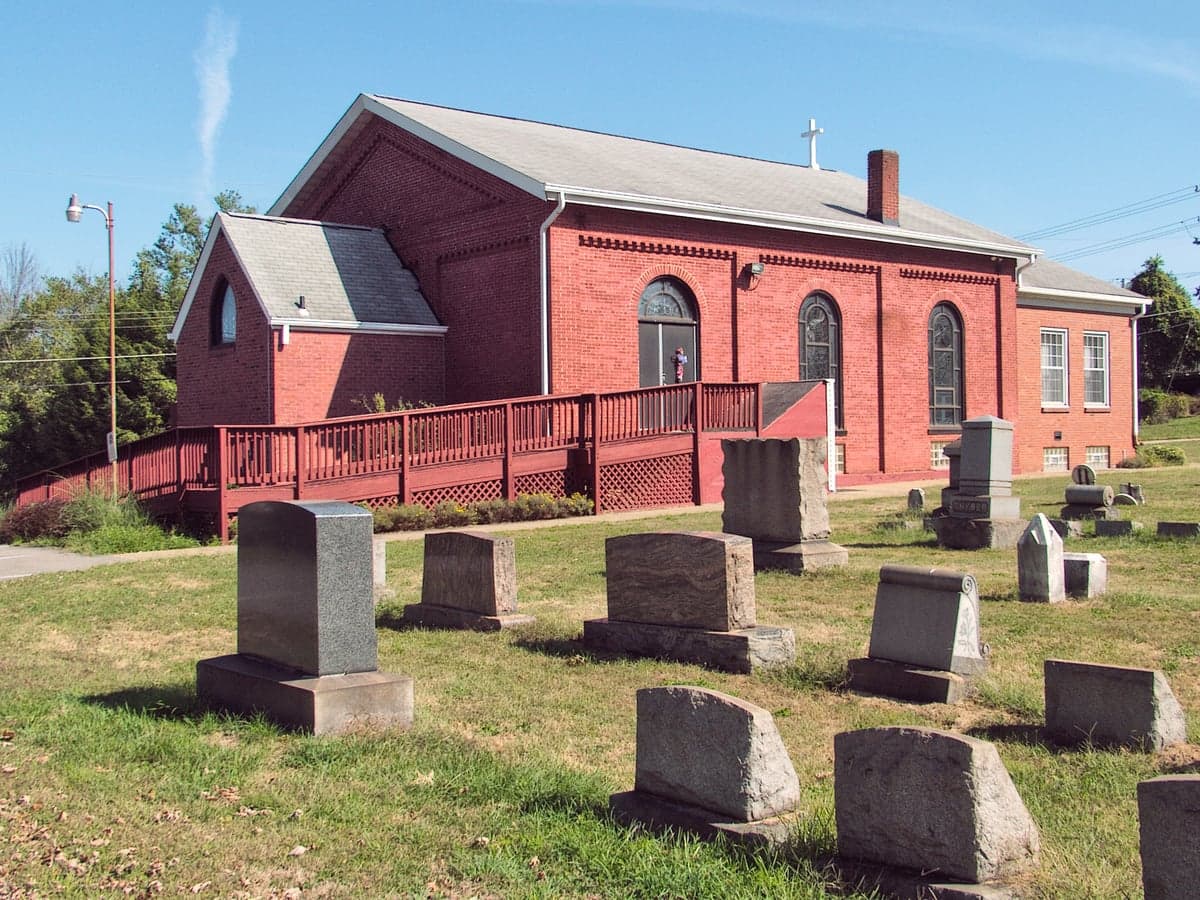
Photo: Wikipedia
Political ClimatePolitical Climate in Baldwin, PA
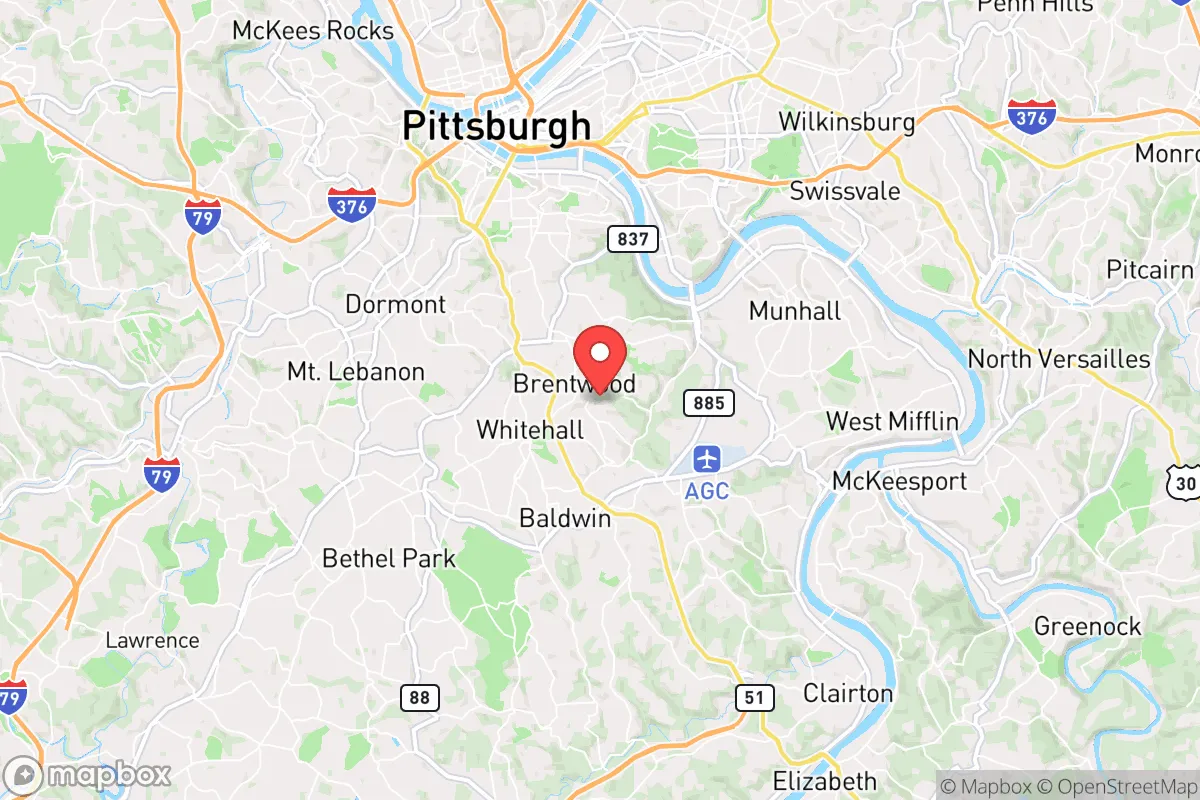
District shown is the primary district for this city’s centroid. Cities may span multiple districts.
Local Political AnalysisPolitical Analysis of Baldwin, PA
Baldwin, Pennsylvania, has a political climate that leans reliably Democratic, with a Cook PVI of D+10, but if you’ve lived here as long as I have, you know that label doesn’t tell the whole story. This isn’t some deep-blue urban stronghold; it’s a working-class suburb of Pittsburgh that used to be a lot more independent-minded. Over the last decade or so, you’ve seen the old-school, common-sense conservatism that kept things balanced get pushed aside by a more progressive agenda, and that shift is starting to chafe on folks who just want to be left alone.
How it compares
Drive ten minutes north into Pittsburgh proper, and you’re in a place where the politics are aggressively liberal—think higher taxes, more regulations, and a city council that’s not shy about telling you how to live. Baldwin, by contrast, still has a bit of that suburban buffer, but it’s losing ground fast. Compare it to nearby communities like Bethel Park or Upper St. Clair, which lean more Republican and tend to push back harder on things like zoning overreach and school mandates. Baldwin used to be in that same camp, but now you’re seeing more local officials cozying up to county-level progressive policies, like the ones coming out of Allegheny County that favor higher property taxes and stricter environmental rules that hit small businesses and homeowners the hardest.
What this means for residents
For the average Baldwin resident, the biggest red flag is how government overreach is creeping into daily life. You’ve got school boards that are more focused on social engineering than teaching kids to read and do math, and local ordinances that make it harder to run a small business out of your home or even put up a fence without jumping through hoops. The tax burden is climbing, too, and it’s not because services are getting better—it’s because the county is chasing progressive pet projects. If you value personal freedoms, like the right to decide what’s best for your family without a bureaucrat’s permission, you’re starting to feel squeezed. The long-term trajectory here is concerning: if the current trend holds, Baldwin could end up looking more like the city, with all the red tape and none of the benefits.
On the cultural side, Baldwin still has a strong sense of community—neighbors help each other, and there’s a real pride in the local sports and volunteer fire departments. But you can feel the tension building. The old guard, the folks who remember when this was a place where you could speak your mind without being labeled, are getting outnumbered by newcomers who bring big-city attitudes. If you’re considering moving here, keep an eye on the local elections and school board meetings. That’s where the real fight is happening, and it’s going to determine whether Baldwin stays a place where you can live your life your way, or becomes another suburb that’s lost its soul to progressive groupthink.

State Political ClimatePolitical Climate in Pennsylvania
State Political AnalysisPolitical Environment in the State
Pennsylvania is a true battleground state, and if you’re looking at it through a conservative lens, the picture is more complicated than the simple “blue vs. red” map suggests. Over the last 20 years, the state has shifted from a reliably Democratic stronghold in presidential races to a pure toss-up, with Donald Trump winning it in 2016 and Joe Biden narrowly flipping it back in 2020 by just over 80,000 votes. The dominant coalition is a classic Rust Belt mix: union-heavy, working-class Democrats in the old industrial cities and a growing, energized conservative base in the rural and exurban counties. The long-term trajectory is a slow, grinding rightward shift in the middle of the state, but the Philadelphia and Pittsburgh metros are pulling hard left, creating a political tug-of-war that makes Pennsylvania one of the most unpredictable places in the country.
Urban vs. rural divide
The political map of Pennsylvania is a stark study in contrasts. The two major Democratic strongholds are Philadelphia (Philadelphia County) and Pittsburgh (Allegheny County). Philadelphia alone delivers about 500,000 Democratic votes in a close election, enough to swing the entire state. Pittsburgh’s Allegheny County has also trended blue, though less dramatically. The suburbs around Philadelphia—like Bucks, Montgomery, and Delaware counties—have flipped from moderate Republican to solidly Democratic over the past decade, driven by college-educated professionals and an influx of out-of-state transplants. In contrast, the vast rural and small-town interior—places like Lancaster, York, and the coal regions of Schuylkill and Luzerne counties—have swung hard to the right. Luzerne County, a classic Obama-Trump county, went from +5 Obama in 2012 to +19 Trump in 2020. The “T” of the state—the central spine running from the New York border down to Maryland—is now deep red, with counties like Tioga, Potter, and Bradford routinely voting 70%+ Republican. The political divide isn’t just urban vs. rural; it’s also a cultural and economic one, with the old industrial towns feeling left behind by the globalized, knowledge-economy cities.
Policy environment
Pennsylvania’s policy environment is a mixed bag for conservatives. On the positive side, the state has a flat income tax rate of 3.07%, which is relatively low and hasn’t been raised in years. There is no state-level estate or inheritance tax on spouses, though the inheritance tax on other heirs can be steep (4.5% to 15%). Property taxes are a major pain point, especially in high-cost counties like Montgomery and Chester, where they can easily top $8,000 a year on a median home. The state’s regulatory posture is moderate—not as business-friendly as Texas or Florida, but far less burdensome than New York or California. Education policy is a flashpoint: the state has a massive school funding disparity, with wealthy suburban districts spending twice as much per pupil as rural ones. Governor Josh Shapiro, a Democrat, has pushed for more state funding and universal school vouchers, but the Republican-controlled state Senate has blocked most voucher expansions. On election laws, Pennsylvania has no voter ID requirement for in-person voting (a sore spot for conservatives), and mail-in voting was expanded in 2019 under Act 77, which remains controversial. The state also has a closed primary system, meaning only registered Republicans and Democrats can vote in primaries—a barrier for independents.
Trajectory & freedom
On the freedom front, Pennsylvania is a state in flux, and the trend is concerning for conservatives. Gun rights are relatively strong: the state is a “shall issue” for concealed carry permits, and there is no state-level assault weapons ban or magazine capacity limit. However, in 2023, Governor Shapiro signed a package of gun safety bills that expanded background checks for long guns and created a “red flag” law allowing courts to temporarily seize firearms from individuals deemed a threat. This was a major win for gun control advocates and a clear erosion of Second Amendment rights. On parental rights, the state has not passed any of the “Parents’ Bill of Rights” laws seen in red states, and school boards in blue areas like Pittsburgh and Philadelphia have adopted policies that restrict parental notification about gender identity changes. Medical freedom took a hit during COVID: Pennsylvania had some of the longest-lasting mask mandates and business closures in the Northeast, and Governor Shapiro has not pushed to repeal any of the emergency powers used then. Property rights are generally respected, but the state’s land use laws can be restrictive in urban areas. The overall trajectory is a slow creep toward more government control, especially in the populous southeastern corner.
Civil unrest & political movements
Pennsylvania has seen its share of political flashpoints. The 2020 election aftermath was particularly intense in Philadelphia, where Republican poll watchers alleged irregularities at the city’s convention center counting site. This led to years of “election integrity” activism, with groups like the Pennsylvania Election Integrity Network pushing for tighter laws. On the left, the Black Lives Matter protests in Philadelphia and Pittsburgh in 2020 were large and occasionally violent, with looting and property damage in Center City. Immigration politics are a growing issue: Philadelphia is a self-declared “sanctuary city,” and the state has no law prohibiting sanctuary policies, which frustrates conservatives who see it as a magnet for illegal immigration. The secession or nullification rhetoric is mostly confined to the rural “T” region, where some county commissioners have passed symbolic resolutions declaring their counties “Second Amendment sanctuaries” or “constitutional counties,” but these have no legal force. The most visible flashpoint for a new resident would be the stark cultural divide: drive 30 minutes west of Philadelphia into Chester County, and you’ll see Trump flags alongside “In This House We Believe” signs—a daily reminder of the state’s split personality.
Projection
Looking ahead 5-10 years, the trend is not favorable for conservatives. The Philadelphia suburbs are growing and getting bluer, driven by an influx of professionals from New York and New Jersey who bring their progressive politics with them. The rural counties are shrinking in population and aging, which means their political weight is slowly declining. The wildcard is the growing Hispanic population in places like Allentown and Reading, which could lean Democratic but are not reliably so—many are working-class and culturally conservative. The state’s electoral votes will likely remain competitive, but the underlying demographic shift favors Democrats in the long run. A conservative moving in now should expect to see more blue laws, more gun control, and more progressive school policies in the populous areas. The rural areas will remain red, but they will have less say in state government as reapportionment after the 2030 census likely shifts a seat from rural Pennsylvania to the Philadelphia suburbs. The bottom line: Pennsylvania is not becoming more free; it’s becoming more divided, with the freedom side slowly losing ground.
For a new resident, the practical takeaway is this: if you want to live in a place where your conservative values are the norm, you need to pick your county carefully. The rural “T” and the exurbs of Lancaster and York are still solid ground. But if you move to the Philadelphia suburbs or Pittsburgh proper, you will be living under increasingly progressive governance—higher taxes, more regulation, and a school system that may not align with your values. Pennsylvania offers a good cost of living and a flat income tax, but the political climate is a battleground, and you’ll need to be engaged if you want to protect your freedoms. It’s not a lost cause, but it’s a state that requires vigilance.
* Values derived from national, state, county, city and local statistics and may differ in a specific area. Last updated: 2026-05-01T10:13:31.000Z
Narrative content on this page is AI-generated and may contain mistakes. Verify any details that matter before acting on them.
ReloMaps may earn a commission from affiliate links at no extra cost to you.

