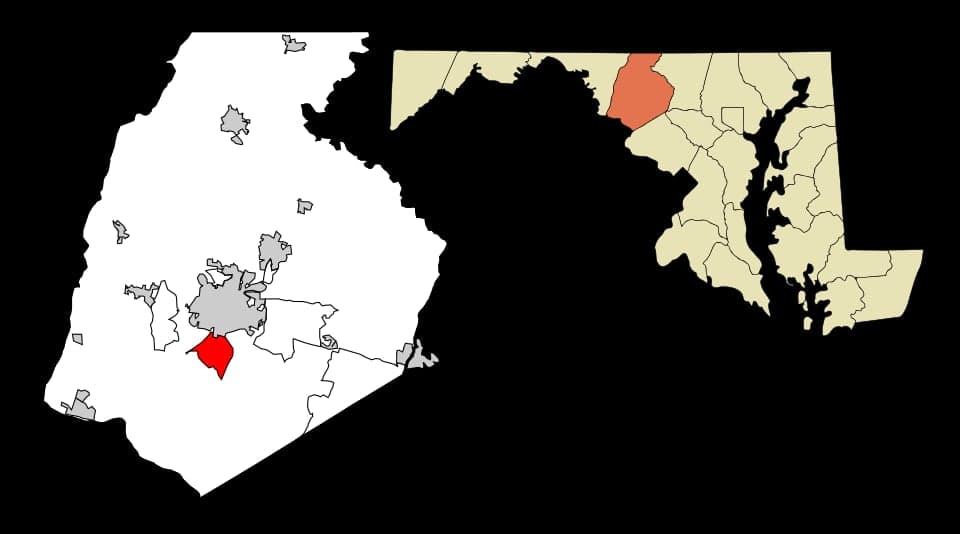
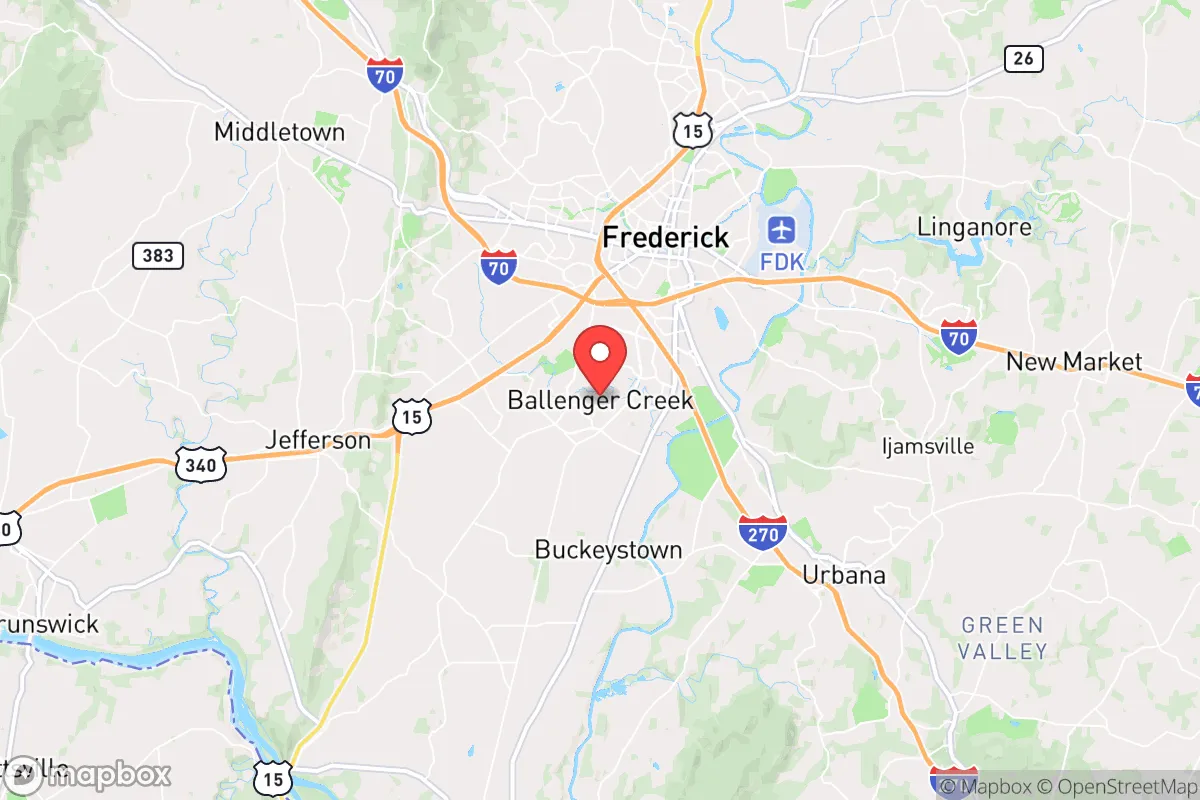
Photo: Wikipedia
Personal Sovereignty in Ballenger Creek, MD
Viable for self-reliance. Generally workable, though some barriers may limit total independence.
What does Personal Sovereignty tell us?
Personal Sovereignty measures your capacity for self-reliance and independence with minimal government friction. Higher scores mean fewer barriers between you and the way you want to live... but it assumes you have the space you need and good neighbors.
What does this tell us?
Personal Sovereignty measures your capacity for self-reliance and independence with minimal government friction. Higher scores mean fewer barriers between you and the way you want to live... but it assumes you have the space you need and good neighbors.
State Policy
Energy independence: Importer (8% of energy produced in-state)
Personal Liberty
Homesteading

Personal Liberty Analysis
Ballenger Creek, Maryland, offers a personal sovereignty environment that is heavily shaped by state-level policies, resulting in a moderate-to-high regulatory touch that residents must navigate. While Frederick County provides more space and a slightly more conservative tilt than the D.C. suburbs, the state's overarching legal framework on taxes, self-defense, and property rights creates a constrained autonomy landscape. For individuals and families prioritizing maximum personal freedom, Ballenger Creek represents a trade-off: access to Mid-Atlantic amenities and a growing community, but within a system that imposes significant limits on self-reliance and independent decision-making.
Tax burden and regulatory posture in Frederick County
Maryland's tax burden is among the highest in the nation, and Ballenger Creek residents feel this directly. The state levies a progressive income tax with rates from 2% to 5.75%, and Frederick County adds a local income tax of 2.96%, bringing the combined top marginal rate to roughly 8.71%. Property taxes in the area are moderate for the region: the county rate is about $1.06 per $100 of assessed value, plus a small Ballenger Creek municipal tax, totaling around $1.10-$1.15. For a $400,000 home, that means roughly $4,400-$4,600 annually in property tax. Sales tax is 6% statewide, with no additional county surcharge. The regulatory posture is heavy-touch in several key areas: Maryland has strict environmental regulations, particularly around the Chesapeake Bay watershed, which affects construction, septic systems, and stormwater management. Zoning in the Ballenger Creek area is primarily suburban residential, with Frederick County's Adequate Public Facilities Ordinance (APFO) tying new development to school and road capacity, limiting how quickly you can build or expand. Business licensing and occupational taxes add another layer; any home-based business must register with the county and may face zoning restrictions. For a conservative-leaning individual, the cumulative effect is a system that requires more paperwork, higher costs, and less flexibility than in states like Virginia or Pennsylvania just across the border.
Self-defense and gun law specifics in Maryland
Maryland's firearm laws are among the most restrictive in the nation, and Ballenger Creek residents must comply with a complex set of regulations. The state requires a Handgun Qualification License (HQL) to purchase a handgun, which involves fingerprinting, a background check, and a four-hour training course. Long gun purchases require a 7-day waiting period and a background check through the Maryland State Police. The state bans "assault weapons" by name and feature, including many popular AR-15 and AK-pattern rifles, and magazines are limited to 10 rounds for long guns and 10 rounds for handguns purchased after 2013. Concealed carry is shall-issue, but the process is rigorous: applicants must complete a 16-hour training course, submit references, and demonstrate a "good and substantial reason" — though a 2022 Supreme Court ruling (NYSRPA v. Bruen) has led to a more permissive interpretation, and the state now issues permits more broadly. However, Maryland does not recognize out-of-state permits, and reciprocity is limited. Stand-your-ground laws do not exist; Maryland imposes a duty to retreat in public spaces before using deadly force, except inside one's home (the Castle Doctrine applies). For a self-defense-minded individual, these restrictions mean that carrying a firearm for personal protection is legally possible but burdensome, and the types of firearms available are limited compared to most other states. The regulatory environment clearly prioritizes state control over individual gun rights.
Self-reliance and homesteading viability: lot sizes, zoning, and off-grid feasibility
Ballenger Creek is a planned suburban community, not a rural homesteading area. Typical lot sizes range from one-quarter to one-half acre in subdivisions, with some townhomes on smaller plots. Zoning is predominantly R-4 (Residential, 4 units per acre) and R-8, which restricts agricultural uses, livestock, and most commercial activity on residential lots. Keeping chickens is allowed in Frederick County on lots of at least 20,000 square feet, but roosters are prohibited, and coop setbacks apply. Larger livestock like goats or pigs are not permitted on standard residential lots. Off-grid living is effectively illegal: Maryland requires connection to public water and sewer in most subdivisions, and the county's building code mandates grid-tied electrical service for new construction. Solar panels are allowed but must be grid-connected; battery-only systems are not permitted for primary residences. Rainwater collection is legal but limited to 5,000 gallons of storage and cannot be the primary water source. Composting toilets are not approved for full-time use. For someone seeking true self-reliance — growing food, generating power, and living independently of municipal systems — Ballenger Creek is a poor fit. The area is designed for suburban convenience, not autonomy. However, rural Frederick County, a 15-30 minute drive west, offers agricultural zoning with 2-5 acre minimum lot sizes, where homesteading is more feasible, though still subject to state environmental regulations.
Personal liberties: parental rights, medical autonomy, speech, and property
Maryland's legal environment on personal liberties is mixed, with strong protections in some areas and significant restrictions in others. Parental rights are generally respected in education: Maryland law requires parental notification for certain health services, but minors can consent to mental health and substance abuse treatment without parental approval. The state has a robust public school system with a standardized curriculum, limiting parental opt-out options for specific content. Medical autonomy is constrained: Maryland has strict vaccine mandates for school attendance, with only narrow medical exemptions (no philosophical or religious exemptions for K-12). The state also has a Prescription Drug Monitoring Program and limits on telemedicine for controlled substances. Free speech is protected under the First Amendment, but Maryland has hate crime laws that enhance penalties for speech that incites violence, and the state's public nuisance laws have been used to restrict certain protests. Property rights are limited by Maryland's strong eminent domain authority and environmental regulations; the state's Critical Area Commission imposes restrictions on development within 1,000 feet of tidal waters, and Frederick County has a Forest Conservation Ordinance that requires tree planting or fees for any development. For a conservative-leaning individual, the overall posture is one of moderate-to-high government involvement in personal decisions, with fewer opt-outs than in states with stronger individual liberty protections.
Compared to neighboring states like Virginia or Pennsylvania, Ballenger Creek and Maryland generally offer a significantly lower degree of personal sovereignty. The tax burden is higher, gun laws are more restrictive, homesteading is less feasible, and personal liberties are more circumscribed by state regulation. For a family or individual who prioritizes maximum autonomy and self-reliance, this area would rank as a constrained choice — livable, but with constant friction from state-level policies. The trade-off is access to a strong job market, good schools, and proximity to Baltimore and Washington D.C., which may be worth the regulatory overhead for some. However, for those seeking a light-touch governance environment, the Shenandoah Valley of Virginia or south-central Pennsylvania would offer a more sovereignty-aligned alternative within a similar commute radius.

* Values derived from national, state, county, city and local statistics and may differ in a specific area. Last updated: 2026-07-31T16:06:27.000Z
Narrative content on this page is AI-generated and may contain mistakes. Verify any details that matter before acting on them.
ReloMaps may earn a commission from affiliate links at no extra cost to you.

