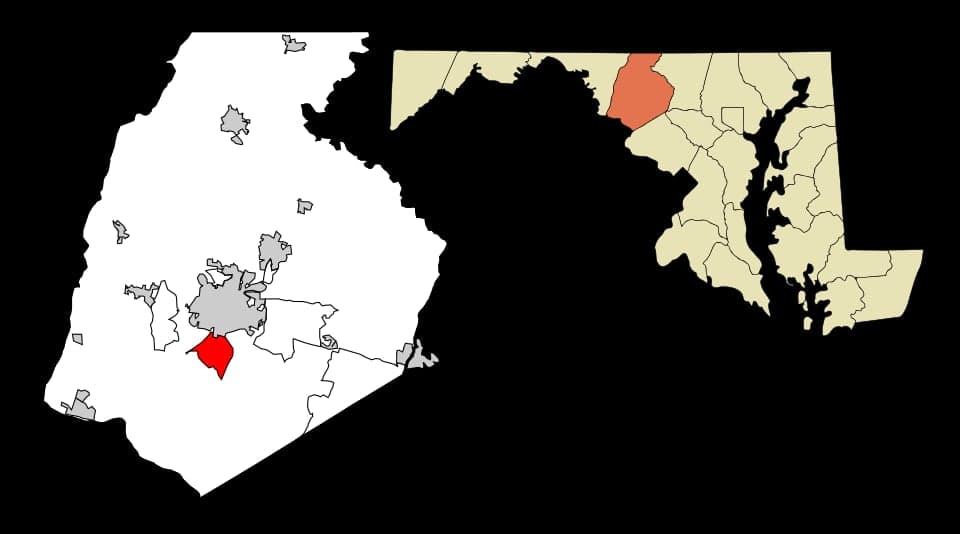
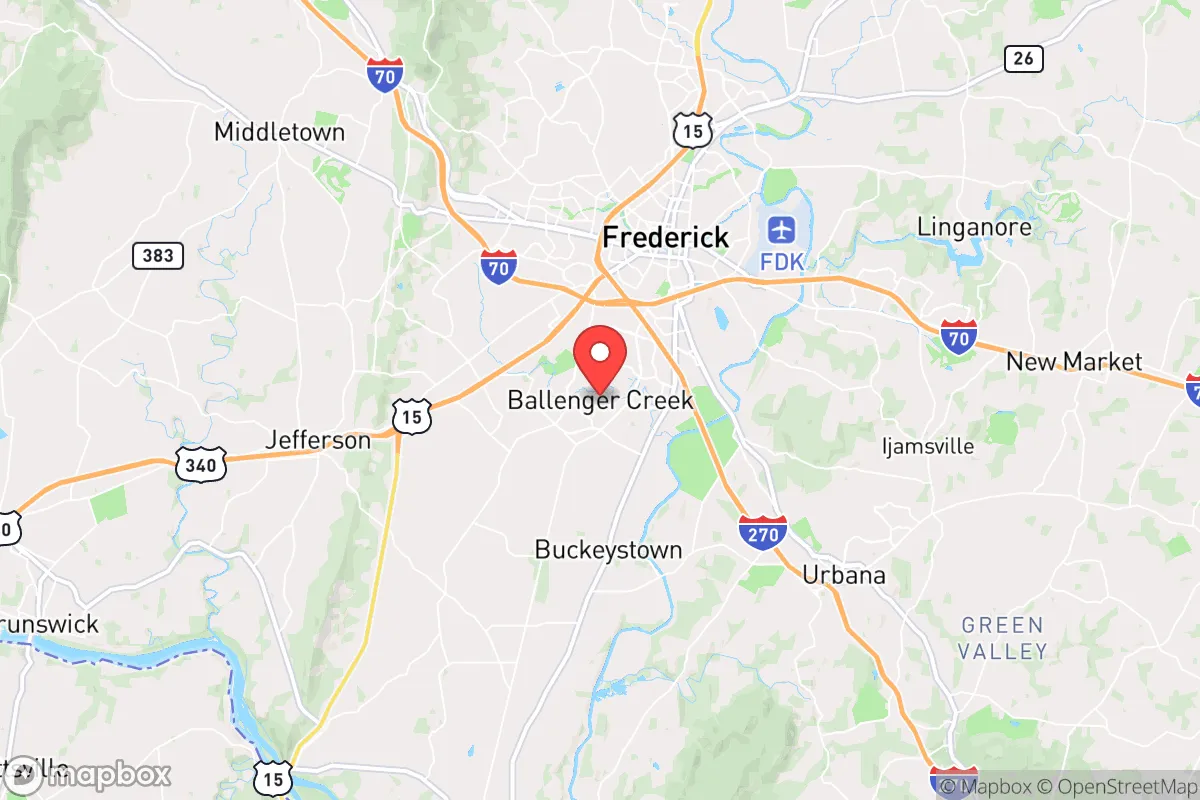
Photo: Wikipedia
Quality of Life in Ballenger Creek, MD
A high quality of life with strong walkability, manageable living costs, healthy neighborhood signals, and solid amenity access.
What does Quality of Life tell us?
Quality of Life blends cost of living, nearby amenities, socioeconomic signals, and neighborhood character. City-level scores represent the whole municipality; individual neighborhoods can differ.
What does this tell us?
Quality of Life blends cost of living, nearby amenities, socioeconomic signals, and neighborhood character. City-level scores represent the whole municipality; individual neighborhoods can differ.
Cost of Living
51% above national average
The Real Cost of Living in Ballenger Creek, MD for 2026
| Tier | Individual | Family (4) |
|---|---|---|
| Survival | $31k | $57k |
| Comfortable | $72k | $106k |
| Luxury | $150k+ | $232k+ |
| Elite (Top 5%) | $176k+ | $273k+ |
103%
The Area Signal
A metric tracking the socioeconomic signals of the area.
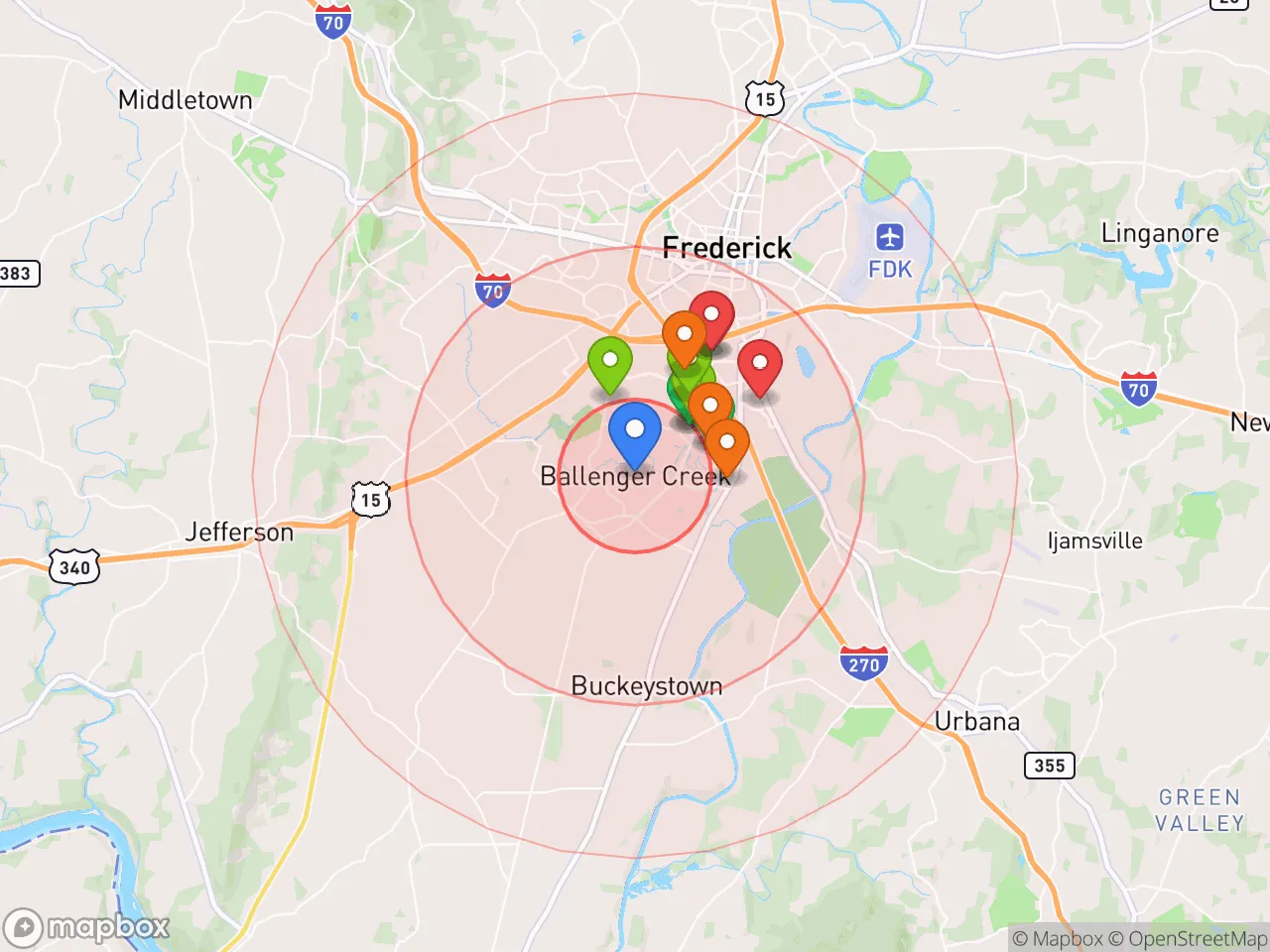
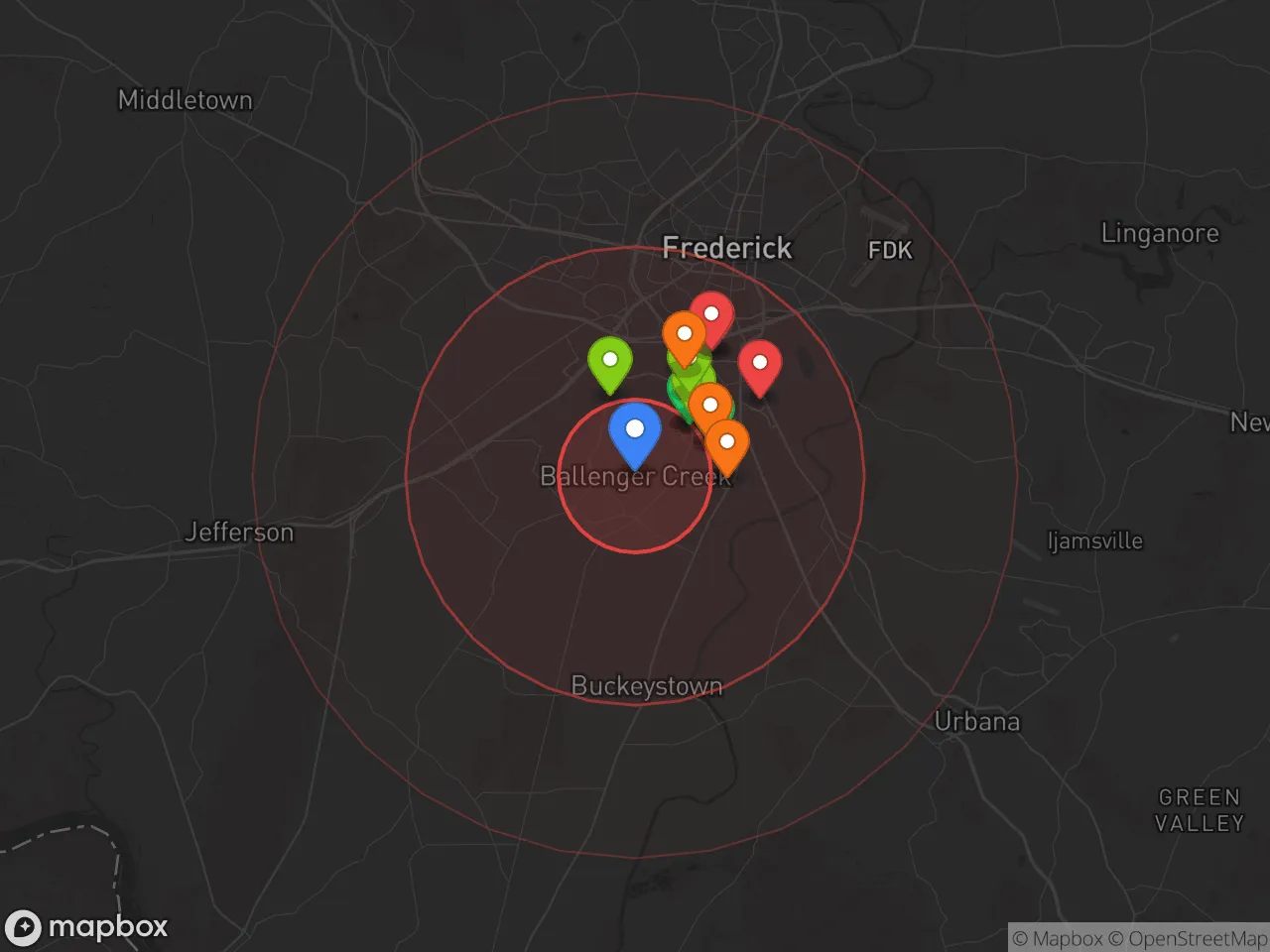
Hobbies
Explore the areaGroceries
0 within 10 miles
Gas
0 within 10 miles
Hospital
0 within 20 miles
Airport
IAD — Washington Dulles International
Post Office
Critical Amenities
Quality-of-Life Analysis
Ballenger Creek, Maryland, is an affluent, family-oriented census-designated place in Frederick County where the cost of living index sits at 151 — 51% above the national average — reflecting its desirability among professionals and commuters seeking suburban comfort near the Washington, D.C., and Baltimore job corridors. The area attracts a mix of dual-income families, federal employees, and tech workers who prioritize good schools, low crime, and newer housing stock over urban proximity. With a median household income well above the state average, Ballenger Creek's residents tend to be college-educated homeowners who value community amenities and a slower pace than nearby Frederick City.
Cost of living, housing prices, and affordability compared to Frederick and D.C. suburbs
Ballenger Creek's housing market is the primary driver of its elevated cost of living. The median home value is $369,800, which is notably higher than the national median but significantly lower than comparable suburbs closer to Washington, D.C., such as Germantown or Gaithersburg, where median values often exceed $500,000. Median rent in Ballenger Creek is $1,913, placing it above the national average but still below the D.C. metro median of roughly $2,200. For buyers, the trade-off is clear: Ballenger Creek offers newer construction and larger lots than older inner-ring suburbs, but property taxes in Frederick County run about 1.06% of assessed value, adding roughly $3,900 annually on a median-priced home. The average commute time of 33.4 minutes is a key factor in the area's affordability equation — residents trade a longer drive for more square footage and lower per-square-foot prices than closer-in Montgomery County. Utilities, groceries, and transportation costs all track above the national baseline, consistent with the broader D.C. metro region.
Schools, parks, and what daily life is like for families
Daily life in Ballenger Creek revolves around its strong public school system, part of Frederick County Public Schools, which consistently ranks among Maryland's top districts. Elementary-aged children attend Ballenger Creek Elementary, a well-rated school with a student-teacher ratio near 15:1, while older students feed into Governor Thomas Johnson High School, known for its Advanced Placement offerings and competitive athletics. The area's amenity anchor is Ballenger Creek Park, a 50-acre facility with sports fields, walking trails, a dog park, and a community center that hosts youth leagues and seasonal events. Retail is concentrated along Monocacy Boulevard and Buckeystown Pike, where residents find grocery stores, chain restaurants, and big-box shopping without needing to drive into Frederick City proper. For entertainment and dining, downtown Frederick — with its breweries, farm-to-table restaurants, and the Carroll Creek Linear Park — is a 10-minute drive. The area lacks a walkable town center, so a car is essential for errands, but the trade-off is a quiet, low-crime environment with ample green space.
Ballenger Creek is best suited for families and professionals who prioritize school quality, newer housing, and suburban safety over urban walkability or a short commute. The 33-minute average drive to work is manageable for those employed in Frederick, northern Montgomery County, or even the D.C. fringe, but it would be a stretch for daily commuters to downtown Washington or Baltimore. Retirees on fixed incomes may find the cost of living challenging, while young singles might prefer the nightlife and density of downtown Frederick. For anyone seeking a stable, amenity-rich suburb with strong schools and a predictable daily rhythm, Ballenger Creek delivers a clear value proposition within the expensive D.C. orbit.

Crime in Ballenger Creek, MD
Higher crime rates than 58% of comparable U.S. locations.
Violent CrimeViolent Crime Analysis
Property CrimeProperty Crime Analysis
Crime Analysis
Ballenger Creek, Maryland, presents a mixed safety profile for prospective residents. The community's violent crime rate of 364.1 incidents per 100,000 residents is notably higher than the national average, while its property crime rate of 1,849.2 per 100,000 sits closer to but still above the national benchmark. These figures place Ballenger Creek in a cautionary position for those relocating to the area, particularly given its location within the broader Frederick County and proximity to the Washington, D.C., metropolitan region.
Crime in context
When compared to state and national averages, Ballenger Creek's violent crime rate is approximately 1.5 times higher than the national average of roughly 230 per 100,000. The property crime rate, while elevated, is less dramatically above the national figure of about 1,600 per 100,000. These statistics reflect a community that experiences more crime than the typical American suburb, though it remains safer than many urban cores. The broader context of being part of a large metro area with progressive judicial leadership is a significant factor. In Maryland, liberal-leaning district attorneys and judges in surrounding jurisdictions have implemented policies that critics argue prioritize offender rehabilitation over public safety, including reduced bail requirements and diversion programs for repeat property offenders. This judicial philosophy, while well-intentioned, can result in higher recidivism rates and more criminals remaining on the street, directly impacting communities like Ballenger Creek.
What residents experience
Daily life in Ballenger Creek involves navigating a tangible risk of both violent and property crime. The violent crime rate translates to roughly one incident per 275 residents annually, meaning most residents will not directly experience an assault, robbery, or similar event, but the statistical probability is non-trivial. Property crime is a more common concern, with theft, burglary, and vehicle break-ins being the most frequently reported issues. Residents often report taking standard suburban precautions: locking vehicles, securing packages, and installing home security systems. The presence of progressive criminal justice policies in the region means that even when perpetrators are caught, they may face lenient sentencing or early release, which can erode community confidence in the justice system and leave victims feeling underserved.
Neighborhood-level variation within Ballenger Creek is worth noting. Areas closer to the commercial corridors along Ballenger Creek Pike and near the interchange with Interstate 270 tend to see higher property crime rates, likely due to easier access and egress for criminals. Conversely, the more established residential subdivisions further from major thoroughfares generally report lower incident rates. Prospective residents should examine crime maps for specific streets and consider that proximity to transit routes and commercial zones correlates with increased risk. Overall, Ballenger Creek requires a higher degree of vigilance than many comparable Maryland suburbs, a reality shaped by both local conditions and the broader regional justice environment.
* Values derived from national, state, county, city and local statistics and may differ in a specific area. Last updated: 2026-07-31T16:06:27.000Z
Narrative content on this page is AI-generated and may contain mistakes. Verify any details that matter before acting on them.
ReloMaps may earn a commission from affiliate links at no extra cost to you.

