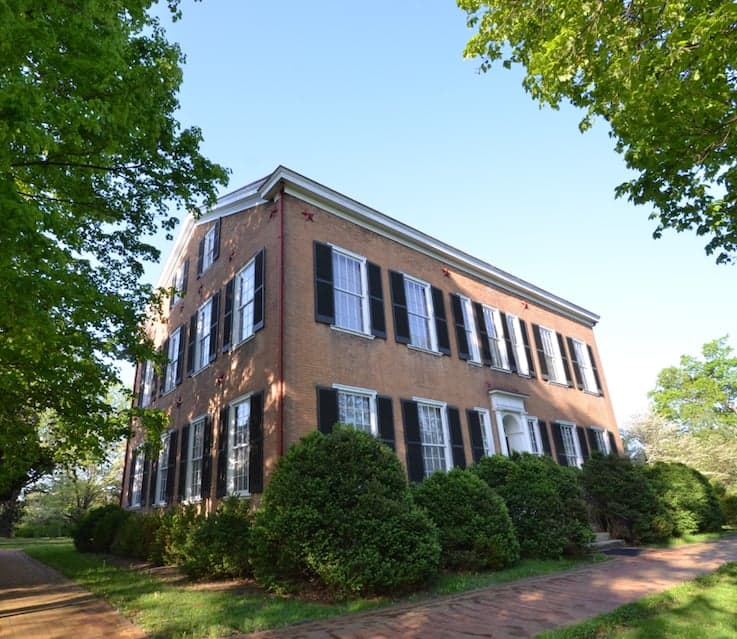
Photo: Wikipedia
Strategic Assessment of Bardstown, KY
Meaningful friction. Expect exposure to either population pressure, blast zones, or natural disaster risk. Consider buying a retreat property.
What does the Strategic Assessment tell us?
Our Strategic Assessment grades tactical survivability of an area. Major population centers, military targets, fallout zones, natural disasters, and border exposure all drive risk — lower exposure means a more defensible position in a crisis.
This is heavily inspired by Joel Skousen's Strategic Relocation book. Highly recommended you checkout the book ($)What does this tell us?
Our Strategic Assessment grades tactical survivability of an area. Major population centers, military targets, fallout zones, natural disasters, and border exposure all drive risk — lower exposure means a more defensible position in a crisis.
This is heavily inspired by Joel Skousen's Strategic Relocation book. Highly recommended you checkout the book ($)Strategic Pillars

Key Distances
Regional Safe Places
Below is our recommended "safe zones" in Kentucky and the surrounding area based on our strategic heuristics. For most people, it's unrealistic to live in a “safe zone” full-time due to work, family or other personal reasons. They tend to be more rural. However, many of these areas are perfect for second homes and retreat properties that double as a vacation home or even a short-term rental.
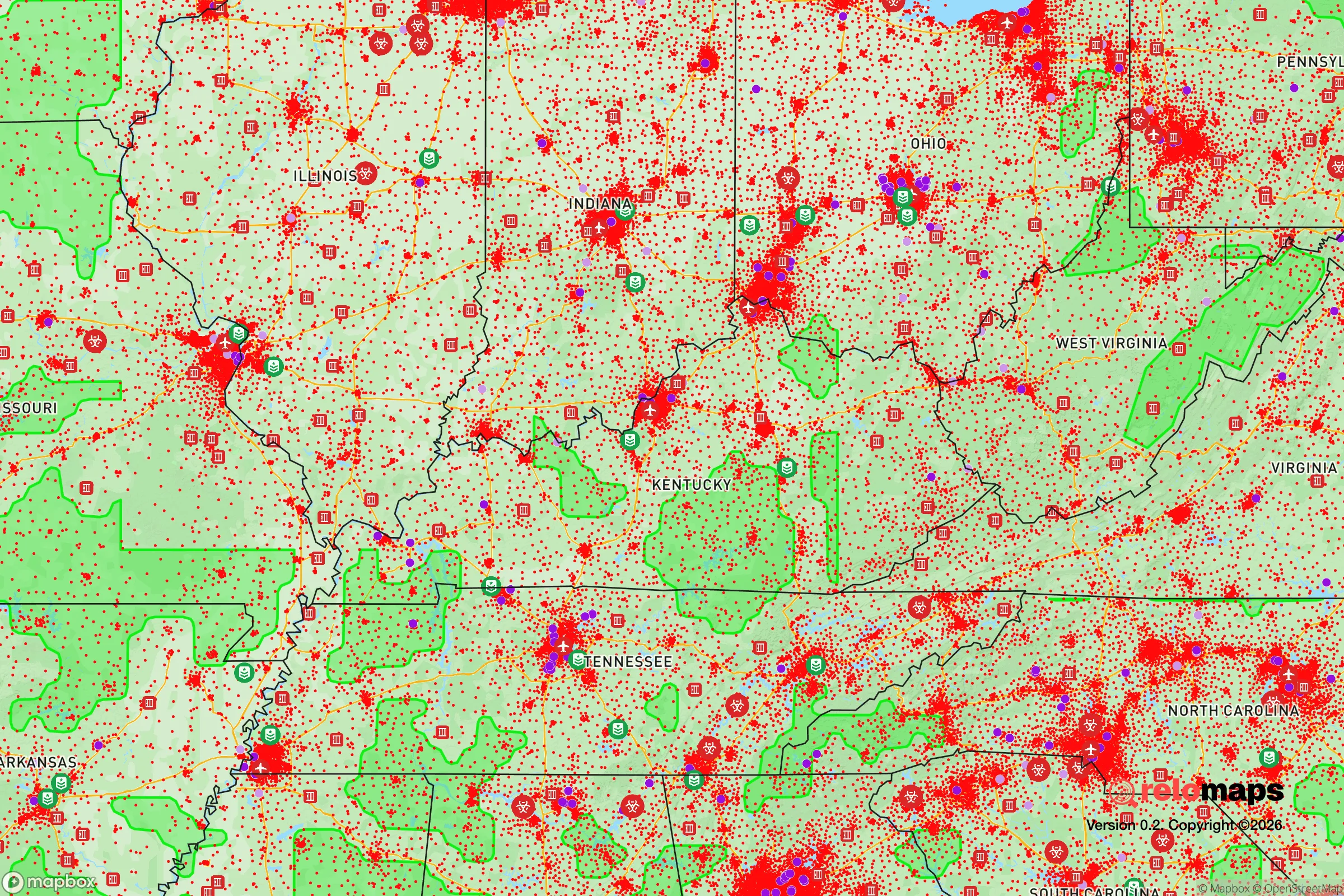
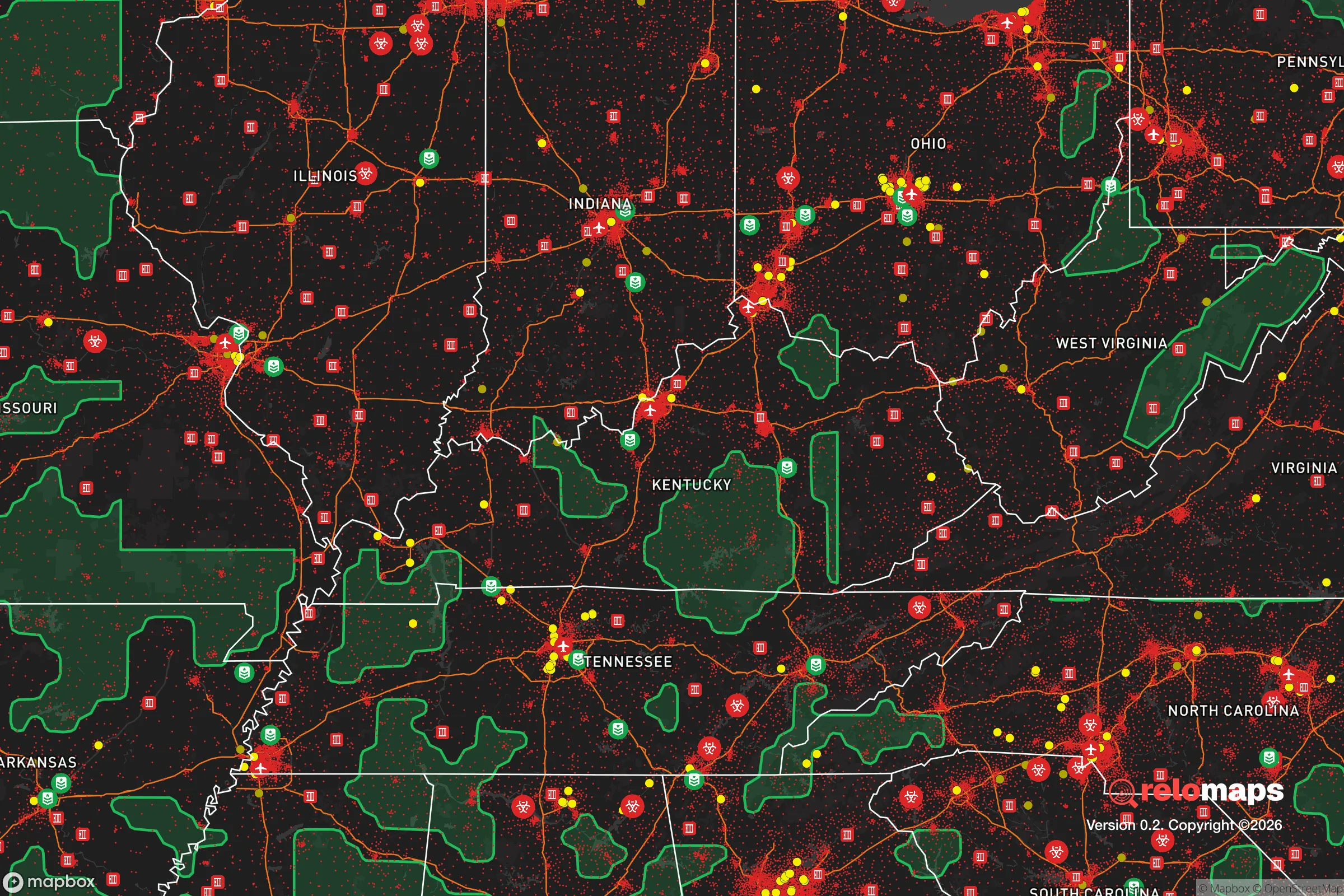


Important Note: For informational purposes only. This does not mean nothing bad ever happens in the green zones. Please use common sense. This is based on public data and modeled with AI. We tried to take a conservative approach but mistakes happen. We update this regularly as new information becomes available.
Solar Generator Recommendations
Backup power matters more here than in safer locations. We've picked three solar generators across budgets and capacity tiers — start with the budget unit if you only need a few essentials, or step up if you want to run a fridge and HVAC for days at a time.

Jackery Portable Power Station Explorer 300
Budget OptionPower on the Go: Weighing only 11 lbs, it's convenient to set up and store with book-sized foldable solar panels

BLUETTI Portable Power Station AC180
Designed for both indoor and outdoor scenarios, AC180 is highly capable as it has a robost capacity and continuous output power.

EF ECOFLOW DELTA Pro Ultra Power Station
Upgraded PickEcoFlow DELTA Pro Ultra is a whole-home energy system designed to grow with your family. Integrated with the Smart Home Panel 2, it scales to meet your evolving energy needs — keeping your home powered, intelligent, and secure through every stage of life.
We earn a commission, at no additional cost to you.
Strategic Assessment Analysis
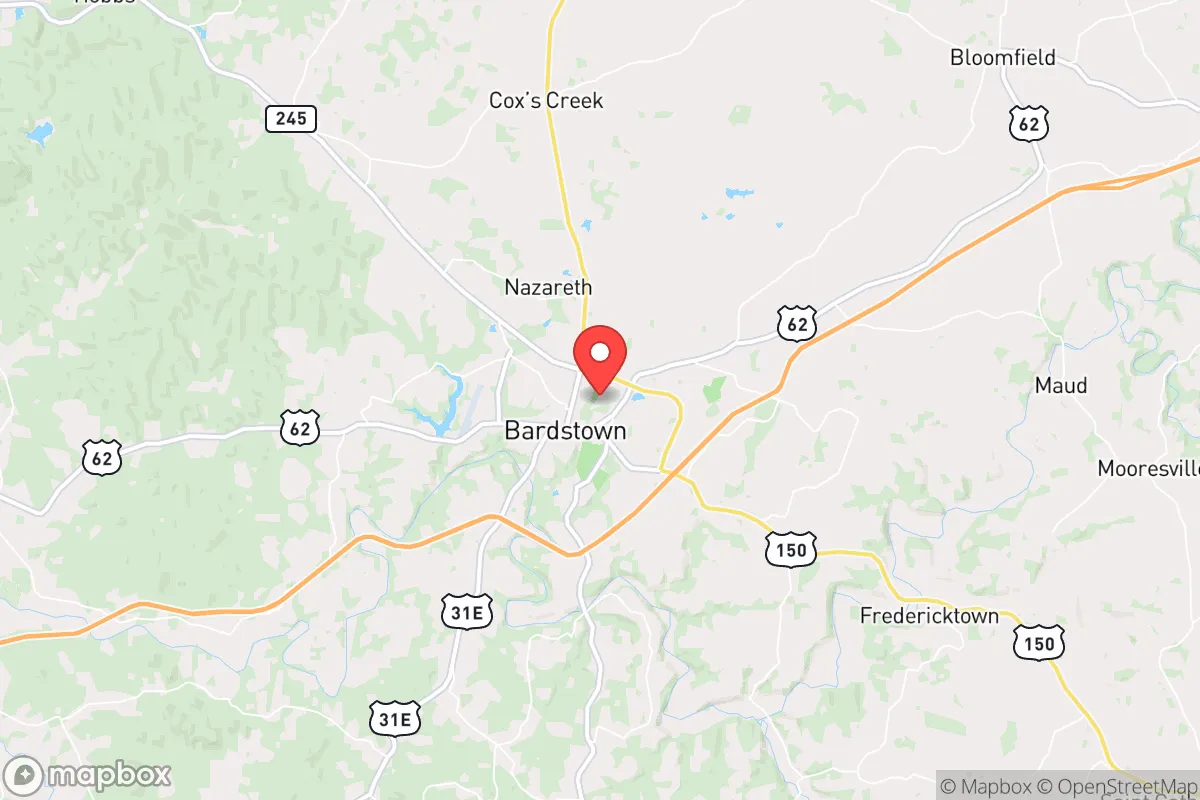
Bardstown, Kentucky, often called the "Bourbon Capital of the World," offers a surprisingly resilient strategic position for those prioritizing self-reliance and preparedness in an uncertain national landscape. Its location in Nelson County, roughly 40 miles south of Louisville and 50 miles east of Elizabethtown, places it far enough from major urban centers to avoid the worst of civil unrest or mass casualty event fallout, yet close enough to access critical resources if needed. The area's deep agricultural roots, robust water supply, and historic infrastructure provide a foundation for long-term sustainability that many suburban or exurban locations lack, making it a serious consideration for conservative-minded relocators seeking a buffer from coastal instability and federal overreach.
Geographic position and natural advantages for long-term security
Bardstown sits in the heart of the Bluegrass region, a landscape defined by rolling hills, limestone aquifers, and fertile soil that has supported continuous habitation for centuries. The area's elevation—around 650 feet above sea level—offers moderate protection from flooding, while the surrounding countryside provides natural chokepoints and defensible terrain for those with a prepper mindset. The Salt River runs nearby, and the region's karst topography means abundant groundwater, a critical asset if municipal systems fail during a prolonged emergency. Unlike flat, open plains or densely forested mountain hollows, Nelson County offers a mix of open farmland and wooded ridges, giving relocators options for both visibility and concealment. The local climate is temperate, with four distinct seasons, reducing the risk of extreme weather events like hurricanes or wildfires that plague other parts of the country. For a single individual or family, this means a lower baseline threat from natural disasters, allowing focus on human-caused risks like civil unrest or supply chain collapse.
Risks, exposures, and proximity to fallout-relevant landmarks
No location is without vulnerabilities, and Bardstown has several that a strategic relocator must weigh. The most glaring is its proximity to Fort Knox, located about 30 miles to the west. While the base itself is a potential target for any large-scale conflict or terrorist strike, the real concern is the secondary effects: military convoys, checkpoints, and potential refugee flows from Louisville or Elizabethtown heading south along US-31E and the Bluegrass Parkway. Bardstown also sits within 100 miles of the Tennessee Valley Authority's nuclear plants and the Paducah Gaseous Diffusion Plant, both of which could become fallout sources in a major event. The city's own bourbon distilleries—Jim Beam, Heaven Hill, and Barton 1792—are industrial sites that could attract looting or sabotage during civil unrest, given the high value of aged spirits. On the plus side, Bardstown is not a major transportation hub; it lacks an interstate highway, which reduces the risk of being overrun by fleeing urban populations. The local population of roughly 13,000 is small enough to maintain social cohesion, but large enough that a relocator won't stand out as an outsider—provided they integrate quietly.
Practical resilience for a relocator: food, water, energy, and defensibility
For the prepper or survivalist, Bardstown's practical resilience hinges on three pillars: local food production, water access, and community networks. Nelson County is one of Kentucky's top agricultural producers, with corn, soybeans, and tobacco as staples, plus a growing number of small farms raising cattle, poultry, and vegetables. Farmers' markets operate year-round in Bardstown, and the Amish and Mennonite communities in nearby Marion and Washington counties offer a reliable source of non-electric tools, seeds, and livestock. Water is less of a concern here than in the arid West; the Bardstown municipal supply draws from the Salt River and deep wells, but a relocator should drill a private well or install rainwater catchment to ensure independence. The local energy grid is served by the Kentucky Utilities Company, which relies heavily on coal and natural gas—vulnerable to cyberattacks or sabotage, but more stable than renewables-dependent grids in California or Texas. For defensibility, the rolling hills and narrow country roads make it difficult for large groups to move quickly through the area, and many properties sit back from main roads with tree lines providing natural cover. A rural property with a good view of approach routes, a backup generator, and a root cellar for long-term storage would serve well here. The local sheriff's department is well-funded and conservative-leaning, which aligns with a self-defense mindset, though relocators should still invest in their own security measures rather than relying on law enforcement during a breakdown.
The overall strategic picture for conservative relocators
Bardstown presents a balanced strategic option for those looking to escape the chaos of coastal cities or the vulnerability of suburban sprawl. It is not a hardened bunker location—it lacks the isolation of Montana or the defensibility of West Virginia's hollows—but it offers a realistic middle ground for a single individual or family who wants to maintain a semblance of normal life while being prepared for the worst. The local culture is deeply conservative, with strong church communities, a high rate of gun ownership, and a general distrust of federal overreach, which means a relocator will find like-minded neighbors rather than hostile transplants. The bourbon industry provides a surprising economic buffer; even in a downturn, distilleries tend to keep operating, and the tourism dollars they bring create a resilient local economy. The biggest risk is complacency: Bardstown feels safe, and it is easy to let preparedness slide when the sun is shining and the neighbors are friendly. But for a strategic relocator who treats this as a base of operations—stockpiling supplies, building skills, and cultivating relationships—Bardstown offers a solid foundation for weathering whatever comes next, whether that's a cyberattack on the grid, a pandemic resurgence, or the slow unraveling of the American social fabric.

* Values derived from national, state, county, city and local statistics and may differ in a specific area. Last updated: 2026-04-21T09:12:39.000Z
Narrative content on this page is AI-generated and may contain mistakes. Verify any details that matter before acting on them.
ReloMaps may earn a commission from affiliate links at no extra cost to you.

