
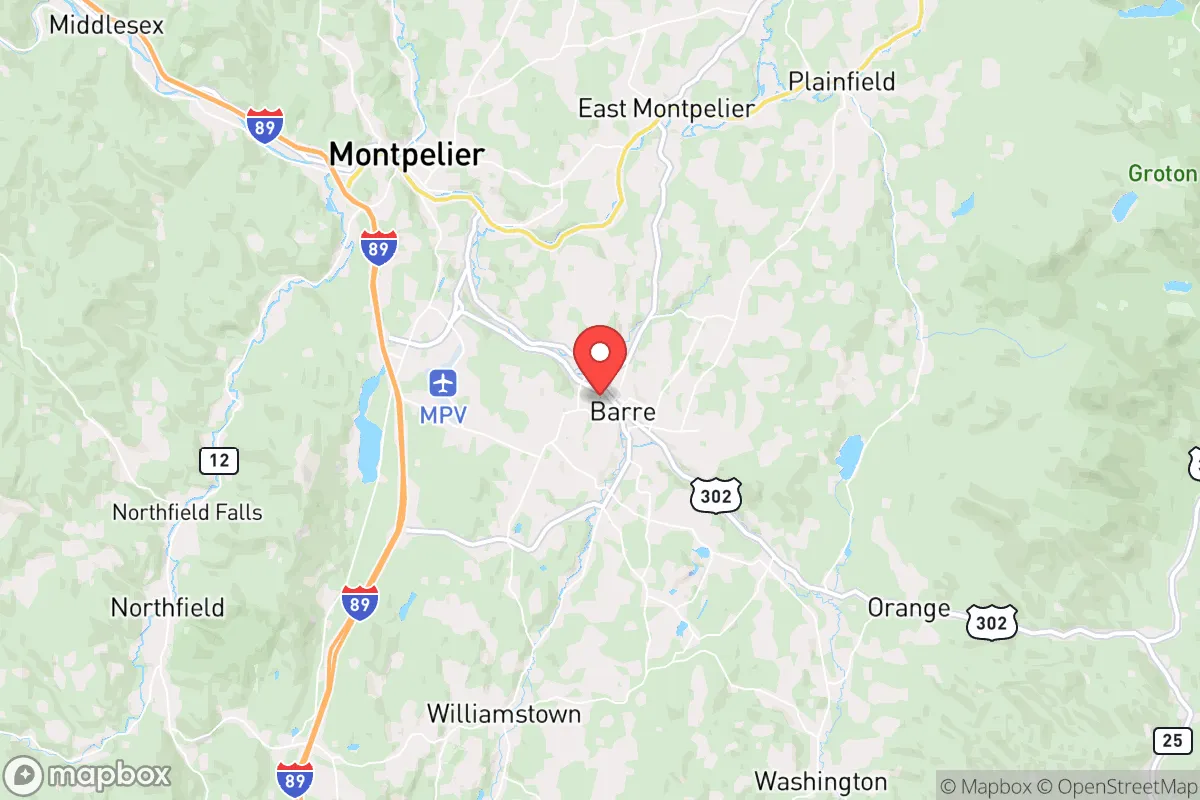
Quality of Life in Barre, VT
Above-average quality of iife. The area offers a reasonable cost of living, decent mobility, and a mix of neighborhood amenities.
What does Quality of Life tell us?
Quality of Life blends cost of living, nearby amenities, socioeconomic signals, and neighborhood character. City-level scores represent the whole municipality; individual neighborhoods can differ.
What does this tell us?
Quality of Life blends cost of living, nearby amenities, socioeconomic signals, and neighborhood character. City-level scores represent the whole municipality; individual neighborhoods can differ.
Cost of Living
21% below national average
The Real Cost of Living in Barre, VT for 2026
| Tier | Individual | Family (4) |
|---|---|---|
| Survival | $16k | $30k |
| Comfortable | $39k | $57k |
| Luxury | $96k+ | $149k+ |
| Elite (Top 5%) | $128k+ | $199k+ |
93%
The Area Signal
A metric tracking the socioeconomic signals of the area.
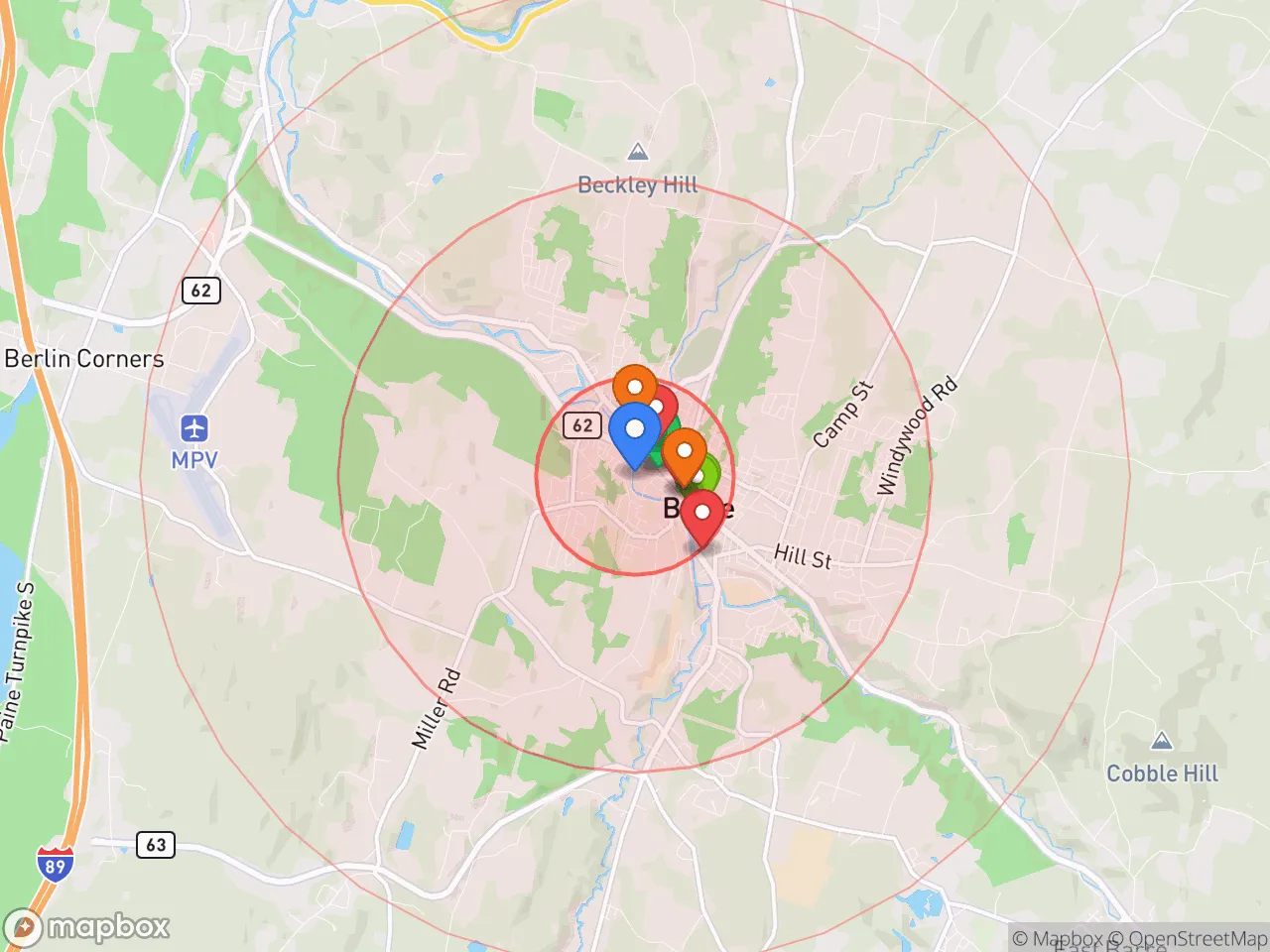
Hobbies
Explore the areaGroceries
4 within 10 miles
Gas
20 within 10 miles
Hospital
3 within 20 miles
Airport
PDX — Portland International Jetport
Post Office
USPS — Barre, VT
Critical Amenities
Quality-of-Life Analysis
Barre, Vermont, offers a notably affordable quality of life in a state known for high costs, with a cost-of-living index of 79—well below the U.S. average of 100. The city attracts a mix of working families, tradespeople, and retirees who value proximity to outdoor recreation and a slower pace, though its median household income of roughly $52,000 trails both the state and national medians. This creates a community that is more blue-collar and pragmatic than the wealthier ski towns to the east, with a population that tends to be older and more rooted in local industry.
How housing costs and affordability compare to Montpelier and Burlington
Barre’s housing market is a standout bargain in central Vermont. The median home value sits at $200,100, roughly half the median in nearby Montpelier (around $400,000) and less than a third of Burlington’s median. Median rent is $986, which is about 30% lower than the state average and significantly undercutting Chittenden County rents that often exceed $1,500. This affordability comes with trade-offs: the housing stock is older—much of it built before 1940—and inventory is tight, with many homes needing renovation. The average commute of 20.4 minutes is shorter than the national average, reflecting Barre’s role as a bedroom community for Montpelier (10 minutes south) and a secondary employment hub for granite quarries and manufacturing. Property taxes in Barre are moderate for Vermont, at roughly 1.8% of assessed value, but still higher than the national median, a factor buyers should weigh against the low purchase price.
What daily life is like for families and outdoor enthusiasts
Barre’s daily rhythm centers on its compact downtown, anchored by the historic Barre Opera House and a handful of independent restaurants and breweries. The city’s public schools—Barre City Elementary and Middle School and Spaulding High School—serve a largely local population, with student-teacher ratios around 12:1, though test scores lag behind wealthier districts like Montpelier’s. For recreation, residents have direct access to the Cross Vermont Trail and nearby Millstone Hill, a former granite quarry turned mountain-biking and hiking network with over 30 miles of trails. Winter sports are a 30-minute drive to ski areas like Sugarbush or Mad River Glen. Healthcare access is solid: Central Vermont Medical Center in Berlin is 10 minutes away, and the University of Vermont Medical Center in Burlington is a 45-minute drive. The city lacks a major grocery store downtown—most shopping is along the Route 302 strip—which can be a minor inconvenience for car-free households.
Barre is best suited for buyers and renters who prioritize affordable entry into Vermont’s housing market over urban amenities or top-tier schools. It works well for remote workers who need a low-cost base near Montpelier’s state government jobs, for tradespeople employed in the region’s construction and quarry sectors, and for retirees on fixed incomes who want walkable access to basic services. Families seeking high-performing schools or a vibrant nightlife will find better options in Burlington or Hanover, New Hampshire. For those willing to accept an older housing stock and a quieter social scene, Barre delivers a cost-effective, outdoor-oriented lifestyle that few other Vermont communities can match at this price point.

Crime in Barre, VT
Generally safer than 57% of comparable U.S. locations.
Violent CrimeViolent Crime Analysis
Property CrimeProperty Crime Analysis
Crime Analysis
Barre, Vermont, presents a challenging safety profile, with crime rates that significantly exceed both state and national averages. The city’s violent crime rate stands at 520.5 incidents per 100,000 residents, and its property crime rate is 3,825.2 per 100,000, figures that place it among the more dangerous small cities in New England. These statistics reflect a community grappling with issues common to many small, post-industrial towns, but the severity of the problem is amplified by local and state-level criminal justice policies that prioritize offender rehabilitation over public safety.
Crime in context
To understand Barre’s safety landscape, it is essential to compare its data to broader benchmarks. The city’s violent crime rate is roughly 1.4 times the national average and more than double the Vermont state average. Property crime is even more stark: Barre’s rate is nearly 2.5 times the national average and about three times the Vermont average. These disparities are not random. Vermont’s progressive judicial philosophy, including the widespread use of restorative justice programs and a reluctance to impose pretrial detention, has been linked to higher recidivism and a perception of lawlessness in communities like Barre. The state’s low incarceration rate, while ideologically consistent, means that repeat offenders—particularly those involved in property and drug-related crimes—remain on the streets longer.
What residents experience
For Barre residents, the high property crime rate translates into tangible daily concerns. Vehicle break-ins, burglaries, and theft from porches are common, with many incidents going unsolved due to limited police resources. The violent crime rate, while lower in absolute numbers, is driven by aggravated assaults and a notable number of drug-related incidents, often linked to the opioid crisis that has hit Vermont hard. Residents report feeling unsafe walking alone at night in parts of downtown, and local businesses frequently cite shoplifting and vandalism as operational burdens. The city’s proximity to the larger Burlington metro area means that crime patterns are influenced by regional drug trafficking, and the progressive policies of the Chittenden County State’s Attorney’s office—which often declines to prosecute low-level offenses—are felt acutely in Barre.
Neighborhood-level variation does exist, though it is less pronounced than in larger cities. The downtown core and areas near the Barre-Montpelier Road corridor see the highest concentration of property crime and drug activity. Residential streets further from the city center, such as those in the North Barre and South Barre neighborhoods, tend to have lower incident rates, though they are not immune. The overall trend, however, is one of elevated risk across the city, driven by systemic factors that local law enforcement struggles to counteract. For anyone considering a move to Barre, a thorough review of block-level crime maps and a conversation with current residents about their experiences are strongly advised.
* Values derived from national, state, county, city and local statistics and may differ in a specific area. Last updated: 2026-04-22T22:58:48.000Z
Narrative content on this page is AI-generated and may contain mistakes. Verify any details that matter before acting on them.
ReloMaps may earn a commission from affiliate links at no extra cost to you.

