
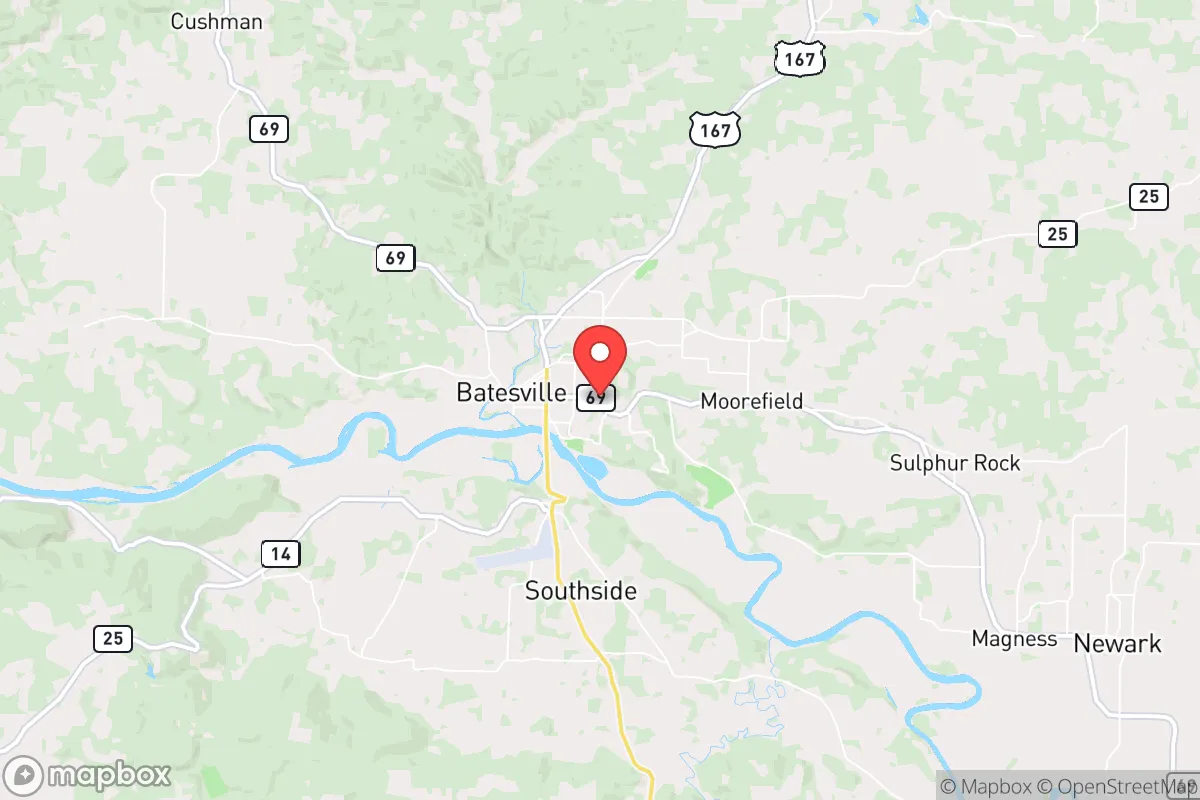
Photo: Wikipedia
Quality of Life in Batesville, AR
A high quality of life with strong walkability, manageable living costs, healthy neighborhood signals, and solid amenity access.
What does Quality of Life tell us?
Quality of Life blends cost of living, nearby amenities, socioeconomic signals, and neighborhood character. City-level scores represent the whole municipality; individual neighborhoods can differ.
What does this tell us?
Quality of Life blends cost of living, nearby amenities, socioeconomic signals, and neighborhood character. City-level scores represent the whole municipality; individual neighborhoods can differ.
Cost of Living
35% below national average
The Real Cost of Living in Batesville, AR for 2026
| Tier | Individual | Family (4) |
|---|---|---|
| Survival | $13k | $25k |
| Comfortable | $31k | $45k |
| Luxury | $98k+ | $152k+ |
| Elite (Top 5%) | $118k+ | $183k+ |
120%
The Area Signal
A metric tracking the socioeconomic signals of the area.
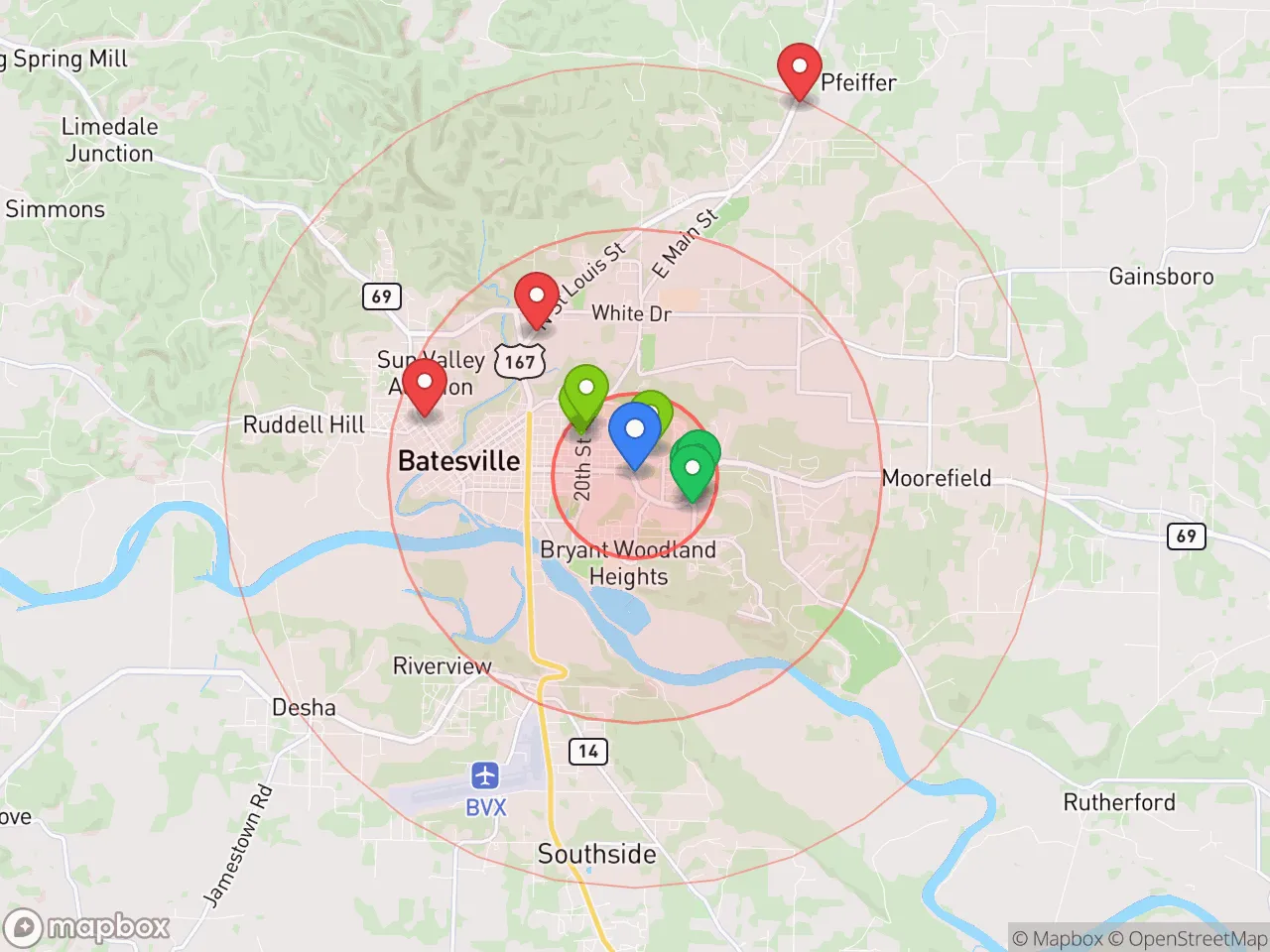
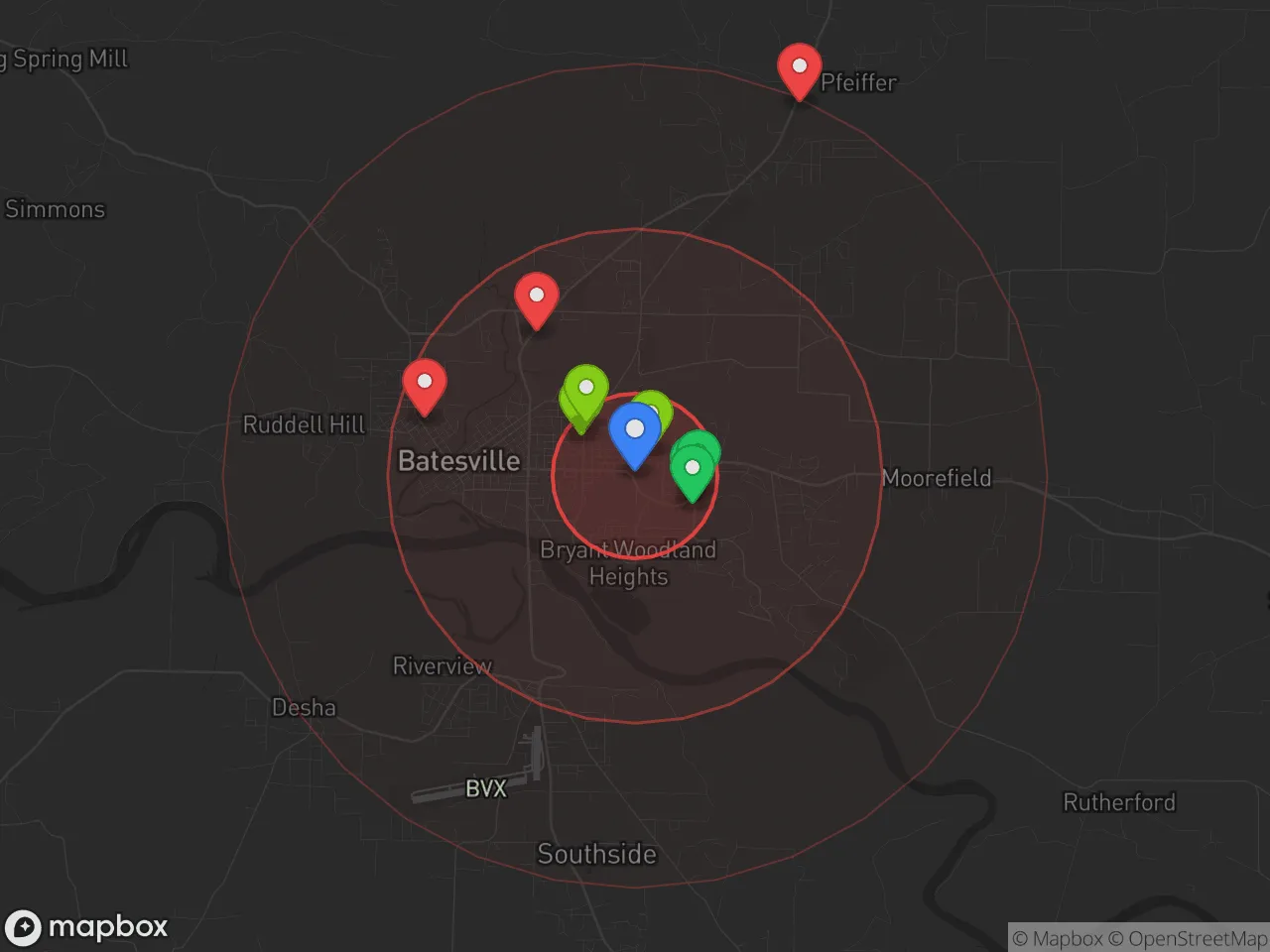
Hobbies
Explore the areaGroceries
2 within 10 miles
Gas
5 within 10 miles
Hospital
1 within 20 miles
Airport
BNA — Nashville International
Post Office
USPS — Batesville, AR
Critical Amenities
Quality-of-Life Analysis
Batesville, Arkansas, offers a notably affordable quality of life that attracts a mix of retirees, young families, and professionals seeking a slower pace without sacrificing access to essential services. With a cost of living index of 65—35 points below the U.S. average—the city provides a financial cushion that allows residents to stretch their incomes further than in many other parts of the country. The median home value of $159,200 and median rent of $821 make homeownership and renting equally attainable, drawing people who value financial stability and a tight-knit community atmosphere over urban hustle.
Cost of living, housing, and how Batesville compares to nearby areas
Batesville’s cost of living is significantly lower than both the national average and many neighboring cities in north-central Arkansas. For context, the median home value of $159,200 is roughly half the national median, while the median rent of $821 is well below the typical $1,200+ found in larger Arkansas metros like Fayetteville or Little Rock. This affordability extends to utilities, groceries, and healthcare, which all track below national benchmarks. Compared to nearby towns such as Mountain View or Newport, Batesville offers a wider range of housing options—from historic homes near Main Street to newer subdivisions on the outskirts—without the premium prices seen in tourist-heavy areas. The low cost of living means that a household earning the area’s median income of around $45,000 can comfortably afford a mortgage or rent, leaving room for savings or discretionary spending.
Local amenities, schools, and what daily life feels like
Daily life in Batesville centers on a walkable downtown with locally owned shops, restaurants, and the historic Landers Theatre, which hosts live performances and film screenings. The city’s public schools, part of the Batesville School District, serve around 2,500 students and maintain a student-to-teacher ratio of roughly 14:1, which is better than the state average. For higher education, the University of Arkansas Community College at Batesville (UACCB) provides associate degrees and workforce training, anchoring the local economy with around 1,200 students. Outdoor recreation is a key draw: the White River runs through town, offering trout fishing and canoeing, while the nearby Ozark Mountains provide hiking and camping within a 30-minute drive. Residents often describe the rhythm as unhurried but not isolated—grocery stores, a hospital (White River Medical Center), and major retailers like Walmart are all within a 10-minute drive. The city also hosts annual events such as the Batesville Scottish Festival and the White River Water Carnival, which reinforce community bonds.
Batesville is best suited for those who prioritize affordability, a slower pace, and access to nature over nightlife or career density. Retirees on fixed incomes find the low housing costs and proximity to healthcare particularly appealing, while remote workers and young families benefit from reliable internet (fiber options are available in parts of the city) and a safe environment—the city’s violent crime rate is roughly half the national average. Professionals in manufacturing or healthcare will find stable employment at major employers like FutureFuel Chemical Company and White River Medical Center. However, those seeking high-end dining, extensive public transit, or a vibrant arts scene may find Batesville limited. For anyone looking to stretch a dollar while living within reach of the Ozarks’ natural beauty, Batesville delivers a grounded, low-stress lifestyle.

Crime in Batesville, AR
Lower crime rates than 76% of comparable U.S. locations.
Violent CrimeViolent Crime Analysis
Property CrimeProperty Crime Analysis
Crime Analysis
Batesville, Arkansas, presents a mixed safety profile that warrants careful consideration for potential residents. The city’s violent crime rate of 430.1 incidents per 100,000 residents is significantly higher than both the national average and the Arkansas state average, placing it among the more dangerous small cities in the region. Property crime, at 1,118.2 per 100,000, also exceeds national benchmarks, though it falls closer to typical rates for the state. These figures suggest that while Batesville is not a high-crime urban center, it faces challenges that are more acute than many similarly sized communities in the South.
Crime in context
To understand Batesville’s safety landscape, it is essential to compare its crime rates to broader benchmarks. The national violent crime rate in recent years has hovered around 380 per 100,000, meaning Batesville’s rate is roughly 13% higher than the U.S. average. Arkansas’s statewide violent crime rate is approximately 530 per 100,000, so Batesville sits below that state figure but still above the national norm. Property crime nationally averages about 1,950 per 100,000, making Batesville’s rate 43% lower than the U.S. average, though it remains elevated compared to the safest rural counties in Arkansas. The city’s proximity to the Little Rock metro area—about 90 miles southwest—means it is not insulated from regional crime trends, and the influence of more progressive prosecutorial policies in larger jurisdictions can sometimes lead to increased recidivism and offender mobility into smaller communities like Batesville.
What residents experience
Residents of Batesville most commonly encounter property crimes such as theft, burglary, and vehicle break-ins, which account for the bulk of reported incidents. Violent crimes, including aggravated assault and robbery, occur less frequently but are concentrated in specific areas, particularly near commercial corridors and lower-income neighborhoods. The city’s police department maintains a visible presence, but response times can vary in outlying parts of Independence County. A notable concern for families is the potential impact of lenient sentencing policies in nearby larger counties, which can result in offenders being released back into smaller communities without adequate supervision. This dynamic is especially relevant given the progressive judicial philosophies seen in some Arkansas metro areas, where district attorneys may prioritize diversion programs over incarceration, potentially compromising public safety in surrounding towns.
Neighborhood-level variation in Batesville is pronounced. Areas closer to the downtown core and along Highway 167 tend to report higher crime densities, while residential subdivisions on the city’s northern and eastern edges generally experience lower incident rates. Gated communities and newer developments near the White River often have the lowest crime levels. Prospective residents are advised to consult local crime mapping tools and speak with the Batesville Police Department about specific blocks, as safety can change dramatically within a few streets. Overall, while Batesville offers a lower cost of living and a small-town feel, its crime statistics and regional justice system dynamics mean that vigilance and neighborhood selection are critical for those prioritizing safety.
* Values derived from national, state, county, city and local statistics and may differ in a specific area. Last updated: 2026-04-30T04:39:08.000Z
Narrative content on this page is AI-generated and may contain mistakes. Verify any details that matter before acting on them.
ReloMaps may earn a commission from affiliate links at no extra cost to you.

