
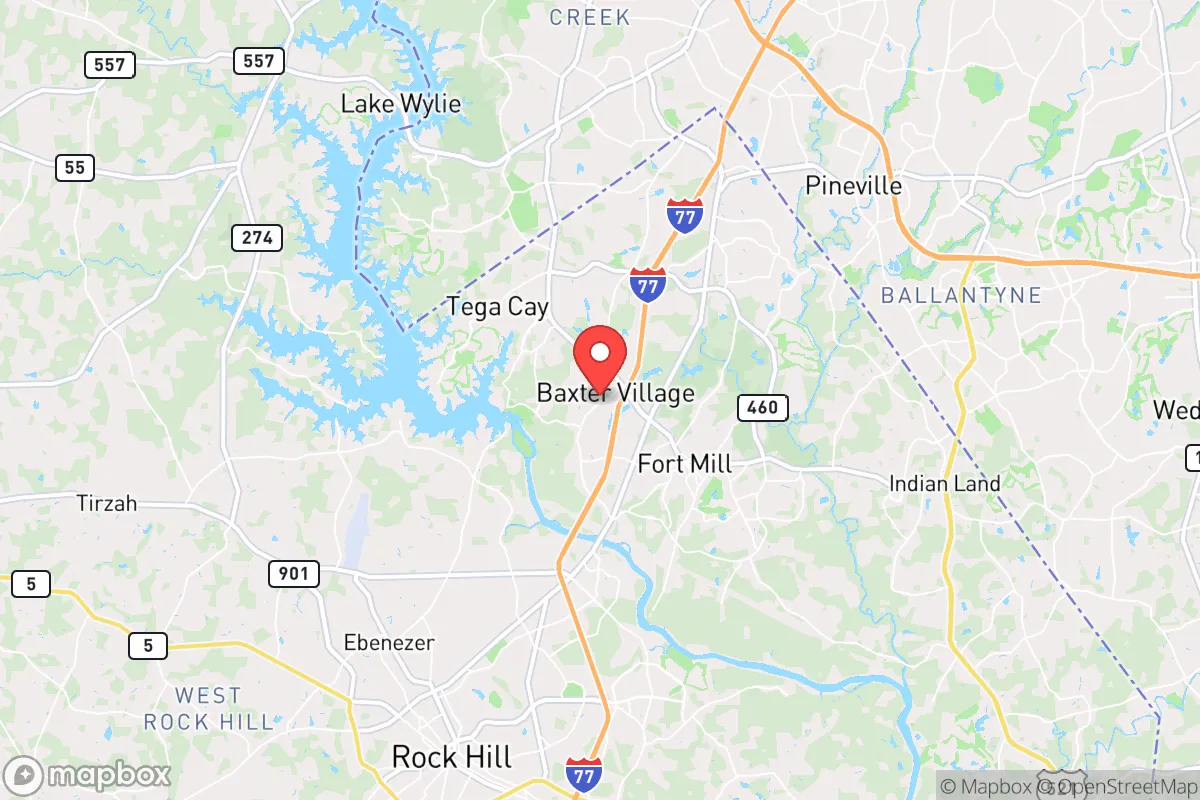
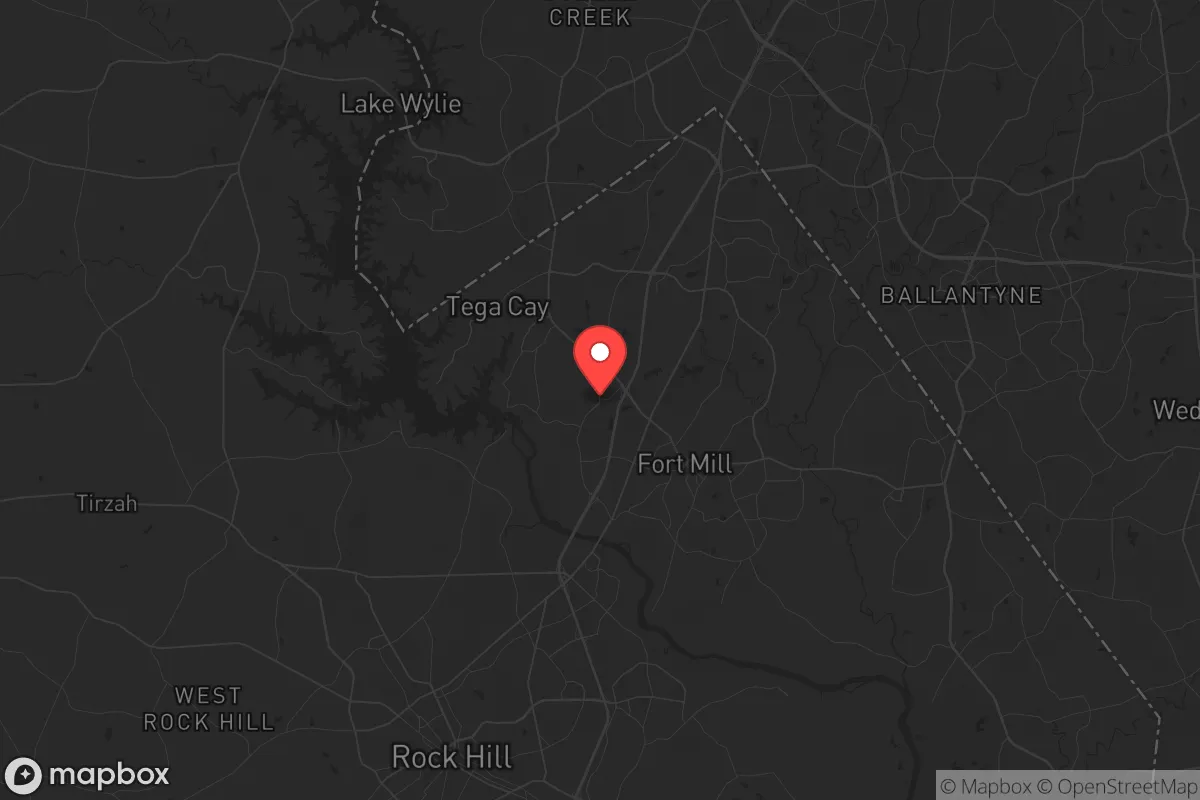
Strategic Assessment of Baxter Village, SC
Meaningful friction. Expect exposure to either population pressure, blast zones, or natural disaster risk. Consider buying a retreat property.
What does the Strategic Assessment tell us?
Our Strategic Assessment grades tactical survivability of an area. Major population centers, military targets, fallout zones, natural disasters, and border exposure all drive risk — lower exposure means a more defensible position in a crisis.
This is heavily inspired by Joel Skousen's Strategic Relocation book. Highly recommended you checkout the book ($)What does this tell us?
Our Strategic Assessment grades tactical survivability of an area. Major population centers, military targets, fallout zones, natural disasters, and border exposure all drive risk — lower exposure means a more defensible position in a crisis.
This is heavily inspired by Joel Skousen's Strategic Relocation book. Highly recommended you checkout the book ($)Strategic Pillars

Key Distances
Regional Safe Places
Below is our recommended "safe zones" in South Carolina and the surrounding area based on our strategic heuristics. For most people, it's unrealistic to live in a “safe zone” full-time due to work, family or other personal reasons. They tend to be more rural. However, many of these areas are perfect for second homes and retreat properties that double as a vacation home or even a short-term rental.
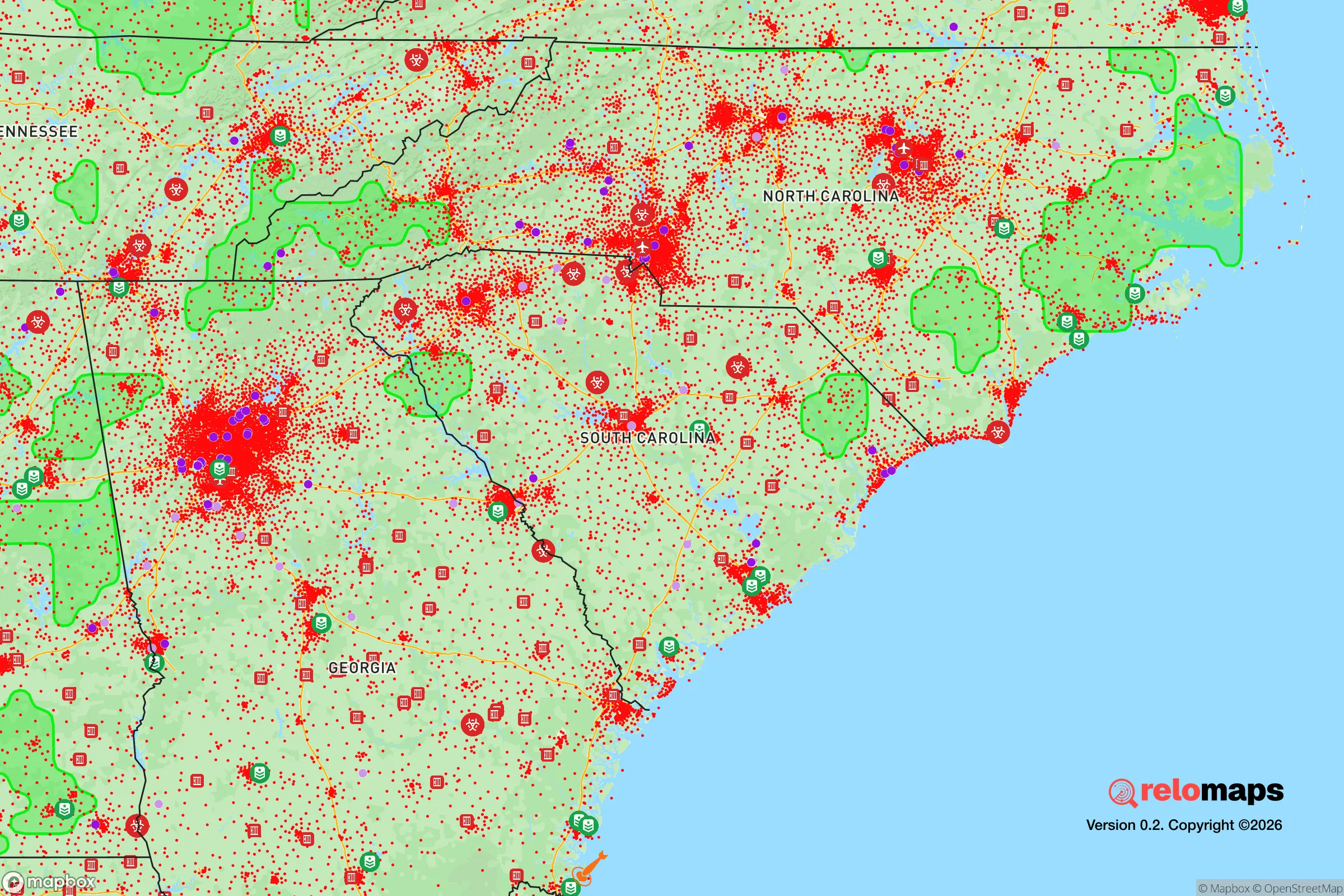
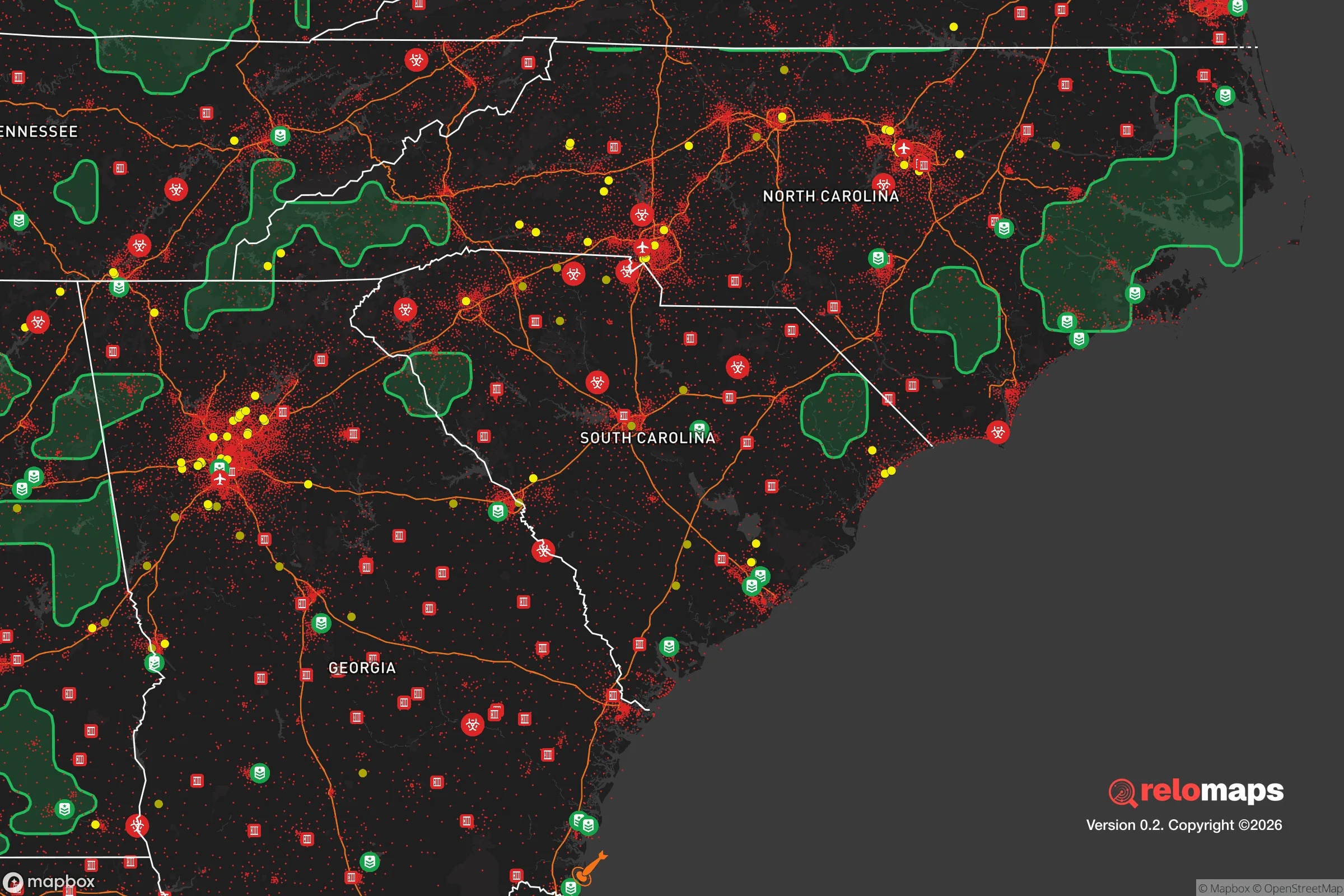


Important Note: For informational purposes only. This does not mean nothing bad ever happens in the green zones. Please use common sense. This is based on public data and modeled with AI. We tried to take a conservative approach but mistakes happen. We update this regularly as new information becomes available.
Solar Generator Recommendations
Backup power matters more here than in safer locations. We've picked three solar generators across budgets and capacity tiers — start with the budget unit if you only need a few essentials, or step up if you want to run a fridge and HVAC for days at a time.

Jackery Portable Power Station Explorer 300
Budget OptionPower on the Go: Weighing only 11 lbs, it's convenient to set up and store with book-sized foldable solar panels

BLUETTI Portable Power Station AC180
Designed for both indoor and outdoor scenarios, AC180 is highly capable as it has a robost capacity and continuous output power.

EF ECOFLOW DELTA Pro Ultra Power Station
Upgraded PickEcoFlow DELTA Pro Ultra is a whole-home energy system designed to grow with your family. Integrated with the Smart Home Panel 2, it scales to meet your evolving energy needs — keeping your home powered, intelligent, and secure through every stage of life.
We earn a commission, at no additional cost to you.
Strategic Assessment Analysis
Baxter Village, a master-planned community in Fort Mill, South Carolina, sits in a position that demands a hard-nosed strategic look. Its location just south of the Charlotte, NC metro area offers economic opportunity, but that proximity to a major urban center is a double-edged sword for anyone serious about resilience. For the conservative prepper or survivalist, the calculus here is about balancing access to resources against the risks of being within the blast radius—both literal and figurative—of a major city. This analysis strips away the marketing gloss and examines Baxter Village through the lens of long-term survivability, civic stability, and practical preparedness.
Geographic position and natural advantages for long-term stability
Baxter Village benefits from the broader Fort Mill area's position in the Piedmont region, a zone of rolling hills and clay soils that sits above the fall line, away from the hurricane storm surge that plagues the coast. The community is roughly 20 miles south of Charlotte, placing it outside the immediate blast zone of a nuclear detonation in the city center, but still within the dangerous fallout footprint depending on wind patterns. The area's elevation, averaging around 600 feet, provides some natural drainage and reduces flood risk compared to low-lying river basins. The Catawba River runs nearby, a significant water source, though its proximity also introduces a floodplain risk for properties closest to it. The local climate is temperate, with four distinct seasons, which supports subsistence gardening for about seven months of the year. The growing season is long enough for a serious food production effort, but the clay-heavy soil requires amendment—something a relocator should plan for from day one. The region's history of relative political stability, with South Carolina's strong conservative governance and low taxes, adds a layer of social resilience that aligns with a prepper mindset. The state's right-to-work laws and robust Second Amendment protections are concrete advantages for those who value self-reliance and the ability to defend their property.
Risks, exposures, and proximity to fallout-relevant landmarks
The single biggest strategic liability for Baxter Village is its proximity to Charlotte. At 20 miles out, the community is within the moderate damage zone for a large-yield nuclear weapon (over 100 kilotons) and would face significant fallout contamination within hours of a detonation. Charlotte is a major financial hub, home to Bank of America and Truist, and a transportation nexus with a major airport (CLT) and rail lines—all high-value targets in a conflict scenario. The Charlotte metro population of over 2.6 million means that in a collapse or mass evacuation event, Baxter Village sits directly in the path of a human wave fleeing south on I-77. The community's location near the interchange of I-77 and SC-160 is a chokepoint that could become impassable during a crisis. Additionally, the Catawba Nuclear Station, located about 15 miles northwest in York County, is a dual-reactor facility that presents a low-probability but high-consequence risk of radiological release. While the plant has a solid safety record, any incident there would put Baxter Village in the primary downwind plume zone. On the positive side, the area is not prone to earthquakes, wildfires, or tornadoes at the frequency seen in the Plains or Midwest. The primary natural threats are occasional ice storms, severe thunderstorms, and the rare tropical storm remnant that dumps heavy rain. The community's HOA-managed infrastructure means that power restoration after storms is typically prioritized, but that same HOA control can be a liability if you want to make independent modifications for resilience, like installing a backup generator visible from the street or building a root cellar.
Practical resilience for a relocator: food, water, energy, and defensibility
For a relocator serious about self-sufficiency, Baxter Village presents a mixed bag. The community is built on a grid of single-family homes with relatively small lots—typically a quarter-acre or less. This limits the scale of food production possible. You can run a serious vegetable garden and a few fruit trees, but you won't be raising livestock or storing a year's worth of grain on site. The HOA covenants are restrictive; chickens, visible solar panels, and non-standard fencing are likely prohibited or require approval. This is a community designed for conformity, not independent survival. Water is a critical concern. The area relies on municipal water from the Catawba River, treated by the local utility. In a prolonged grid-down scenario, that tap stops flowing. A well is not an option for most homes here, as the community is on a centralized system. Rainwater collection is possible but limited by HOA rules and roof size. A serious prepper would need to budget for a large, hidden cistern and a high-quality filtration system. Energy resilience is similarly constrained. Natural gas is available in many homes, which is a plus for cooking and heating during power outages, but backup power requires a generator. Solar panels are often restricted by HOA aesthetic guidelines, though state law in South Carolina does protect the right to install them to some degree. Defensibility is the weakest point. Baxter Village is a dense suburban neighborhood with multiple entry points, a grid of interconnected streets, and a population density that makes perimeter security impossible. In a civil unrest scenario, this is not a place you can hold. The community's strength is in numbers and mutual aid among like-minded neighbors, but that requires vetting your neighbors—a process that takes time and trust. For a single individual or a family, the best strategy here is to treat Baxter Village as a base for economic opportunity and community building, while maintaining a secondary retreat property further out, ideally in the rural areas of York or Chester counties, where land is cheaper and restrictions are fewer.
The overall strategic picture for Baxter Village is one of calculated trade-offs. It is not a survivalist's paradise, nor is it a death trap. It offers a strong economic base, a conservative political environment, and a community that values order and stability. The risks are real: proximity to a major city, a nuclear plant, and a vulnerable transportation corridor. The practical limitations on self-sufficiency are significant due to HOA restrictions and lot sizes. For the relocator who wants to be close to good jobs and good schools while maintaining a low-profile preparedness posture, Baxter Village can work—if you are honest about its limitations. The key is to layer your resilience: invest in a hidden water storage system, a quiet generator, and a deep pantry. Build relationships with neighbors who share your values. And always have a bug-out plan that takes you west or south, away from Charlotte and into the rural Piedmont. Baxter Village is a good place to live, but it is not a fortress. Treat it as a forward operating base, not a final redoubt, and you will be positioned to weather the storms ahead.

* Values derived from national, state, county, city and local statistics and may differ in a specific area. Last updated: 2026-04-23T03:17:42.000Z
Narrative content on this page is AI-generated and may contain mistakes. Verify any details that matter before acting on them.
ReloMaps may earn a commission from affiliate links at no extra cost to you.

