
Political ClimatePolitical Climate in Baxter Village, SC
District shown is the primary district for this city’s centroid. Cities may span multiple districts.
Local Political AnalysisPolitical Analysis of Baxter Village, SC
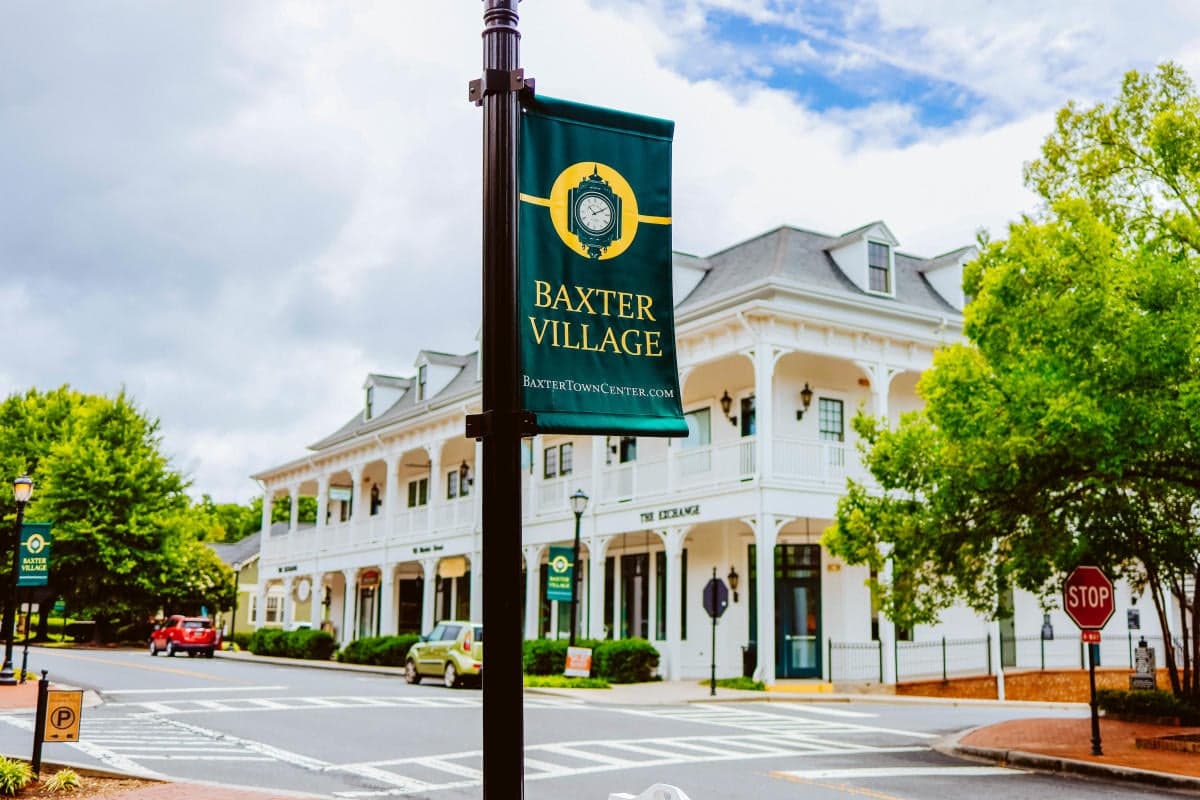
Baxter Village, South Carolina, sits solidly in the conservative column, with a Cook PVI of R+11 that reflects the area’s long-standing preference for limited government and traditional values. This isn’t a place that flips on a dime—the political lean here has been steady for decades, rooted in a deep skepticism of federal overreach and a belief that local folks know best how to run their own lives. If you’re looking at the trajectory, it’s holding firm, though you can feel the pressure from the Charlotte metro creeping down I-77, bringing a more progressive vibe that’s starting to show up in local races and school board meetings. The core of Baxter Village remains reliably red, but the edges are getting a little frayed, and that’s something to keep an eye on if you value personal freedoms and a government that stays out of your business.
How it compares
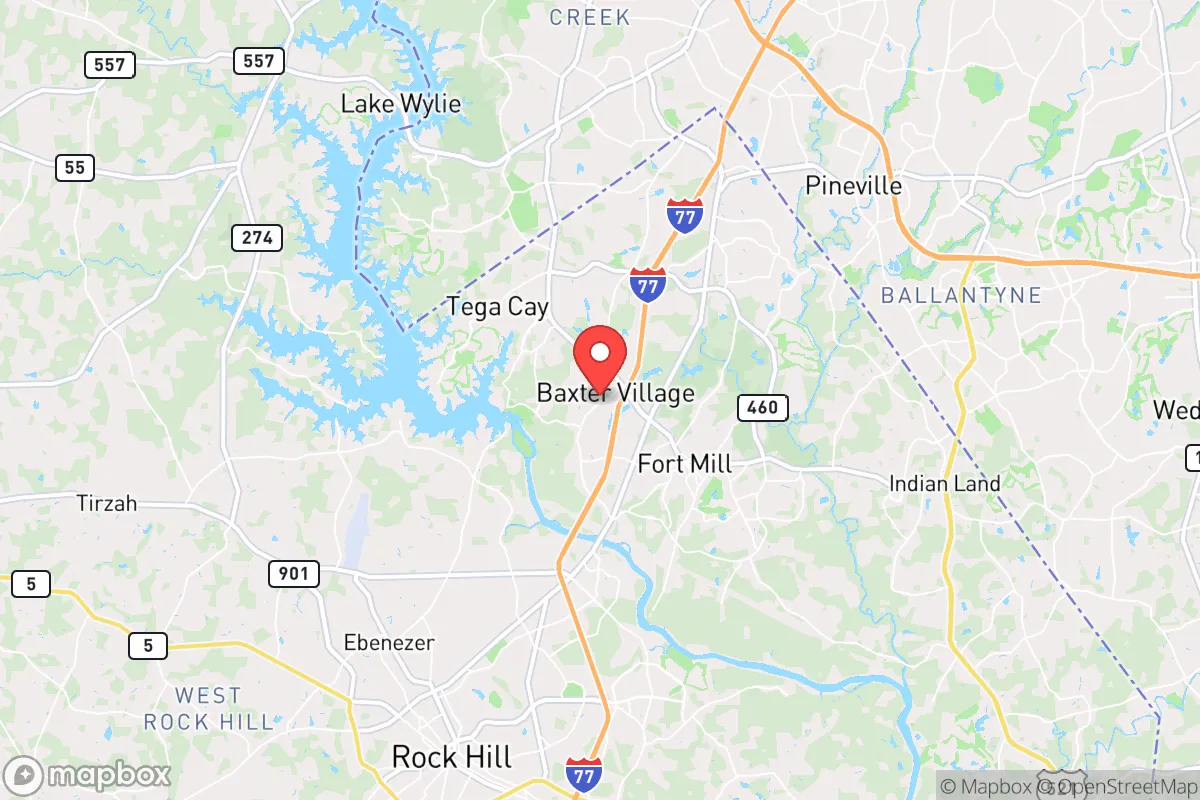
Drive ten miles north into Fort Mill, and you’ll hit a different world—that town has been shifting leftward as Charlotte transplants flood in, with local elections getting tighter and more contentious over things like zoning and school curriculum. Baxter Village, by contrast, still feels like the old guard, where the county council and sheriff’s office are overwhelmingly Republican and proud of it. Head south to Rock Hill, and you’ll find a more mixed bag, with a Democratic mayor and a city council that’s pushed for things like inclusionary zoning and diversity initiatives that raise eyebrows among folks who see them as government overreach. Baxter Village’s R+11 rating puts it squarely in the same camp as nearby Tega Cay and Lake Wylie, where the mantra is “less is more” when it comes to taxes, regulations, and mandates. The contrast is stark: while Charlotte’s suburbs are trending purple, Baxter Village is a redoubt where the Second Amendment isn’t debated, and property rights are taken seriously.
What this means for residents
For the people living here, the political climate translates into a daily life that feels free from the heavy hand of bureaucracy. You won’t see mask mandates or business shutdowns being debated at town hall—those fights are for other places. Property taxes stay reasonable because the county commission isn’t looking to fund grand social experiments, and the school board focuses on academics and discipline rather than pushing ideological agendas. The downside? If you’re hoping for rapid change or progressive policies like expanded public transit or affordable housing mandates, you’ll be disappointed. But for most residents, that’s a feature, not a bug. The local government’s hands-off approach means you can build a shed without a permit hassle, carry a concealed weapon without feeling like a criminal, and send your kids to school without worrying about critical race theory or gender ideology being shoved into their lessons. It’s a place where personal responsibility still counts for something.
Culturally, Baxter Village stands apart from its neighbors by maintaining a distinct “don’t tread on me” ethos that’s getting harder to find in the Carolinas. The local chamber of commerce and civic groups are dominated by small business owners and veterans who see government as a necessary evil, not a solution to every problem. There’s a strong church presence—mostly evangelical and Baptist—that shapes community events and charity drives without demanding taxpayer money. One policy distinction that sets Baxter Village apart is its resistance to annexation by larger municipalities, keeping control local and preventing Charlotte-style zoning rules from creeping in. The long-term outlook is cautiously optimistic: as long as the transplants respect the local culture, the conservative foundation will hold. But if the progressive tide from the north keeps rising, you might see some heated school board elections and a few more “Keep Baxter Village Free” signs on lawns. For now, it’s a good place to live if you want to be left alone to live your life your way.

State Political ClimatePolitical Climate in South Carolina
State Political AnalysisPolitical Environment in the State
South Carolina has long been a reliably red state, but the flavor of that conservatism has shifted noticeably over the past two decades. The state’s overall partisan lean is still solidly Republican—Donald Trump carried it by 11 points in 2024—but the coalition that delivers those wins has changed. The old-school, establishment GOP that dominated the 2000s has been steadily replaced by a more populist, liberty-minded, and culturally conservative base. The 10-to-20-year arc shows a state that was once content with low taxes and a quiet life now actively pushing back against federal overreach, with a growing contingent of residents who moved here specifically to escape the policies of places like New York, California, and Illinois.
Urban vs. rural divide
The political map of South Carolina is a textbook study in the urban-rural split. The state’s two major metros—Charleston and Greenville—are both growing fast, but they pull in opposite directions. Charleston County has been trending purple for years, with the city itself becoming increasingly progressive. The 2024 election saw Charleston County go for Trump by only a few thousand votes, a far cry from the 20-point margins in the surrounding Lowcountry. Meanwhile, Greenville and its suburbs in the Upstate are a different story. Greenville County is a Republican stronghold, and the exurban towns like Simpsonville and Greer are among the fastest-growing conservative enclaves in the country. The rural counties—Oconee, Pickens, Laurens, and Cherokee—vote 70-80% Republican, driven by a mix of traditional values, gun culture, and a deep distrust of Columbia and Washington. The real political action, though, is in the suburbs of Myrtle Beach (Horry County) and Rock Hill (York County), where in-migration from the Northeast is slowly diluting the GOP base. Horry County still votes red, but the margin has shrunk from 30 points in 2016 to about 18 in 2024, as retirees from blue states bring their voting habits with them.
Policy environment
South Carolina’s policy environment is a mixed bag for conservatives. On the plus side, the state has no state income tax on Social Security benefits, a flat 6.2% income tax rate (down from 7% in 2022), and a relatively low property tax burden thanks to Act 388 of 2006, which exempts owner-occupied homes from school operating taxes. The regulatory climate is business-friendly, with a right-to-work law and a tort reform package passed in 2023 that capped noneconomic damages in medical malpractice cases. On education, the state passed a universal school voucher program in 2024—the Education Scholarship Trust Fund—which allows any family to use state funds for private school, homeschooling, or tutoring. This was a major win for parental rights. However, the state still has a problematic Certificate of Need (CON) law that restricts the opening of new hospitals and medical facilities, which many conservatives see as government overreach protecting incumbent providers. Healthcare freedom is also limited: South Carolina has not expanded Medicaid, which keeps costs lower for taxpayers, but it also has some of the strictest telemedicine and scope-of-practice laws in the Southeast, limiting options for direct primary care. Election laws are solid—voter ID is required, and the state has cleaned up its voter rolls aggressively since 2020—but there’s no early voting on Sundays, which some see as a minor inconvenience.
Trajectory & freedom
The trajectory in South Carolina is toward more personal freedom in most areas, but with some worrying exceptions. The biggest win for liberty in recent years was the 2024 passage of Constitutional Carry (H. 3594), which allows any law-abiding adult to carry a concealed firearm without a permit. This was a long fight, and it passed with strong bipartisan support in the legislature. Parental rights were also strengthened with the Parents’ Bill of Rights (H. 3724) in 2023, which requires schools to notify parents of any changes to a child’s health or well-being and prohibits classroom instruction on sexual orientation or gender identity in K-5. On the medical freedom front, the state passed a law in 2023 prohibiting COVID-19 vaccine mandates by private employers, though it stopped short of banning mask or vaccine mandates in schools. The concerning trend is on property rights. The state’s “taking” laws are weak, and there have been several high-profile eminent domain cases in Charleston and Columbia where local governments seized land for private development. The legislature has not yet passed a strong property rights protection bill, which is a red flag for anyone buying land. Also, the state’s “blue laws” still restrict Sunday alcohol sales in many counties, a lingering piece of old-school government nannyism that frustrates many newcomers.
Civil unrest & political movements
South Carolina has seen relatively little civil unrest compared to other states, but there are active political movements on both sides. The most visible conservative movement is the “Constitution Party” and the “10th Amendment” groups, which have been pushing for nullification of federal gun laws and marijuana prohibition. In 2023, the state legislature considered a bill to nullify federal firearm regulations, though it didn’t pass. On the left, the “SC for Abortion Rights” coalition has been active since the 2023 six-week abortion ban (the Fetal Heartbeat Act), with protests in Columbia and Greenville. These protests have been largely peaceful but are growing in size as more progressive transplants arrive. Immigration politics are a flashpoint, especially in the Lowcountry and Upstate where agricultural and construction labor is heavily immigrant. The state passed a law in 2024 requiring all employers to use E-Verify, which was popular with conservatives but has caused labor shortages in some sectors. There is no sanctuary city policy anywhere in the state—every county cooperates with ICE. The most visible flashpoint for a new resident would be the Confederate monument debates, which still flare up in places like Charleston and Columbia, though the legislature passed a law in 2023 making it harder to remove them. Election integrity remains a hot topic, with the state’s State Election Commission being criticized by both sides for different reasons, but no major scandals have emerged since 2020.
Projection
Over the next 5-10 years, South Carolina will likely become more conservative in its policy output, but the political culture will become more contested. The in-migration from blue states is real—about 200,000 people moved to South Carolina between 2020 and 2024, mostly from New York, New Jersey, and California. These newcomers are not all liberals; many are conservatives fleeing high taxes and crime. However, the ones who are progressive tend to cluster in Charleston and Columbia, and they are slowly shifting those cities left. The rural and suburban areas, meanwhile, are becoming even more conservative as they fill with like-minded transplants. The net effect is that the state will remain red, but the margin will tighten in the coastal counties. The legislature will continue to pass conservative bills—expect further tax cuts, expanded school choice, and a push for a state-level “Second Amendment Preservation Act” to nullify federal gun laws. The biggest wild card is the Greenville-Spartanburg corridor, which is booming with manufacturing jobs from companies like BMW and Boeing. If those workers unionize or bring progressive politics with them, the Upstate could shift. But for now, the projection is for a state that is freer in most respects, with a government that is more responsive to the conservative base than to the coastal transplants.
For a new resident, the bottom line is this: South Carolina is a great place to live if you value low taxes, gun rights, and school choice. The government is generally hands-off, but you’ll need to watch for local overreach on property rights and the slow creep of progressive politics in the cities. If you’re moving to Greenville or Simpsonville, you’ll find a community that shares your values. If you’re looking at Charleston, be prepared for a more mixed environment. The state is trending in the right direction on most fronts, but it’s not a libertarian paradise—you’ll still have to deal with CON laws, blue laws, and the occasional government overreach. Overall, it’s one of the better bets in the Southeast for someone looking to escape the policies of the Northeast or West Coast.
* Values derived from national, state, county, city and local statistics and may differ in a specific area. Last updated: 2026-04-23T03:17:42.000Z
Narrative content on this page is AI-generated and may contain mistakes. Verify any details that matter before acting on them.
ReloMaps may earn a commission from affiliate links at no extra cost to you.

