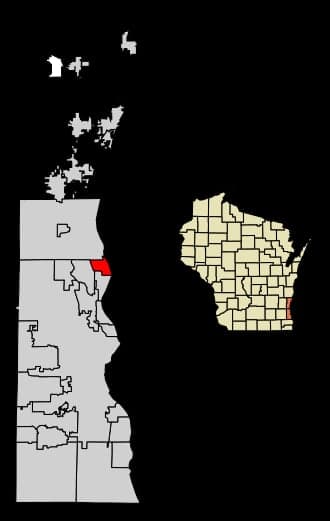
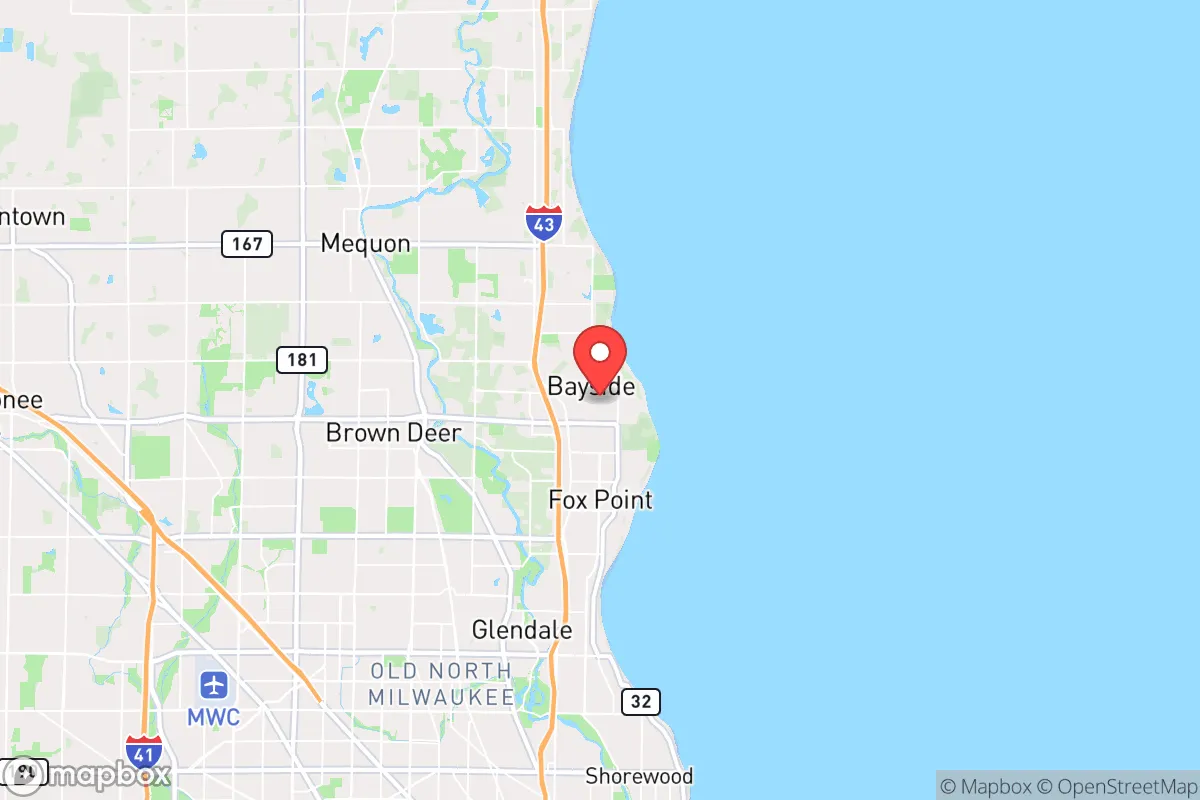
Photo: Wikipedia
Demographics of Bayside, WI
Affluence Level in Bayside, WI
An upper-middle-class area. Household wealth, education levels, and homeownership run ahead of national benchmarks.
People of Bayside, WI
Bayside, Wisconsin, is a small, affluent lakeside village of 4,398 residents that stands out for its exceptionally high education level—71.1% of adults hold a bachelor’s degree or higher—and its predominantly White, stable population. The village is characterized by low density, large single-family homes on wooded lots, and a strong sense of local governance, with a foreign-born population of just 1.6% and a demographic profile that has shifted only modestly over recent decades. For conservative-leaning individuals and families, Bayside represents a quiet, orderly community with a long history of owner-occupied housing and minimal turnover, where the population is more likely to age in place than to experience rapid demographic change.
How the city was settled and grew
Bayside was not a pioneer settlement but a planned suburban village incorporated in 1954, carved from the Town of Mequon along the Lake Michigan shoreline. The original population was drawn by the post-World War II housing boom and the appeal of lakefront property within commuting distance of Milwaukee, about 15 miles south. Early residents were predominantly White, middle-to-upper-class families of Northern European descent—many of German and Polish heritage—who built homes in the Lake Drive corridor and the Bayside Heights neighborhood, which still features the village’s oldest mid-century ranch and split-level houses. The village’s founding coincided with the expansion of Milwaukee’s northern suburbs, and its zoning laws from the start favored large lots (typically half-acre or more), ensuring low density and high property values. No major industry or land grant drove settlement; Bayside was purely a residential enclave for professionals, executives, and business owners seeking a semi-rural lakeside setting with strong schools (part of the Nicolet Union High School District).
Modern era (post-1965)
After the 1965 Hart-Cellar Act, Bayside saw only minimal immigration, consistent with its very low foreign-born share (1.6% today). The village did not experience the suburban diversification that reshaped nearby communities like Brown Deer or Glendale. Instead, domestic in-migration from other parts of the Milwaukee metro area and the Midwest sustained slow growth. The North Shore Estates neighborhood, developed in the 1970s and 1980s along the lakefront, attracted a slightly younger cohort of professionals, while the Village Green area near the Bayside Community Center became a cluster for families with children. The Black population, now 5.0%, began to increase modestly after 2000, largely through domestic moves from Milwaukee’s north side, but remains concentrated in no single neighborhood—Bayside’s housing costs (median home value well above $400,000) limit broad demographic shifts. The Hispanic share (2.9%) and East/Southeast Asian share (0.8%) are small and dispersed, with no ethnic enclave forming. The Indian-subcontinent population (0.4%) is negligible. The village’s racial and ethnic character has remained overwhelmingly White (82.8%), with the most notable change being a gradual aging of the White cohort rather than replacement by other groups.
The future
Bayside’s population is heading toward further homogenization by age and income, not by race. The village’s median age has risen steadily as younger families find the housing stock expensive and the lot sizes impractical for maintenance; many long-term residents are empty-nesters or retirees. New construction is rare due to limited undeveloped land, and teardown-rebuilds in the Lake Bluff area attract only high-income buyers, often from within the metro area. The immigrant communities are too small to grow organically without a change in housing affordability or local employment base, and no major employer or refugee resettlement program is present. The next 10–20 years will likely see a continued slow decline in total population (down from a peak of 4,600 in 2000) as deaths outpace births and in-migration remains selective. The village will become slightly more diverse at the margins—the Black and Hispanic shares may each rise to 6–7%—but Bayside will remain a predominantly White, highly educated, and economically exclusive suburb.
For someone moving in now, Bayside is a stable, low-turnover community where demographic change is measured in decades, not years. The trade-off is clear: you gain a safe, well-run village with top-tier schools and lake access, but you join a population that is older, wealthier, and more racially homogeneous than the surrounding county. The village is not becoming more tribalized or polarized; rather, it is quietly consolidating its character as a haven for those who can afford its entry price and value its continuity.

* Values derived from national, state, county, city and local statistics and may differ in a specific area. Last updated: 2026-04-27T14:46:13.000Z
Narrative content on this page is AI-generated and may contain mistakes. Verify any details that matter before acting on them.
ReloMaps may earn a commission from affiliate links at no extra cost to you.

