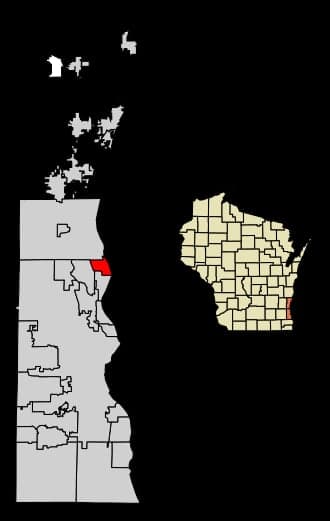
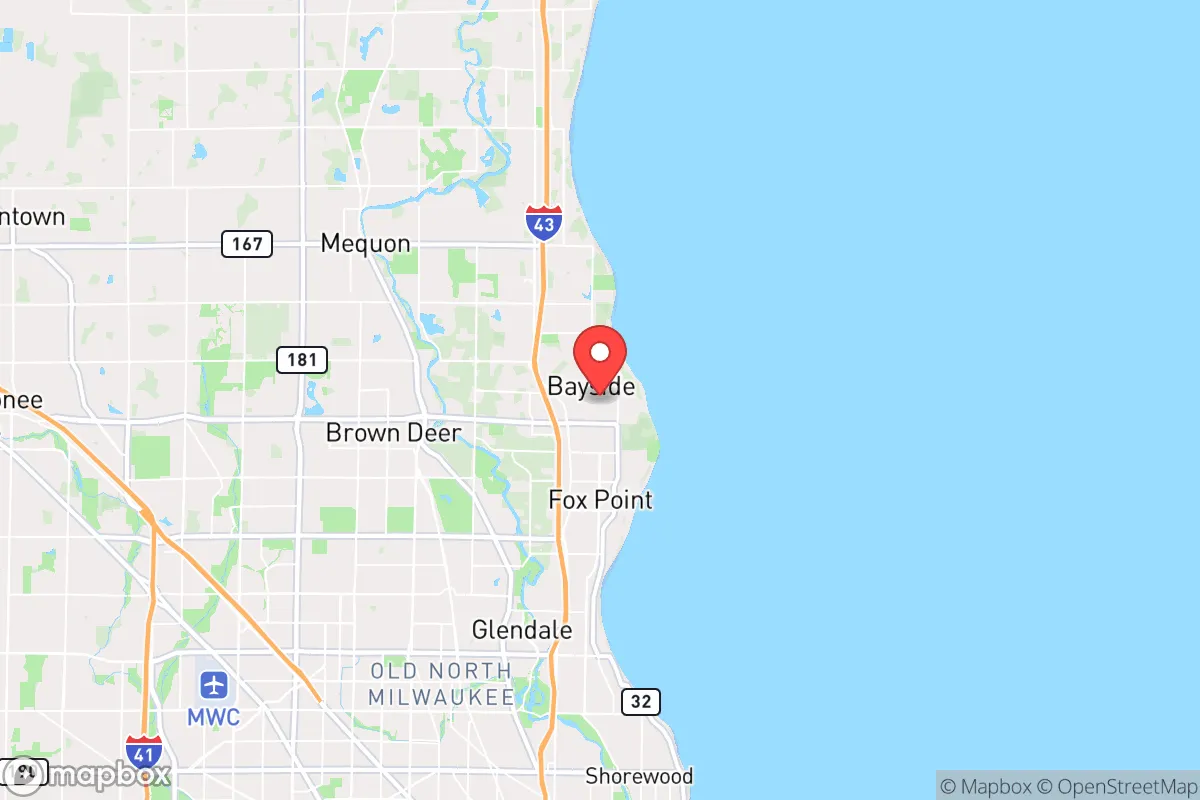
Photo: Wikipedia
Political ClimatePolitical Climate in Bayside, WI
District shown is the primary district for this city’s centroid. Cities may span multiple districts.
Local Political AnalysisPolitical Analysis of Bayside, WI
Bayside, Wisconsin, leans heavily to the left, with a Cook Partisan Voting Index of D+26, meaning it votes about 26 points more Democratic than the national average. This wasn't always the case—I remember when this village was a quiet, middle-of-the-road community where folks just wanted to be left alone. Over the last decade, though, the political winds have shifted hard, and it's not hard to see the changes in local ordinances and school board decisions. If you're looking for a place where individual liberties and common-sense governance still hold sway, Bayside might feel like a tough sell these days.
How it compares
To understand Bayside's politics, you have to look at its neighbors. Just a few miles west, Mequon and Thiensville lean more conservative, with a mix of fiscal restraint and traditional values that feels like a different world. Head north to Grafton or Cedarburg, and you'll find communities that still push back on overreaching mandates and high taxes. Bayside, by contrast, sits in the shadow of Milwaukee's progressive machine, and it shows. The village council often mirrors the county's agenda, with a focus on expansive social programs and zoning rules that can feel like government telling you how to live. It's a stark contrast to the surrounding North Shore suburbs, where some towns still prioritize property rights and local control.
What this means for residents
For those of us who've been here a while, the biggest concern is how this political tilt affects daily life. Property taxes have crept up to fund initiatives that feel more about ideology than necessity—think diversity equity inclusion programs in schools and strict environmental mandates that add red tape to home renovations. The school board has pushed curriculum changes that prioritize social justice over core academics, which has some families looking at private options or even moving to Ozaukee County. On the plus side, if you align with progressive values, you'll find plenty of like-minded neighbors and active community groups. But if you value personal freedom—like the right to opt out of vaccine mandates or speak your mind without being labeled—you might feel increasingly isolated. The local police are still professional and responsive, but there's a growing unease about how far the village will go in enforcing state-level gun laws or health orders.
Culturally, Bayside has become a place where the public square is dominated by one viewpoint. Town hall meetings can feel less about debate and more about affirmation of the current path. I've seen longtime residents sell and move to places like West Bend or Hartford, where the tax burden is lighter and the government stays out of your business. The village's parks and lake access are still beautiful, but the political atmosphere has a way of souring the charm. Looking ahead, I expect the trend to continue—more regulations, more spending, and less tolerance for dissent. If you're considering a move here, just know what you're signing up for. It's a comfortable bubble if you fit in, but a frustrating one if you don't.

State Political ClimatePolitical Climate in Wisconsin
State Political AnalysisPolitical Environment in the State
Wisconsin has long been a classic swing state, but over the past decade it has shifted from a purple battleground to a state with a deeply entrenched political divide, leaning slightly Republican in statewide elections while its largest cities pull hard left. The 2024 presidential race saw Donald Trump carry the state by roughly 1 point, a margin that reflects the ongoing tug-of-war between the conservative exurban and rural vote and the progressive strongholds of Milwaukee, Madison, and their inner-ring suburbs. The 10-20 year trajectory shows a state that was once reliably blue in presidential years (voting for Democrats from 1988 to 2012) now locked in a knife-edge partisan balance, with the legislature firmly under Republican control due to aggressive gerrymandering that was only partially undone by a 2024 state Supreme Court ruling.
Urban vs. rural divide
The political map of Wisconsin is a textbook case of the urban-rural chasm. Milwaukee County and Dane County (home to Madison) together deliver roughly 40% of the Democratic vote statewide, with Milwaukee proper voting over 80% Democratic in recent cycles and Madison not far behind. Meanwhile, the rest of the state—from the Fox Valley cities like Appleton and Green Bay to the Northwoods counties like Vilas and Oneida—has swung hard toward the GOP. The WOW counties (Waukesha, Ozaukee, Washington) surrounding Milwaukee are among the most reliably Republican suburbs in the Midwest, routinely delivering 60-70% of their votes to GOP candidates. The Driftless Region in the southwest, including counties like Vernon and Crawford, has become a fascinating microcosm: historically Democratic-leaning due to union roots, these areas have trended red as cultural issues overtook economic ones. The real battleground is now the Green Bay media market and the Fox Valley, where working-class voters who once backed Democrats have shifted decisively to the GOP over the last two cycles.
Policy environment
Wisconsin’s policy environment is a mixed bag for conservatives. On the plus side, the state has a flat income tax rate of 4.4% (down from 7.65% a decade ago), a Republican priority that has made the state more competitive with low-tax neighbors like Indiana. Property taxes are moderate, and the state has a right-to-work law (passed in 2015) that weakened public-sector unions. However, the state’s sales tax is relatively low at 5%, but local municipalities can add up to 1.5% more. On the education front, Wisconsin has a robust school choice program—the oldest in the nation—allowing families in Milwaukee, Racine, and the statewide program to use vouchers for private or religious schools. Healthcare is a sore spot: the state expanded Medicaid under Governor Tony Evers (a Democrat), and while the program is popular, it has locked Wisconsin into a federal entitlement that conservatives view as a long-term liability. Election laws are a bright spot: Wisconsin has voter ID requirements (upheld by courts), and the 2020 election integrity battles led to a 2022 law tightening absentee ballot procedures. The state Supreme Court flipped to a 4-3 liberal majority in 2023, which has already led to the redrawing of legislative maps and could threaten the voter ID law in the future.
Trajectory & freedom
The trajectory on personal freedom is a mixed picture, and it’s moving in the wrong direction on several fronts. Gun rights are strong: Wisconsin is a shall-issue state for concealed carry, and there is no state-level assault weapons ban or magazine capacity limit. However, the 2023 liberal court majority has signaled interest in revisiting the state’s preemption law, which currently prevents local governments from passing their own gun ordinances. Parental rights saw a win with the 2023 law requiring schools to notify parents if a child requests a name or pronoun change, but the law is being challenged in court. Medical autonomy took a hit in 2024 when the state Supreme Court ruled that a 1849 law banning abortion (with a rape/incest exception) was unenforceable, effectively legalizing abortion up to fetal viability—a major loss for pro-life conservatives. Property rights are generally respected, but the state’s DNR (Department of Natural Resources) has a heavy hand in land use, particularly in the Northwoods, where environmental regulations can delay development. On taxation, the trend is positive: the 2023-25 budget included $2 billion in income tax cuts, and the flat tax is a structural improvement. But the state’s gas tax is indexed to inflation, meaning it rises automatically without a legislative vote—a sneaky form of tax creep that frustrates conservatives.
Civil unrest & political movements
Wisconsin has been a flashpoint for political activism on both sides. The 2020 Kenosha riots following the Jacob Blake shooting saw businesses burned and two people killed, with the trial of Kyle Rittenhouse becoming a national symbol of self-defense and the breakdown of law and order. The 2020 election integrity controversy in Milwaukee and Green Bay—where private grants funded ballot drop boxes and election officials accepted guidance from a left-wing nonprofit—led to ongoing distrust and a wave of conservative activism at the local level. The Wisconsin Institute for Law & Liberty (WILL) has been a powerhouse in conservative litigation, successfully challenging the governor’s emergency powers during COVID and the 2020 election procedures. On the left, the Indivisible and Progressive Dane movements are highly organized, particularly in Madison, where the city council has passed sanctuary city policies and defunded the police in 2020 (though funding was later restored). Immigration politics are relatively quiet compared to border states, but the 2024 law banning local sanctuary policies was a win for rule of law. The 2023-2024 legislative session saw a record number of bills introduced on election integrity, but most were vetoed by Governor Evers.
Projection
Looking 5-10 years out, Wisconsin is likely to remain a battleground, but the demographic trends favor the GOP. The Milwaukee suburbs (Waukesha, Ozaukee, Washington) are growing and getting redder, while Dane County is maxed out in its Democratic vote share—there are simply not enough new liberal voters moving in to offset the rural and exurban growth. The Fox Valley is trending red as manufacturing workers shift culturally right, and the Northwoods is becoming a destination for remote workers from Illinois and Minnesota who bring conservative values. However, the state Supreme Court will be a critical battleground: the 2025 election will determine whether the liberal majority holds, and if it does, expect challenges to the voter ID law, the school choice program, and the flat tax. The 2026 gubernatorial election will be a proxy war for the state’s direction—if a Republican wins, expect further tax cuts and school choice expansion; if Evers wins again, expect a continued stalemate. The biggest wildcard is in-migration from Illinois: thousands of families are moving to Kenosha, Racine, and the Lake Geneva area, and while many are fleeing high taxes, they may bring blue-state voting habits with them.
For a conservative considering a move to Wisconsin, the bottom line is this: the state offers a low and falling tax burden, strong gun rights, school choice, and a political map that gives Republicans a fighting chance in statewide races. But the state Supreme Court and the governor’s mansion are currently held by the left, meaning the policy environment is fragile and could shift dramatically with a few key elections. If you value local control and want to live in a place where your vote actually matters, Wisconsin is one of the few states left where a single ballot can tip the balance. Just be prepared for the fight—because the other side is dug in, and they’re not going anywhere.
* Values derived from national, state, county, city and local statistics and may differ in a specific area. Last updated: 2026-04-27T14:46:13.000Z
Narrative content on this page is AI-generated and may contain mistakes. Verify any details that matter before acting on them.
ReloMaps may earn a commission from affiliate links at no extra cost to you.

