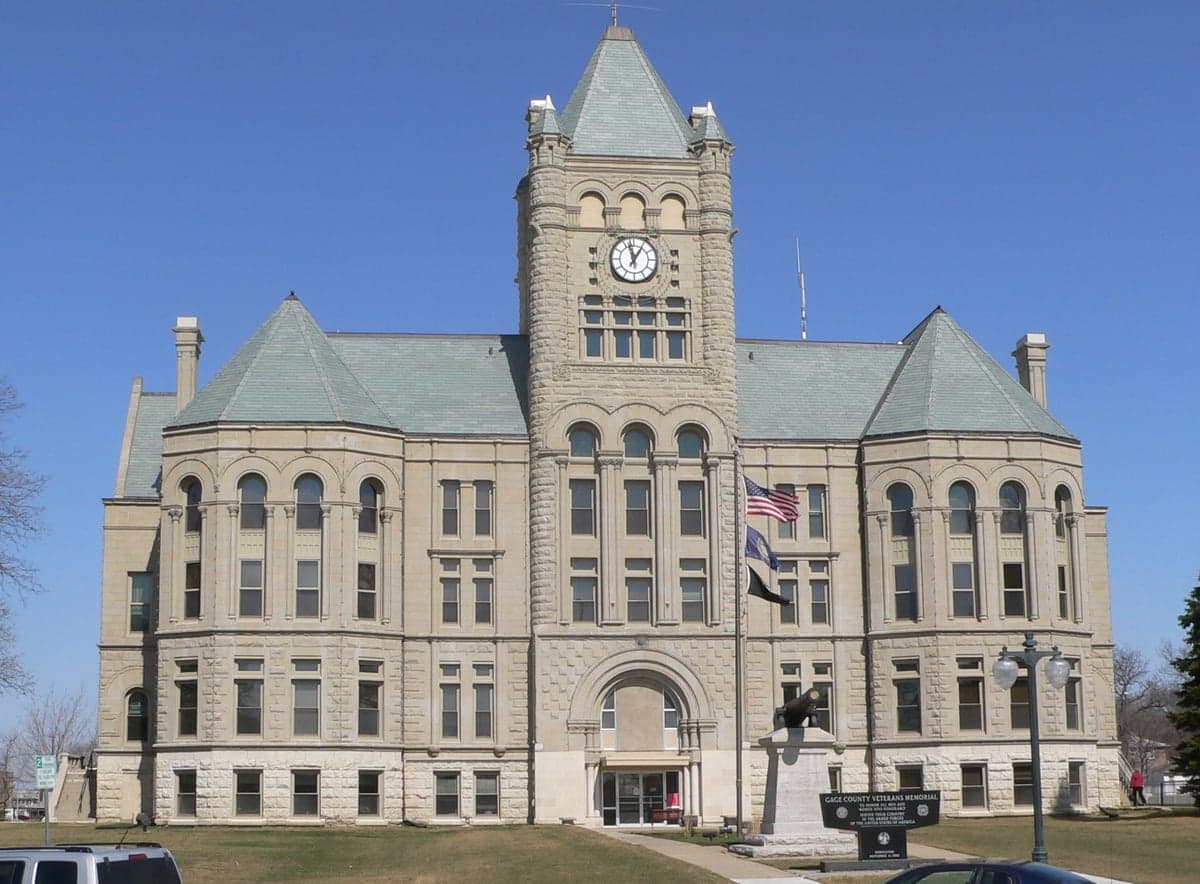
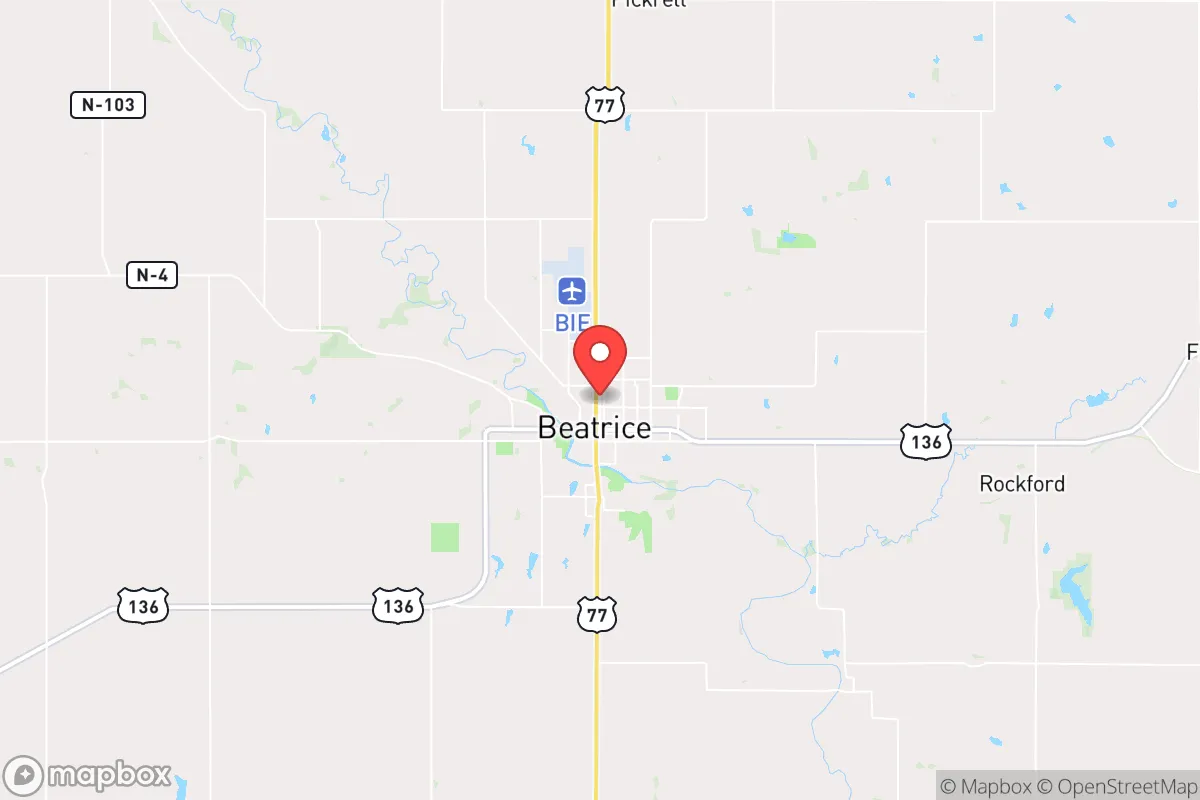
Photo: Wikipedia
Demographics of Beatrice, NE
Affluence Level in Beatrice, NE
A middle-class area roughly in line with national averages across income, home values, education, and employment.
People of Beatrice, NE
The people of Beatrice, Nebraska today form a predominantly white, native-born community of 12,233 residents, with a density that feels small-town and neighborly. The city’s identity is rooted in its agricultural and manufacturing heritage, reflected in a population that is 92.1% white and only 0.4% foreign-born, making it one of the least ethnically diverse cities in the state. With just 19.9% of adults holding a college degree, the workforce leans heavily toward blue-collar and trade-based employment, and the community retains a strong sense of local pride and self-reliance. For a conservative-leaning individual or family, Beatrice offers a stable, predictable social environment where change comes slowly and traditional values remain visible in daily life.
How the city was settled and grew
Beatrice was founded in 1857 by settlers drawn to the fertile bottomlands of the Big Blue River, with the promise of land under the Homestead Act of 1862 accelerating its early growth. The original population was overwhelmingly of German, Czech, and English stock, many arriving directly from the Midwest or as second-wave immigrants from the Eastern states. These early families built the Historic Downtown district along Court Street, where brick storefronts and grain elevators still anchor the city’s commercial heart. By the 1880s, the arrival of the Burlington and Missouri River Railroad spurred a second wave of Scandinavian and Irish laborers, who settled in the North Side neighborhoods near the rail yards and packing plants. The city’s population peaked at around 12,000 in the 1950s, driven by the expansion of the Beatrice State Developmental Center and the local manufacturing base, with workers filling bungalows in the West End and East Hill districts.
Modern era (post-1965)
After the 1965 Hart-Cellar Act, Beatrice saw virtually no new immigration, a pattern that continues today with a foreign-born share of just 0.4%. The city’s modest Hispanic population of 3.4% is largely composed of families who arrived in the 1990s and 2000s to work in meatpacking and agriculture, with many settling in the South Side area near the industrial corridor along Highway 136. The East/Southeast Asian community, at 1.0%, is small and concentrated among professionals at the local hospital and the state developmental center, with no distinct ethnic enclave forming. The Black population, at 0.9%, has remained stable and is scattered across the city, with no single neighborhood absorbing a majority. Suburbanization within Beatrice has been limited, as the city’s boundaries are tightly drawn; newer subdivisions like Indian Creek Addition in the southeast have attracted middle-class families, but the overall population has declined slightly from its mid-century peak, reflecting out-migration of younger adults to larger cities like Lincoln and Omaha.
The future
Beatrice’s population is projected to remain flat or decline modestly over the next decade, with an aging demographic profile and limited in-migration. The city is not tribalizing into distinct ethnic enclaves; rather, it is homogenizing further, as the small Hispanic and Asian communities are largely assimilating into the white-majority fabric through intermarriage and geographic dispersion. The foreign-born share is unlikely to rise significantly, given the lack of refugee resettlement programs or large employers recruiting internationally. The next 10-20 years will likely see a continued slow erosion of young adults, balanced by retirees moving in from nearby rural areas for access to healthcare and services. For a conservative-leaning family, this means a community that remains culturally stable, with little pressure for rapid demographic change, but also one that may struggle to attract new businesses and maintain its tax base without a younger workforce.
Beatrice is becoming a quieter, older version of itself—a place where the population is more likely to shrink than diversify, and where the social fabric remains tightly knit around long-established families and institutions. For someone moving in now, the city offers a predictable, low-crime environment with a clear sense of local identity, but little of the cultural dynamism or ethnic variety found in larger Nebraska cities. It is a solid choice for those seeking stability over change, and a community where neighbors are likely to share a common background and worldview.

* Values derived from national, state, county, city and local statistics and may differ in a specific area. Last updated: 2026-05-03T04:43:53.000Z
Narrative content on this page is AI-generated and may contain mistakes. Verify any details that matter before acting on them.
ReloMaps may earn a commission from affiliate links at no extra cost to you.

