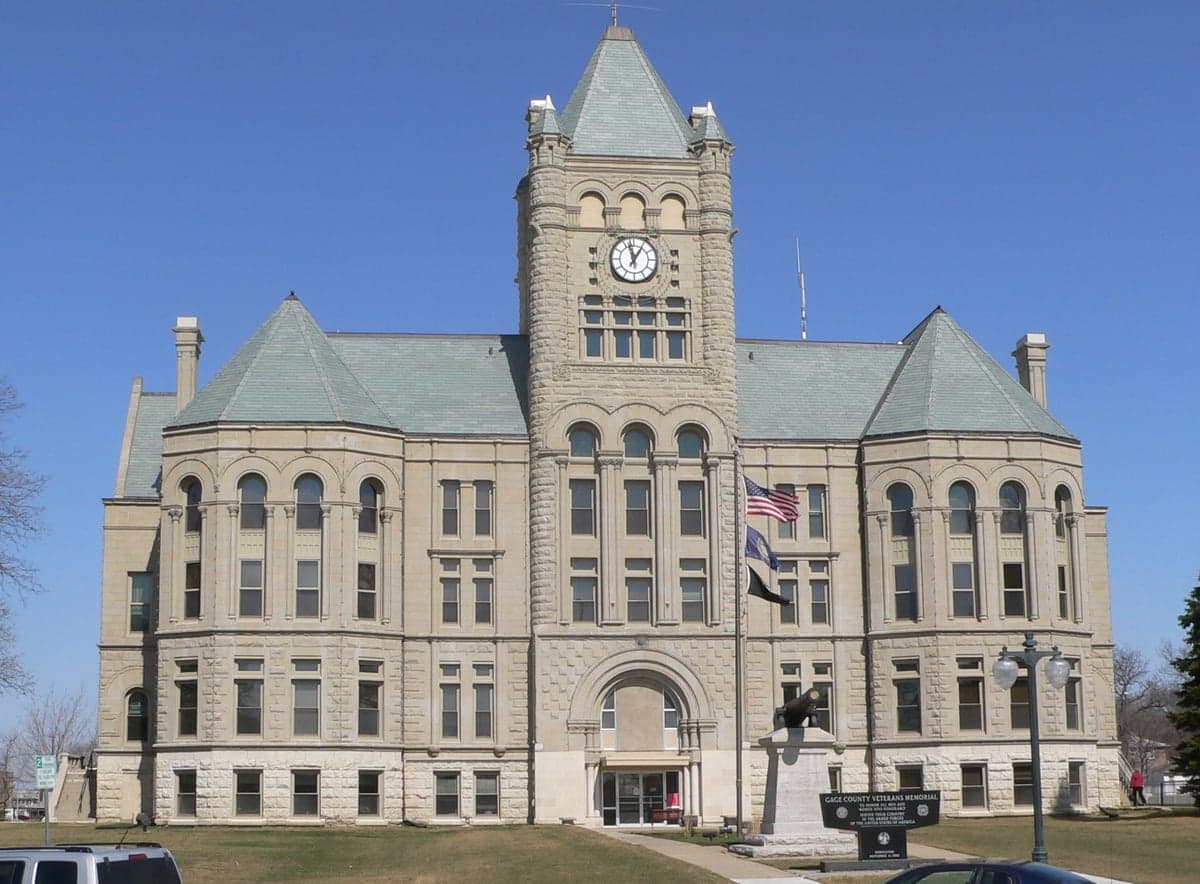
Photo: Wikipedia
Political ClimatePolitical Climate in Beatrice, NE
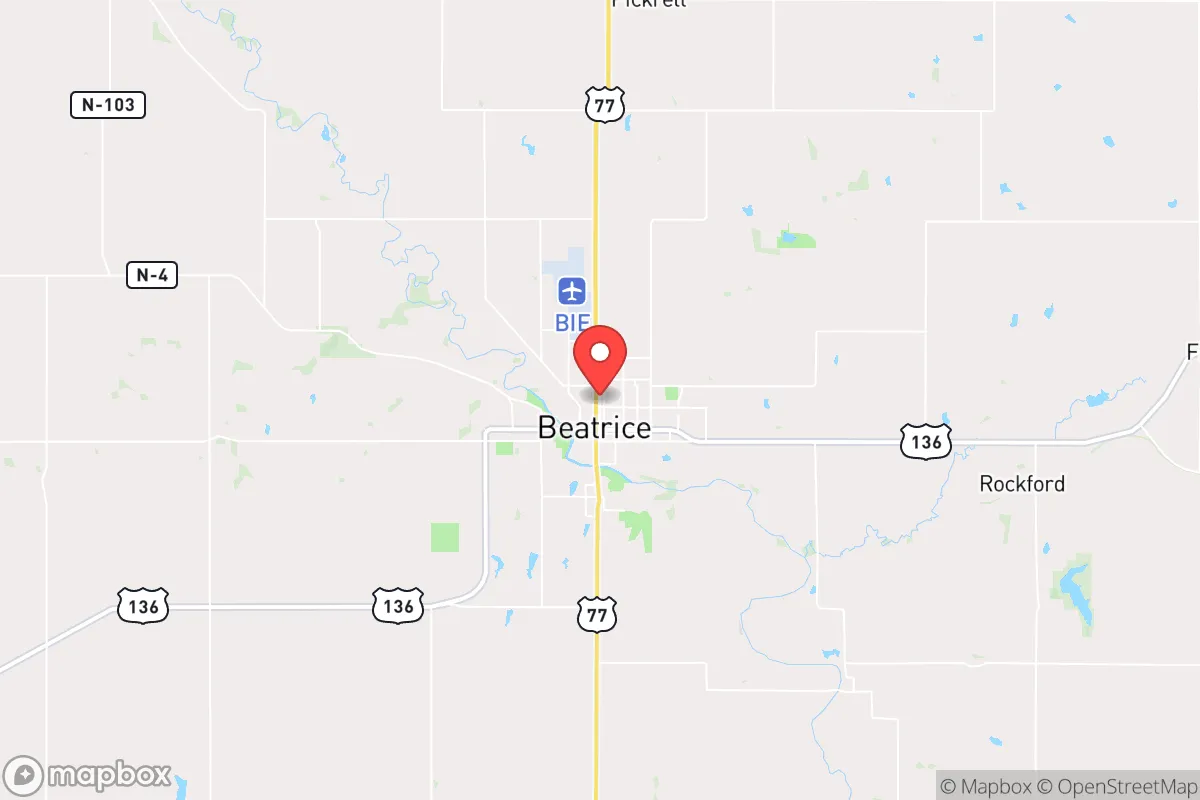
District shown is the primary district for this city’s centroid. Cities may span multiple districts.
Local Political AnalysisPolitical Analysis of Beatrice, NE
Beatrice, Nebraska, sits deep in conservative territory, and that’s not changing anytime soon. The Cook PVI of R+27 tells you everything you need to know: this is one of the most reliably Republican areas in the state, and it’s been that way for as long as anyone can remember. You won’t find much hand-wringing over election results here—folks vote their conscience, and that conscience leans heavily toward limited government, personal responsibility, and a healthy skepticism of anything coming out of Lincoln or Washington. The political lean is solid, the trajectory is steady, and the local culture reflects that stability.
How it compares
Drive 40 miles north to Lincoln, and you’ve stepped into a different world. Lincoln’s blue-leaning tendencies—especially in the city core—stand in stark contrast to Beatrice’s unapologetic conservatism. Even nearby towns like Fairbury or Crete, while still red, don’t carry the same weight of political certainty. Beatrice is the anchor of Gage County’s conservative identity, and it shows in everything from local school board decisions to county commission votes. The surrounding rural areas are even more conservative, but Beatrice itself holds the line without apology. If you’re looking for a place where the political temperature matches your own values, this is it.
What this means for residents
For the people who live here, the political climate means a lot of practical freedom. You’re not going to see the kind of government overreach that’s become common in bigger cities—no mask mandates that drag on for months, no heavy-handed business closures, no zoning fights that tell you what you can and can’t do with your own property. The local government generally stays out of the way, and that’s exactly how most folks want it. Property taxes are a perennial gripe, sure, but that’s a Nebraska-wide issue, not a Beatrice-specific one. The bigger concern for longtime residents is the slow creep of progressive ideology into state-level policy—things like curriculum changes or environmental regulations that feel disconnected from local realities. So far, Beatrice has been a bulwark against that, but you can feel the pressure building from the outside.
Culturally, Beatrice is a place where your neighbor knows your name and your business, but in a good way. The local churches, the VFW, the farm co-ops—these are the institutions that hold the community together. There’s a strong sense of self-reliance here, and that extends to politics. People don’t look to the government to solve their problems; they look to each other. That said, there’s a quiet concern about the direction of the country, and a growing wariness of federal overreach into everything from land use to health mandates. The next few years will test whether Beatrice can keep its conservative character intact as the state and nation shift. For now, it’s still a place where personal freedom isn’t just a talking point—it’s how life is lived.

State Political ClimatePolitical Climate in Nebraska
State Political AnalysisPolitical Environment in the State
Nebraska has long been a reliably conservative state, but its political climate is more nuanced than a simple red-state label suggests. The state has voted Republican in every presidential election since 1968, and Donald Trump carried it by 19 points in 2024, yet its unique unicameral legislature and nonpartisan elections often produce pragmatic, center-right governance rather than hardline ideological battles. Over the past 20 years, the dominant coalition has been a mix of rural conservatives, agricultural interests, and business-friendly Republicans, though a growing urban-liberal axis in Omaha and Lincoln has begun to shift the needle on certain cultural and fiscal issues.
Urban vs. rural divide
The political map of Nebraska is a textbook case of the urban-rural split. The state’s two population centers—Omaha (Douglas County) and Lincoln (Lancaster County)—are the only reliably blue areas, with Omaha’s 2nd Congressional District famously splitting its electoral vote in 2020 and 2024. In 2024, Douglas County voted for Kamala Harris by about 8 points, while Lancaster County went for Harris by a narrower 2-point margin. Meanwhile, the rest of the state is deeply red. Scottsbluff in the Panhandle, Grand Island in the central Platte Valley, and Norfolk in the northeast all vote Republican by 30-40 point margins. The most conservative counties are in the Sandhills and the Panhandle—Cherry County and Kimball County routinely give Republicans 85%+ of the vote. The real political tension isn’t between left and right, but between the urban cores and the vast rural expanse that feels increasingly ignored by the state’s power brokers in Lincoln and Omaha.
Policy environment
Nebraska’s policy environment is broadly conservative, but with some notable exceptions. The state has no income tax on Social Security benefits and a flat state income tax rate of 5.84% (down from 6.84% in 2020), with a phased reduction to 4.99% by 2027. Property taxes are a perennial sore point—among the highest in the region relative to home values—though the legislature has passed annual caps and increased state aid to schools. The regulatory posture is business-friendly, with a right-to-work law and no state-level minimum wage above the federal $7.25 (though a 2022 ballot initiative raised it to $15 by 2026). On education, Nebraska allows charter schools but has no voucher program, and the state’s school choice movement has stalled in the legislature. Healthcare policy is mixed: the state expanded Medicaid under the Affordable Care Act in 2020 via ballot initiative, but also passed a 12-week abortion ban in 2023 (LB 574) with exceptions for rape, incest, and medical emergencies. Election laws are moderately restrictive—voter ID was enacted in 2023 (LB 514), and the state has no same-day registration. The unicameral legislature, while officially nonpartisan, operates with clear Republican majorities (32-17 as of 2025), but the nonpartisan structure means committee chairs and bills often advance with bipartisan support.
Trajectory & freedom
Over the past five years, Nebraska has moved in a decidedly more freedom-oriented direction on several fronts, though not without pushback. The 2023 passage of LB 77 eliminated the need for a permit to carry a concealed handgun, making Nebraska a constitutional carry state. The same year, LB 574 restricted abortion to 12 weeks, a significant win for pro-life advocates. On parental rights, the legislature passed LB 1089 in 2024, requiring school districts to notify parents of any curriculum involving sexual orientation or gender identity—a direct response to Omaha Public Schools’ diversity initiatives. However, the state has also seen expansions of government power that concern liberty-minded residents. The 2020 Medicaid expansion, while popular, added hundreds of thousands to the state rolls and increased healthcare spending. More troubling for some, the state’s Nebraska Emergency Management Agency retains broad authority to issue health directives, a power that was used during COVID-19 to mandate masking in schools and businesses. Property rights remain strong—Nebraska has no statewide rent control and limits eminent domain for private development—but the state’s high property taxes are effectively a form of wealth confiscation for homeowners. The trajectory is mixed: Nebraska is becoming more free on guns and parental rights, but less free on taxation and healthcare mandates.
Civil unrest & political movements
Nebraska has seen relatively little civil unrest compared to coastal states, but flashpoints exist. The most visible recent movement was the 2020 George Floyd protests in Omaha, which turned violent with looting and fires along 72nd Street, leading to a curfew and National Guard deployment. Since then, the left has organized around abortion access and transgender rights, with groups like Nebraska Abortion Resources and OutNebraska holding regular rallies at the state capitol. On the right, the Nebraska Republican Party has seen a grassroots takeover by the Nebraska Freedom Coalition, a group aligned with the national liberty movement that successfully pushed for the permitless carry law and parental rights legislation. Immigration politics are less heated than in border states, but Grand Island and Lexington have seen tensions over meatpacking plant workers, with local ordinances targeting undocumented labor. There is no sanctuary city movement in Nebraska—Lincoln considered it in 2019 but backed down after state threats to withhold funding. Election integrity remains a live issue: the 2020 election saw no major fraud cases, but the 2023 voter ID law was passed partly in response to concerns about non-citizen voting in Omaha’s 2nd District. Overall, the political climate is stable but increasingly polarized along urban-rural lines.
Projection
Over the next 5-10 years, Nebraska is likely to become more politically divided, not less. The urban cores of Omaha and Lincoln are growing faster than the rest of the state, driven by in-migration from blue states and young professionals. This will likely push the 2nd Congressional District further left, potentially flipping it permanently blue and making Nebraska’s electoral vote split a regular feature. Meanwhile, the rural areas will continue to hemorrhage population, concentrating political power in the cities. The state legislature will remain Republican-controlled, but the margin could narrow, especially if the nonpartisan system allows more moderate Republicans and Democrats to win seats in suburban districts like Papillion and La Vista. On policy, expect continued fights over property tax reform, school choice, and abortion—the 12-week ban will face legal challenges and potential ballot initiatives to expand access. The biggest wildcard is the state’s tax structure: the flat income tax cuts are popular, but they’ll strain the budget if the economy slows, potentially forcing cuts to services or higher property taxes. For a conservative moving in now, the state will remain a safe bet for the next decade, but the cultural and political center of gravity is slowly shifting eastward toward the Omaha metro.
Bottom line for a new resident: Nebraska offers a solid conservative foundation—low crime, strong gun rights, and a business-friendly environment—but don’t expect a libertarian paradise. Property taxes are high, the cities are trending blue, and the state government still wields significant power over health and education. If you’re looking for a place where your vote counts and your values are respected, Nebraska is a good bet, but keep an eye on Omaha and Lincoln—they’re where the future of the state will be decided.
* Values derived from national, state, county, city and local statistics and may differ in a specific area. Last updated: 2026-05-03T04:43:53.000Z
Narrative content on this page is AI-generated and may contain mistakes. Verify any details that matter before acting on them.
ReloMaps may earn a commission from affiliate links at no extra cost to you.

