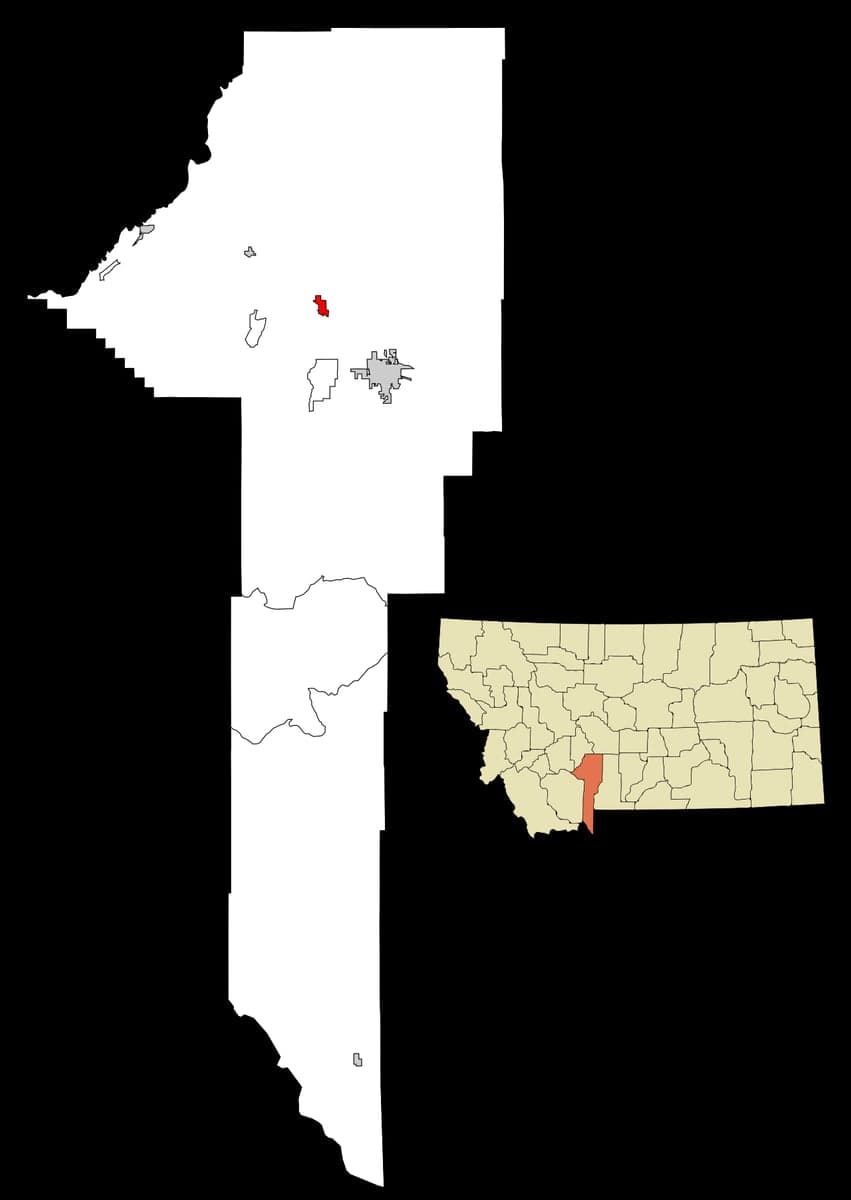
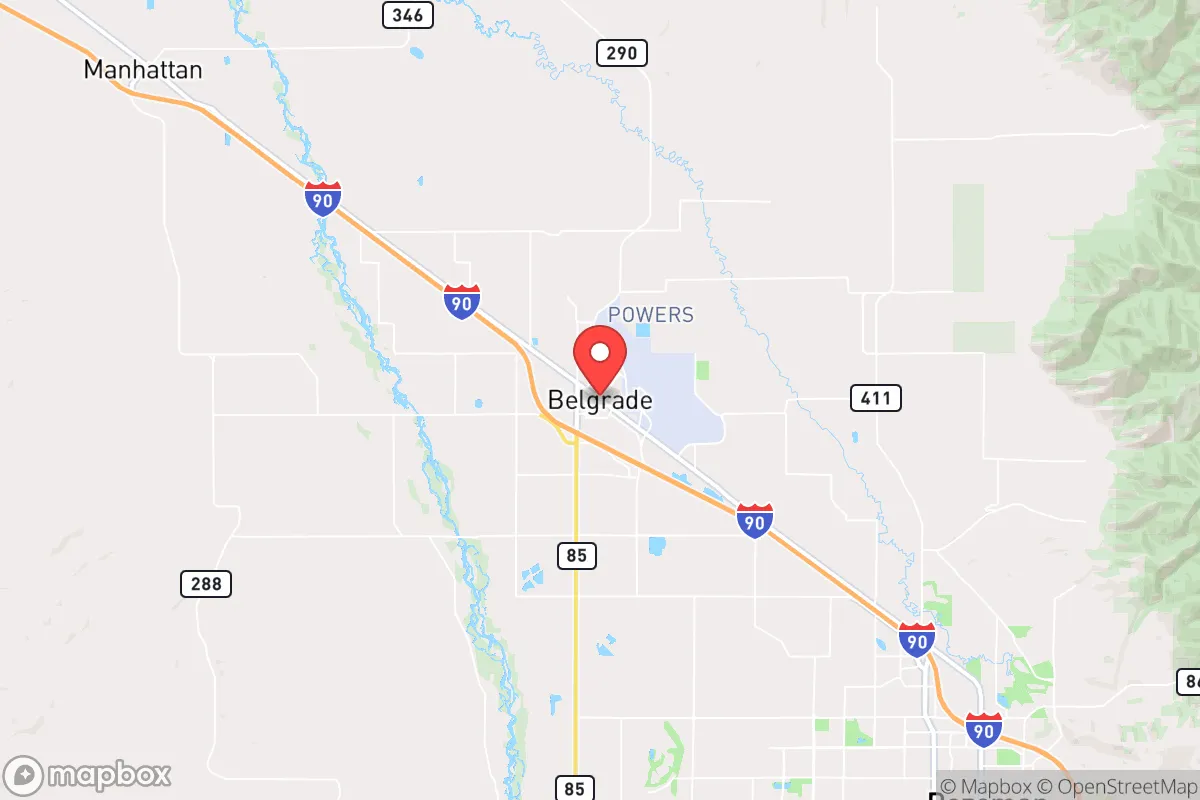
Photo: Wikipedia
Demographics of Belgrade, MT
Affluence Level in Belgrade, MT
An upper-middle-class area. Household wealth, education levels, and homeownership run ahead of national benchmarks.
People of Belgrade, MT
The people of Belgrade, Montana, today number roughly 11,425 and form one of the state’s fastest-growing small cities, characterized by a predominantly white (86.2%) and native-born (98.8%) population with a modest Hispanic minority (6.0%). The city’s identity is shaped by its role as a working-class bedroom community for Bozeman, with a higher-than-average college attainment rate (37.4%) reflecting recent in-migration of professionals and remote workers. Distinctively, Belgrade retains a strong agricultural and ranching heritage, visible in its annual Labor Day parade and the concentration of multi-generational families in older neighborhoods like Historic Downtown and North Belgrade, while newer subdivisions like Jackrabbit Crossing and Valley West draw younger families and out-of-state transplants.
How the city was settled and grew
Belgrade was founded in 1887 as a railroad town on the Northern Pacific line, named by Serbian immigrant settlers who saw the Gallatin Valley as reminiscent of their homeland. The original population was a mix of Serbian homesteaders and Northern European farmers (primarily German and Scandinavian), drawn by the promise of fertile land under the Homestead Act and the railroad’s need for labor. These early groups built the core of what is now Historic Downtown, centered on Broadway Avenue, with small frame houses and commercial buildings that still stand. A second wave came during the 1910s-1920s as dryland wheat farming expanded, bringing more Midwestern families to North Belgrade, an area of larger lots and older farmhouses. The city remained a small agricultural service hub through the mid-20th century, with population hovering around 1,000 until the 1970s, when the completion of Interstate 90 began shifting its character.
Modern era (post-1965)
Belgrade’s modern growth began in earnest after the 1965 Hart-Cellar Act, though the city’s foreign-born population remains minimal at just 1.2% today. Instead, the post-1965 era has been defined by domestic in-migration from other parts of Montana and the Pacific Northwest, driven by Bozeman’s expanding economy (Montana State University, tech startups, and outdoor tourism). The 1990s and 2000s saw the development of Jackrabbit Crossing, a master-planned subdivision of single-family homes that attracted young families and Bozeman commuters seeking cheaper housing. The 2010s brought Valley West, a newer area of townhomes and apartments that absorbed many out-of-state transplants from California and Colorado, drawn by Montana’s lower taxes and conservative politics. The Hispanic population, now 6.0%, has grown steadily since 2000, concentrated in South Belgrade near the agricultural processing plants and construction firms, where many work in landscaping, roofing, and dairy operations. The Black (0.1%) and East/Southeast Asian (0.4%) populations remain negligible, with no Indian-subcontinent community recorded.
The future
Belgrade’s population is heading toward continued growth, likely reaching 15,000-18,000 by 2040, driven by Bozeman’s housing spillover and Montana’s appeal to remote workers. The city is homogenizing in racial terms, with the white share projected to remain above 80% as in-migration from other predominantly white states (Idaho, Washington, Colorado) outpaces any growth in minority populations. The Hispanic community is growing slowly but steadily, concentrated in South Belgrade and Historic Downtown, but shows signs of assimilation into the broader working-class culture rather than forming a distinct enclave. The foreign-born share is unlikely to rise significantly given the lack of major employers recruiting international labor and the city’s distance from established immigrant gateways. The most notable demographic shift is educational and economic: the college-educated share (37.4%) is rising as professionals and retirees replace agricultural workers, creating a subtle cultural divide between older, blue-collar families in North Belgrade and newer, white-collar arrivals in Jackrabbit Crossing and Valley West.
Belgrade is becoming a more educated, more affluent, and slightly more diverse version of its former self, but remains overwhelmingly white and native-born, with a political culture that leans conservative and a social fabric still rooted in its agricultural past. For someone moving in now, the city offers a stable, family-oriented environment with low crime and strong schools, but little racial or ethnic diversity beyond the growing Hispanic presence in South Belgrade. The next decade will likely see continued suburban-style expansion into the surrounding Gallatin Valley farmland, with new subdivisions absorbing more Bozeman commuters and remote workers, while the historic core retains its small-town character.

* Values derived from national, state, county, city and local statistics and may differ in a specific area. Last updated: 2026-04-19T20:39:11.000Z
Narrative content on this page is AI-generated and may contain mistakes. Verify any details that matter before acting on them.
ReloMaps may earn a commission from affiliate links at no extra cost to you.

