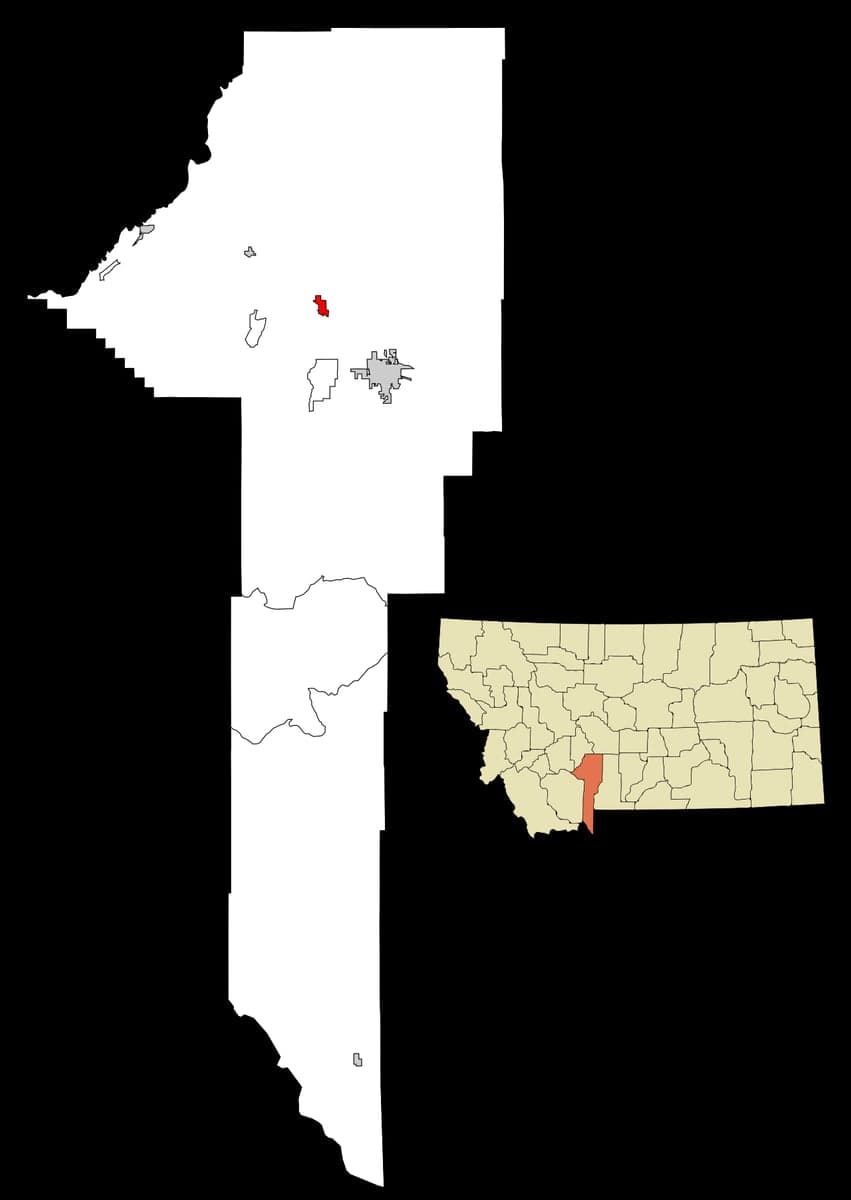
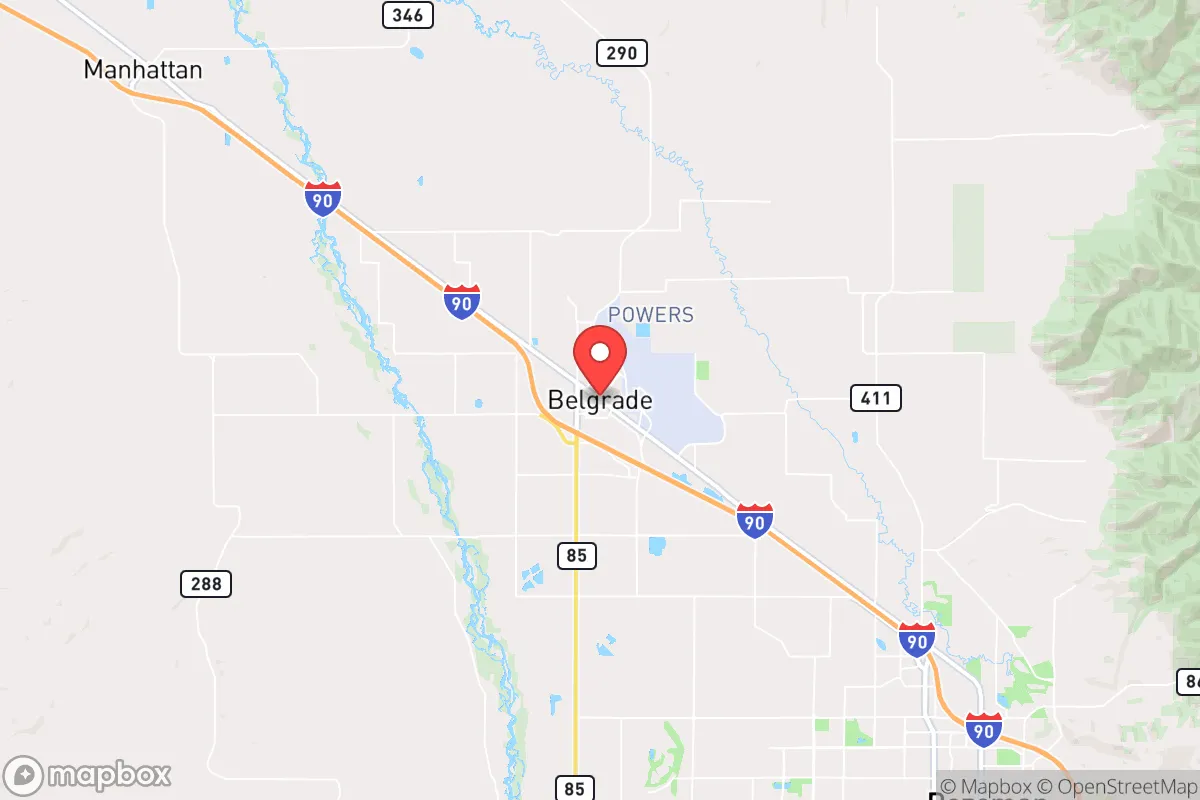
Photo: Wikipedia
Political ClimatePolitical Climate in Belgrade, MT
District shown is the primary district for this city’s centroid. Cities may span multiple districts.
Local Political AnalysisPolitical Analysis of Belgrade, MT
Belgrade, Montana, has long been a reliably conservative community, anchored by a Cook PVI of R+5, but the political climate here is shifting in ways that long-time residents find increasingly concerning. For decades, this was a place where folks minded their own business, the government stayed out of your backyard, and the biggest political fights were over school levies and gravel roads. That’s changing fast. The influx of out-of-state transplants, many from deep-blue states like California and Washington, is slowly diluting the traditional independent spirit that defined the Gallatin Valley. You can feel it in local elections, where candidates who talk about “sustainability” and “equity” are gaining traction, and in the growing pressure to adopt policies that feel like they were written in Portland or Seattle.
How it compares
To understand Belgrade’s trajectory, you have to look at its neighbors. Bozeman, just 10 miles east, has already tipped hard into progressive territory—its city council debates are dominated by climate action plans and affordable housing mandates that often trample property rights. Belgrade used to be the sensible counterbalance, a place where you could buy a house without a dozen zoning hoops. But now, as Bozeman’s cost of living pushes people west, Belgrade is absorbing that same political energy. Meanwhile, towns like Manhattan and Three Forks, just 15 miles west, remain staunchly conservative, voting against nearly every tax increase and keeping their local governments lean. The contrast is stark: drive 20 minutes and you go from a place where the county sheriff is still the top authority to one where city planners are telling you what color you can paint your shed.
What this means for residents
For those of us who’ve been here a while, the biggest red flag is the slow creep of government overreach into everyday life. It starts small—new building codes that add thousands to a home renovation, stricter noise ordinances that make it harder to run a small engine repair shop out of your garage, and a school board that’s more focused on DEI training than on teaching kids to read. The real worry is that Belgrade’s city council, once a group of ranchers and small business owners, is now filling up with transplants who see government as the solution to every problem. If this trend continues, you can expect more zoning restrictions, higher fees on new construction, and a push for “complete streets” designs that prioritize bike lanes over parking—all paid for by your property taxes.
On the cultural side, Belgrade still holds onto some of its old character. The annual Harvest Festival still feels like a community gathering, not a corporate event, and most folks still wave when you pass them on the street. But the political undertones are shifting. There’s a growing divide between the “old guard” who want to keep Belgrade a place where you can live without a permit for everything, and the newcomers who see it as a blank slate for progressive experiments. If you’re thinking about moving here, pay close attention to the next city council election. That’s where the real battle for Belgrade’s soul is being fought—and right now, it’s too close to call.

State Political ClimatePolitical Climate in Montana
State Political AnalysisPolitical Environment in the State
Urban vs. rural divide
The political map of Montana is a textbook case of the urban-rural split, but with a few unique wrinkles. The state's largest population center, the Gallatin Valley around Bozeman, has been a flashpoint. Bozeman itself has trended leftward as it has exploded with out-of-state transplants, tech workers, and Montana State University faculty, making it a blue dot in a red county. Gallatin County as a whole is now a swing county, voting for Biden in 2020 and then flipping back to Trump in 2024 by a narrow margin. In contrast, Missoula remains the state's most reliably liberal city, home to the University of Montana and a strong environmental activist community. It consistently votes 20-30 points more Democratic than the state average. The other major population centers—Billings, Great Falls, and Kalispell—are solidly conservative. Billings, the largest city, is a Republican stronghold that anchors the eastern part of the state. The real engine of Republican power, however, is the vast rural expanse. Counties like McCone, Garfield, and Petroleum in the eastern plains routinely deliver 85-90% of their votes to Republican candidates. The Flathead Valley around Kalispell has become a hotbed of conservative activism, with a strong libertarian and constitutionalist presence that has pushed the local party further right than the state GOP establishment.
Policy environment
Montana's policy environment is one of the most conservative in the nation, reflecting a deep-seated distrust of government overreach. The state has no sales tax, a major draw for newcomers, and a relatively low, flat income tax rate that was recently cut from 6.75% to 5.9% as part of a 2023 tax reform package. Property taxes are a perennial source of frustration, but the state has resisted the kind of runaway assessment increases seen in neighboring Idaho. On education, Montana has been a battleground. The 2021 session saw the passage of a robust school choice bill that expanded charter schools and education savings accounts, though it was later partially blocked by the courts. The state has also passed strong parental rights legislation, including a 2023 law requiring schools to notify parents of any curriculum involving sexual content. Healthcare policy is a mixed bag: Montana expanded Medicaid under the Affordable Care Act in 2015, a decision that remains controversial among conservatives, but the state has also resisted Medicaid expansion reauthorization fights and has no state-run insurance exchange. Election integrity has been a major focus. In 2021, the legislature passed a comprehensive voter ID law, eliminated same-day voter registration, and banned ballot harvesting. These measures have been praised by conservatives as necessary safeguards and criticized by progressives as voter suppression. The state also passed a constitutional carry law in 2021, allowing the concealed carry of firearms without a permit, a clear signal of Montana's commitment to Second Amendment rights.
Trajectory & freedom
The trajectory of freedom in Montana is a tale of two trends. On one hand, the state has aggressively expanded personal liberty in several key areas. The 2021 passage of constitutional carry was a landmark victory for gun rights advocates. The same session saw the passage of the Montana Land Use Planning Act, which curtailed the ability of counties to impose restrictive zoning regulations on private property, a direct response to concerns about government overreach in the booming Bozeman area. The state has also been a leader in medical freedom, passing a 2023 law that prohibits employers from mandating COVID-19 vaccines as a condition of employment. On the other hand, there are concerning signs of creeping government control. The state's Department of Environmental Quality has become more aggressive under the current administration, imposing new regulations on agricultural burning and private well drilling that have angered rural landowners. The 2023 data privacy law, while well-intentioned, created a new state bureaucracy to oversee consumer data, a move that some libertarians see as an expansion of government power. The most significant threat to freedom, however, may be the rapid growth of local government. As towns like Bozeman, Missoula, and Whitefish swell with new residents, city councils have imposed new impact fees, short-term rental bans, and urban growth boundaries that restrict property rights. The state legislature has pushed back with preemption bills, but the battle is ongoing.
Civil unrest & political movements
Montana has not seen the kind of large-scale civil unrest common in coastal states, but there have been notable flashpoints. The Yellowstone County area around Billings saw a series of protests in 2020 over racial justice issues, but they were small and largely peaceful compared to national events. The more significant political movements have been on the right. The Montana Freedom Caucus, a group of hardline conservative state legislators, has become a powerful force, often clashing with the more moderate Republican leadership over budget priorities and the pace of conservative reforms. The Flathead County area has been a hotbed of constitutional sheriff movements, with local law enforcement openly refusing to enforce certain state and federal gun laws. Immigration politics are less visible here than in border states, but the issue has flared up around the Havre area, where a small but growing immigrant population has led to local tensions and calls for stronger enforcement. Election integrity remains a live issue. The 2022 secretary of state race was bitterly contested, with the Republican winner, Christi Jacobsen, promising to clean up voter rolls and audit election machines. There have been no major election fraud scandals, but the issue continues to animate conservative activists. The most visible political flashpoint for a new resident would likely be the Bozeman City Commission meetings, where debates over growth, zoning, and housing policy have become intensely partisan and often draw large, passionate crowds.
Projection
Looking ahead 5-10 years, Montana's political trajectory is likely to be defined by the tension between its conservative state government and its rapidly growing, increasingly diverse population centers. The in-migration wave, which has brought hundreds of thousands of new residents from California, Washington, and Oregon, shows no signs of slowing. Many of these newcomers are fleeing progressive policies in their home states and are themselves conservative, but a significant minority are bringing more moderate or liberal views, particularly on environmental and social issues. This demographic shift is already turning Gallatin County into a perennial swing county and could eventually flip Missoula County even further left. The state legislature, however, is likely to remain firmly in Republican hands for the foreseeable future, thanks to the rural bias of the state's legislative districts and the continued growth of conservative strongholds like the Flathead Valley. The most likely scenario is a continuation of the current dynamic: a deeply conservative state government in Helena passing laws that are increasingly at odds with the values of the growing urban centers. This will lead to more preemption battles, more local control fights, and a growing sense of cultural alienation among residents of Bozeman and Missoula. For a conservative moving in now, the state will likely feel even more politically aligned with their values in a decade, as the rural and exurban areas continue to dominate state politics, but they should expect the cultural and political battles over growth and local control to intensify.
For a new resident, the bottom line is this: Montana is a state where your personal freedoms are broadly protected at the state level, but the local political environment can vary dramatically depending on where you choose to put down roots. If you value low taxes, strong gun rights, and a government that largely stays out of your business, the state as a whole is a good bet. But pay close attention to the local dynamics. Moving to Bozeman or Missoula means plugging into a community that is increasingly at odds with the state's conservative direction, with all the local policy fights that entails. If you want a more consistent experience, look to the Flathead Valley, Billings, or the smaller towns of eastern Montana, where the political culture is more uniformly conservative and the local government is less likely to be a source of frustration. The key is to understand that Montana's freedom is not monolithic—it's a patchwork, and your experience will depend heavily on which patch you choose.
* Values derived from national, state, county, city and local statistics and may differ in a specific area. Last updated: 2026-04-19T20:39:11.000Z
Narrative content on this page is AI-generated and may contain mistakes. Verify any details that matter before acting on them.
ReloMaps may earn a commission from affiliate links at no extra cost to you.

