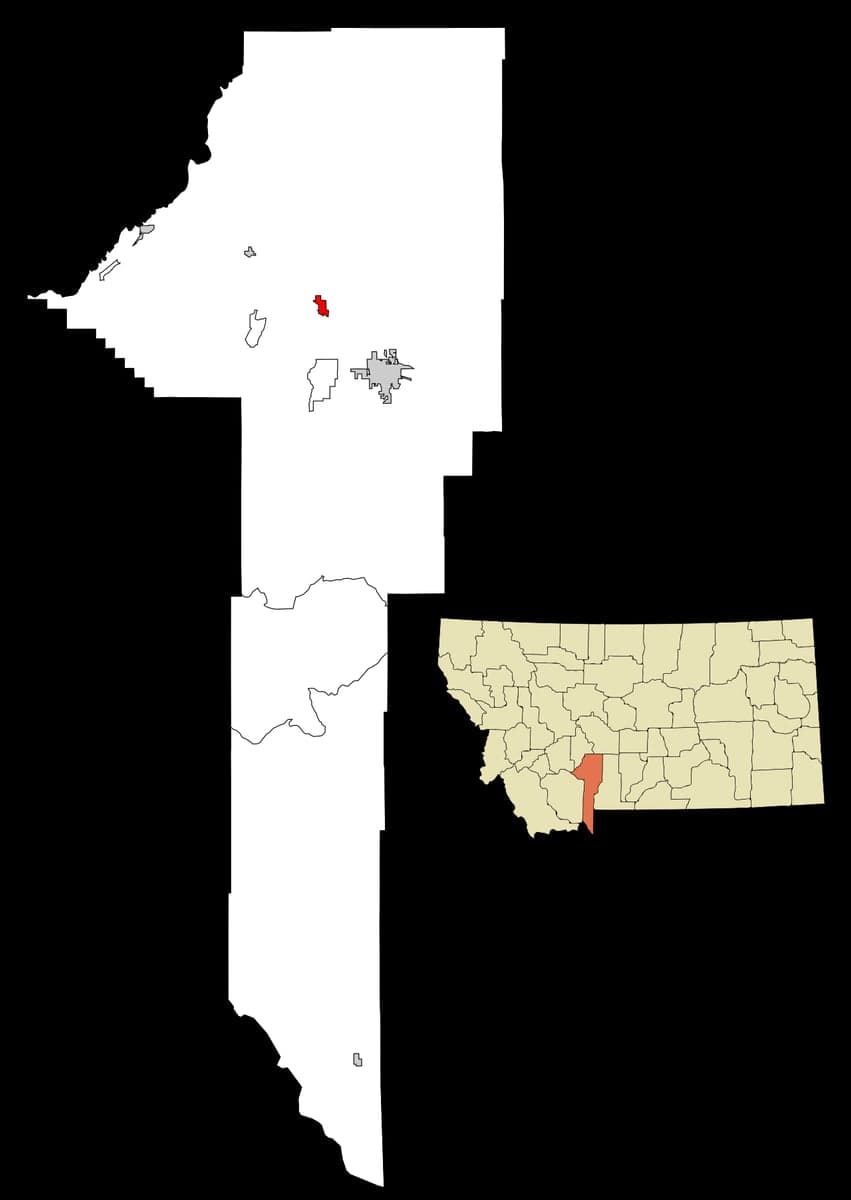
Photo: Wikipedia
Strategic Assessment of Belgrade, MT
Workable tactical position. Some exposure to population density or targets, but generally defensible in a crisis.
What does the Strategic Assessment tell us?
Our Strategic Assessment grades tactical survivability of an area. Major population centers, military targets, fallout zones, natural disasters, and border exposure all drive risk — lower exposure means a more defensible position in a crisis.
This is heavily inspired by Joel Skousen's Strategic Relocation book. Highly recommended you checkout the book ($)What does this tell us?
Our Strategic Assessment grades tactical survivability of an area. Major population centers, military targets, fallout zones, natural disasters, and border exposure all drive risk — lower exposure means a more defensible position in a crisis.
This is heavily inspired by Joel Skousen's Strategic Relocation book. Highly recommended you checkout the book ($)Strategic Pillars

Key Distances
Regional Safe Places
Below is our recommended "safe zones" in Montana and the surrounding area based on our strategic heuristics. For most people, it's unrealistic to live in a “safe zone” full-time due to work, family or other personal reasons. They tend to be more rural. However, many of these areas are perfect for second homes and retreat properties that double as a vacation home or even a short-term rental.
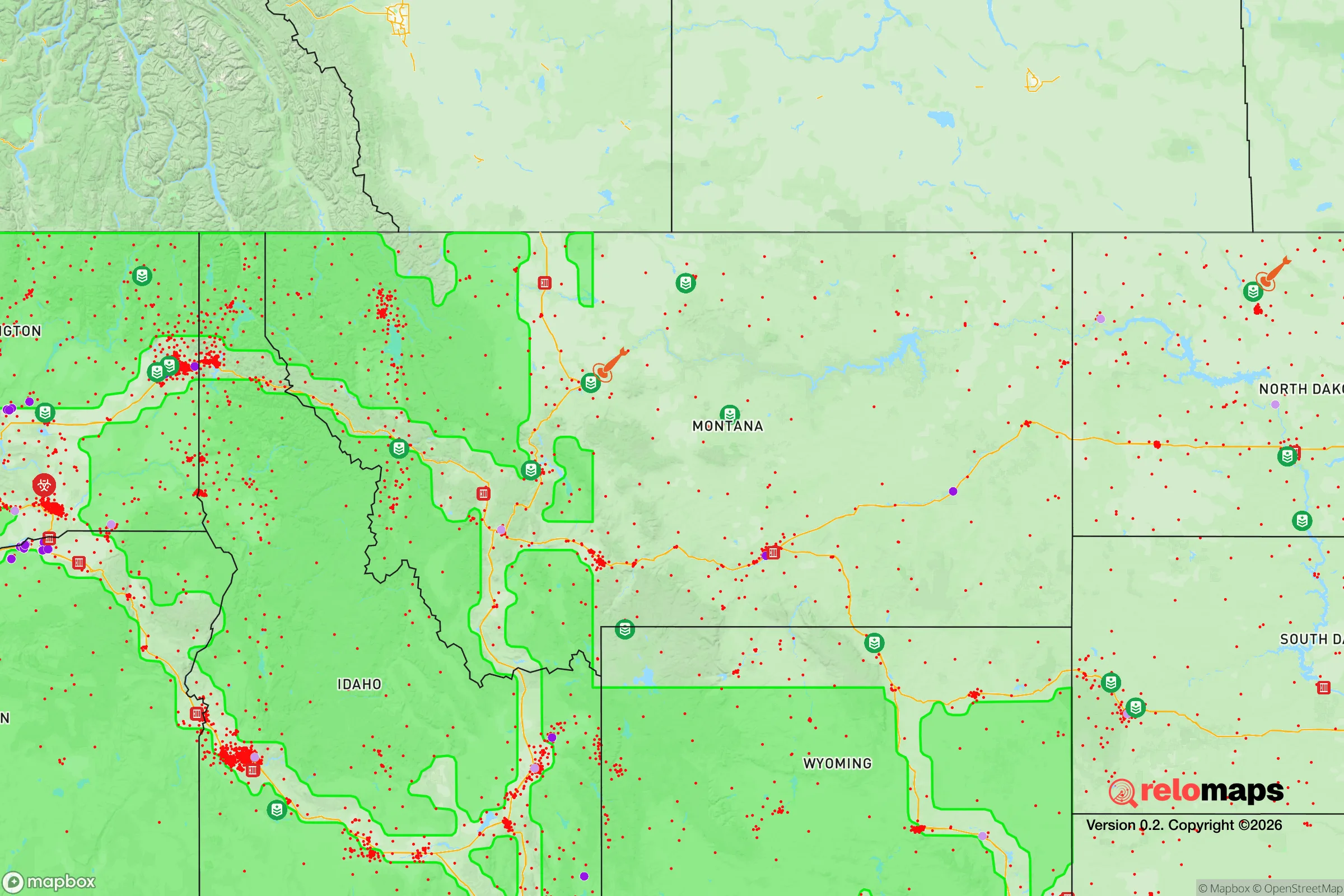


Important Note: For informational purposes only. This does not mean nothing bad ever happens in the green zones. Please use common sense. This is based on public data and modeled with AI. We tried to take a conservative approach but mistakes happen. We update this regularly as new information becomes available.
Solar Generator Recommendations
Backup power matters more here than in safer locations. We've picked three solar generators across budgets and capacity tiers — start with the budget unit if you only need a few essentials, or step up if you want to run a fridge and HVAC for days at a time.

Jackery Portable Power Station Explorer 300
Budget OptionPower on the Go: Weighing only 11 lbs, it's convenient to set up and store with book-sized foldable solar panels

BLUETTI Portable Power Station AC180
Designed for both indoor and outdoor scenarios, AC180 is highly capable as it has a robost capacity and continuous output power.

EF ECOFLOW DELTA Pro Ultra Power Station
Upgraded PickEcoFlow DELTA Pro Ultra is a whole-home energy system designed to grow with your family. Integrated with the Smart Home Panel 2, it scales to meet your evolving energy needs — keeping your home powered, intelligent, and secure through every stage of life.
We earn a commission, at no additional cost to you.
Strategic Assessment Analysis
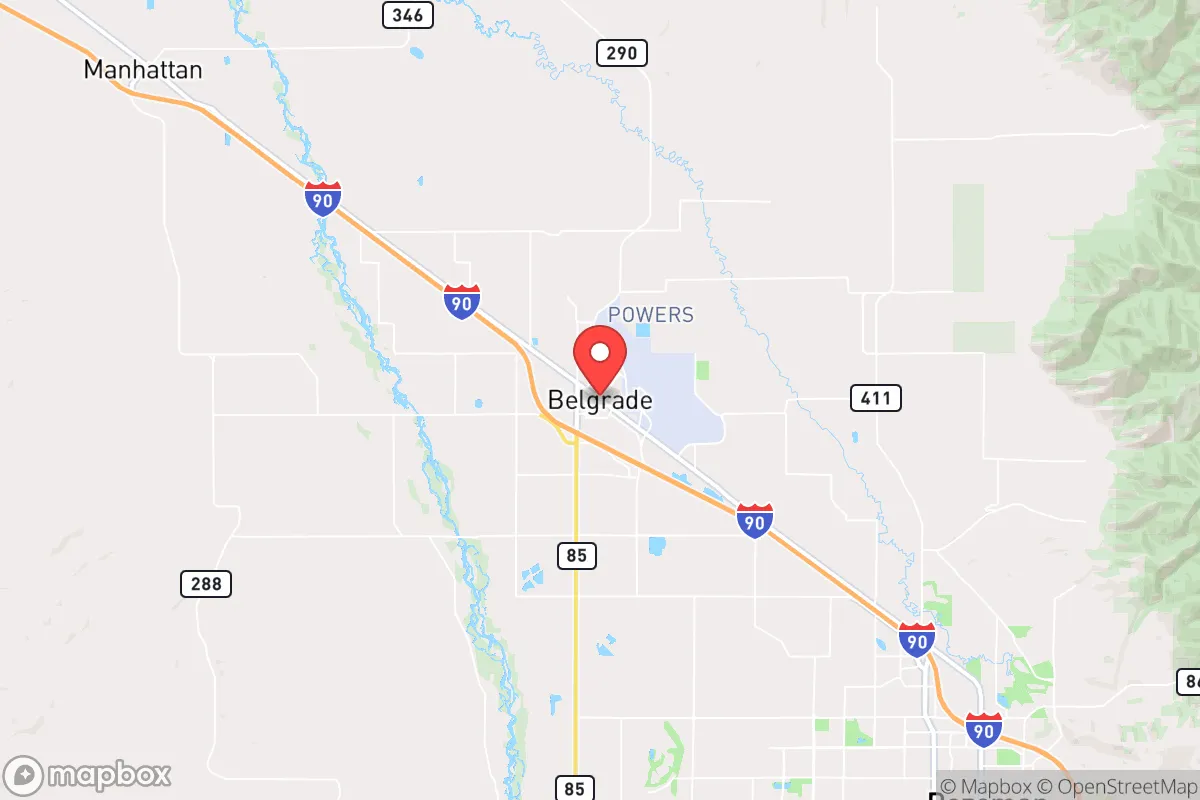
Belgrade, Montana, sits in a strategic sweet spot that few relocators fully appreciate until they map out the concentric rings of risk around America’s vulnerable zones. Positioned roughly 10 miles west of Bozeman in the Gallatin Valley, Belgrade offers a blend of agricultural self-sufficiency, mountain-barriered access, and enough distance from major metropolitan targets to matter in a crisis scenario. For a conservative-leaning individual or family thinking about long-term resilience—civic unrest, supply-chain collapse, or a mass-casualty event—Belgrade’s location along the Interstate 90 corridor, with the Bridger and Gallatin ranges as natural shields, provides a defensible base that still allows connection to regional resources. The town itself has grown from a quiet railroad stop into a community of roughly 10,000, but it retains a working-class, ranch-rooted character that stands apart from Bozeman’s rapid gentrification and tourism-driven economy.
Geographic position and natural advantages for long-term security
Belgrade’s geography is its first and most important asset. The Gallatin Valley is a high-elevation basin (around 4,500 feet) ringed by the Bridger Mountains to the east, the Gallatin Range to the south, and the Madison Range to the west. This creates a natural funnel for travel—only a handful of passes and river corridors provide vehicle access, which can be monitored or controlled if necessary. The valley floor is flat, fertile, and irrigated by the Gallatin River and its tributaries, meaning local food production is viable without heavy infrastructure. Belgrade sits far enough from Bozeman (a city of roughly 55,000) to avoid the immediate blast radius or fallout plume of a targeted strike on Bozeman’s airport or Montana State University, yet close enough to access medical facilities, hardware stores, and fuel if those systems remain intact. The area’s low population density—Gallatin County averages about 30 people per square mile—means fewer competition vectors for resources during a breakdown. For a relocator, the key takeaway is that Belgrade offers a 300-mile buffer from the nearest major metropolitan target (Seattle, Salt Lake City, Denver), and the surrounding mountains provide both physical barriers and multiple escape routes into national forest land if evacuation becomes necessary.
Risks, exposures, and proximity to fallout-relevant landmarks
No location is immune to risk, and Belgrade has specific vulnerabilities that a prepper must weigh. The most obvious is its proximity to Bozeman Yellowstone International Airport (BZN), which sits just east of Belgrade city limits. In a conflict scenario involving strategic strikes, BZN could be a secondary target due to its role as a regional transport hub and its proximity to military-adjacent facilities like the Montana Air National Guard’s 120th Airlift Wing in Great Falls (about 120 miles north). While Belgrade itself is not a primary target, fallout from a strike on Bozeman or the nearby Malmstrom Air Force Base (home to Minuteman III ICBM silos, roughly 150 miles north) could drift into the valley depending on wind patterns. The prevailing winds in the Gallatin Valley run west to east, meaning fallout from a strike on the west side of the valley (Bozeman) would likely push toward Belgrade. Additionally, the I-90 corridor that makes Belgrade accessible also makes it a chokepoint for evacuation or resupply—a single bridge collapse or road blockage at the Bozeman Pass could isolate the valley. Earthquake risk is low but not zero, with the Hebgen Lake fault zone (site of the 1959 magnitude 7.3 earthquake) about 60 miles southwest. For a relocator, the calculus is that Belgrade’s risks are manageable with basic preparation—a fallout shelter, multiple exit routes, and a 90-day supply of food and water—but ignoring the airport and missile-silo proximity would be a mistake.
Practical resilience for a relocator: food, water, energy, and defensibility
Belgrade’s practical resilience hinges on its agricultural base and water access. The Gallatin Valley is one of Montana’s most productive farming regions, with irrigated hay, barley, wheat, and alfalfa fields surrounding the town. Local ranchers raise cattle and bison, and the area has a growing network of small-scale vegetable farms and CSAs. For a relocator, this means food can be sourced locally without relying on national supply chains, provided you build relationships with producers before a crisis. Water is abundant—the Gallatin River flows year-round, and the valley’s aquifer is shallow and high-yielding, with most residential wells hitting water at 50-100 feet. Belgrade’s municipal water comes from the Gallatin, but a private well with a hand pump or solar-powered pump is a straightforward backup. Energy is a mixed bag: the grid is served by NorthWestern Energy, which relies on coal, hydro, and natural gas, but winter storms can knock out power for days. Solar potential is good—the valley averages 300 sunny days per year—but snow cover in winter reduces output. Wood heating is common, with national forest land offering firewood permits for $5 per cord. Defensibility is moderate: the flat terrain offers few natural defensive positions, but the surrounding mountains create a natural perimeter, and the town’s layout (grid streets, single-story homes, and open fields) allows for clear sightlines. The local culture leans heavily toward self-reliance, gun ownership is common, and the Gallatin County Sheriff’s Office is generally responsive but stretched thin over a large area. For a relocator, the practical checklist includes: secure a property with a well and septic, install a wood stove, stock at least three months of food and ammunition, and establish a mutual-aid network with neighbors who share your values.
The overall strategic picture for Belgrade is one of calculated opportunity. It is not a remote bunker—it is a working community with infrastructure, schools, and a hospital (Bozeman Health Deaconess, 15 minutes away) that can function in normal times and adapt in abnormal ones. The trade-off is that its growth is accelerating: Gallatin County’s population has increased by over 20% since 2020, driven by remote workers and out-of-state relocators, which strains housing, water rights, and social cohesion. For a conservative relocator, the key is to move before the window closes—lock in a property with water rights, establish a local network, and treat Belgrade as a base of operations rather than a final redoubt. It offers proximity to federal land (Gallatin National Forest, Yellowstone National Park) for hunting, fishing, and retreat, while maintaining enough distance from high-value targets to avoid the worst of a cascade event. In a world where the coasts are increasingly fragile and the interior is the only viable long-term option, Belgrade represents a solid middle ground: not the safest place in America, but one of the smartest for a family willing to prepare, adapt, and stand their ground.

* Values derived from national, state, county, city and local statistics and may differ in a specific area. Last updated: 2026-04-19T20:39:11.000Z
Narrative content on this page is AI-generated and may contain mistakes. Verify any details that matter before acting on them.
ReloMaps may earn a commission from affiliate links at no extra cost to you.

