Photo: Wikipedia
Demographics of Bellevue, NE
Affluence Level in Bellevue, NE
A middle-class area roughly in line with national averages across income, home values, education, and employment.
People of Bellevue, NE
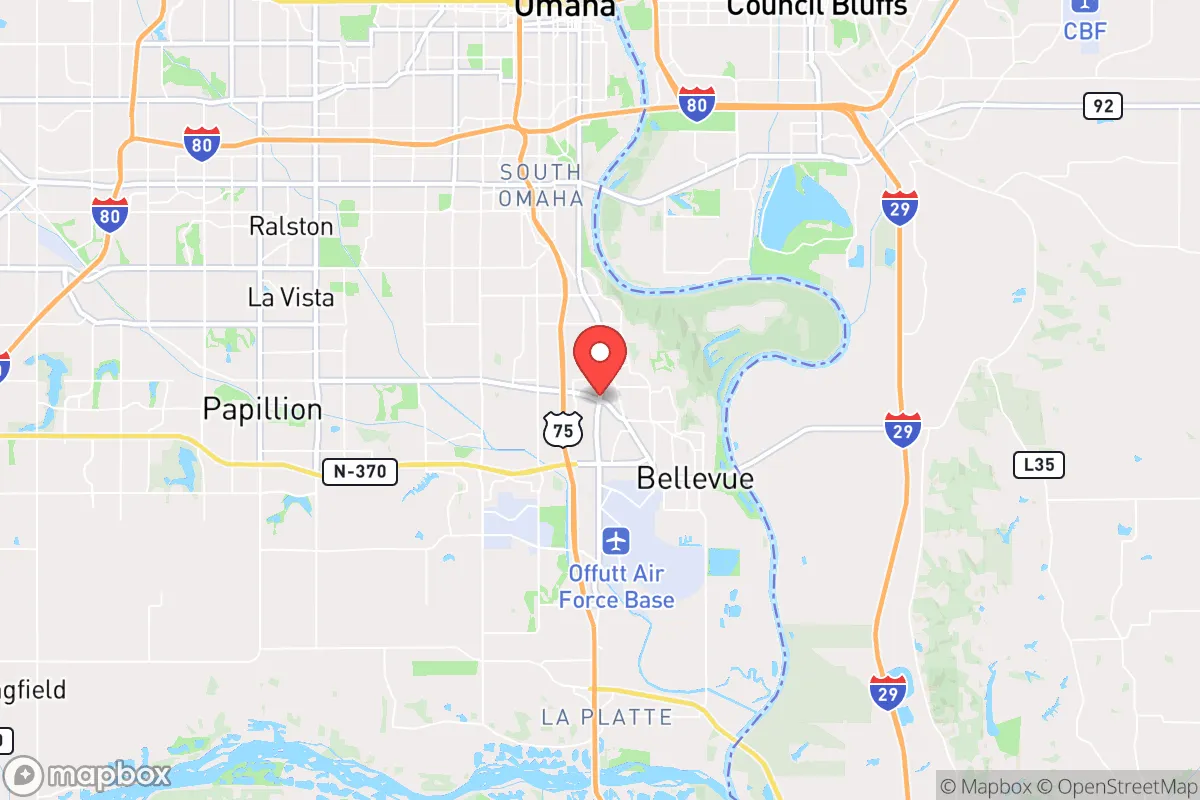
Bellevue, Nebraska, is a city of 64,355 residents that blends a strong military and defense-industry presence with a growing suburban character. Its population is predominantly White (67.9%) with a significant Hispanic minority (18.0%), a smaller Black community (5.4%), and an East/Southeast Asian population (2.9%). The city is denser than much of Sarpy County, with a distinct identity shaped by Offutt Air Force Base and a history of steady, family-oriented growth.
How the city was settled and grew
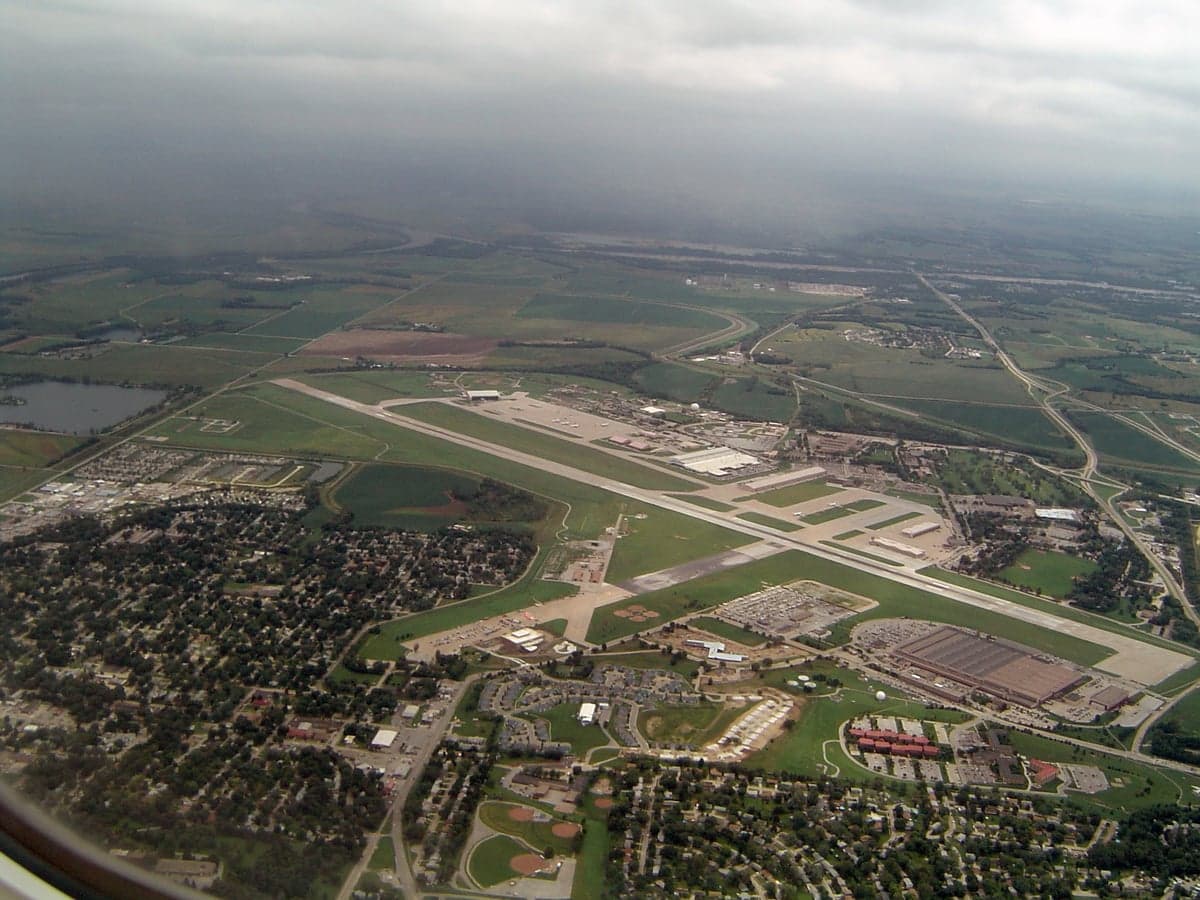
Bellevue’s founding population was drawn by the fur trade and early military outposts. Established in the 1820s as a trading post by the American Fur Company, it became Nebraska’s first permanent Euro-American settlement. The original settlers were predominantly French-Canadian trappers and traders, followed by Anglo-American farmers and merchants after the 1854 Kansas-Nebraska Act opened the territory. The arrival of the Union Pacific Railroad in the 1870s spurred a second wave, bringing German and Irish immigrants who built homes in the Olde Towne Bellevue district, the historic core along the Missouri River. These groups established small farms and businesses, and the area remained a quiet river town through the early 20th century. The construction of Offutt Air Force Base in the 1920s (originally Fort Crook) marked a turning point, drawing a new wave of military personnel and civilian support workers. The Fort Crook neighborhood, adjacent to the base, became home to many of these families, with modest post-war housing built to accommodate them.
Modern era (post-1965)
The post-1965 era saw Bellevue transform from a small town into a suburban city driven by Offutt’s expansion and the growth of Omaha’s metro area. The 1960s and 1970s brought a large influx of military families, many of whom were White and from other parts of the country, settling in newer subdivisions like Fairview and Fontenelle Hills. These neighborhoods, developed with single-family homes and good schools, attracted middle-class families seeking space and safety. The Hispanic population began growing noticeably in the 1990s and 2000s, driven by labor demand in construction, meatpacking, and service industries. Many Hispanic families settled in the South Bellevue area, near the base and along Highway 370, where more affordable housing was available. The Black population, historically small, grew modestly through military transfers and domestic migration, with concentrations near Offutt in the Offutt Base Housing area and parts of central Bellevue. The East/Southeast Asian community (2.9%) arrived primarily through military connections and professional recruitment, with families often living in the Central Bellevue neighborhoods near the base. The Indian subcontinent population remains tiny (0.1%), reflecting limited professional migration to this specific area.
The future
Bellevue’s population is likely to continue growing modestly, driven by Offutt’s stability and Omaha’s suburban spillover. The city is not homogenizing into a single demographic block; instead, distinct enclaves are solidifying. The Hispanic population is the fastest-growing group, projected to rise toward 25-30% over the next decade, concentrated in South Bellevue and along the Highway 370 corridor. The White population, while still the majority, is aging and declining slightly as younger families move to newer suburbs like Papillion and Gretna. The Black and East/Southeast Asian communities are expected to remain stable, sustained by military rotations and professional recruitment, but not expanding rapidly. The city is not tribalizing into sharply divided neighborhoods, but income and housing price differences are creating de facto separation: newer, pricier subdivisions in Fontenelle Hills and Fairview attract higher-income families, while older, more affordable areas in South Bellevue and near the base see more diversity. The foreign-born share (4.3%) is low but rising slowly, primarily through Hispanic immigration.
Bellevue is becoming a more diverse, suburban city with a stable military anchor. For someone moving in now, the city offers a safe, family-oriented environment with good schools and a strong sense of community, but the demographic shifts mean that neighborhoods vary noticeably in character and cost. The city’s future is one of gradual diversification, not rapid change, making it a predictable choice for those seeking a mid-sized Midwestern suburb with a clear identity.

* Values derived from national, state, county, city and local statistics and may differ in a specific area. Last updated: 2026-05-03T20:29:35.000Z
Narrative content on this page is AI-generated and may contain mistakes. Verify any details that matter before acting on them.
ReloMaps may earn a commission from affiliate links at no extra cost to you.

