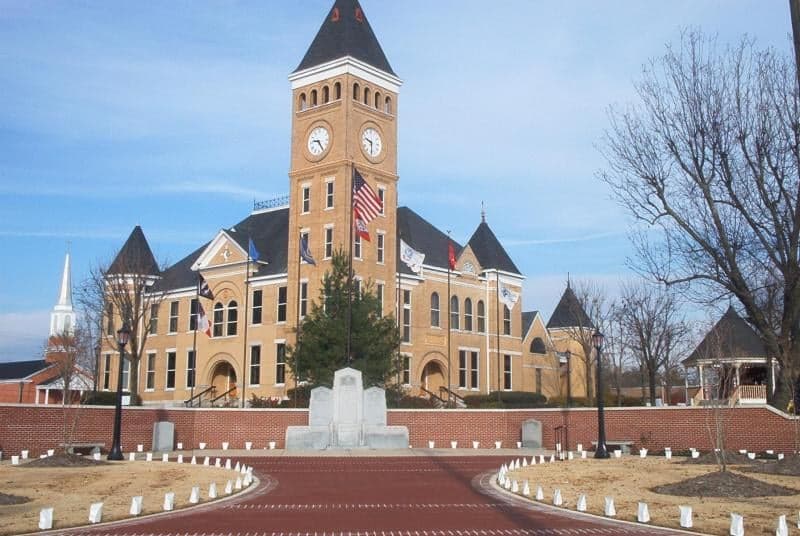
Photo: Wikipedia
Political ClimatePolitical Climate in Benton, AR
District shown is the primary district for this city’s centroid. Cities may span multiple districts.
Local Political AnalysisPolitical Analysis of Benton, AR
Benton, Arkansas, has long been a solidly conservative community, and the numbers back that up with a Cook PVI of R+8. This isn't just a statistic; it reflects a deep-rooted cultural and political identity that has held steady for decades. While you see some of the more progressive shifts creeping into Little Rock, just 20 miles north, and even into parts of Saline County near the interstate, Benton proper has remained a place where traditional values and limited government are still the default setting. The local elections and the way folks vote in state and national races show a consistent preference for candidates who prioritize personal responsibility and local control over top-down mandates.
How it compares
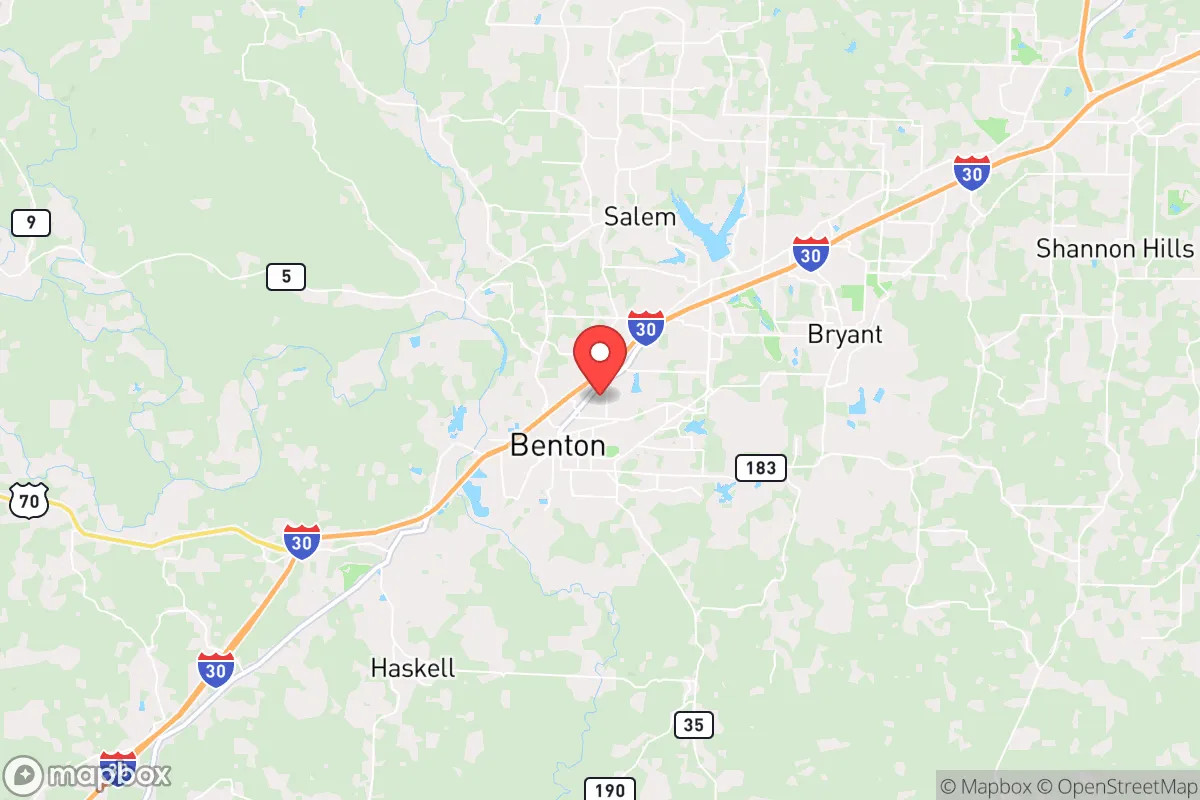
The contrast is pretty stark when you look at the surrounding area. Drive north into Little Rock or Pulaski County, and you're in a completely different political world—a deep blue island in a red state. Even closer, the city of Bryant, just a few miles east on I-30, has seen more of that suburban influx and feels a bit more moderate, especially in its school board and city council races. But Benton? It's still the heart of old-school Saline County conservatism. You don't see the same kind of pressure to adopt progressive policies on things like zoning, school curriculum, or public spending. The local government here is generally more skeptical of new regulations and more focused on keeping taxes low and letting people run their own lives and businesses without a lot of interference.
What this means for residents
For someone living here, the political climate translates into a pretty straightforward daily reality. You're less likely to run into the kind of government overreach that feels like it's creeping into other parts of the country. The local leadership tends to be wary of state or federal programs that come with strings attached, preferring to solve problems at the county or city level. This means fewer mandates on local businesses, a school system that has largely resisted the more controversial curriculum changes you see elsewhere, and a general sense that your personal freedoms—whether it's how you run your small business, what you teach your kids, or how you use your property—are respected. The concern among long-time residents is that as the area grows, there's always a risk of that progressive influence bleeding in from Little Rock, bringing with it higher taxes and more bureaucratic red tape.
Culturally, this political lean shows up in the community's priorities. You see it in the strong support for the local sheriff's office and a general "live and let live" attitude, as long as you're not hurting anyone else. The city has been careful about how it uses federal grants, often turning down money that would require adopting certain social policies. There's a palpable resistance to the idea that government knows better than the people. The trajectory, as I see it, is that Benton will likely hold its conservative line for the foreseeable future, but it's not automatic. It takes staying engaged, showing up to city council meetings, and voting in every local election to keep that small-government, freedom-first spirit alive. The alternative is letting the area drift toward the kind of centralized control that so many folks moved here to get away from in the first place.

State Political ClimatePolitical Climate in Arkansas
State Political AnalysisPolitical Environment in the State
Arkansas has been a reliably red state for decades, with Republicans holding every statewide office and supermajorities in both legislative chambers since 2014. The state’s overall partisan lean is roughly R+20 in presidential elections, but the real story is the dramatic shift from a competitive, Democrat-heavy past to a solidly conservative present. Over the last 20 years, the state has moved from electing moderate Democrats like Governor Mike Beebe to embracing hardline conservatives like Governor Sarah Huckabee Sanders, with the GOP’s dominance now baked into the state’s DNA. For a conservative-leaning relocator, this means a policy environment that’s been consistently trending in your favor, but with some important nuances to understand.
Urban vs. rural divide
The political map of Arkansas is a textbook case of the rural-urban split. The state’s two major metros—Little Rock and Fayetteville (home to the University of Arkansas)—are the only real blue dots. Pulaski County (Little Rock) voted for Biden in 2020 by about 10 points, and Washington County (Fayetteville) is now a swing county, flipping to Trump by just 3 points in 2024 after being reliably red for decades. Meanwhile, the rest of the state is deep crimson. Fort Smith, the third-largest city, is solidly conservative, and the rural Delta counties like Mississippi County and Phillips County are among the poorest and most Democrat-leaning in the state, but their populations are shrinking fast. The real growth is in the northwest corridor—Bentonville, Rogers, and Springdale—which are booming with transplants from California and Texas. These areas are still conservative, but they’re becoming more moderate as the tech and retail sectors (hello, Walmart HQ) bring in a more diverse workforce. If you’re looking for a reliably red suburb, Benton (just outside Little Rock) and Cabot are your best bets, while Hot Springs remains a conservative-leaning tourist town with a libertarian streak.
Policy environment
Arkansas’s policy environment is a conservative dream in many respects, but it’s not without its complexities. The state has a flat income tax rate of 4.4% (down from 7% in 2015), and Governor Sanders signed a bill in 2023 to phase it down to 3.9% by 2027. Sales tax is high at 6.5% state-level, but local options can push it to 9% or more in cities like Little Rock. Property taxes are low, averaging about 0.6% of assessed value. On education, the state passed the Arkansas LEARNS Act in 2023, which created universal school choice through Education Savings Accounts (ESAs) worth roughly $6,600 per student—a huge win for parental rights. The state also banned critical race theory and transgender ideology in K-12 classrooms. Healthcare is a mixed bag: Arkansas expanded Medicaid under the private option, but the state has also passed some of the strictest abortion laws in the country, banning the procedure at conception with no exceptions for rape or incest. Election integrity is strong—the state requires voter ID, has purged inactive voters, and passed a law in 2021 banning ballot harvesting. There’s no state-level gun control to speak of, and constitutional carry has been law since 2013.
Trajectory & freedom
Arkansas is clearly trending toward more freedom in most areas, but there are some concerning countercurrents. On the positive side, the state passed the Second Amendment Preservation Act in 2021, which prohibits state enforcement of any future federal gun bans. The Parental Rights in Education Act (2023) gives parents explicit authority over their children’s medical and educational decisions. The state also passed a medical freedom bill in 2023 that prohibits employers and schools from mandating COVID-19 vaccines. On the negative side, the state’s medical marijuana program remains heavily restricted—only 12 dispensaries for the entire state, and no home grow allowed. There’s also a growing concern about corporate influence from Walmart and Tyson Foods, which have pushed for some diversity, equity, and inclusion (DEI) initiatives in the northwest corridor. The state’s property rights are strong, with no statewide zoning and a right-to-farm law that protects agricultural operations from nuisance lawsuits. But watch out for Little Rock’s city council, which has tried to impose rent control and anti-discrimination ordinances that go beyond state law.
Civil unrest & political movements
Arkansas has been relatively quiet on the civil unrest front compared to states like Oregon or Minnesota, but there have been flashpoints. The Black Lives Matter protests in Little Rock in 2020 were mostly peaceful, but there were some instances of property damage and looting in the downtown area. The state’s Confederate monument controversy flared up in 2020 when the state legislature passed a law protecting monuments from removal—a law that remains in effect. On the right, the Arkansas Patriot Coalition and local Constitutional Sheriffs have been active, particularly in rural counties like Baxter County and Stone County, where there’s a strong nullification movement. The state’s immigration politics are straightforward: Arkansas is not a sanctuary state, and in 2023, the legislature passed a law requiring all employers to use E-Verify. There was a notable election integrity controversy in 2022 when the state’s Republican secretary of state, John Thurston, was sued for removing thousands of inactive voters from the rolls—a move that was upheld by the courts. The most visible flashpoint for a new resident would be the Little Rock city council’s ongoing battle with the state over local control, particularly around housing and policing.
Projection
Over the next 5-10 years, Arkansas is likely to become more conservative, but also more internally divided. The northwest corridor will continue to grow, bringing in more moderate Republicans and even some Democrats from California and Texas. This could shift Washington County (Fayetteville) to a permanent swing county, and maybe even flip Benton County (Bentonville) to purple by 2032. Meanwhile, the rural Delta will continue to depopulate, making the state’s overall partisan lean even redder. The biggest wildcard is in-migration from California: if the trend continues, you’ll see more pressure for moderate policies on education and healthcare, but the state’s constitutional carry and school choice laws are likely to remain intact. The tax environment will continue to improve, with the income tax likely hitting 3% or lower by 2030. The biggest risk is federal overreach—if the Supreme Court ever overturns the Second Amendment Preservation Act, Arkansas could see a major backlash. For now, the state is on a solid trajectory toward more personal liberty, but the cultural battle in the northwest is one to watch.
Bottom line for a new resident: Arkansas offers a low-tax, high-freedom environment that’s ideal for conservatives who want to escape blue-state overreach. The state’s school choice program, constitutional carry, and strong parental rights laws are major draws. But be aware of the urban-rural divide: if you move to Little Rock or Fayetteville, you’ll be in a blue bubble with higher taxes and more progressive local policies. Stick to the suburbs like Benton, Cabot, or Rogers for a reliably conservative experience. The state is trending in the right direction, but the cultural battle is real, and your vote matters more here than in a deep-blue state. If you’re looking for a place where your values are reflected in the law and your tax dollars aren’t funding woke agendas, Arkansas is a solid bet.
* Values derived from national, state, county, city and local statistics and may differ in a specific area. Last updated: 2026-04-30T02:11:08.000Z
Narrative content on this page is AI-generated and may contain mistakes. Verify any details that matter before acting on them.
ReloMaps may earn a commission from affiliate links at no extra cost to you.

